Einstein 1 Platform
Now everyone’s an Einstein—and being more productive. Build on the #1 AI CRM.
Integrated
Intelligent
Automated
Low Code & No Code
Open


Explore the Einstein 1 Platform.
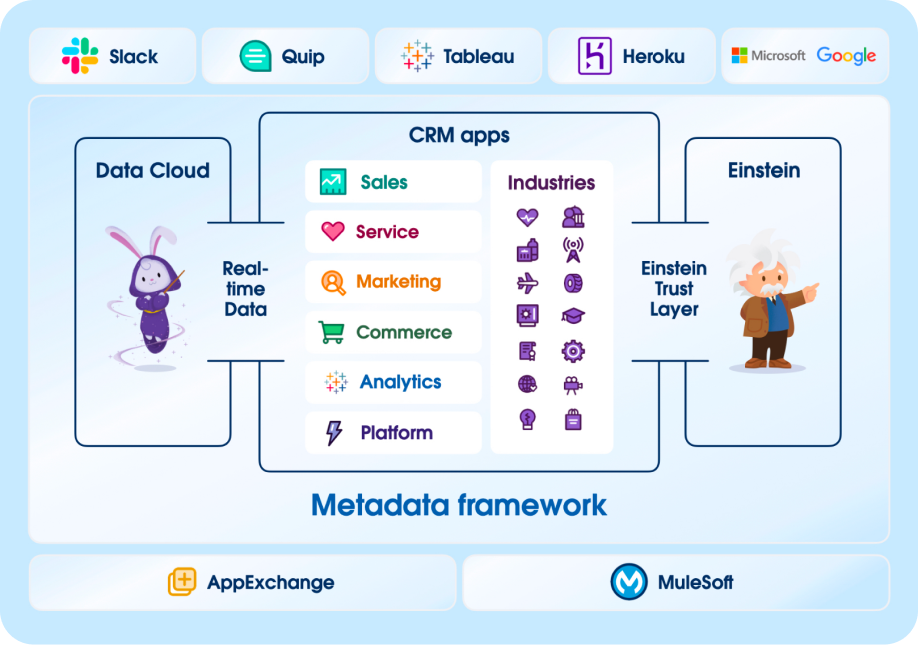
Enhance and seamlessly align CRM apps with integrated metadata.
Generate code, content, emails, campaigns with intelligent builders.
Automate securely across people, processes, and systems to increase productivity.
Use low code & no code tools to drive admin & dev efficiency.
Extend Salesforce faster with open APIs and thousands of ecosystem partners.

Customer 360
Tailor experiences to the needs of every customer. Connect service to sales, marketing, commerce, and IT.
Einstein
Boost growth by using AI to create customer success through personalized experiences.
Data Cloud
Create a single, dynamic view of every customer and asset by unifying all your data in real time.
Application Development
Build faster and automate across your business with low code.
Automation
Empower people, streamline processes, and connect systems with Salesforce Flow.
Security
Secure your enterprise with Shield and natively built tools.
Discover how Vonage uses automation
to respond faster.


Salesforce’s solutions have helped us to automate workflows that allow our teams to collaborate more easily, drive value for customers, and fuel our international expansion.
Savinay Berry
EVP, Product & Engineering
EVP, Product & Engineering
Join these Platform customers.




Stay up to date on the latest IT news.
Article
What is Cloud Computing Technology?
Article
The IT Leader's Guide to Fast App Development
Article
Top Data Security Trends 2022
Take the trail and learn more about the Salesforce Platform.
Automate, build, and secure your Customer 360.
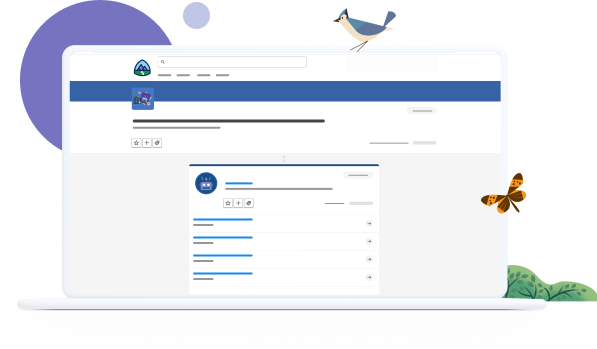
Enterprise App Development Platform That Extends your CRM’s Reach and Functionality
Salesforce Platform is the app development platform that extends your CRM’s reach and functionality.
You do not have to be a developer to build apps using the Salesforce Platform. With drag-and-drop simplicity, just about anyone can create apps that automate business processes or help customers find important information. If you are a coder, the Salesforce Platform is language agnostic, allowing fully customized application development in your preferred language.
The apps you create for your business can be deployed on mobile, tablet, and web, be simple or complex, and connect to nearly any data source. Start finding ways to enrich user experiences and streamline processes. Salesforce app development is only limited by your imagination.

Sign up for a free trial. No software to install, no credit card, no commitments.