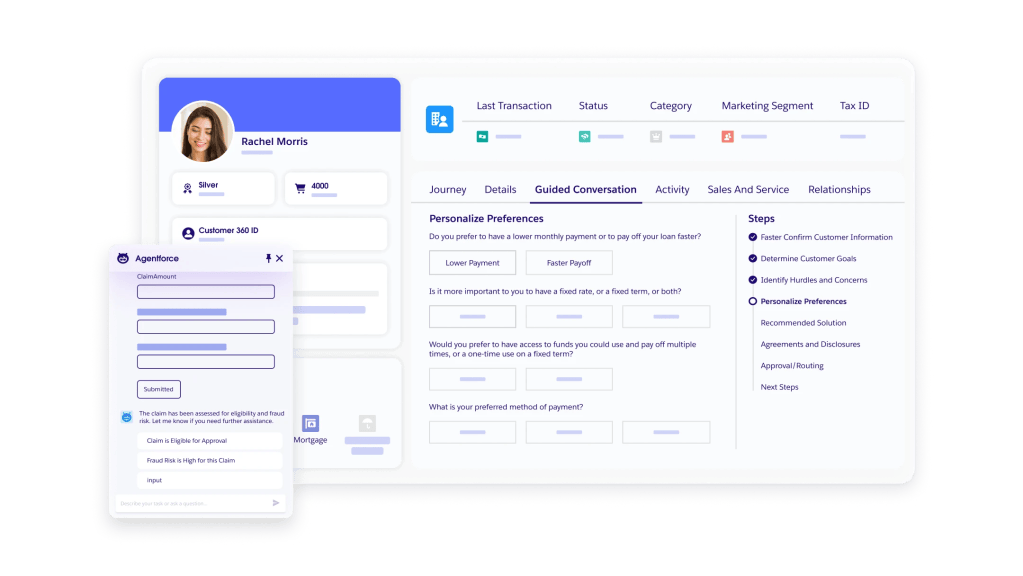
Use case 2: Dynamic data displays
Picture this: Your client needs a quick-glance dashboard, like a retail manager checking order summaries, total spent, items shipped, returns pending. Or a healthcare team viewing a patient's latest vitals, appointments, and meds all in one spot. It's got to feel alive, updating based on who's looking and what they need right now
With custom development, you need to write LWC components, fetch data from multiple objects, format it nicely, make it responsive, and handle all the edge cases. And you need to do this every time for a different client or a different use case. So, you're basically rebuilding it again. Those custom LWCs also tend to be brittle. One small change in the data structure and the whole thing breaks
In Omnistudio, with Flexcards you use pre-built card components that you configure visually. Want to show a customer's order history? You drag in a card, point it to the right data, and tweak what fields display. Need that same card for a different client? You just reuse it.
The beauty is in the flexibility. Flexcards pull data from multiple sources, display it in a clean format, and they're built to last. When Salesforce updates or your data changes, the card adjusts without you needing to rewrite code. Flexcards are stable, supported, and you spend way less time fixing them. Plus, they fill gaps in standard Salesforce UI affordably, without the overhead of building everything yourself.