The Small Business Marketer's Guide to Understanding Your Customer
5 Use Cases to Give Your Customers Tailored Experiences, Fast


Table of Contents

88% of small business marketers believe they must continually innovate in order to remain competitive.

39% of small business marketers say they don’t have real time data access to execute campaigns.
Use Case 1
Create a Strong Data Foundation
Get a complete view of your customers, personalize their journey, and close deals faster with marketing, sales, service, and commerce data and teams working in one place.
Having marketing, sales, service, and commerce teams on one platform, powered by Data Cloud, means all teams can access and action on data across the entire organization. It also means marketing can pull from sales, service, and commerce data to create better, more personalized customer journeys.
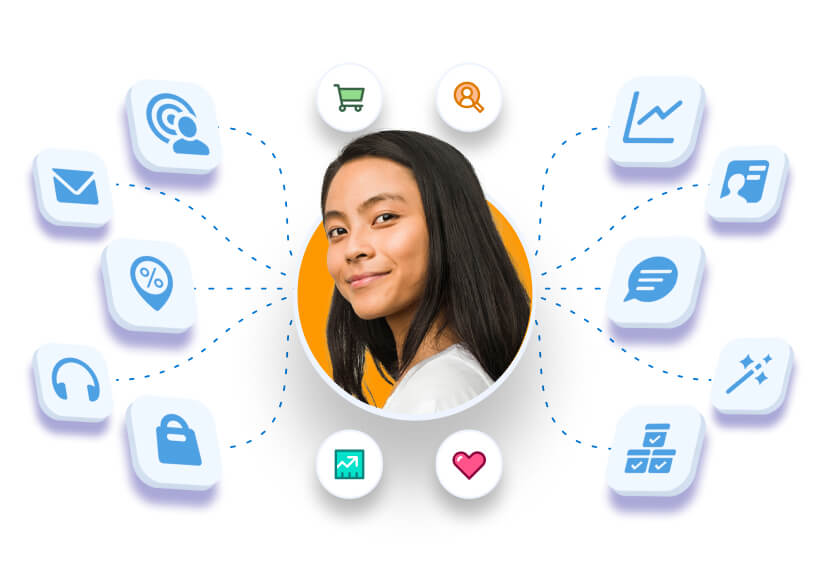
Three-Step Process to Achieving Your Goals
Step 1: Identify which data sources you use.
Step 2: Create a single source of truth across teams.
Step 3: Segment with precision.
Real-World Example:
Let’s say you work for a small tech company. You likely have a number of different data sources you use to understand your customer. This could include your sales CRM data, any marketing data from your email and advertising engagements, transactional commerce data, and service case data. You might also bring in data outside of these teams to understand your customer, including product usage data, shipping data, and ERP data. All of these touchpoints are important to understand how your customer is interacting with your company."
Once you get all of your data in one place, it’s easier for all teams – marketing, sales, commerce, and service – to get a single view of how your customer interacts with your company and your product. It also makes it easier to organize your data into segments.
Use Case 2
Use Data to Better Understand Your Customer
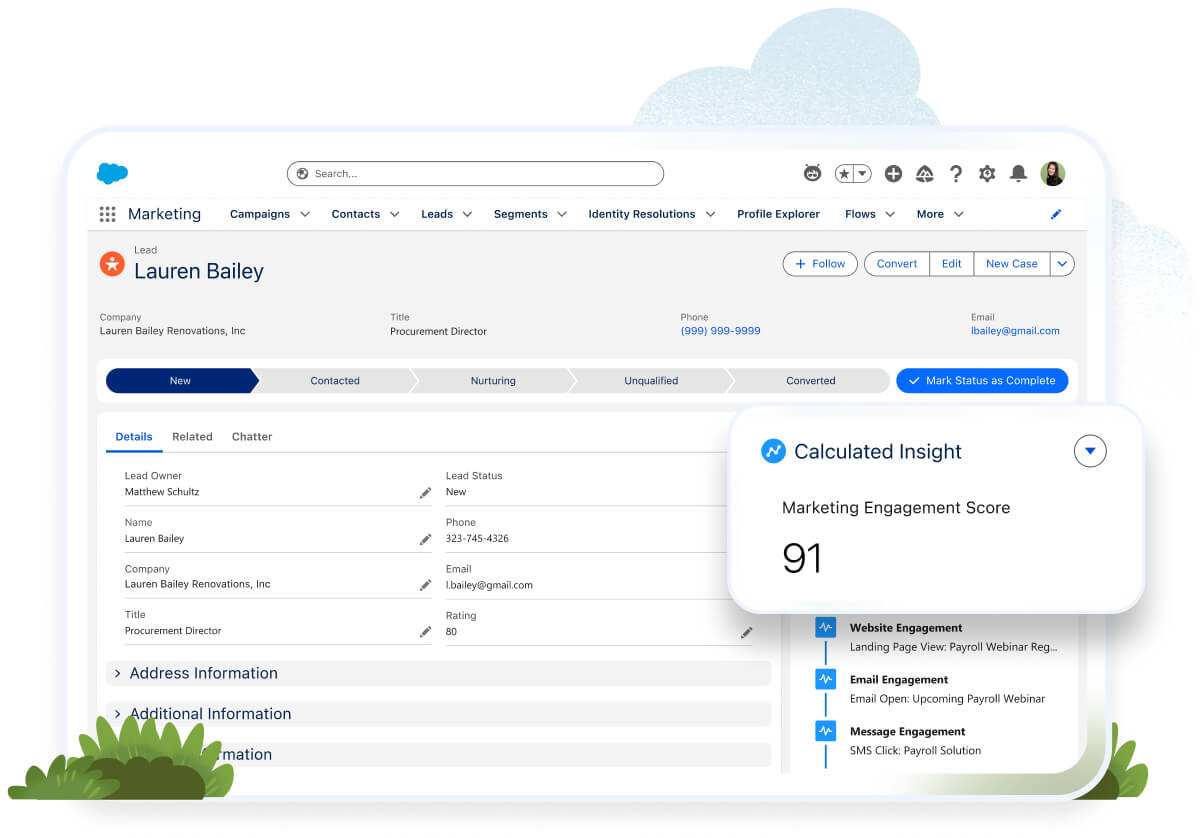
Step 1: Capture both engagement and fit.
Step 2: Use AI to understand which customers are most engaged.
Step 3: Use AI to pinpoint customers who are oversaturated with messaging.
Real-World Example:
Use Case 3
Create Campaigns Faster with Agentforce
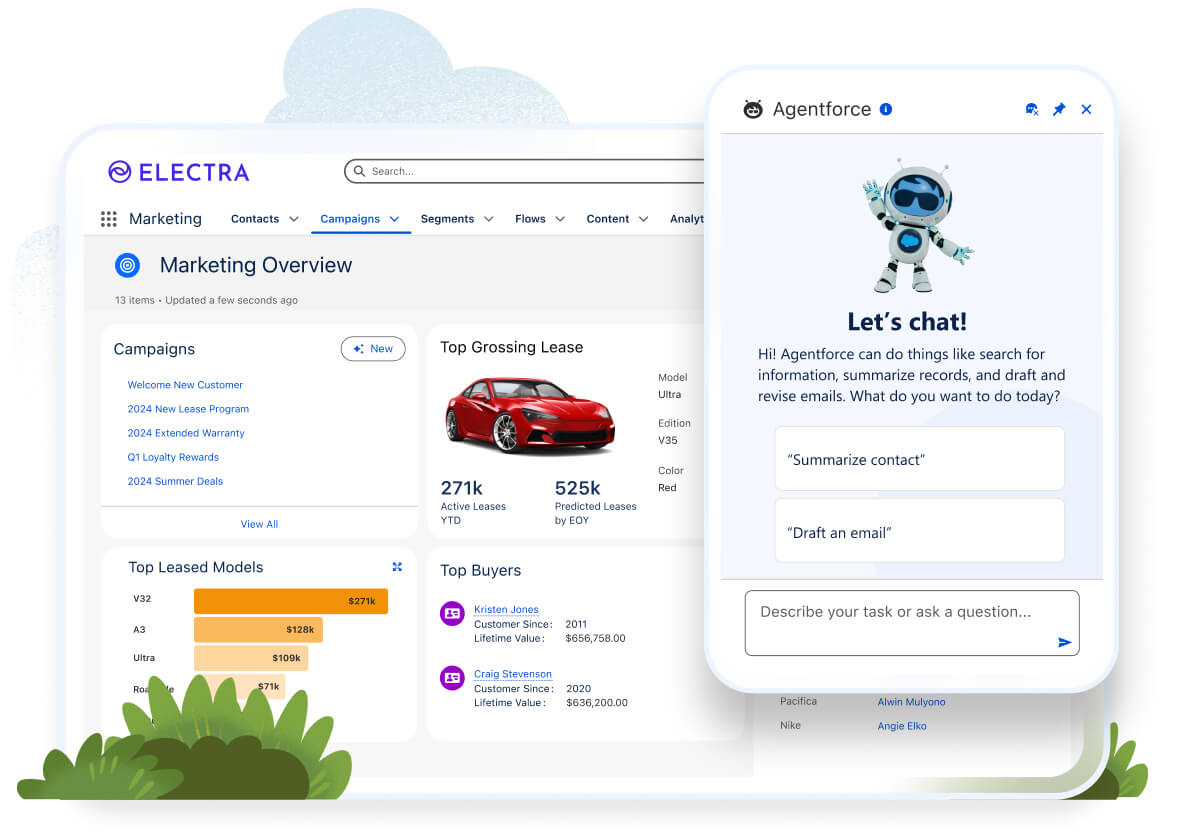
Step 1: Craft a powerful prompt.
Step 2: Leverage the Agent to build a segment
Step 3: Personalize faster.
Real-World Example:
Use Case 4
Personalize Every Interaction with Connected Data
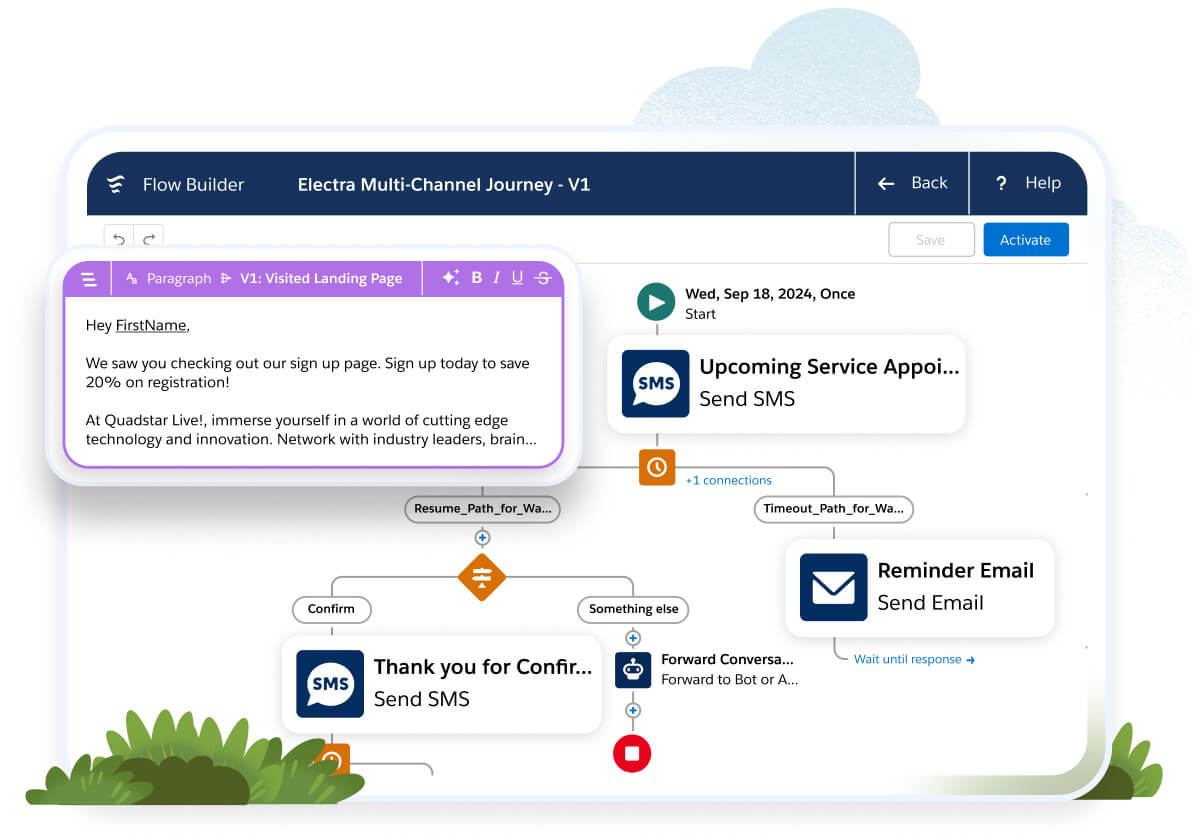
Step 1: Personalize email outreach with data.
Step 2: Message customers on the channels where they are most likely to engage.
Step 3: Connect sales and service service touchpoints (Salesforce Flow).
Real-World Example:
Let’s go back to our tech company example. You now want to build out an automated customer journey. The first step is to make sure the content you’re sending out is personalized to the individual customers. Let’s say you want to pull in information related to their most recent purchase, with the goal of helping them get the most out of their investment. Because you have a strong data foundation and all teams work on one platform, you can easily pull in commerce data and create content blocks related to the product they recently purchased.
From there, you can build out an automated journey using SMS and email, with sales and service touchpoints to make sure your customer is getting the most of their purchase. In your automated journey, you send out a text message asking if everything is okay with their recent order. If they respond that they have an issue, your automated journey can send them to the service team. This is the power of having all your teams work on the same platform.
Use Case 5
Take a Data-Driven Approach to Optimizing Marketing Efforts
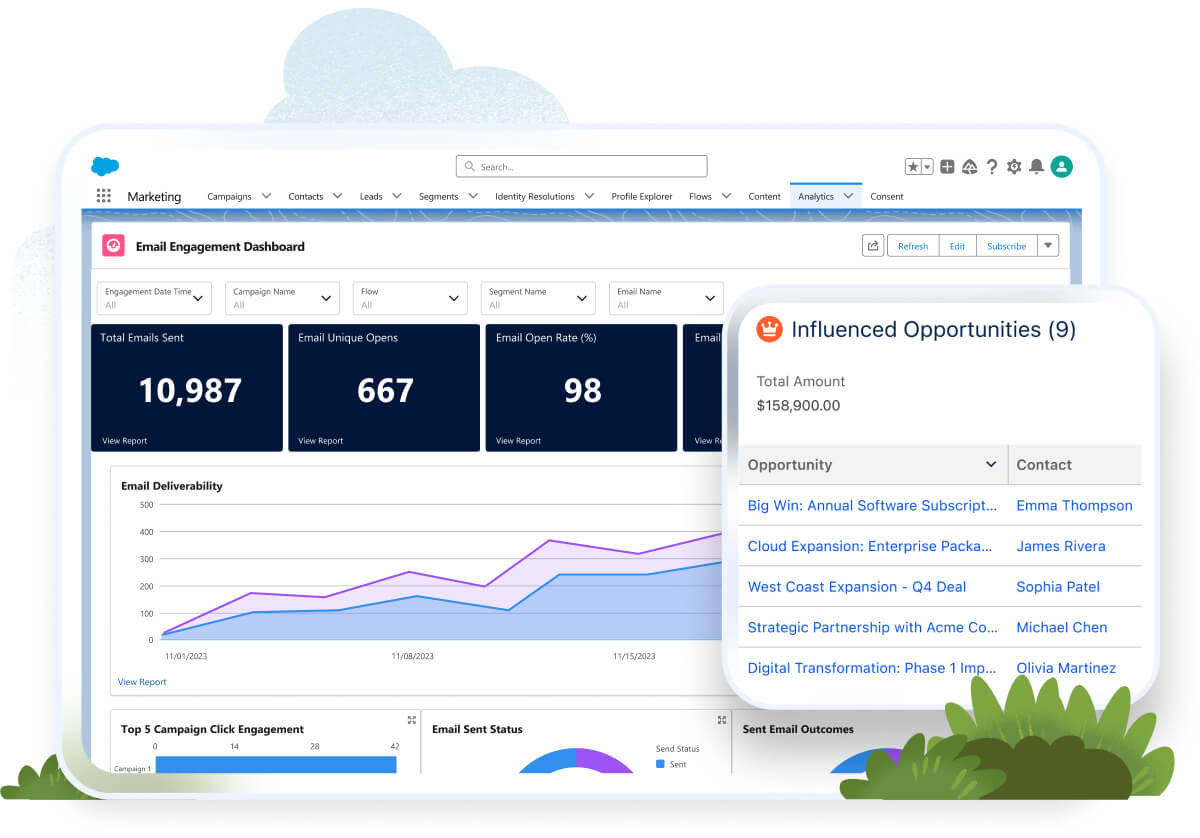
Step 1: Get a view of marketing performance on the asset level.
Step 2: Test automated journeys.
Step 3: Tie campaign efforts back to revenue.
Real-World Example:

What is Marketing Cloud Advanced Edition?

Say Goodbye to Blast Emails -- How AI Helps Your Personalized Email Marketing

9 Ways AI Can Save Marketers Time, Money -- and Grief
More resources

Grow Your Small Business Marketing Footprint with AI

Practical AI for Small Businesses