
How to fix disconnected marketing and sales data for better targeting
Learn how to unify your marketing and sales data with a customer data platform that sharpens your lead nurturing and campaign targeting.


Learn how to unify your marketing and sales data with a customer data platform that sharpens your lead nurturing and campaign targeting.

Marketing and sales teams are always looking to improve their lead nurturing and campaign targeting. It’s all part of establishing an effective lead management plan to deliver better customer experiences, hit more sales targets, and retain more customers.
However, working with disconnected marketing and sales data can result in the ‘blind leading the blind’. Siloed data makes it harder for teams to make informed, data-driven decisions with contextual awareness. Using multiple standalone tools, as opposed to an all-in-one platform, also increases tech bloat and limits personalisation.
Source: State of Sales Report
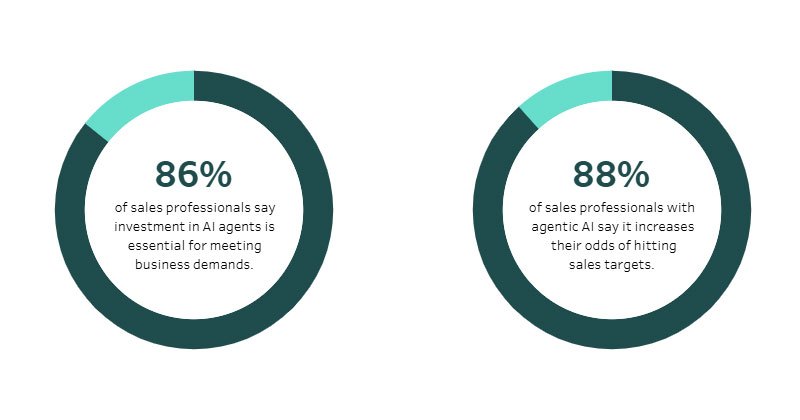
For years, businesses have used Customer Data Platform (CDPs) to unify their sales and marketing data. Now, in the age of agentic AI, CDPs have evolved. Marketers and sellers can use CDPs to unify their fragmented enterprise data into a single, integrated ecosystem, as well as deploy agentic workflows to personalise the customer journey across every touchpoint. No wonder 86% of sales professionals say investment in AI agents is essential for meeting business demands .
In this guide, you’ll learn how disconnected marketing and sales data hurt your lead nurture and campaign targeting, and how an enterprise CDP like Data 360 can sharpen your campaign targeting and personalisation.

Transform your company by infusing your data with AI and building a thriving data culture.
Disconnected marketing and sales data often contributes to siloed thinking. This is where different departments work with different versions of the truth.
While marketing may be kicking goals with its latest social media campaign, deeper down the funnel, the sales team may be wondering: Why are our leads low-quality and not converting? Both departments are operating on the truth, but only one is “winning”. There lies the disconnect.
The result? Potential customers who might be interested in an offer get overlooked. Teams may dedicate too much time to low-quality leads who are unlikely to convert. Poor audience segmentation can also lead to untimely or irrelevant messaging, causing prospects to unsubscribe or abandon carts in the blink of an eye.
These aren’t just hypothetical scenarios, either. Misaligned marketing and sales cost businesses an estimated $1 trillion annually , with only 8% of companies reporting a strong alignment between their marketing and sales . Worse still, some entrepreneurial leaders falsely believe more automation is the answer.
Action all your data faster with unified profiles and analytics. Deploy smarter campaigns across the entire lifecycle with trusted AI. Personalise content and offers across every customer touchpoint.
Not exactly. Sure, automation tools can help streamline workflows and free up time for higher-value work. But they won’t fix your underlying data. In fact, more automation will only amplify the existing problems with inefficient workflows.
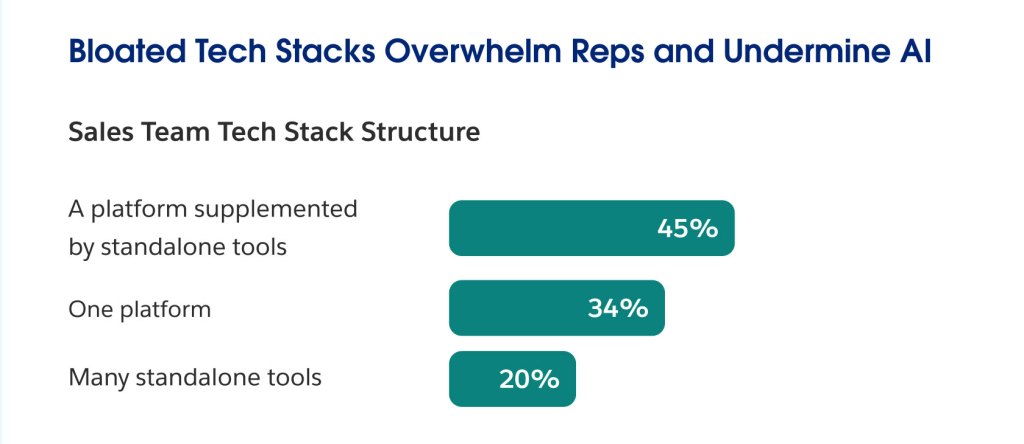
Tech bloat is a common drawback of over-automation. As businesses successively acquire more tools, disk space runs low, performance tanks, and hardware requirements soar. Aside from the increased operating costs, tech bloat also has a hidden productivity cost, with 42% of sales reps feeling overwhelmed by too many tools and held back by siloed data.
Source: State of Sales Report
Teams that operate multiple standalone tools, each with separate automation workflows, are more likely to struggle than those with a mature, unified data architecture. With the average sales team member using around eight standalone tools, that means money lost to multiple subscription plans, disrupted workflows due to inconsistent user interfaces between each tool, and increased risk of duplicated governance and security expenses .
Focusing on automation over your underlying data poses another problem: Genuinely useful, valuable data sits there collecting dust. Data and analytics experts estimate around 19% of their data is inaccessible , and that their most valuable data resides within that 19% of inaccessible data. This trapped data limits your ability to transform insights into action.
The first step to better targeting is to unify your marketing and sales data. With a CDP like Data 360, you can consolidate customer data from multiple sources (websites to CRM interactions to e-commerce engines) into a single view. This historical data lets you create customer identities and audience segments, making it easier to personalise the journey for each target audience across every touchpoint.

Data 360, the only data platform native to Salesforce, unlocks and harmonises data from any system — so you can better understand your customers and drive growth.
Here’s what a unified plan looks like in action. Legend Corporation successfully moved away from an 18-year-old proprietary system to an integrated solution for order management and CRM, powered by Salesforce and MuleSoft. But the business still faced a significant volume of manual work, with 700 daily orders arriving as PDFs attached to emails.
In response, Legend Corporation combined MuleSoft IDP with Data 360 and Prompt Builder. MuleSoft IDP uses AI to extract order details from the PDF attachments without building rigid templates for each customer. The data is then matched against the centralised customer data in Data 360. In turn, customer service workload is reduced by approximately 1,000 hours per annum.
The minute we enabled EDI order processing through Salesforce, we went from handling every order manually to processing the majority touch-free.
Alison MurphyHead of Digital and Marketing, Legend Corporation
These results show how data unification not only enhances the customer experience, but also boosts internal productivity. And best of all, a cohesive data structure can benefit businesses of any size or industry.
Unified data helps retailers capture and update customer data from web, mobile, and in-store interactions to personalise their offers. Financial service providers can unify their legal policy systems and data environments, giving them a holistic overview of each customer’s policy information, engagement activity, and claims history.
Data fragmentation increases the risk of valuable leads slipping through the cracks. And those cracks widen the longer teams wait to address them.
For years, the preferred channels for B2B suppliers and buyers were in-person sales and electronic data exchange (EDI). Now, times are changing. Today’s B2B buyers are ready to embrace better alternatives.
In promising news, B2B companies with account-based marketing (ABM) programs report a 38% higher sales win rate and 91% larger deal sizes. With ABM, B2B marketers can tailor their approach to high-value customer accounts through personalised sales cycles and content delivery, which is vital as 85% of marketers say customer expectations are higher than ever . That means B2B marketers who can unify their data are better equipped to stay in tune with their customers.

Source: State of Marketing Report
Data fragmentation also leads to communication breakdown between departments. If sales aren’t notified of a supply chain disruption, they may promise an offer they cannot deliver on. When marketing uses standalone email and social media platforms, they may not know which channel is drawing in the highest-value customers.
Poor data readiness also holds businesses back from adopting the best pricing model. These days, usage pricing is the #1 revenue model contributing to growth. However, if sales cannot accurately track current usage and predict future usage, then finance cannot accurately forecast revenue. Customers may then feel the downstream effects of these inefficiencies through delayed quotes and renewal processes.
When comparing B2C and B2B marketing automation platforms, there are two main types: insights and engagement.
In a sense, insight CDP software helps you better understand your customers, while engagement CDP turns that understanding into action. But, like trying to follow a recipe without ingredients, or vice versa, you cannot really have only one without the other.
That’s why Data 360 brings the best of both worlds – insight and engagement – together into one. Bringing together data from over 200 sources, Data 360 provides context-rich data to Agentforce to fuel real-time workflows and better decision-making.
Teams can use Agentforce to give sales coaches personalised feedback, 24/7 real-time customer support, and targeted product recommendations based on past customer purchases and brand interactions.
What else should you look for in a CDP software solution? Ideally, your CDP should be:

Close your revenue gaps and get more out of every rep — with Sales Programs delivered in your CRM.
Customers crave personalisation more than ever, and they’re willing to go through longer sales cycles to get what they want. However, busy work is holding sellers back. They spend up to 60% of an average work week on non-selling-related tasks like data entry and prospecting. That means less time connecting with customers.

Source: State of Sales Report
With CDP marketing platforms like Data 360, sales teams work smarter, faster, and sharper. Ninety per cent of sellers with AI agents say they understand their customers better , while 88% say they reach their sales targets more often . Plus, 85% of high performers using AI prospecting agents for cold outreach say it frees them to focus on higher-value work .
Global business partner Xero uses Salesforce Agentforce to deliver personalised, AI-generated emails that invite potential partners to book a call with the sales team. Agentforce then uses firmographic data (characteristics that define a business or organisation) collected during sign-up and stored in Data 360 to match marketing messages to partner needs. Within three weeks, open rates for emails sent to potential partners saw an increase by three times.

The SDR agents are there to handle high‑volume, low‑judgement work, so people can spend more time in conversations that actually move the needle.
Ben GilmoreHead of Customer AI, Xero
By using CDPs to sharpen your campaign targeting and personalisation, you can meet your customers exactly where they are. You can use Agentforce to autonomously track when customers watch a product demo video, then follow up with an automated product email reminder or targeted paid ad. Unified data can even spruce up your email marketing, letting you customise the email hero image based on past customer activity.
Connected customer journeys ensure a consistently seamless, relevant journey across touchpoints. With the average customer now using more than three channels to communicate with businesses, delivering personalised, multi-channel experiences matters more than ever.
A customer journey map visually represents every customer interaction with a business. This helps teams better understand customer perspectives, identify pain points, and uncover opportunities for improvement. Teams can use a CDP to harmonise their data and create customer identities, providing a unified view of the customer journey from one place.
With a connected customer profile, teams can see when customers perform notable actions: visit websites, view product pages, open emails, and download guides. Agentforce can then analyse this data to deliver relevant insights to sellers, marketers, and service reps based on their current goals. Over time, patterns in customer behaviour and audience segments are uncovered, revealing what’s working and where to improve.
Data 360’s ability to streamline sales and marketing benefits all industries. Manufacturers can use Data 360 to deliver dynamic pricing offers, maximising profit margins and improving forecast prediction accuracy. Retailers can unify customer information to deliver proactive and personalised service, optimising service with conversation intelligence. This helps personalise selling channels, loyalty and membership programs, and pricing and promotions.
As the #1 customer data management platform, Data 360 empowers sellers and marketers with unified customer data to personalise the buying journey.
Tired of disconnected data hurting your lead nurture and campaign targeting? Transform your fragmented marketing and sales data into a single view with Data 360. Empower your sales and marketing teams with AI agents that drive real-time workflows and better decision-making with contextual awareness.
Start a free trial of Data 360 to test unifying your sales and marketing data for better targeting, or view our success plans to see how customers of all sizes and industries achieve success with Salesforce.


Activate Data 360 for your team today.
Your marketing and sales team may struggle not only to talk to each other, but also to work toward shared outcomes. This may affect their ability to personalise the customer journey at every touchpoint, resulting in lost lead generation and revenue opportunities. Disconnected data can also impact your team’s productivity, as juggling multiple standalone apps can lead to tech bloat.
A CDP unifies your marketing and sales data by pulling data from the systems you already use. These include your website, mobile apps, email platform, CRM, marketing platforms, and e-commerce engines. The CDP then stitches all of this data together, giving you a more complete picture of who your customers are and how they interact with your brand.
Data 360 provides a complete view of your customers, giving your sales and marketing team the context to drive real-time, personalised journeys across every channel. It helps bridge the gap between merely understanding your data and actually acting on it. From warehouses to data lakes, every data source is connected to give structured insights for AI agents to use.

