Mentorship in Action: Meet Julia Park and Willard Monroe


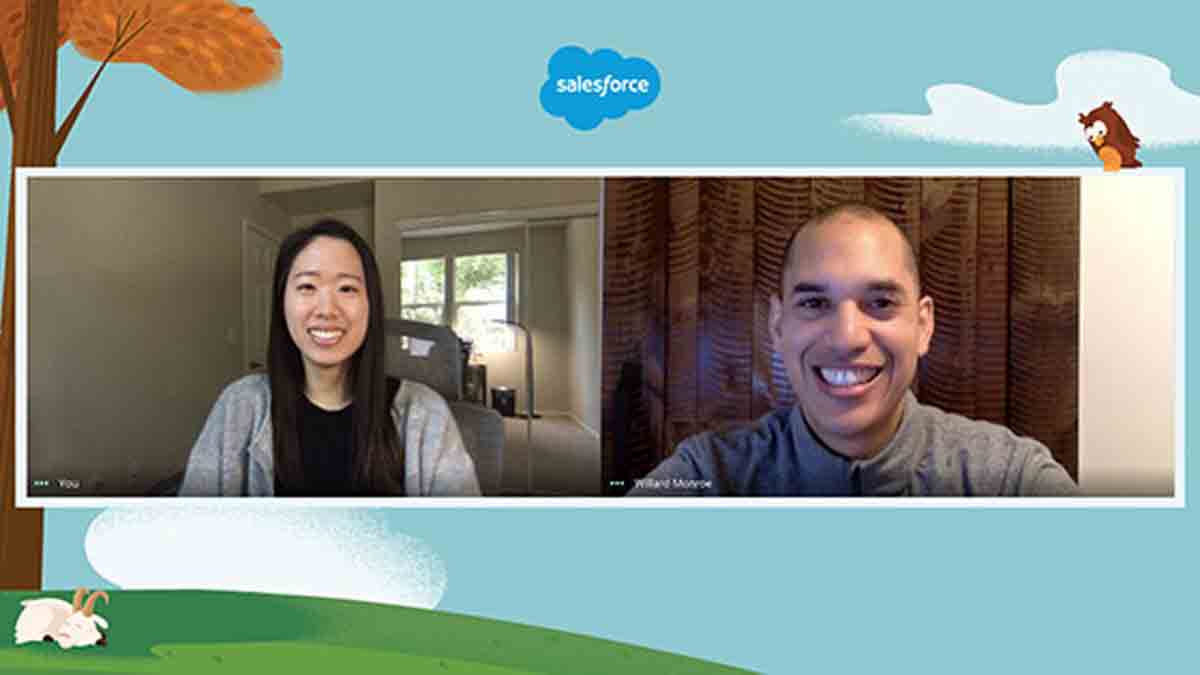

When Julia was looking for a mentor outside her solution engineering network, her manager suggested the Equality Mentorship Program. Julia was looking forward to being paired with a Salesforce leader who also identified as a member of an underrepresented group.
Julia and Willard were matched in the mentorship program, and they’d also met casually at a business event a couple years prior.
“I was excited to be matched with someone who’s extremely experienced in the realm of mentorship and equality,” Julia comments. “Willard is well known for his contributions to the Salesforce Equality Program.”
And she was a trifle nervous.
“I hadn’t had formal mentorship experiences in the past,” says Julia, “and wasn’t sure how to prepare. So, for my first meeting with Willard, I prepped as I would for an interview!”
Read on to benefit from Willard and Julia’s insights.
Finding Guidance in Support of Aspirations and Opportunities
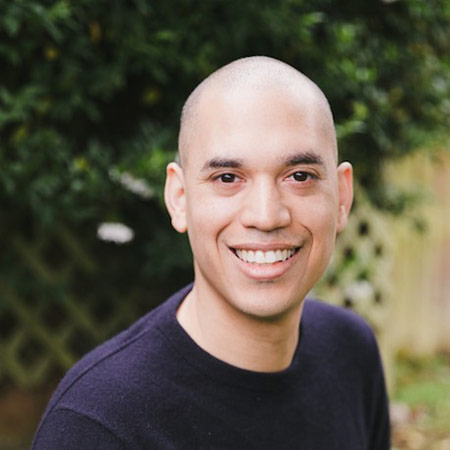
With nearly 10 years at Salesforce — much of that as a people leader — Willard has acquired significant mentoring experience. From his interaction with mentees, Willard believes most people are looking to mentors for general guidance, not to solve a specific problem.
“Many people want support during periods in their careers where there’s some ambiguity,” he explains. “It was that way with Julia. She had aspirations and saw opportunities. She wanted feedback and tactical actions on how she might move through those.”
Julia was looking for an outside perspective on her career journey.
It was another plus that Willard used to support Julia’s current Pardot team.
“I want to build my own long-term career at Salesforce,” Julia comments, “and Willard has been able to explore different functional business lines at Salesforce while progressing in his career.” In fact, Willard started his experience with Salesforce on the traditional sales track — growing from business representative, to account executive, and business development manager. After exploring another tech company, he boomeranged back to Salesforce to become Vice President of Sales for Pardot before entering his current role. He’s explored various roles that tap into his sales expertise.
Willard advises, “When you’re thinking about your career — consider the job after this job. Don’t be reactive to something right in front of you. Make sure it fits into a longer path and do some soul-searching to understand what that path is.”
The Joy of Growth
“I hold the act of mentoring close to my heart,” says Willard, “because I wouldn’t be where I am today without having had some really strong mentors in my life. There’s an innate joy in watching people grow.”
Of course, navigating that growth can often be challenging and uncomfortable.
“I’m going through a growth period in terms of developing interpersonal and leadership skills, which has been quite an adjustment,” Julia notes. “In consulting with Willard, I can express any frustrations on my career journey. Hearing his perspective is affirming and encouraging — it helps my emotional wellbeing.”
“Having that outlet gives you the ability to just get out of your own head,” agrees Willard. “That’s a lot of what mentorship is about. It helps give a more structured, guided path to the next thing.”
The Value of Mentoring
The recent Being Black in Corporate America report found that Black professionals have less direct access to senior leaders in their company than their white counterparts, 31% compared to 44%.
“Creating a workplace that reflects society where everyone feels seen, heard, valued, and empowered to succeed is important now more than ever,” points out Salesforce Equality Mentorship Program, Specialist Marcus Stevenson.
“I think an example of that,” Willard emphasizes, “is when somebody comes into an organization and they don’t see anybody that looks like them. It can be isolating.”
That isolation, in turn, can create self-doubt.
“If you have self-doubt, having a mentor who looks like you, and is further along in their career can balance that out,” he adds. “They’re showing faith in you. Someone’s telling you, ‘Yes, you can.’”
Willard’s dedication to mentoring led him to work with BOLDforce and the Office of Equality to create a mentorship program on the west coast for underrepresented groups.
“We had some great success,” says Willard, “building a foundation for retention and upward mobility. “It was the start of building the program that Marcus Stevenson has grown and formalized, which is now blessed all over the company.”
The Power of Reflective Listening
Often times, the most valuable thing you can do as a mentor isn’t to coach, guide, or advise.
“One of my good friends is a reflective listener who creates space for me to share my thoughts,” says Julia. “This helps me come to my own conclusions. I’ve always admired her for her ability to turn off ‘teaching mode’ and lend me time and space to organize my own thoughts.”
This emphasis aligns closely with Willard’s thoughts on what makes a good mentor.
“A lot of times mentorship is just letting people bounce ideas off you,” he says. “Then they reach a conclusion themselves on how to move forward. If you insert your point of view too soon, you aren’t helping them develop the skills to pivot in real-time when you’re not around.”
Sign up for our newsletter to stay in the know about upcoming jobs, tips to improve your work/life balance at your current job, and more!

Repot Yourself: The Secret to a Successful Career

I Waited Five Years to Join Salesforce and It Was Worth It

From a Microbiologist Turned Techie