careers
How to Build Your Personal Board of Directors at Work
June 1, 2022
Kaycee Oyama


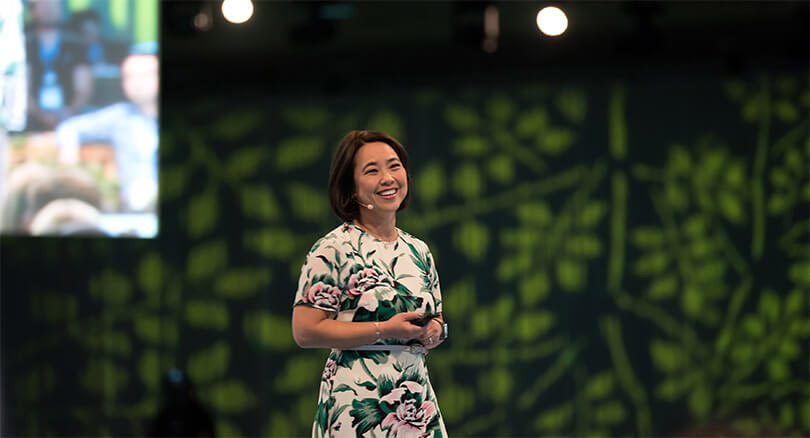
Vivienne Wei has led an inspiring and ambitious career, one that has taken her all the way to VP of Tech Strategy & Operations at Salesforce. Along the journey, she hasn’t hesitated to mentor and help those coming after her. A practice she learned from her earliest mentors — the first of which was her mother.
A first-generation emigrant from Shanghai, China, Vivienne ventured to the U.S. alone to study economics and mathematics at Dartmouth College, later trailblazing her way through Harvard Business School and Wall Street. Though she found herself in a foreign country, she was no stranger to hard work and determination. Since childhood, these were character traits she learned from her mom, who was a working parent and entrepreneur.
Vivienne is passionate about helping individuals realize their fullest potential in the workplace and community. As part of her commitment to Salesforce’s core value of equality, she serves as an executive sponsor for our Women in Engineering group. She’s also actively engaged in the Salesforce Women’s Network (SWN), our Employee Resource Group focused on amplifying the progress of women through professional and personal development, allyship, and more.
“I’m most proud of co-founding SWN’s Expecting at Work group with Vartika Vaish. Vartika and I built the group in order to support, retain, and promote working mothers at Salesforce.” This led to Vivienne’s first book, Labor Force, which provides actionable advice for expecting mothers to excel in the transition to motherhood and accelerate their careers. “Women represent a tremendous opportunity for our global economy to grow. It is our job as leaders to create the culture and systems to make it happen.”


Finding mentors, coaches, and sponsors
So, how did she build her personal board of directors? Vivienne mentions she reached out first and maintained those relationships over time. She says it’s something she’s worked on formally and informally, meeting people through mentorship programs and in trainings. “I've been paired up with product management and engineering leaders through mentorship programs — that's more of the formal approach. And informally, I seek advice from leaders with whom I work on various projects.”
Whether someone is a mentor, coach, or sponsor depends on the relationship that was built. Vivienne explains that mentors may be your manager or someone more senior — “the person who's a couple of steps ahead of you.” They help you navigate difficult situations and may not be someone you work with regularly, giving them a neutral third-party perspective.

Coaches are people who help you navigate your career. “A coach, in my mind, is somebody who would ask open-ended questions and help guide you through a situation.” On the other hand, Vivienne describes sponsors as those who “open doors and are willing to put their reputations on the line and speak for you when you're not in the room.”
Where to find a mentor

As a mentor herself, Vivienne has seen the impact of mentorship. “I have known one of my mentees well over a decade. She has grown from a fresh grad to an impactful leader with a family. I couldn’t be more proud to have been part of her journey.”
Watch the full video, “How to Find a Mentor,” with Vivienne and subscribe to Salesforce Careers & University for more employee stories.
Want to be the first to know about upcoming Salesforce news, events, and career opportunities? Join our Talent Community.
Transform your everyday.
Related

Senior Director, Technical Consulting Joe Alviani Returns to Salesforce

Stand in Your Potential: How Jessa Jennings Rose to RVP in Canada