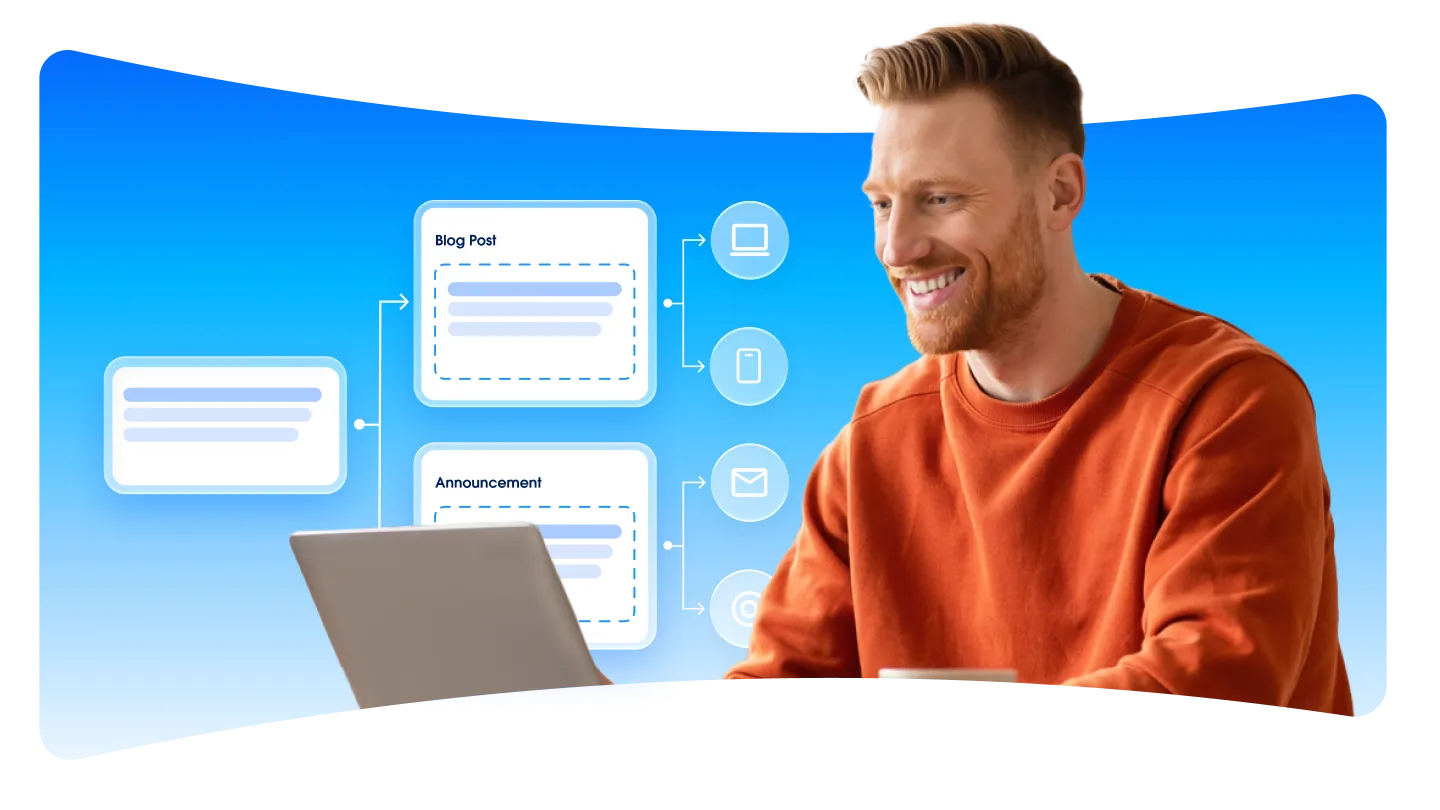
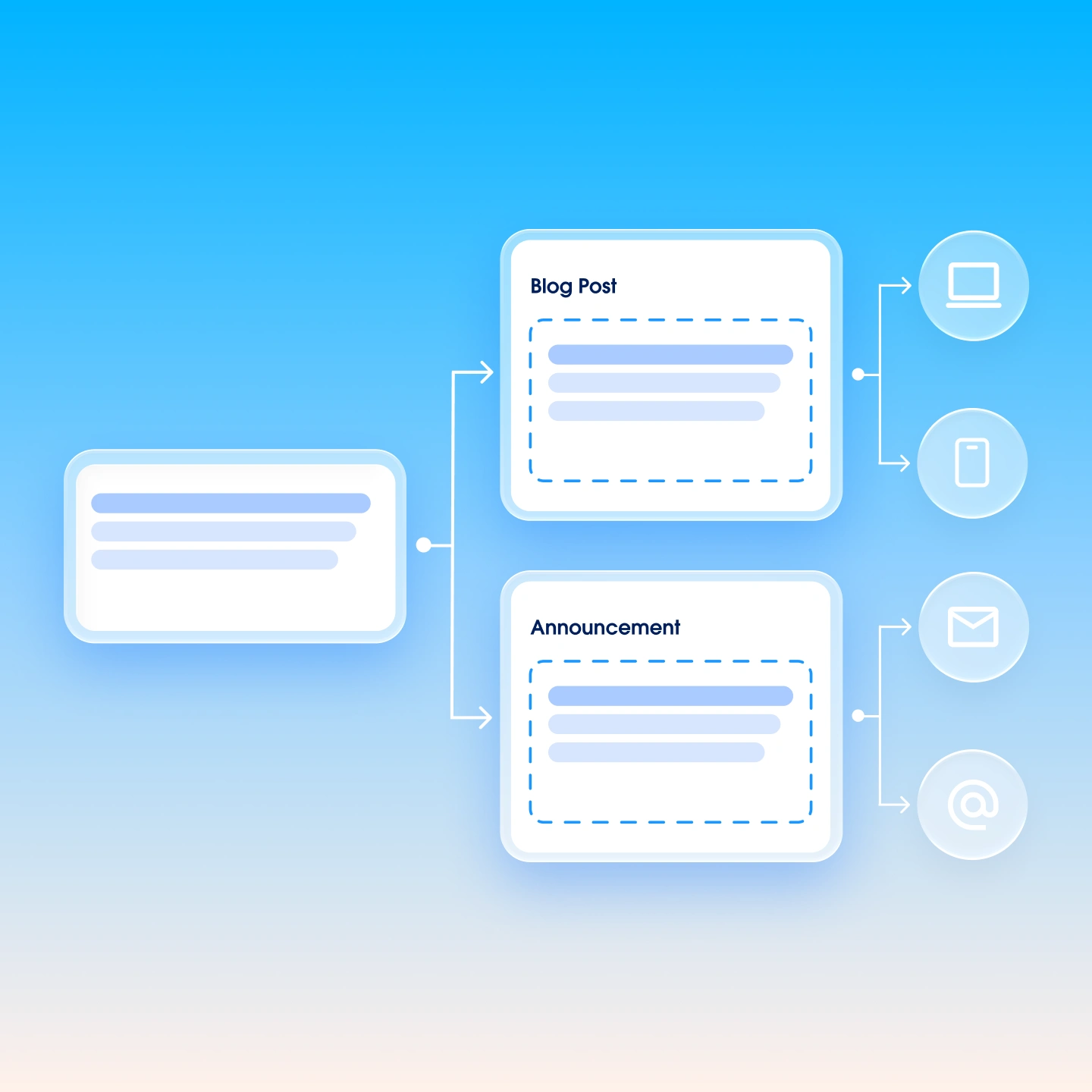
A headless CMS separates the content repository from the front-end Presentation layer. Content is stored as structured data and delivered via API, independent of how or where it will be displayed.
In a traditional content management system, content and Presentation live inside the same system. Change the content, and the template changes with it. A headless content management system puts an end to that dependency.
The term "headless" refers to removing the "head" — the front-end display layer — from the body of the CMS. What remains is a structured content repository that stores entries as data, independent of how or where they’ll be displayed. A developer’s front-end Application requests that content via REST APIs, GraphQL APIs (or both) and renders it according to its own design rules.
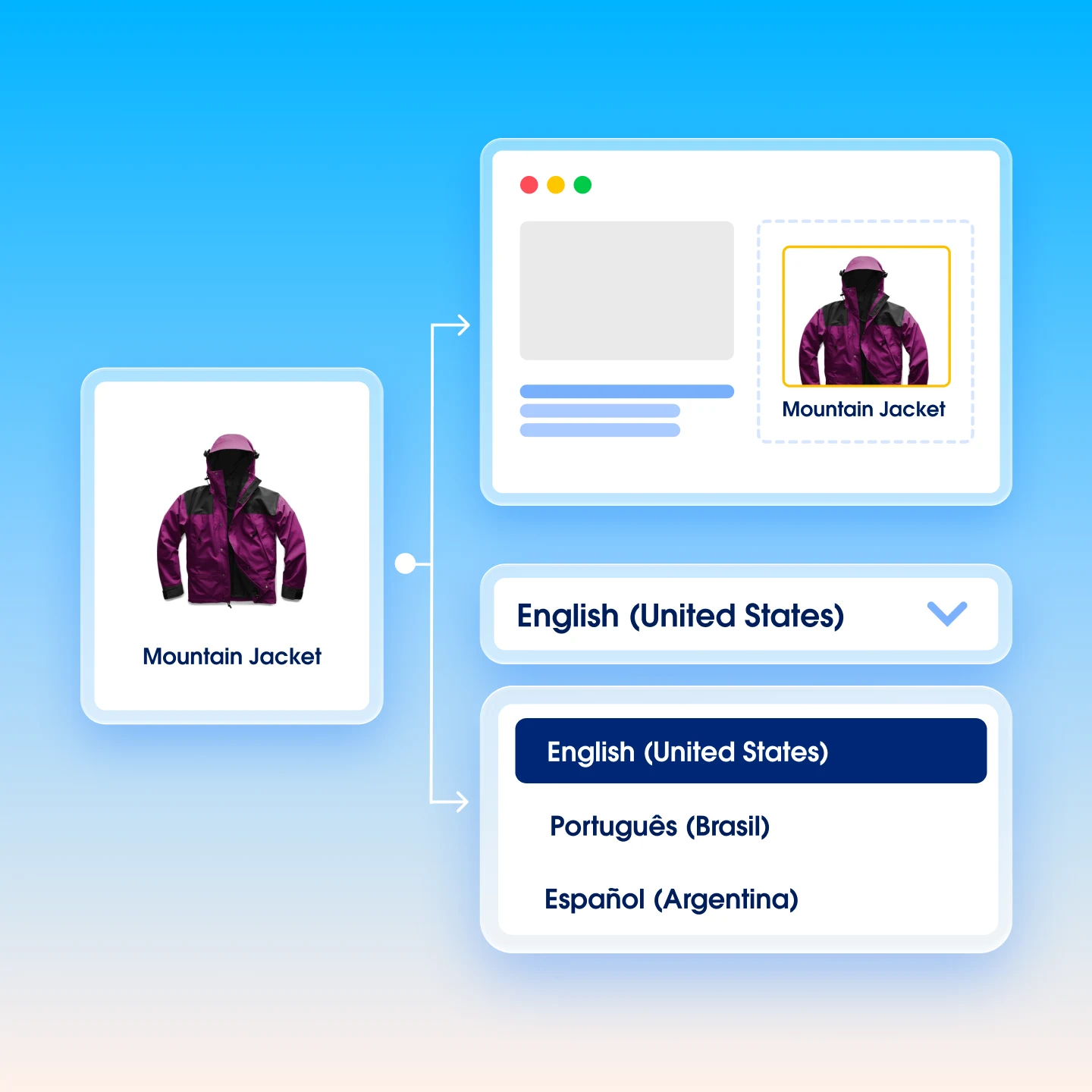
At the centre of any headless CMS is the content Model: a set of structured content types that define the fields, relationships, and formats for every entry. Because those types carry no visual assumptions, the same content entry can render differently depending on the channel consuming it.