Australian Service Leaders Lead on Customer-Facing AI Investment Despite Compliance Pressure

Key Takeaways
- More than three quarters (76%) of Australian service leaders have customer-facing AI as a top investment priority
- Globally, the use of AI agents in customer service has grown 1.7x in the last year
- Customer service professional are showing confidence despite despite regulatory requirements impacting AI deployments
Australian service professionals are prioritising customer-facing AI and showing higher levels of trust in AI agents, despite facing greater regulatory pressure than their global peers, according to new Salesforce research.
Three in four Australian service leaders (76 per cent) named customer-facing AI as a top spending priority for the next six months – closely aligned with New Zealand leaders (74 per cent) but 15 percentage points above the global average of 61 per cent and ahead of the US (68 per cent), the UK (56 per cent) and Canada (60 per cent).
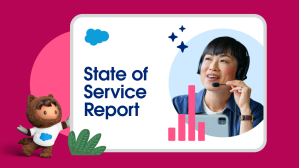
The State of Service: AI Agents Edition surveyed 3,075 customer service professionals globally, including respondents across Australia and New Zealand. The data shows local adoption rates are broadly in line with global averages, but Australia stands out in where organisations are directing budgets, how they perceive compliance risk, and how much they trust AI agents to handle more complex work.
Australian adoption of agentic AI is slightly ahead of global averages, with 13 per cent reporting it is already in use, compared with a global average of 12 per cent. A further 17 per cent of Australian respondents expect to adopt agentic AI within six months, versus 14 per cent globally.
By allowing AI agents to manage common enquiries and initial guest support, our teams can spend more time focused on personalised, high-value interactions that reflect the premium hospitality experience Journey Beyond is known for.
Madhumita Mazumdar, Executive General Manager, Technology, Journey Beyond
These findings build on the annual State of Service report, which found Australian service teams estimate 31 per cent of cases are already being handled by AI, expected to rise 60 per cent in 2027.
Globally, this new research suggests AI agents in customer service have reached a tipping point, with adoption rising 1.7x in a single year, from 39 per cent in 2025 to 66 per cent in 2026. Not only that, but 70 per cent of organisations using AI agents report measurable value within 60 days.
Australian organisations are also placing greater emphasis on measuring AI performance: 76 per cent track AI accuracy as a KPI, compared with 66 per cent globally, while 69 per cent track AI adoption rates, five percentage points higher than the global average. In New Zealand, 84 per cent of organisations track AI adoption rate as a KPI, 20 percentage points above the global average.
“Australia is redefining what responsible AI adoption looks like in customer service. While regulatory pressure is real, our local leaders are using it as a design constraint, not a roadblock, directing investment precisely where trust and accuracy matter most: in direct customer interactions,” said Leandro Perez, SVP and CMO ANZ, Salesforce.
“The fact that Australian service teams lead global benchmarks on AI trust and performance measurement, even as they operate under some of the strictest compliance conditions, tells you this market isn’t just adopting AI, it’s learning to lead with it.”
Compliance remains a stronger constraint in Australia
Australian service organisations are navigating a unique tension between strict compliance and aggressive adoption. While regulatory requirements constrain AI deployment for 83 per cent of local professionals (well above the 68 per cent global average), trust in the technology remains remarkably high. Australians lead global benchmarks in trusting AI agents for complex troubleshooting (80 per cent vs. 70 per cent) and sensitive requests (74 per cent vs. 65 per cent), even as they manage heightened security concerns (75 per cent vs. 70 per cent) and a sharper focus on performance measurement than their international peers.
In New Zealand, 74 per cent of respondents also cite regulatory hurdles, while 47 per cent report AI agents have full access to sensitive data, significantly higher than Australia (32 per cent) and the global average (28 per cent). But the same level of confidence in agentic AI is also present; 80 per cent trust AI agents for complex troubleshooting and 76 per cent for sensitive requests, two points higher than Australia.
Human oversight and workforce planning
In parallel, workforce changes are also underway, with 47 per cent of Australian service organisations adjusting workforce planning in response to AI, and a further 48 per cent planning changes. As many as 63 per cent of Australian service teams using AI say they already spend more time supervising AI than handling simple customer requests, and 67 per cent expect this to increase in the next six months.
Australian service reps also report higher rates of upskilling activity than the global average: 65 per cent said they had taken on more complex or strategic work in the past year, compared with 50 per cent globally with AI architect (67 per cent), specialist (66 per cent) and data management roles (63 per cent) the top areas of expected growth.
AI agents in action: Journey Beyond
Journey Beyond, one of Australia’s leading travel and experiences businesses, is already seeing the impact of AI agents on its customer service operations across its portfolio of brands.
“At Journey Beyond, our approach to Agentforce is centred on improving the guest experience while providing scalable, always-on support across our brands. We now have four AI agents live across multiple brands, supporting thousands of guest conversations and extending service availability beyond traditional operating hours,” said Madhumita Mazumdar, Executive General Manager, Technology, Journey Beyond.
Explore Further:
- Read the full State of Service report
- Find data on AI agents and more in the Salesforce Stat Library
- Learn why Limitless Service is the new operating model for growth in the agentic era
- Hear firsthand how service leaders deploy AI agents and measure results in the State of Service: AI Agents Edition webinar.
Methodology: Data in this report are from a double-anonymous survey conducted from 9 March to 4 April 2026. The survey generated 3,075 responses from service professionals across North America, Latin America, Asia-Pacific and Europe, including 275 respondents from Australia and 50 from New Zealand. For more demographic information, please refer to the report.