Asset-Light, Impact-Heavy: Inside Salesforce’s Approach to Reduce the Environmental Footprint of AI Growth
Key Takeaways
- Salesforce embeds sustainability in its procurement strategy by setting ambitious expectations for suppliers and partnering across the value chain.
- Deploying right-sized AI models and zero-copy architecture eliminates massive amounts of energy and data waste.
- AI-driven tools can provide near-instant visibility into emissions and water usage to enable proactive environmental action.
Driven by the rapid acceleration of AI, global data center demand is expected to more than triple by 2030, heavily straining power grids and increasing data center water consumption by an estimated 170%. This significant environmental impact is compelling technology leaders to overhaul their energy strategies and ask tough questions.
“Beyond today’s energy use, the concern is the projected ‘hockey stick’ growth in demand and whether it will outpace clean energy,” said Sunya Norman, SVP of Impact at Salesforce, who leads the company’s AI sustainability strategy.
As AI infrastructure, models, and measurement standards are evolving rapidly, the industry is still learning what it will take to scale AI more sustainably. Salesforce has developed a preliminary approach to AI sustainability that continues to evolve alongside the technology itself — informed by collaboration with cloud providers, researchers, and customers.
Given that sustainability is a core value at Salesforce and the company has committed to achieving science-based targets, working to reduce its environmental impact is an important priority. While Salesforce doesn’t directly operate data centers, it’s leveraging its position in the value chain to help reduce impact across layers of the stack, including procurement, compute efficiency, data intelligence, data architecture, and water stewardship.
1. Working together to build a sustainable value chain
Salesforce hosts its cloud infrastructure, Hyperforce, on public providers like Amazon Web Services (AWS) and Google Cloud Platform (GCP). Because Salesforce doesn’t operate the physical facilities, emissions from these processes are considered indirect, or scope 3. This means decarbonizing the work depends on supplier influence rather than direct operational control.
“This isn’t only an environmental issue. It’s also a business and community one. Companies need to be thinking now about how to manage demand, improve efficiency and transparency, and support the transition to clean energy so innovation can scale responsibly,” Norman said. “We see our role as helping bring the ecosystem together, working alongside partners across the supply chain so we can collectively make progress that none of us could make alone.”
That orientation drives a shared responsibility model that uses several tools, from contractual mechanisms to direct collaboration with providers. As a major cloud customer, Salesforce works closely with its partners to encourage greater efficiency at both the facility and compute levels, using its procurement relationships to help advance broader industry progress.
The collaboration tends to find natural alignment. Public cloud providers carry their own ambitious sustainability commitments, which gives both sides reasons to work through specifics as a team.
“We use these deep relationships to drive change together,” said Amanda von Almen, Senior Director of Sustainability Intelligence and Decarbonization at Salesforce. “We mutually align and work together on shared goals such as data centers powered by 100% renewable energy, reducing water use, and using efficient hardware.
2. Right-sizing AI models to the task at hand
The prevailing enterprise instinct is to throw massive, energy-intensive AI models at every problem. Salesforce counters this with “smart demand” — strictly calibrating model size to the specific task. Doing this reduces the load on individual data centers, as compute demand is the upstream constraint that drives downstream energy use in data centers.
In collaboration with Hugging Face and academic partners, we subsequently parlayed this work into creating the AI Energy Score, a standardized Energy Star-style rating system that measures the power consumption of AI models during inference. Real-time rankings are displayed on a public leaderboard; the goal of this metric is to provide transparency that helps organizations choose more sustainable and cost-effective models.
“Where possible, we use right-sized LLMs to avoid wasting money and emissions on oversized models,” said Eric Gertsman, Director of Tech Sustainability at Salesforce. Within the Agentforce Trust Layer, Salesforce has fine-tuned smaller, more efficient models — ranging from 44 to 135 million parameters — for targeted tasks like data masking. These precision models can operate up to 99% more efficiently than massive frontier large language models (LLMs).
Additionally, Salesforce’s new Hyperforce cloud architecture drives an estimated 40% increase in operational efficiency due to super-efficient data center facilities, cutting-edge IT hardware, and operational flexibility.
This infrastructure rigor extends to software development itself. Salesforce’s engineering organization is defining computer code efficiency metrics and setting annual targets to streamline the products that run on the cloud. The company also operationally deploys AI to predict server loads and resolve bottlenecks, embedding sustainability into every layer of the tech stack.
3. Powering real-time action with technology
One of the biggest challenges of applying sustainability principles in decision-making is backward-looking and stale data. Salesforce flips this reactive model with its sustainability intelligence program, built on years of rigorous data centralization, and commitment to being Customer Zero of Agentforce Net Zero.
Salesforce started with automating key parts of the carbon accounting process by leveraging the platform’s capabilities to run emissions factors calculations, data gap filling, and data integrations. This investment reduced its time spent collecting data by over 40% and reduced its need for consultants, reducing spend by 37%. The investment in automated data centralization and Salesforce technology meant that it’s been able to deploy machine learning to process millions of rows of carbon, energy, and water data in near real time and integrate that into its decarbonization motion.
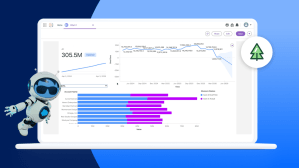
Salesforce’s Agentforce Net Zero product has numerous capabilities that help sustainability teams streamline reporting, boost efficiency, and enable forward-looking strategic action through prebuilt agent topics and actions.
4. Treating zero-copy architecture as a sustainability tool
Enterprise AI faces a massive data movement problem. Executing complex models requires transferring large datasets to the compute source, a process that burns significant power and creates immense storage redundancies. Salesforce tackles this inefficiency through its Hyperforce platform and zero-copy architecture, which brings the intelligence directly to the data and can reduce the compute cycles required in downstream data center processing.
By integrating with external data sources in place, Salesforce neutralizes “data gravity,” the slow, expensive, and risky process of migrating massive datasets. “The value is in being able to bring all of these different sources of data together and not requiring that the data be migrated or copied,” said Paul Constantinides, EVP of Engineering at Salesforce.
Eliminating redundant storage instantly reduces the energy required to process duplicate data. This approach delivers distinct enterprise value: Chief information security officers reduce their threat exposure, while chief sustainability officers shrink their computational footprint.
Beyond storage efficiency, Hyperforce’s regional architecture unlocks another powerful climate lever: spatial and temporal workload routing. Salesforce is actively developing capabilities to shift nonurgent AI workloads to off-peak hours or regions with abundant wind and solar resources.
“AI is particularly well suited to perform tasks that are temporally and spatially flexible,” noted Gertsman. To accelerate this dynamic balancing, Salesforce works closely with its Hyperscale partners and actively invests in early-stage grid intelligence companies such as Base, Crusoe, Emerald AI, and WeaveGrid, betting that tomorrow’s infrastructure will autonomously optimize when and where it draws clean power.
5. Building a scalable water program
Data centers also depend on water-intensive cooling systems and power grids, which rely on regional water availability. This is why freshwater scarcity has become a more central focus in infrastructure discussions.
As AI infrastructure demand accelerates, the industry response should be increasingly focused on strengthening community relationships, water stewardship, and supporting long-term resource resilience in the regions where this infrastructure operates.
Sunya Norman, Salesforce’s SVP, of Impact, Salesforce
Norman noted, “While the global footprint is still relatively small, data center impacts can become very significant at the local level. As AI infrastructure demand accelerates, the industry response should be increasingly focused on strengthening community relationships, water stewardship, and supporting long-term resource resilience in the regions where this infrastructure operates.”
That’s why Salesforce expanded its Nature Positive Strategy to include a dedicated water program, focusing on resilient data centers, power supplies, and watersheds.
As part of this initiative, the company is establishing sustainable water withdrawal and discharge expectations for its priority facilities. Furthermore, Salesforce tracks the comprehensive water footprint of its cloud infrastructure, accounting for both the direct water used in server cooling systems and the indirect water consumed by regional power grids.
Fundamentally, Salesforce treats local water depletion as a direct threat to business continuity. To mitigate this risk, the company pushes public cloud partners to adopt closed-loop cooling and recycled water systems while actively investing in regional water health. Where industry measurement standards lag, Salesforce co-develops shared reporting frameworks with providers or builds proprietary models to fill the data gaps, helping strengthen environmental transparency and accountability as AI infrastructure scales.
The broader picture
These focus areas are deeply interconnected. Collaborating with partners, surfacing real-time intelligence, and managing localized water footprints demand pristine, centralized data. Likewise, right-sizing AI models, deploying zero-copy architecture, and shifting workload require rigorous, systemwide engineering discipline.
Together, they illustrate how sustainability considerations are increasingly being embedded into how Salesforce builds and operates technology.
As AI adoption accelerates, Salesforce sees sustainability as an important part of building trusted AI. While the technologies and standards will continue to evolve, the company believes improving efficiency, increasing transparency, and supporting cleaner infrastructure will all play an important role in reducing environmental impact over time.
Go deeper:
- Learn more about Salesforce’s AI approach through its AI Sustainability Outlook
- Explore a three-step guide to starting and scaling an AI sustainability strategy
- Read more about Salesforce’s Nature Positive Strategy