
When a hot lead goes cold, it’s rarely because your product wasn’t right for them. It’s because someone forgot to follow up, a quote sat in someone’s inbox for three days or your team spent more time searching for the last customer conversation than actually having the next one.
If you’re serious about growing your business, you need your sales team selling — not chasing context across a dozen tools. But did you know that when you pair Slack with a customer relationship management (CRM) system, the sales can become more connected? Here’s how Slack and CRM for sales teams works in practice and why it’s one of the best investments a lean business can make.
What CRM and Slack for sales actually mean together
Most people think of Slack as a messaging app. But paired with Starter Suite, Slack becomes the place where your CRM continues to grow. Customer data, deal status, follow-up actions — all of it connects right where your team already works.
According to our latest research, 88% of SMBs are engaging with artificial intelligence (AI) and 74% say their AI investment has generated strong ROI. The businesses seeing those returns aren’t buying more tools — they’re connecting the ones they have into a single, smart system. That’s exactly what Slack and CRM do together.
Why your sales cycle has a collaboration problem
The most common reason deals stall isn’t a pricing objection or a tough competitor. It’s internal friction. A rep can’t get a custom quote approved. A manager hasn’t got the full picture going into a call. Two teammates are working from different versions of a customer record.
Salesforce research on SMB sales found that administrative bottlenecks — not lack of effort or skill — are the real drag on sales productivity. When your team is scattered across email threads, shared docs and disconnected apps, every deal takes longer than it should. Slack and CRM solve sales management problems at the source by keeping everyone on the same page, literally in the same channel.
FREE WEBINAR:
How Salesforce customer Go1 sells faster and closes smarter with Sales Cloud in Slack.

How Slack and Agentforce are connecting sales cycles
Sales Cloud is a tool that businesses can use to amplify their pipeline. Slack is a connective tool that pulls it all together. Imagine what they can do together.
Your CRM updates itself
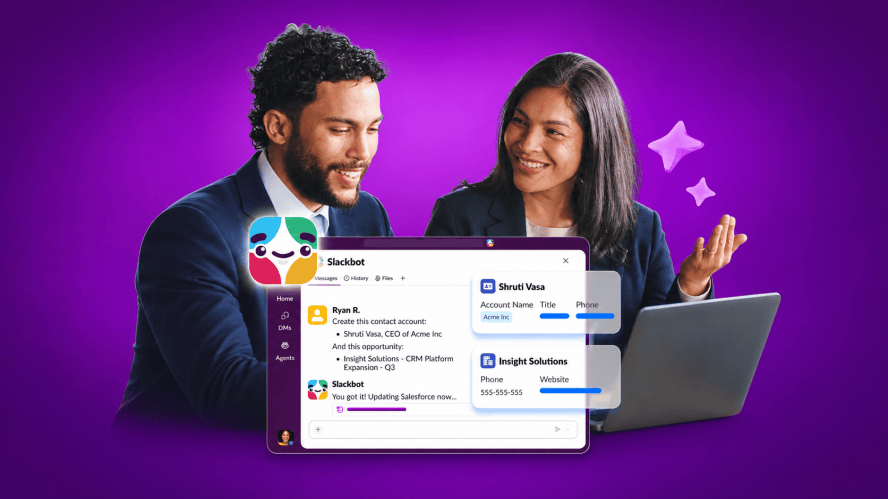
Slackbot captures what happens in calls, messages and meetings, then logs it directly to your CRM — no manual entry required. Ask it to add a contact, update a deal stage or pull a pre-call brief and it handles it in seconds. That means your pipeline stays accurate even on the days nobody has time to be admin.
Deal rooms that keep everyone aligned
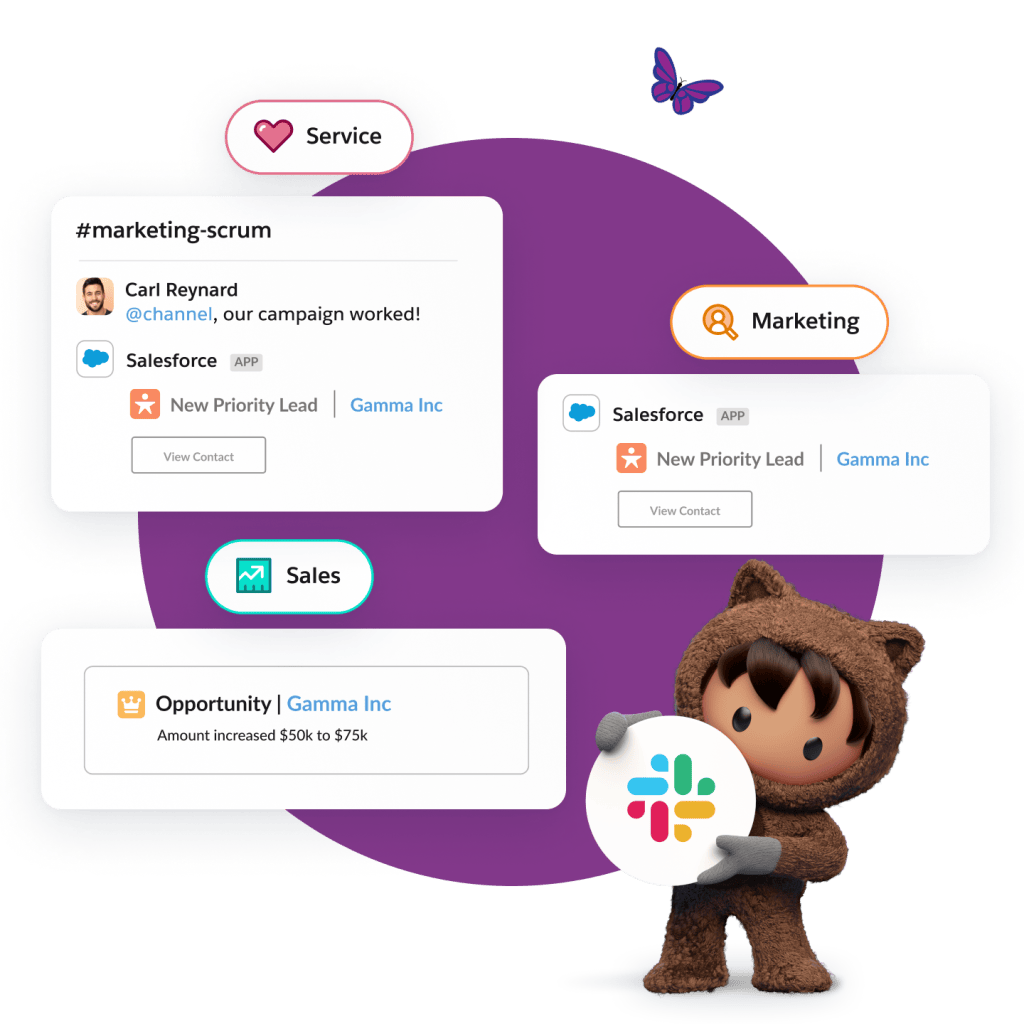
You can create a dedicated channel for every major opportunity — a centralised space where sales, service and marketing stay in sync on the same account. No more “did you see my email?” moments. The full deal history lives in one place, accessible to everyone who needs it.
Approvals that don’t kill momentum
One of the biggest bottlenecks in a small business sales cycle is getting approvals — for customised pricing, legal review or finance sign-off. With workflows, you can automate those requests so the right person gets notified instantly and can respond in the same place your team is already working. A deal no longer has to wait two days for a quote to get greenlit.
Faster follow-through after every conversation
The moment a call ends, Slackbot delivers a structured summary — decisions made, next steps and actions logged — directly into Slack and your CRM. Nothing falls through the cracks because nothing depends on anyone remembering to write it down.
Slack CRM: Simplicity of Slack. Power of Salesforce.
Meet your new conversational AI CRM. Run your entire business in Slack, with the power of Salesforce.
CRM + Slack: A new way to run your growing pipeline
If you’re still relying on spreadsheets, sticky notes or a CRM that only gets updated on Fridays, you’re leaving deals on the table. A CRM turns your everyday conversations into a living sales record — one that tracks every customer interaction, surfaces the right context at the right moment and keeps your team moving in the same direction.
The businesses winning right now aren’t the ones with the biggest teams — they’re the ones who’ve built a system where nothing gets dropped. That’s what Agentforce and Salesforce make possible for SMBs today: a sales operation that works as hard as you do, right inside Slack.

For a limited time, get 55% off Sales Cloud in Slack with digital teammates. Learn more here.
Terms and conditions apply. Offer available through 31 January 2027.
Start using CRM and Slack together to close deals faster
If your sales cycle is slower than it should be, the fix probably isn’t more effort — it’s better infrastructure.
Get started with Starter Suite for free or activate Foundations to try out Agentforce today.
AI supported the writers and editors who created this article.
What is Slack CRM and how does it work for small businesses?
Slack CRM brings customer relationship management functionality directly into Slack, so your team can manage contacts, track deals and log customer interactions without switching tools. With Salesforce Starter Suite, everything is connected from day one — your conversations automatically feed your CRM and your CRM data surfaces where you need it most.
How does Slack CRM help speed up a sales cycle?
By centralising deal information, automating approvals and keeping follow-ups from slipping, Slack CRM removes the internal friction that slows most sales cycles down. Your team spends less time tracking down context and more time actually moving deals forward.
Is Slack CRM for startup sales teams a realistic option?
Absolutely. Salesforce is designed for lean teams — it takes minutes to set up and requires no dedicated admin to maintain. Startups especially benefit because Slackbot handles the busywork (logging notes, updating records, drafting follow-ups) that would otherwise fall on whoever has a spare five minutes.
What’s the difference between Slack and Salesforce Suites?
Slack is the communication and collaboration platform where your team works every day. Salesforce is the CRM layer that shops your customer data, automates your sales process and powers AI-driven insights. Together, they give you a complete sales operating system. Learn more on the Salesforce small business blog.
What is Agentforce Sales in Slack?
These tools integrates autonomous AI agents directly into your workspace to assist sales teams. These AI agents handle routine tasks such as prospecting, updating CRM records, summarising deal progress and executing automated workflows, allowing reps to focus on building customer relationships and closing deals faster.