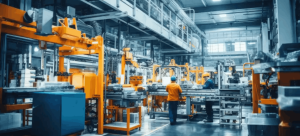



In a bid to turn India into a $1 trillion manufacturing export economy, factories are becoming smarter and more agile. Digital twins are being used to simulate production lines and processes, so that bottlenecks can be identified and fixed faster. Predictive analytics are spotting equipment failures before they occur, reducing costly downtime.
Meanwhile, sensors and IoT platforms are tracking machine performance in real time to boost operational efficiency. And soon, robot dogs may be found traversing the production environment to transport, inspect, and sort materials.
But success in manufacturing isn’t limited to the shop floor. It extends into the front-office through functions like sales, service, and partner engagement.
- Sales teams need to understand customers in-depth, and collaborate seamlessly with operations teams to drive revenue growth.
- Service teams – from the contact centre to field technicians – need to provide faster support and more predictive maintenance services to boost customer loyalty.
- Dealers and distributors need to have real-time inventory, warranty, and customer data at their fingertips to perform effectively.
How do you achieve these objectives?
Through a complete transformation of the value chain:
- From manual workflows → to end-to-end automation
- From fragmented systems → to connected platforms
- From plant-centric thinking → to customer-centric operations
- From reactive decisions → to real-time intelligence and predictive insights
- From transactional relationships → to personalised customer engagement
Breaking that down even further, here are 3 critical priorities that manufacturers in 2026 and beyond need to be focusing on:
1. Modernising commercial operations
| The challenge | The shift |
| Margin erosionRevenue leakageLost profits | Eliminate silos between sales and operationsManage the complete book of business in one placeUnify customer data on one platformModernise selling with AI + automationStreamline revenue management |
2. Transforming the service experience
| The challenge | The shift |
| Reactive supportDelays between contact centre, service ops, and field teamsLimited customer visibility | Enable connected service with a unified platformUnlock trapped customer, distributor, and product data with a single source of truthPersonalise field service, optimise service scheduling with AIProvide omnichannel support to customersBoost service productivity with hyper-automation |
3. Simplifying partner engagement
| The challenge | The shift |
| Limited dealer and distributor visibilitySlow partner onboardingFragmented data on products, categories, and catalogues | Give partners easy access to the data they need Speed up onboarding and approvals with automationCollaborate with partners on sales and forecastingBuild a single source of truth on partner performanceSimplify order fulfilment through a connected partner portal |
How 5 manufacturing Trailblazers are putting these priorities into action
Our newest playbook features five manufacturing Trailblazers that have transformed and connected their manufacturing value chain. Read their stories for proven tips on how to modernise commercial operations, transform service experiences, and simplify partner engagement.
- Penna Cement digitised sales processes from end to end
Impact: 15% increase in sales, 20% increase in efficiency - JSW Steel built 120+ APIs that integrate up to 32 systems
Impact: Faster order processing, seamless customer experiences - Tata Power Solaroof automated customer service
Impact: 58% reduction in field service TATs - JK Cement replaced 12+ channel partner apps with one platform
Impact: Simpler engagement with 10,000+ channel partners and 1.5 lakh influencers - Godrej & Boyce built a 360-degree customer view across 10 business units
Impact: More consistent customer engagement
The modern Manufacturing Playbook: Lessons from Five Industry Trailblazers