


India’s mutual fund industry has had a remarkable decade. Monthly SIP inflows have grown nearly fourfold, from approximately ₹8,500 crores in early 2020 to over ₹32,000 crores today. Retail investor participation is deepening well beyond India’s major metros, driven by smartphone penetration, digital onboarding, and rising financial awareness. The growth story is real.
But the harder story is what happens next: when the investor who joined easily also expects to be served well, engaged relevantly, and retained intelligently. The AMCs that will define the next decade are not just those who captured the SIP wave. They are those who built the relationship infrastructure to sustain it.
The Personalisation Gap in Indian Asset Management
India’s mutual fund investor today is not who they were five years ago. Frictionless KYC, digital platforms, and the normalisation of investing beyond Tier 1 cities have brought in a new generation of retail participants: younger, more mobile-first, more informed, and with expectations shaped not by financial services convention but by the consumer experiences they have with Amazon, Swiggy, and Blinkit.
The implication for asset managers is significant. Leading with fund performance is no longer sufficient differentiation. An investor who can compare NAVs with two taps on their phone does not stay because of historical returns. They stay because the AMC understands them: their life stage, their risk behaviour during a market correction, their SIP pattern, and when to reach out versus when to wait.
n a recent episode of the Great India Industry Transformation podcast featuring Nippon Life India Asset Management Limited, Smita Jain, RVP, Sales at Salesforce India, notes that the conversation across the industry has moved toward lifetime value thinking: “How can I help an investor for every life event of theirs, or every goal of theirs, or every risk profile of theirs.” Asset managers still leading with products will find that ground shrinking fast.
The Data Problem at the Heart of Investor Relationships
The challenge most AMCs face is not a lack of investor data. It is a lack of connected investor data. A relationship manager preparing for a client meeting might know their portfolio but not that they raised a service ticket last week, or that their redemption behaviour during the last correction flags elevated churn risk today. The commercial consequences accumulate: missed cross-sell windows, reactive retention conversations that arrive too late, and an investor experience that feels generic when it needs to feel personal.
Abhijit Shah, CTO at Nippon Life India Asset Management Limited (NAM), identifies the root cause: “isolated systems which are not really talking to each other efficiently, and because of which at times we had data inconsistencies, [and lack of] availability of data in real time for our business.” For an organisation managing large volumes of investor relationships across institutional, retail, urban, and rural channels, that gap is not just an operational inconvenience. It is a ceiling on how intelligent any customer interaction can be.
Building the Unified Investor View
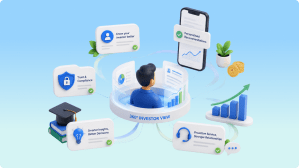
NAM’s transformation began with the fundamental question of what it would mean for every relationship manager, service agent, and operations team to simultaneously work from the same view of the investor. That required moving from a fragmented CRM setup to a unified platform connecting sales, service, operations, and analytics in one place.
Agentforce Sales now gives RMs a 360-degree view of distributors and investors: past investments, portfolio performance, redemption trends, and engagement history, all surfaced before a single conversation begins. Agentforce Service handles case management with full investor context available to every agent. Tableau, where approximately 600 to 700 users already work daily, is embedded directly into the platform so analytical views are available without switching systems.
The impact on data availability was immediate: NAM made real-time decision-making possible for teams that had previously worked from overnight batch reports. And this reduced processing time from 12 hours to one hour.
What Relationship Intelligence Enables at Scale
A unified investor view changes what relationship managers can do, and at what scale. Rather than prioritising conversations based on instinct or relationship history alone, RMs now receive AI-powered nudges that surface the right action at the right moment. Shah describes the mechanism: “Whenever a relationship manager gets into a portfolio view or any report, the first thing he sees is the call to action. There are four, five things that he needs to immediately act upon. Not analysing the report himself. The report is already there. It is already analysed. Now it is time to take action.”
That shift from analysis to action changes the productivity ceiling for a relationship manager handling not 10 or 20 but hundreds of investor accounts. An investor who has not logged into the system for 60 days, unusual for someone who typically checks weekly, triggers a proactive nudge so the RM can engage before disengagement becomes a withdrawal. Shah notes that a visible productivity lift is already apparent six months into the journey.
AI in a Trust-Sensitive Industry
In asset management, AI is not primarily a productivity question. It is a trust question. Every model that surfaces a recommendation, every agent that suggests a next best action, operates in an environment where the stakes are an investor’s financial security.
NAM’s approach to responsible AI reflects this directly. Data privacy, explainability of model outputs, reliability of results, and system security are not only compliance checkboxes. They are the conditions under which investors permit an AMC to act on their data at all. SEBI’s tightening of oversight on fair practices and expense disclosures adds a regulatory layer that makes governance infrastructure a legal prerequisite, not just best practice.
Jain frames the non-negotiable: every consequential decision will have a human in the loop. That is not a constraint on what AI can do in financial services. It is the framework within which AI’s potential in this sector can actually be realised and sustained.
The AMCs building this foundation today, unifying data, empowering relationship managers, and deploying AI within accountable governance structures, are not preparing for a future still years away. They are building the advantage that will separate the leaders from the rest of the field in this decade.
To hear how Nippon Life India Asset Management Limited is navigating this transformation, from data foundation work in 2021 through a unified platform and toward an agentic AI roadmap, listen to the Great India Industry Transformation podcast episode featuring Abhijit Shah, CTO, Nippon Life India Asset Management Limited, and Smita Jain, RVP, Sales, Salesforce India.