



Key Takeaways
Retail distribution in India did not become jugaadu (shortcut-driven) by accident. For years, shortcuts were the most rational way to operate.
General trade scaled through informality. Relationships substituted for systems. Local judgement filled gaps where data arrived too late to be useful. In a market shaped by fragmented routes and around 13 million kirana stores, this approach helped organisations move faster than their formal processes allowed.
And for a long time, it worked.
What changed was not intent. What changed was scale, frequency, and volatility.
What changed in distribution economics?
Distribution today operates under very different conditions.
Assortments have expanded. Promotion cycles have shortened. Secondary sales signals now arrive continuously rather than periodically. Distributor networks have grown more layered, with more actors involved in every decision.
As a result, the number of decisions has increased sharply, while the useful life of each signal has shrunk. At this point, shortcuts cross a tipping point. They stop being situational responses and become the default way the organisation copes with complexity.
This is where problems begin to surface as variance, when execution no longer behaves consistently across the network.
- Variance in allocation.
- Variance in availability.
- Variance in promotion execution.
- Variance in response time.
How shortcuts create variance that erodes loyalty
Shortcuts introduce lag, distortion, and inconsistency into the system. Allocation decisions drift. Promotions land unevenly. Stock availability varies by region and timing. Reporting closes after the window to act has already passed.Operational research offers a helpful parallel here. According to studies in Queueing Theory, in systems operating close to capacity, small delays do not remain small. They cascade. Waiting times increase non-linearly, and recovery becomes expensive.
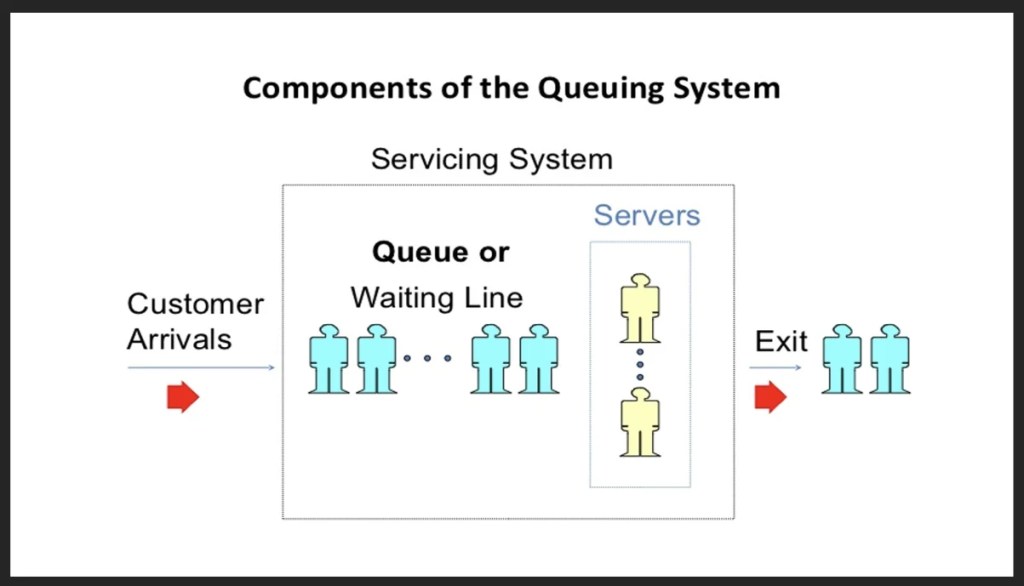
Distribution networks behave in much the same way. Minor mismatches between demand signals and decisions compound quickly when volumes are high and margins for error are thin.
Shoppers do not experience your internal complexity. They experience empty shelves. Retailers do not see coordination challenges. They see unpredictability.
Dissatisfaction costs a sale. Inconsistency costs loyalty.
Did you know: 44% of Indian shoppers switch retailers when a product isn’t available, and 31% pick another brand altogether.
Why visibility alone no longer fixes the problem
For years, the default response has been more visibility. Better dashboards. Faster reports. More frequent reviews.
But visibility saturates attention quickly. Complexity has grown beyond what human coordination can reliably absorb through meetings and dashboards alone.
Adding more information does not reduce the number of decisions that need to be made. At a certain point, it increases noise rather than control.
What is missing is not data.
What is missing is institutional judgement. The ability to decide where to act, when to hold, and when to escalate, consistently and at scale.
How Agentforce supports a new operating model for Indian retailers
Fixing shortcuts is not about eliminating informal behaviour. It is about removing the need for it by redesigning how signals turn into decisions across the retail network.
A connected operating model needs three things:
- A shared operational picture across the ecosystem
At scale, distribution requires alignment across planning, sales, and partner execution. That alignment depends on a continuously reconciled view of distributor inventory, secondary sales, scheme performance, route execution, and sell-through, not as separate reports, but as a unified operating layer.
This enables allocation decisions to reflect live demand signals rather than historical patterns. It allows promotion performance to be evaluated against stock movement in near real time. It ensures that distributors and internal teams act on the same demand context, reducing mismatches between planning intent and field execution.
Agentforce for Consumer Goods supports this by bringing execution, partner collaboration, and performance visibility into one workspace, so teams and distributors work from the same numbers rather than parallel spreadsheets and message threads.
- Consistent responses to routine situations, and early surfacing of exceptions
Most distribution variance does not require leadership intervention. It requires clear, predefined responses that activate automatically when certain thresholds are crossed.
This means defining guardrails for replenishment triggers, scheme adjustments, stock rebalancing, and route-level follow-ups. It also means separating normal day-to-day variation from deeper structural issues, so managers focus their attention where it truly matters.
AI agents powered by Agentforce can monitor shifting patterns at the SKU- and distributor-level, flag deviations, and recommend actions within defined guardrails. As a result, routine follow-ups and exception handling do not depend on manual consolidation or individual memory.
- A reduction in coordination load, not just more reporting
Consistency in the field depends on reducing coordination gaps between planning, sales, and distributors.
This includes aligning scheme eligibility with current inventory, ensuring route plans reflect current priorities, aligning order capture with allocation updates, and feeding execution outcomes back into planning without delay.
This is where agentic AI matters. Field actions update central visibility in real time. Distributor movements inform planning logic continuously. It absorbs the repetitive work that drains teams, and it protects attention for decisions that genuinely need leadership judgement.
Designing distribution for what comes next
Many retail leaders now recognise that the real choice is no longer efficiency versus control, but whether to continue relying on shortcuts that once worked or to redesign how judgement flows through the organisation.
Explore Consumer Goods Cloud and Agentforce
Explore how Consumer Goods Cloud and Agentforce support shared execution, exception-first decisioning, and partner alignment across your retail network.