Beyond Intelligence: The Rise of the Agentic Enterprise and the New Era of Business Agency
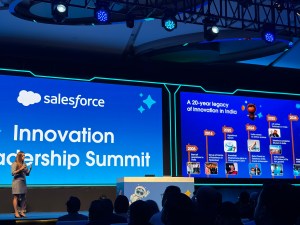
Step into the future where visionary leaders explore how to become an Agentic Enterprise, uniting human expertise with AI agents to accelerate customer success. This vision—including powerful insights from industry pioneers and trends across sales, service, marketing, and data—was the central theme of the recent Salesforce Innovation Leadership Summit in New Delhi.
In India, the shift to agentic AI is urgent. According to the State of Data and Analytics report, 89% of leaders prioritize data modernisation to unlock AI’s impact. Yet modernising data is only the first step. The bigger task is making that data connected, trusted, and usable by both people and AI agents. Enterprises are bridging the gap via zero-copy architectures; these companies are 40% more likely to have fully connected customer data and 22% more likely to succeed with AI initiatives. Ultimately, success lies in shifting from trapped data to connected, intelligent execution.
The summit spotlighted the convergence of strategy, technology, and human expertise necessary to navigate this new landscape. Below are the key pillars defining this transformation.
The Blueprint of Intent: Transformation by Design
Agentic transformation is not merely a technical deployment; it is a fundamental business design imperative.
Leaders are now determining the specific outcomes they seek and identifying where agents working alongside humans can drive the most profound impact. Whether optimising employee productivity or revolutionising customer service, the design stage is where the future competitive advantage is forged.
Reimagining Engagement and Service
Broadening the focus to customer engagement, Agentic Marketing is enabling organisations to create more personalised, contextual interactions while responding to growing customer expectations for relevance and immediacy.
The organisations that succeed will be those that create trusted enterprise contexts and turn intelligence into action.
Romil Agarwal, VP, Sales.
Underpinning these capabilities is a unified platform architecture. Innovations such as Headless 360 and the Agentforce Experience Layer are designed to make trusted business data, logic, and AI experiences available consistently across channels and applications.
Similarly, service teams are leveraging AI to boost responsiveness, streamline support workflows, and elevate the employee experience. The emphasis remains on augmenting teams with intelligent capabilities that remove operational friction and allow people to focus on higher-value work.
Transforming Conversations into Relationships
By leveraging AI agents to manage complex customer journeys, forward-thinking organisations are turning every channel into a personalised experience that meets customers exactly where they are.
By leveraging Salesforce to better understand and communicate with their diverse community of riders, Royal Enfield has transformed its approach to customer engagement.
Creating these experiences starts with a connected view of the customer across every interaction.
The next frontier of marketing isn’t personalisation — it’s context.
Nishant Kalra, VP Digital, South Asia
“The next frontier of marketing isn’t personalisation — it’s context. When you unify millions of customer profiles across data fields, channels, and touchpoints, you can deliver the right context at the right moment. That’s what turns a transaction into a relationship — whether it’s humans, agents, or both engaging with the customer.” says Nishant Kalra, VP Digital, South Asia.
Why Data Has Become the Differentiator
The success of AI agents rests entirely upon trusted data and integrated systems. As organisations scale, the focus is broadening from simple access to data to the sophisticated governance and activation of that information.
This evolution marks a transition from AI experimentation to the building of enterprise-wide AI strategies. As organisations look to scale, attention is increasingly directed towards the quality, accessibility, governance, and interoperability of data—the essential precursors to reliable agency.
“As AI moves from experimentation to enterprise-wide adoption, the differentiator is no longer access to data. It is the ability to connect, govern, and activate it. The organisations that succeed will be those that create trusted enterprise contexts and turn intelligence into action,” says Romil Agarwal, VP, Sales.
Data readiness and integration are now foundational requirements. AI agents only operate effectively when grounded in accurate, connected information, enabling them to interact seamlessly with the systems that power the business. This reflects a broader shift in enterprise software: business systems are now designed for both human users and AI agents, anchored by a unified platform architecture that ensures secure access to data, workflows, and business logic to facilitate meaningful action.
The Agentic Evolution of Sales
Accelerating growth in the Agentic era requires a sales platform reinvented for the task—one that unites AI agents and human representatives to multiply capacity. This shift redefines sales from a game of productivity metrics to a focus on the fundamental driver of success: relationships.
The teams embracing this are not just selling more. They are selling better.
Pablo Tachil, RVP, Sales
“Sales has always been about human connection,” says Pablo Tachil, RVP, Sales. “What agentic AI does is give sellers more time for exactly that, by taking care of everything else. When humans and agents work together, the result is not just more efficiency. It is better relationships, deeper conversations, and outcomes that neither could achieve alone. The teams embracing this are not just selling more. They are selling better.”
Building the Operating System for the Agentic Enterprise
Becoming an Agentic Enterprise is not merely about adopting new technology—it is about establishing a new operating model for work. Realising this vision requires moving beyond individual AI applications to a platform that unifies trusted data, business processes, and autonomous agents. The path forward rests on the core pillars of the Agentic Enterprise: context through data, execution through connected workflows, and engagement powered by intelligent agency.
Throughout the summit, one message remained consistent: becoming an Agentic Enterprise is less about deploying another AI tool and more about creating a platform where trusted data, workflows, and intelligent agents operate together.
Organisations that succeed will not be defined by the number of AI tools they possess, but by their ability to orchestrate humans, data, and agents into a unified, high-performance operating model.
This piece was drafted on the sidelines of Salesforce’s Innovation Leadership Summit held in New Delhi on June 11.