

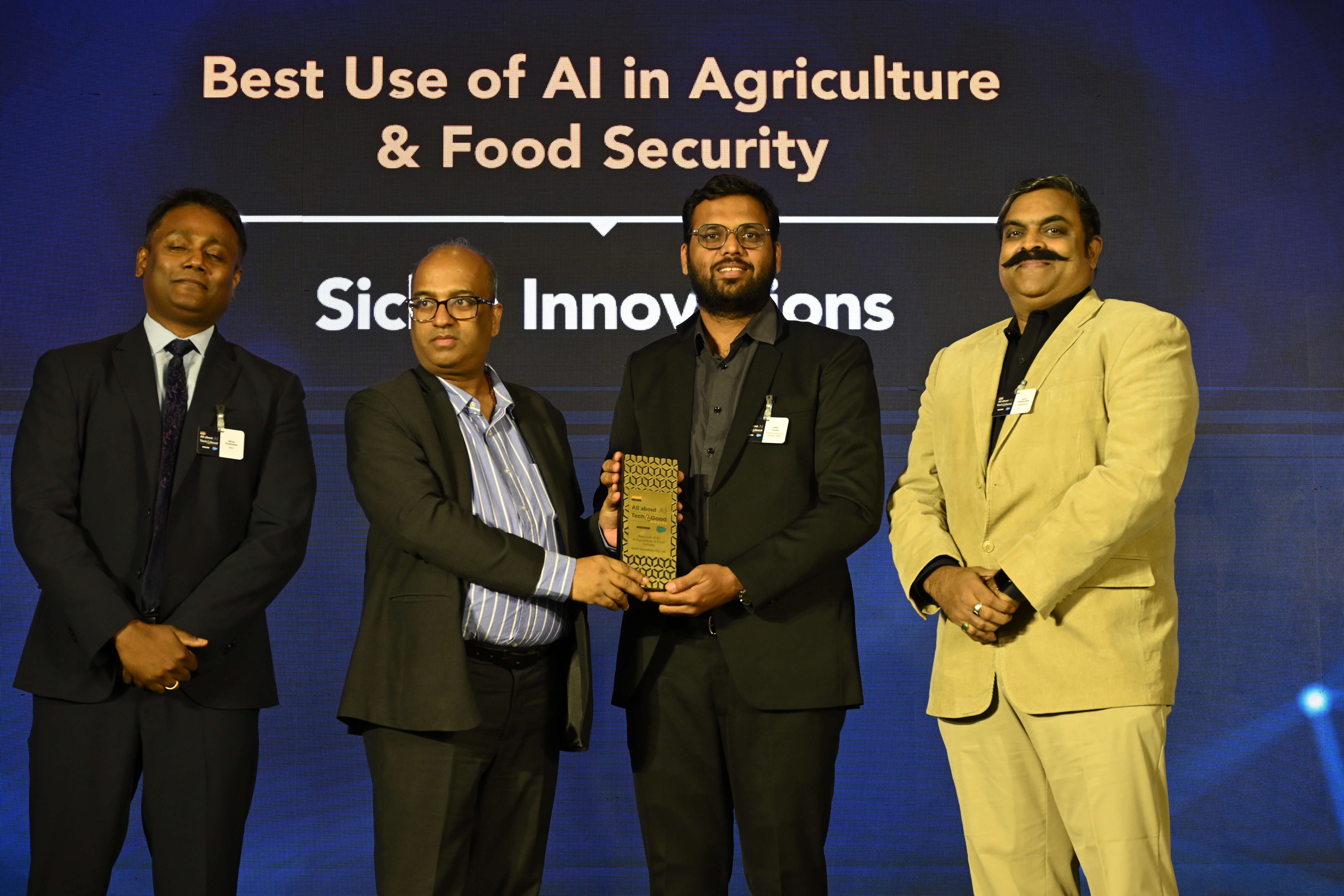
Nitin Gupta of Sickle and Ankit Gupta of Dayatani Digital, Gold and Silver winners for Best Use of AI in Agriculture and Food Security at the Salesforce-powered All About AI | Tech4Good Awards and Summit share how AI is reshaping farmer income and resilience.
Across orchards in Himachal and small farms in Indonesia, one reality is constant, farmers know their land and their crop, but they do not always control how that work is valued. A spell of rain, a pest outbreak or a single decision at the auction can decide whether a season feels secure or fragile.
In this category, two Gold winners work at different points in that journey. Sickle sits at the auction gate, where a box of fruit meets the market. Dayatani works inside the soil, weather and input choices that shape that box months earlier. Both use AI to replace guesswork with clarity.
Sickle: When one damaged apple no longer sets the price
Sickle is an India based agritech company that builds AI powered grading and sorting machines for fruits and vegetables, with close to 100 systems installed. In a typical apple auction, fruit is split into 24 grades based on colour and size. A tiny hole in one apple can drag down the price of an entire box.
For years, grading was either manual or handled by large imported machines whose internal settings farmers could not see. Colour is subjective. Ten workers see ten shades. Disputes at the mandi were routine, and farmers often felt they were arguing without proof.
Sickle started by listening to that frustration. Farmers said they could handle size, but colour and surface defects were the real problem. The first product was a rule based grading machine that standardised colour and size. The next step was AI.
Using deep learning vision models trained on thousands of real defects, Sickle’s machines now spot scratches, pinholes and blemishes at a speed and consistency humans cannot match. Sorting accuracy has crossed 95 percent, labour costs have fallen and post harvest losses have reduced by up to 20 percent. Sickle is now in the process of extending this system to other apple growing regions such as Jammu and Kashmir, and implementing the same technology for pomegranate, mango and oranges.
For a farmer, the change is simple and concrete. Earlier, a mixed box meant a blended price that the buyer decided. Now every box is uniform and defects are removed before packing. Farmers typically earn about 5 to 10 percent more per crate. Across 10,000 to 20,000 boxes in a season, that uplift can recover the machine cost in the first year.
In one season of heavy rains, damaged roads made it hard to reach the mandi. A buyer agreed to purchase only if the fruit was graded cleanly. With Sickle’s system on site, the farmer packed uniform boxes, sold the entire lot at a premium and earned enough that he did not even apply for subsidy. For Sickle, that was the moment the technology felt less like a machine and more like a safety net.
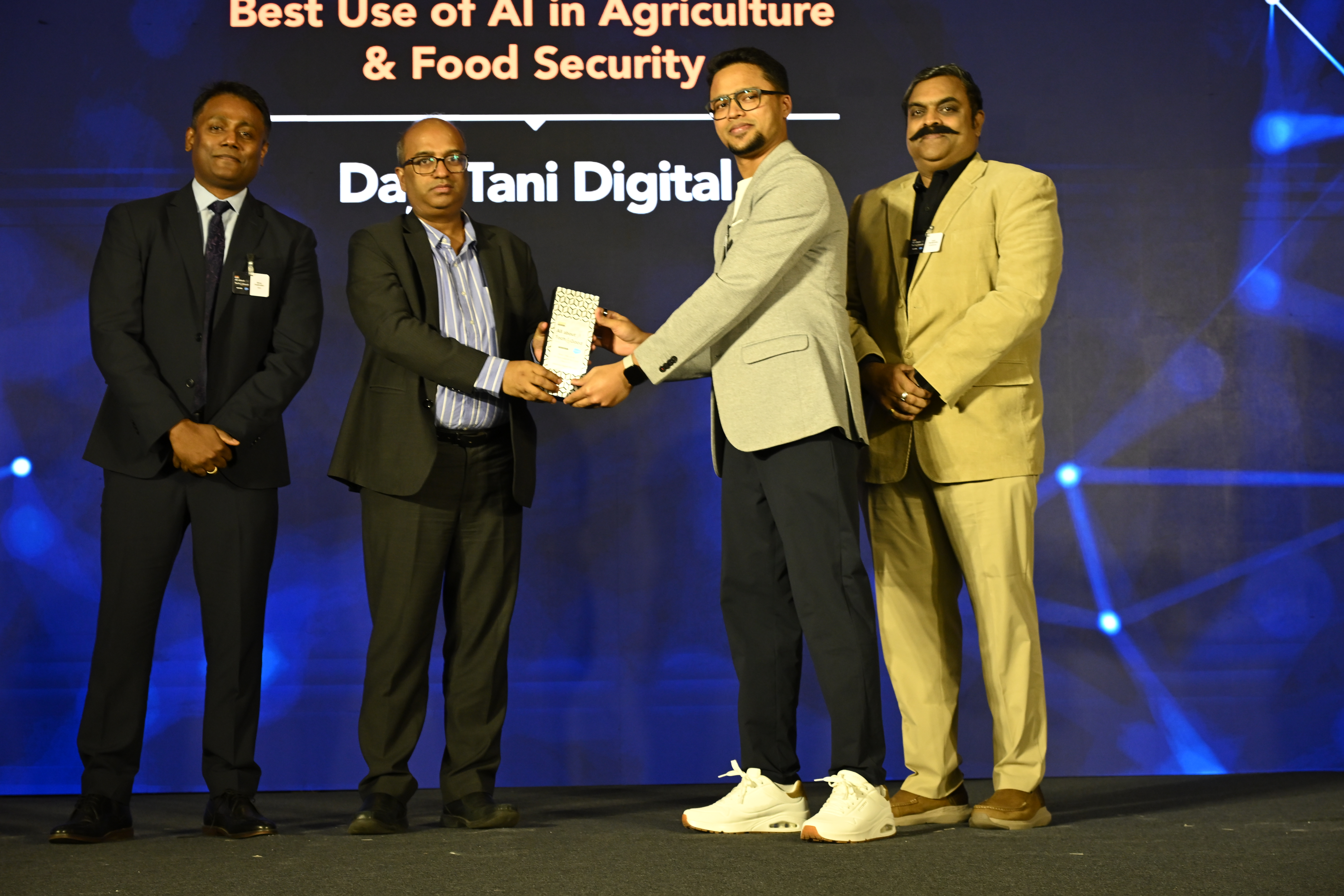
Dayatani: Teaching technology how to farm
If Sickle makes the auction fairer, Dayatani focuses on the months before harvest. Dayatani Digital, founded in Singapore by Ankit Gupta and Deryl Lu and operating across Indonesia, uses AI powered agronomy tools and agents to turn farm data into field specific guidance on a farmer’s phone.
The starting question was direct. Why do smallholders still lose 50 to 60 percent of potential yield even when they work hard and know their fields? The gap, they found, was not effort but insight. Soil biology and nutrients, micro climate, past inputs and planting choices all interact in ways that are hard to see without structured data.
Dayatani’s answer is to teach technology how to farm so that farmers do not have to guess alone. Its platform captures multiple layers of data from each plot and uses AI models and task oriented agents to turn that context into simple next steps. Behind the scenes, Dayatani runs a network of specialised agents including prompt, reasoning, interpreter, reviewer, soil and fertilisation, weather, pest and agri input, all coordinated by an orchestrator agent that routes each farmer query to the right expertise at the right time. When to plant. How to adjust nutrition before a dry spell. When to change pest management based on local patterns.
In pilot districts in Java and Sumatra, farmers using Dayatani’s tools have seen yields rise by roughly 18 to 25 percent, input costs fall by around 12 percent and query to solution time drop from about 48 hours to under 10 minutes. The phone becomes a trusted second opinion they can check before they act.
Dayatani was recognised as a Silver winner in the Best Use of AI in Agriculture and Food Security. Built in Singapore and deployed in Indonesia, it is now preparing to expand to Thailand and Vietnam with support from partners such as Google.
When AI Starts Working the Field
Sickle and Dayatani look different from the outside. One is a physical machine on a packing line that uses trained models for grading and sorting. The other already uses AI agents that watch soil, weather and farm history to guide decisions in the field.
Together, these stories show AI sitting beside farmers, protecting value at the point of sale and translating complex data into everyday decisions on the ground. That is the spirit of the Tech4Good Catalyst Series and of a new generation of trailblazers who are using AI to make staying in farming feel like a stronger, more dignified choice for the next generation.
This is the second feature in the Tech4Good Catalyst Series on India Newsroom, spotlighting winners from the Salesforce powered All About AI | Tech4Good Awards and Summit.
Know more:
- First feature in Tech4Good Catalyst Series on AI revolutionsing patent valuation here
- All about AI| Tech4Good Awards, second edition here
- Glimpse of the first edition of All about AI | Tech4Good awards here
- About Agentforce and Agentforce 360