


Social media marketing is how brands use platforms like Instagram, TikTok, LinkedIn, and Facebook to stay top-of-mind, connect with customers, and grow their reach. It’s an organic way to build trust and attract a new online audience that can be nurtured into customers.
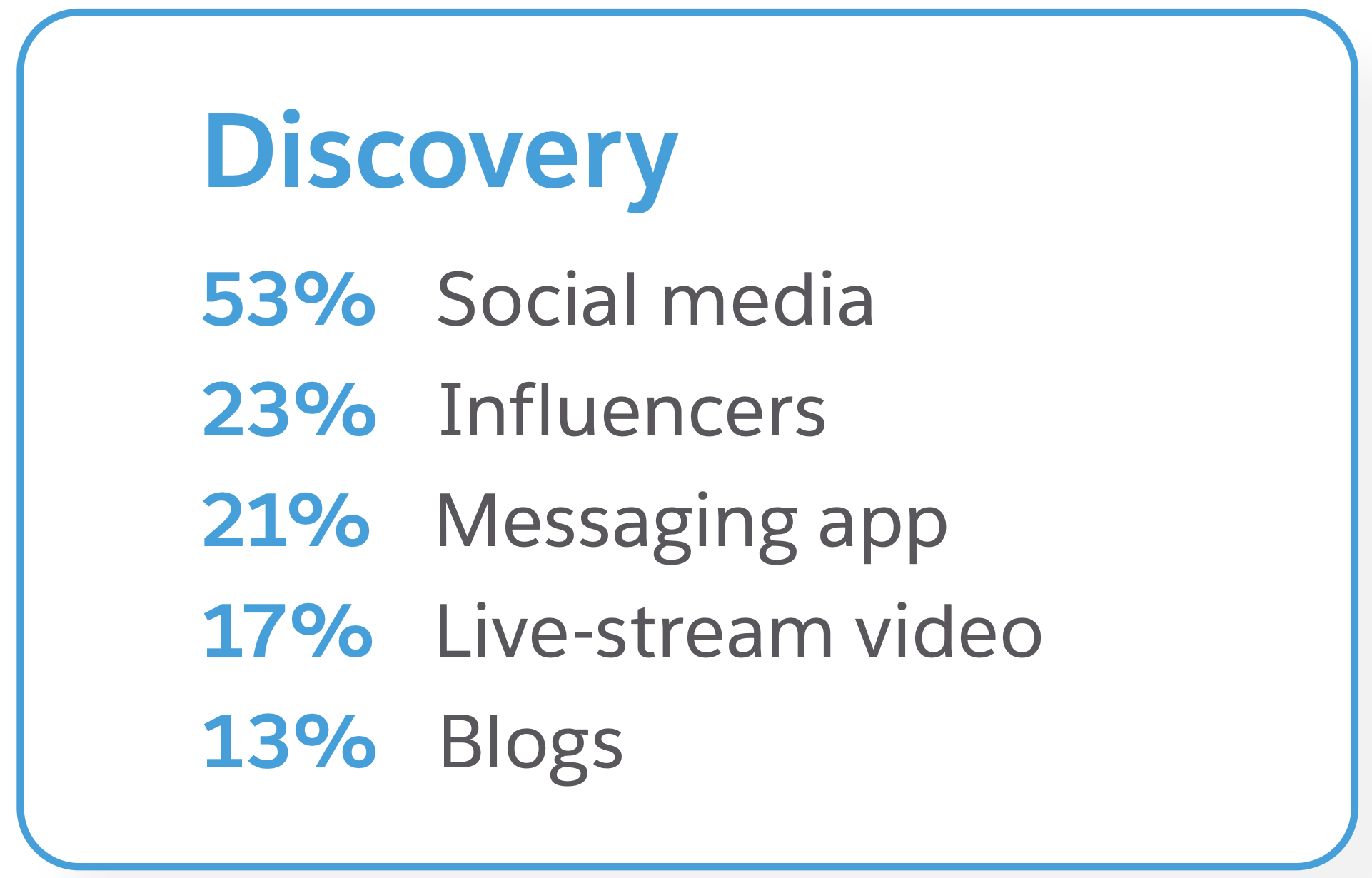
The average person now spends 143 minutes a day on platforms like Facebook, Instagram, TikTok, YouTube, and LinkedIn. On top of this, in our latest Connected Shoppers Report, we found that 53% of consumers now discover products on social media, up from 46% in 2023.
That opens up a huge opportunity for brands to connect with customers, promote what they offer, and build long-term brand loyalty. To stand out, you need strong content backed by a clear, data-led strategy.
In this article, we cover the fundamentals of social media marketing and how your brand can drive sales from social media.
What is social media marketing (SMM)?
Social media marketing is the process of using social platforms to share content, connect with people, and grow your business online. It helps you reach potential new customers, build trust, and guide people toward buying your products or services.
Goals of social media marketing:
- Build awareness of your brand
- Move people to your website or physical store
- Generate leads and sales
- Reinforce customer loyalty
- Offer customer support and feedback
Social media can be especially powerful at the awareness stage of the marketing funnel. It can be where people first discover your brand, get a feeling for what you offer, and what your brand stands for. All of this helps move people towards becoming customers.
Build lasting relationships that drive growth with Marketing Cloud.
Activate your social insights faster with unified profiles and analytics. Deploy smarter campaigns across the entire lifecycle with trusted AI. Personalise social content that sparks real engagement.


What changed for SMM in 2025 (and what’s next for SMM in 2026)
In the past year, social media marketing has leaned heavily on authenticity. People are less interested in polished influencer content, and brands are partnering with smaller, more passionate creators who genuinely connect with their audiences.
Short-form video continued to dominate in 2025, shaping how brands communicate and capture attention. At the same time, LinkedIn has grown to more than 1.1 billion registered users. That surge in activity has driven more genuine conversations and engagement across the platform.
Here’s a snapshot of what’s changed and what we predict for 2026.
2026 Social Media Marketing – Anticipated Trends
| 2025 trends | What’s next for 2026 |
|---|---|
| Short-form video dominated every platform | Videos will become easier to shop from directly, with built-in product tags, searchable captions, and creator videos that link directly to sales pages. Gen Z and Alpha, especially, will skip Google entirely when shopping. |
| LinkedIn focused on expertise and authenticity | Employee-led storytelling and genuinely passionate thought leadership (less engagement farming) |
| Brands pulled back from X and Meta due to safety concerns | Budgets shifting to YouTube, LinkedIn, and TikTok |
| AI was used to speed up content creation and scheduling | AI becomes a creative assistant, helping refine ideas and analyse performance. Fewer people are using it to create content without human input. |
| Smaller creators got more engagement compared to major influencers | Long-term creator partnerships and micro-influencer communities to build trust |
| Most brands relied on public feeds to reach as many people as possible | Private groups, paid communities, and micro-forums will replace public feeds for many brands, focusing on loyalty over reach |
| Audiences questioned what was real versus AI-generated | Authenticity filters emerge, helping users identify or label AI-created content. Posts that humans have worked on will feel more premium. |
The core parts of social media marketing
Great social media marketing isn’t posting your product or service and hoping it will “go viral”.
Behind the best-performing brands on social media are a number of elements that work together to boost visibility, grow an audience, and turn followers into business results. Here are eight key pieces of work that go into a social media marketing strategy.
- Strategic planning: You don’t need to plan every post, but you do need a clear idea of your main content pillars. This keeps your messaging consistent while leaving space for timely, fun, or off-the-cuff posts that still make sense for your brand.
- Content creation and curation: Whether it’s a one-off post or part of a wider campaign, the goal is the same: be educational, entertaining, and/or helpful.
- Community connection: Social isn’t a broadcast channel; it’s a conversation. Replying to comments, asking questions, and showing up consistently are how you build a loyal, active community.
- Social listening: What are people saying about your industry? Tuning in to what people in your industry are talking about helps you post relevant content and spot opportunities to share your expertise.
- Targeted advertising: Paid ads help you scale, but they work best when they feel like a natural part of your feed. Focus on reaching the right people with content designed for them.
- Analytics and reporting: Social media can sometimes feel fluffy or data-poor to executives. To show the impact of your work on social media, you need to become a great data storyteller. Track and report what drives reach, clicks, and engagement so you can double down in the right places.
- Influencer partnerships: The right collab can get your brand in front of fresh eyes, especially when a creator’s audience already trusts them. Just make sure the person makes sense for your brand, and the promotion feels authentic.
- Reputation management: Responding quickly and thoughtfully to negative feedback helps build trust. However, be aware that negative or rude comments (not genuine feedback) do happen on social media. Not everything is worth your brand’s time, and it’s perfectly fine to delete or block a user.
The benefits of social media marketing
Here are five ways effective social media marketing can bring in sales for your business in the short and long term.
- Building brand awareness: With 5+ billion users online, social media content puts your brand in front of the right people, so you’re top-of-mind when they’re ready to buy.
- Lead generation: It drives traffic to your landing pages and helps turn interest into action.
- Trust and credibility: 81% of people say social media makes brands more accountable. Being present and authentic builds trust.
- Data and insights: Social media is a low-stakes way to test ideas to see what sticks before investing in a full campaign.
- Sales growth: Using social media generates awareness and strong relationships with repeat customers, all of which add up to more conversions and long-term revenue growth.
- Enables targeted advertising: Social platforms allow you to select who sees your ads by location, interests, job titles and behaviour. This ensures your ad spend goes towards reaching the right audience.
- Enhances customer engagement: Engaging with followers through comments and messages keeps your brand feeling human and approachable.
- Provides customer insights: Every interaction, comment, and click offers valuable data about what your customers want.
- Boosts SEO: While social activity doesn’t directly affect Google rankings, it increases brand visibility, traffic, and backlinks. All of these help your content perform better in search results.
Grow fast with the #1 CRM for small businesses.
Get started and scale fast with the #1 AI CRM for small businesses in any industry. Connect marketing, sales, service, and commerce on one platform. Save time with simple setup and built-in guidance. Set the foundation for growth with unified data and AI.
9 steps to creating a winning social media marketing strategy
Now let’s get into the nuts and bolts of social media strategy. Here’s how to develop your social media presence from square one, in nine practical steps.
- Build a buyer persona
- Set clear and measurable goals
- Research your competitors
- Choose the right platforms
- Define your brand voice
- Optimise your profile
- Create a content calendar
- Develop original, high-quality content
- Start posting and measure your results
1. Build a buyer persona
Start by looking at your current customers. Use sales data, customer interviews, and analytics to understand who’s buying from you.
Note their age, job title, income, hobbies, pain points, and preferred platforms. Document how they communicate online and what content they engage with. Developing this persona will guide every post, channel, and message you create.
Expert tip: Use historical sales data or surveys to find out who your best customers really are.
2. Set clear and measurable goals
What do you want to achieve by posting on social media? Choose 1–2 business goals, like increasing brand awareness, generating qualified leads, or improving retention.
Try using the SMART framework:
- Specific: Be clear on what you want to do
- Measurable: Use metrics to track it
- Attainable: Be realistic
- Relevant: Tie it to wider business goals
- Time-bound: Give it a deadline
Example: “Increase Instagram engagement by 20% over the next three months by posting three Reels per week, responding to all comments within 24 hours, and running a monthly giveaway.”
3. Research your competitors
A competitive analysis helps you see what’s working in your industry (and what’s not). Look at their channels, content types, and engagement.
- Are people commenting on posts or ignoring them?
- What are people sharing?
- Are there gaps you can fill?
Use these insights to inform your own strategy and avoid a bit of your own trial-and-error.
4. Choose the right platform/s
There are dozens of platforms out there, but you don’t need to spread yourself thin across them all. Choose one or two based on your buyer persona and the type of content you’re going to make.
- TikTok: Ideal for short-form, trend-based video content with a casual, creative tone.
- Instagram: Great for visual storytelling, product highlights, and influencer content.
- Facebook: Popular with Gen X and Baby Boomers. Works well for events and ads.
- LinkedIn: Best for B2B, thought leadership, company updates, and recruitment.
- YouTube: Ideal for long-form videos like how-tos, product demos, and brand storytelling.
5. Define your brand voice
How do you want your audience to perceive you?
- Professional and informative?
- Playful and bold?
- Friendly and helpful?
Decide on your brand’s tone, values, and personality. The more consistent your voice is, the easier it is to build trust and for customers to recognise your brand at a glance.
6. Optimise your profile
Before posting, make sure your profiles are clear, professional, and on-brand.
- Use a recognisable logo or image
- Add a strong cover photo with brand colours
- Write a short, punchy CTA in your bio
- Link to your main website or a relevant landing page
Think of it like setting up your storefront. Make it easy to navigate and welcoming at first glance.
7. Create a content calendar
Consistency matters. Plan your posts using a calendar that outlines what you’ll post, when, and where.
Use your buyer persona to guide the best times to post. For example, professionals may check most social media outside work hours but will check LinkedIn during the day.
Try to post at a realistic cadence for your team. It’s better to do one or two quality posts a week than multiple low-quality posts.
8. Develop original, high-quality content
Your content should stop the scroll. Think about what your audience wants to see and what problems you can solve.
Here are some types of content to spark inspiration:
- Before-and-after transformations
- “How it’s made” or packing/shipping process videos
- Hot takes or unpopular opinions in your niche
- Day-in-the-life content from your team or founder
- Satisfying demos (e.g., cleaning, product assembly, try-ons)
- Fast Q&A or myth-busting reels
- User-generated content with real customer reactions
- Behind-the-scenes bloopers or outtakes
Tip: Watch what’s trending, but jump early. Yesterday’s trending moment won’t land next week.
9. Start posting and measure your results
Once your content is live, your next job is to prove it’s delivering value. Use the platform’s built-in analytics to track how your content is performing. You may need to run a few weeks of experimentation to create a baseline you can measure future results against.
Focus on metrics that tell a business story:
- Reach: Look at your impressions. Are more people seeing your brand?
- Engagement: Are users interacting through likes, comments, and shares? Remember that the level of engagement will vary by platform. For example, LinkedIn is notoriously hard to generate engagement on.
- Click-through rate (CTR): Are posts driving traffic to your website or product pages?
- Conversion rate: Are social leads turning into customers or sign-ups? Include UTM codes so you can track attribution through GA4.
- Follower growth: Is your audience consistently expanding over time?
Track these over time to build a clear narrative, what’s working, why it’s working, and how it’s contributing to your broader marketing goals.
The difference between paid and organic social media marketing
Organic and paid social media both have a role to play, and neither is better than the other.
- Organic social media: Refers to any content you post for free on your account to engage your audience, build your brand, and stay top-of-mind.
- Paid social media: When brands run ads or ‘boost’ posts to reach new or hyper-targeted audiences. It gives marketers more control, lets them retarget people who’ve already visited their website, and supports goals like generating leads, driving traffic, or increasing sales.
When used together, organic and paid create a balanced strategy that keeps you visible and grows your future customer base.
Choosing the right social media platform for your business
Each platform attracts different audiences. These stats can help you understand what platforms have the most people, how other brands use them, and what type of content performs best.
Which Social Media Platform is Right For My Business?
| Platform | Active Users | Marketing model | Audience | Best For |
|---|---|---|---|---|
| 3.07B | B2C & B2B | Gen X & Baby Boomers | Paid advertising, web traffic | |
| 3B | B2C (some B2B) | Millennials & Gen Z | Short-form video, brand awareness | |
| X (Twitter) | 611M | B2C & B2B | Millennials | Customer service, real-time updates |
| 310M | B2B | Gen X & Millennials | B2B marketing, lead generation | |
| TikTok | 1.58B | B2C (some B2B) | Gen Z & Gen Alpha | Short-form content, influencer marketing |
| YouTube | 2.5B | B2C & B2B | Gen Z, Millennials, & Gen X | Long-form video, education, brand storytelling |
Updated: November 2025

Active users: 3.07 billion
Business model: B2C and B2B
Audience: Gen X and Baby Boomers
Best for: Paid advertising, web traffic
Facebook is still one of the most widely used platforms, particularly for reaching older demographics. It’s a strong option for driving website traffic and running targeted paid campaigns at scale. However, ongoing issues with misinformation and inconsistent moderation have made some brands selective about how they use the platform.

Active users: 3 billion
Business model: B2C (some B2B)
Audience: Millennials and Gen Z
Best for: Short-form video, brand awareness
Instagram is ideal for visually-led brands targeting younger audiences. Reels, Stories, and influencer content make it a great tool for building brand awareness and social proof. Instagram is owned by Meta (Facebook’s parent company) and allows you to manage both Instagram, WhatsApp, and Facebook all within its Meta Business Suite.

X (Twitter)
Active users: 611 million
Business model: B2C and B2B
Audience: Millennials
Best for: Customer service, real-time updates
X (formerly Twitter) is useful for brands that want to share timely updates and engage in direct conversations. It’s also a top platform for customer support and community management. However, recent changes to content policies and moderation have raised brand safety concerns, prompting some advertisers to scale back their activity.

Active users: 310 million
Business model: B2B
Audience: Gen X and Millennials
Best for: B2B marketing, lead generation
LinkedIn is the go-to platform for B2B marketing. It’s the place for reaching decision-makers, generating leads, and building authority in professional spaces.

TikTok
Active users: 1.58 billion
Business model: B2C (some B2B)
Audience: Gen Z and Gen Alpha
Best for: Short-form content, influencer marketing
In our latest Connected Shoppers Report, we found that 40% of Gen Z use TikTok to discover products.
This makes it an ideal platform for brands targeting younger audiences through short-form content and trends. Influencer partnerships work especially well here, helping build fast-moving brand awareness.

YouTube
Active users: 2.5 billion
Business model: B2C and B2B
Audience: Gen Z, Millennials, and Gen X
Best for: Long-form video, education, brand storytelling
In our latest Connected Shoppers Report, we found that YouTube is the most popular social platform for product discovery. It’s also a powerful channel for brands that want to educate, entertain, or build deeper customer engagement through longer-form video content. Shorts also offers a surprisingly large reach for brands with little to no followers.
Australian brands getting social media right
Plenty of local and global brands have been using social media for 10+ years to drive results, from generating awareness to building strong communities. Here are three standout Australian examples.
Koala

Source: Facebook
Koala Mattresses are all about luxury, but this doesn’t mean its social media copy is formal and stilted. The brand still maintains a conversational tone and injects light humour into its posts.
The lesson? Your product doesn’t always have to define your brand voice. On social media, you can create a unique personality that customers will grow to associate with your brand over time. Don’t put yourself in a box.
Vegemite
Source: Instagram
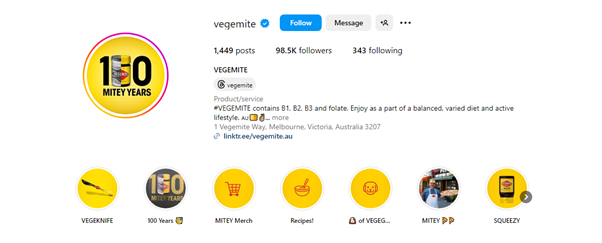
Notice a common theme with Vegemite’s Instagram page? The brand repeatedly uses its core colours (yellow and red), creating a stronger visual image that helps customers remember the brand. It’s always worth optimising your profile page to reflect what makes your business unique.
Bunnings Warehouse
Source: Bunnings YouTube
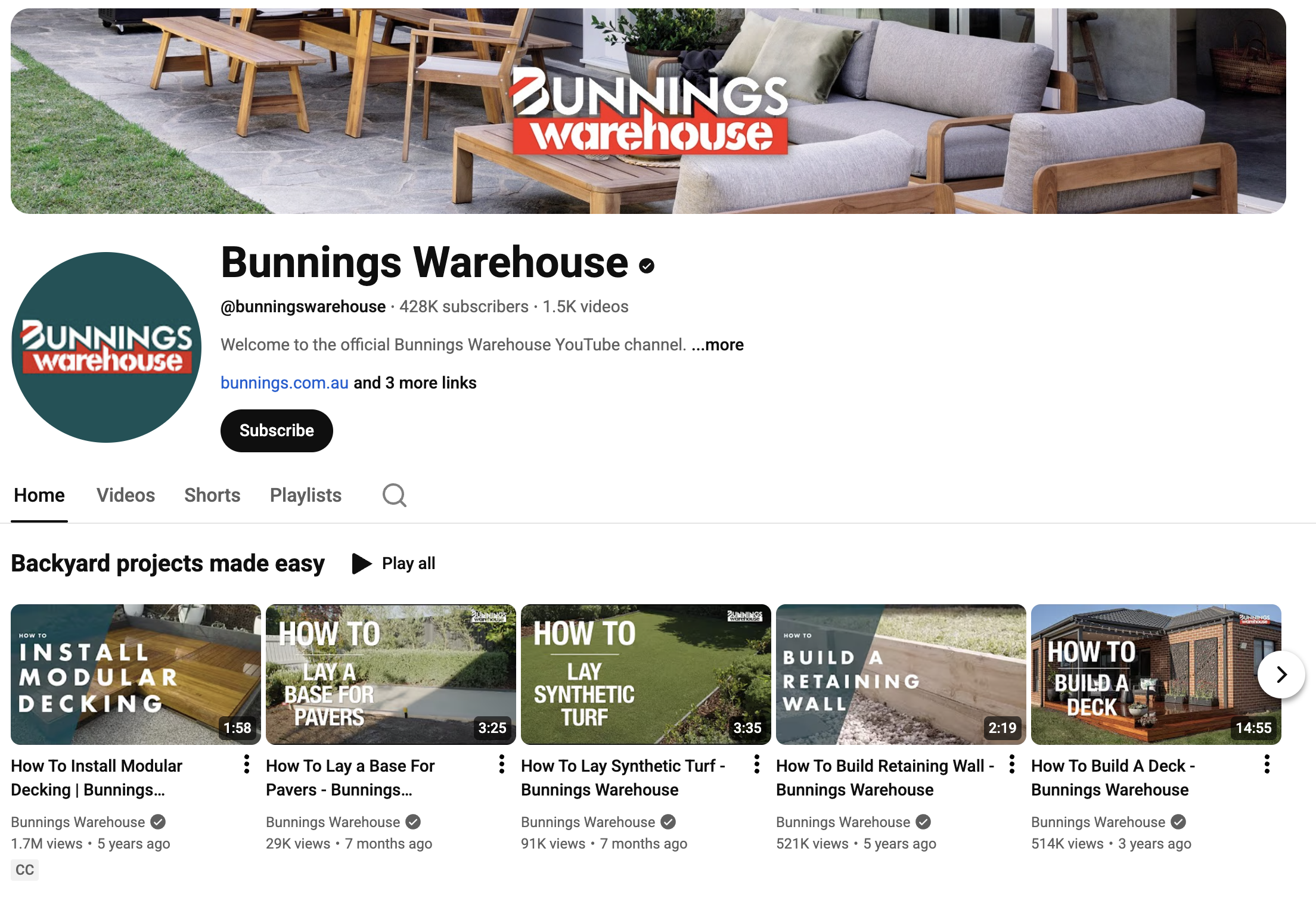
Bunnings uses YouTube to share practical, step-by-step DIY videos that help Australians tackle home projects. With 428K subscribers and more than 1,500 videos, the channel covers everything a DIY enthusiast could ever need.
Through focusing on helpful, hands-on content rather than direct product promotion, Bunnings is able to build trust and authority in the home improvement space.
Stay up to date on all things marketing.
Sign up for our newsletter to get the latest research, industry insights, and product news delivered straight to your inbox.
How can Salesforce Marketing Cloud help?
Building a social media marketing strategy from the ground up takes time. Every business would geBuilding a social media marketing strategy from the ground up takes time. Every business would generate hundreds of leads if it were as easy as creating a few posts and watching as customers poured down your sales funnel. But it takes effort, and you need the right data to optimise and refine your advertising campaign over the long term.
Salesforce Marketing Cloud can help you turn interested consumers into loyal customers. Our software centralises your siloed marketing and sales data in one place, allowing you to make better, data-driven decisions to optimise your strategies.
Here’s how our software can complement your social media marketing strategy:
- Tailored customer journeys: Build unique customer journeys for every social media channel. Design custom sales funnels that guide customers to the point of sale and beyond.
- Audience Builder: Segment your target demographics and create distinct sales pipelines for each across every social media platform.
- Content calendars: Create and manage your social media content in one place with our advanced content features.
- Analytics: Track the performance of every single post. Get AI-driven recommendations to improve. Discover new insights through our AI-driven predictive analytics.
Want to learn how Salesforce Marketing Cloud can help your social media marketing campaign hit the mark? Explore our Marketing AI tools here or sign up to watch the free demo.
FAQs
Does social media actually lead to sales?
Yes, when done with purpose. A clear social strategy, quality social content, and realistic goals can turn awareness into sales. It’s important to understand that likes don’t matter unless you connect with your audiences and move them through the funnel.
Do I need to post every day?
No. Consistency matters more than frequency. Set realistic social media goals and a schedule you can stick to. Quality always beats quantity.
How much time should a small business spend on social media each week?
Aim for two focused hours on social media per week. Remember that one strong post can outperform a week of rushed ones.
Do you need a social media manager, or can I use marketing tools?
If you’re planning to grow your business through social media, tools help with scheduling and analytics, but a real person brings creativity, management, and judgment.