



Operations teams at many Australian enterprises manage an administrative workload that all too often takes them away from higher-value work. They may use several tools to ease that burden, but when they have to toggle between them repeatedly throughout the day, they have the opposite effect.
Indeed, according to our latest State of Sales Report, 42% of sales reps say they’re overwhelmed by too many tools, some of which increase costs but not efficiency. Disconnected tools not only slow teams down, but they also increase compliance risks. It’s a major operational problem that many financial businesses battle regularly.
Discover top sales trends, AI agent use cases, and growth strategies — from over 4,000 sales reps worldwide.

New regulations often add even more complexity to the problem, such as the recent introduction of CPS 234, designed by the Australian Prudential Regulation Authority (APRA). Through these regulations, financial business entities are expected to maintain robust information security across all information assets beyond core banking systems.
The good news is that the right platforms can resolve many of these challenges, freeing your teams to do the work that drives business and protecting your organisation from compliance breaches.
In this guide, we’ll unpack the problems that a fragmented tech stack can create for an organisation, including those linked to sales and data leaks. Then we’ll offer a step-by-step methodology to help you audit your sales stack efficiently and explain how an integrated enterprise platform architecture can help you meet APRA CPS 234 standards.
Key takeaways
- Under APRA CPS 234, regulated entities are fully accountable for vendor security failures across all customer registries, even if they haven’t caused the third-party tech to fail
- A structured audit is essential to identify and organise uncoordinated architecture and build the clean data foundation that agentic AI requires
- Modern enterprises are thriving on unified platforms that combine native pipeline automation, role-based access control, automated PII masking, and local onshore data residency
- Adoption of the new system is critical, so a phased approach to eliminating or consolidating tools and a clear value proposition for your teams are necessary to ease any reluctance to shift
The hidden cost of stack fragmentation
When teams have to work with a mass of disconnected platforms and tools, their performance inevitably suffers. Sales reps often spend much of their time jumping between a primary CRM platform, a standalone email tracking app, and a separate predictive forecasting tool just to execute a single workflow or task.
According to research from Lokalise, 22% of workers lose at least two hours a week to tool fatigue (burnout caused by focusing on too many overlapping applications). Across an enterprise-scale organisation with hundreds of staff members, this friction compounds into thousands of lost selling hours.
Beyond the productivity drain, however, stack fragmentation introduces serious security and regulatory blindspots, including:
- Shadow IT and data leakage: Bypassing official purchasing processes creates an unmonitored backdoor, particularly when workers purchase unvetted apps they hope will make their job easier. When sensitive customer data enters a third-party system, data leaks become much more likely.
- Expanded attack surfaces: Every APA integration, third-party login, and browser extension increases the chances of encountering bad actors with malicious intent.
- Third-party risk management: Under CPS 234, APRA makes it clear that regulated entities are fully accountable for the security posture of any third-party providers they engage with. Even if an external application suffers a data leak and puts your customer data at risk, your enterprise will still be held accountable.
How tool sprawl becomes a boardroom liability
As with most business decisions, purchasing new and innovative tools to cover every function starts with good intent. Each tool may initially make things easier by handling certain tasks, but as the tech stack increases, enterprises often reach a point of diminishing returns. Eventually, it can affect operational resilience and become a compliance risk.
The issues usually show up in three types of liability:
1. Data liability
Executive decisions will start to stall because senior leaders can no longer agree on what the single source of truth is and what the actual enterprise figures are. A Sales Director, for example, may present a pipeline report pulled from an external forecasting tool that contradicts what the customer relationship management (CRM) platform has been tracking.
2. Compliance liability
Enterprises that are subject to APA CPS 234 audits may quickly find themselves unable to pull the necessary information together if the data they need is hidden under layers of mismatched systems, which could have huge consequences on the business as a whole. They may also start to struggle with internal tasks such as risk assessments.
3. Financial liability
If there’s no clear advantage for a sales rep to use a certain tool or app, they may abandon it and return to their legacy system. If there’s no clear process for monitoring app usage, then leadership may end up paying premium prices for unused software. Multiply this across all departments, and costs can quickly mount.
When these issues start cropping up, it may become obvious that stacking more tools onto a broken system isn’t a viable option anymore. To maintain compliance and profitability, the best solution is to migrate from multiple, disconnected tools to an all-in-one platform.
Many enterprises have already reached this trigger point, as 84% of sales teams that currently operate without an all-in-one platform say they’re planning to consolidate their tech stacks.
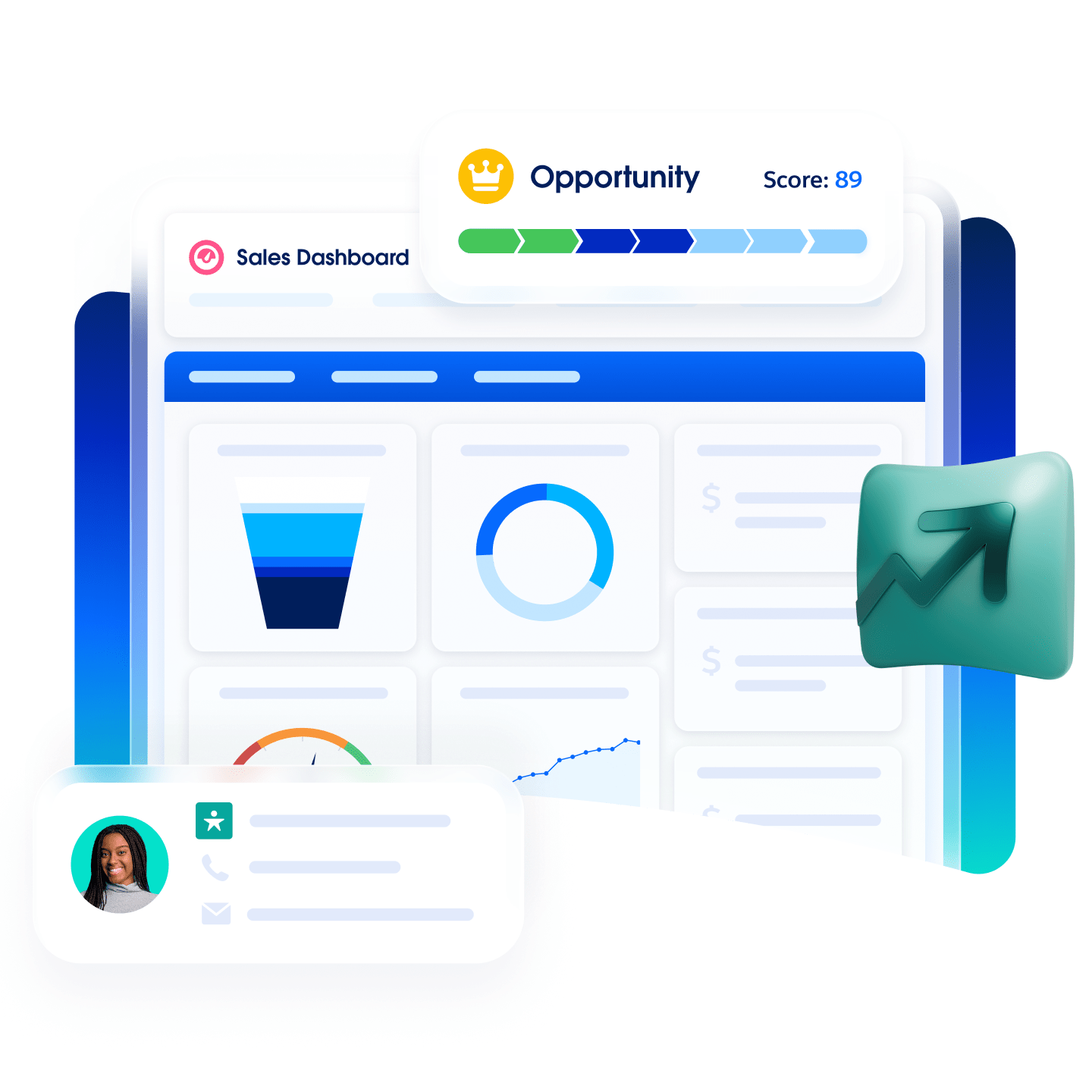
Grow revenue faster with a single source of truth.
Discover how Sales Cloud uses data and AI to help you build relationships and close deals fast.
Audit your tech stack
One of the most important things you can do to ensure that you maintain compliance with APRA CPS 234 regulations is to carry out a thorough evaluation of your tech stack internally before auditors come knocking at your door. It’s a good idea to treat a full-scale evaluation like this as a strategic reset to uncover hidden (or misused) software, dissect true usage across applications, and eliminate regulatory vulnerabilities.
To help with this, let’s look at a clear three-stage review process:
Phase 1: Discovery
For this phase, you’ll need to partner directly with your procurement team to review every corporate credit card statement and software invoice from the past 12 months. This should help to identify any SaaS subscriptions that have become redundant, as well as other unverified solutions.
Try to avoid relying on self-reported usage from your teams. If you suspect that there’s a lot of shadow IT usage in your business, your IT team will likely need to examine all systems and user accounts to try and uncover them. Always keep in mind that your team members likely have installed these apps with the best of intentions.
Phase 2: Capability mapping
Once you’ve uncovered every tool and application in your enterprise infrastructure, you should map them against your core CRM capabilities. Pay specific attention to standalone applications (meeting schedulers, email sequence builders, forecasting sheets, etc.) that can be fully replicated by autonomous agents operating directly within a unified CRM platform.
Phase 3: Utilisation vs. cost
Cross-reference your monthly active users (MAU) data against total contract licensing costs. If your specialist tools are actively leaking revenue or aren’t showing a demonstrable ROI, you should add them to your list of tools to eliminate or consolidate.
Why a tech stack audit is important
The main purpose of an audit is to identify all of the tools your business currently uses and any areas where they’re creating inefficiencies or potential compliance issues. It also helps you determine whether you have duplicated or inaccurate data, which creates problems both for your teams and for the AI you may be using.
And, perhaps most importantly, under APRA CPS 234 regulations, enterprise organisations are required to maintain an inventory of all information assets and their physical locations. A comprehensive stack audit is often the first line of defence against compliance failure.
Moving from feature chasing to a unified platform architecture
Currently, only 34% of sales teams use a single, all-in-one platform, with the remainder using a fragmented mix of standalone tools. This likely goes a long way towards explaining why many enterprises, including financial institutions, are concerned about falling short of APRA CPS 234 expectations.
Rather than looking to add another tool that might solve a new or growing problem, the best approach is to consider how each new piece of the stack can integrate natively into the enterprise ecosystem. This is especially important if you want to use autonomous AI to increase your sales.
Our sales keynote presentation, Accelerate Sales with Trusted AI for Everyone, highlights how a combination of trusted data, AI, and workflow automation on an integrated platform allows enterprises to scale productivity without sacrificing compliance.
Key pillars of enterprise sales architecture
To build a modern platform foundation for your financial institution that satisfies Australian regulatory frameworks, consider evaluating each solution against four key pillars.
Compliance alignment for Australian financial services
| Operational financial need | Target business outcome | APRA CPS 234 and sovereignty value | Salesforce architecture solution |
| Pipeline and revenue automation | Eliminates manual rep updates, automates activity tracking, and stabilises quarterly forecasting | Generates immutable, tamper-proof activity logs across all communications | Sales Cloud (Einstein Activity Capture) |
| Autonomous AI and action orchestration | Qualifies inbound leads, triggers proactive renewal actions | Enforces strictly governed, policy-based communications across all channels | Agentforce |
| Security, governance, and local data residency | Prevents internal data sprawl and creates a single source of truth | Guarantees zero-data-retention, automatic PII/TFN masking, and onshore storage | Einstein Trust Layer and Data 360 on Hyperforce |
| Process agility and enterprise integration | Connects sales workflows directly to core banking, CPQ, and ERP engines | Eliminates third-party vendor risks driven by unmonitored shadow IT, guaranteeing full accountability of tech stacks | MuleSoft |
Let’s look at each of these in a little more detail.
1. Pipeline and revenue automation
A unified platform can offer direct integration with enterprise mail servers to log communications, meetings, and client updates into the CRM automatically. That eliminates the risk of duplicate customer data records being stored in multiple systems.
It can also analyse your sales pipeline to develop quarterly revenue forecasts without exporting sensitive data to third-party tools. Everything stays in a single system that decision-makers can easily access.
Hit your forecast with real-time pipeline insights
What could you do with AI-powered insights at your fingertips? Sell smarter, take action, and hit your forecasts.


2. Autonomous AI and action orchestration
Conversational AI agents are able to research inbound financial prospects quickly and efficiently. The agents work within the boundaries your business establishes, and they can identify prospects while maintaining compliance with the appropriate rules and regulations.
Automated engines can also be used to recommend the best actions to take next, such as generating policy renewal quotes in advance or letting the sales team know when high-value customers are showing signs they’re ready to purchase or leave.
3. Security, governance, and local data residency
Financial institutions handle highly sensitive customer information daily, so they need to maintain the highest security levels. Granular security controls that restrict visibility based on user role and territory are critical. To ensure APRA CPS 234 compliance, access controls ensure that advisors and sales reps can only view the records they’re authorised to view.
Security controls should also automatically remove any personal information, tax file numbers (TFNs), and financial data before AI requests are processed.
Finally, all customer data and financial assets should have onshore data residency wholly within Australian data centres to satisfy strict APRA and Privacy Act data sovereignty standards.
4. Process agility and enterprise integration
Low-code administrative interfaces can allow RevOps and risk teams to rapidly adjust lead routing, territory assignments, or credit approval chains without custom code development. The platform should also directly connect with ERPs, CPQ software, and other operational systems so that data can flow seamlessly without the need for potentially unreliable connectors.
Executing the transition to a unified Salesforce platform
Enterprise leaders are often hesitant to dismantle legacy point solutions out of fear that migration will drop active deal levels or corrupt historical pipelines, or that new tech options will be too difficult to adopt.
These fears are slowly decreasing. Unified platforms, powered by AI, can now make the transition to a new system far less disruptive to daily business operations. And the payoff is often considerable, as 94% of sales leaders who have deployed AI agents say they’re now critical for meeting overall business demands.
Let’s look at an easy-to-follow checklist that can help you successfully phase out your legacy systems and incorporate your new platform:
- Build comprehensive inventory mapping to identify where sensitive data currently lives within your fragmented tools
- Leverage native enterprise security controls, such as Salesforce Shield, to apply field-level encryption as data is migrated to the new platform
- Phase out secondary point solutions first
- Obtain formal and legal verification from departing software vendors confirming that all enterprise historical data has been purged from their external hosting environments
- Once data is consolidated, configure granular visibility baselines using role-based access controls (RBAC);
- Make sure that autonomous lead-nurturing and research agents strictly mirror user permissions
Salesforce’s native architecture explicitly ensures that its AI agents only act on the data they’re authorised to see, guaranteeing zero cross-contamination of sensitive information.
By executing a structured, phase-based migration, Australian financial institutions can eliminate bloat and transition onto a unified Salesforce platform with zero data loss and regulatory alignment.
Priming your workforce for the transition
Switching to new tools or platforms can be hard for all of us, especially when we’ve become comfortable with the ones we’ve worked with every day. We may even prefer to stick with a familiar, less-effective tool rather than move to something that could make our jobs easier in the long run.
To help employees get through any resistance to the new system, RevOps leaders need to shift the focus from what they’re giving up to what they’ll gain, particularly increased job satisfaction.
For example, Einstein Activity Capture lives natively in Sales Cloud and automatically syncs client touchpoints to the correct accounts in real time. That means reps will never have to type out manual logs again, and they’ll always have a single source of truth for all customer data.
Augmented work with Agentforce
Many sales reps often worry that autonomous agents are designed to replace them or add administrative oversight to take away authority.
Agentforce acts as the ultimate sales assistant, augmenting a human agent’s workload by taking care of the inefficiencies and busywork that can stifle productivity. Inbound lead nurturing AI agents can handle things such as inbound queries, lead scoring, and qualifying intent under strict compliance. Reps will then be free to handle the hot leads that they are presented with, paving the way for potential increases in commission and quality of life.
Enable stellar service in the age of AI
You can scale your customer service with the power of generative AI on a unified foundation of trusted data. See how this technology improves efficiency and generates revenue from the contact centre to the field.
Streamline and secure your operations
The era of growth at all costs left many Australian financial institutions and enterprises burdened by fragmented point solutions, with leaders wasting thousands on inflated SaaS spend that leads to tool fatigue and exposes high-value assets to significant regulatory risk.
Eliminating tech bloat to satisfy APRA CPS 234 can be achieved without blunt force replacement of legacy tech. By unifying customer information, AI agents, and sales workflows onto a single governed platform, you can protect sensitive data while empowering sellers to focus on what actually matters: closing deals and driving revenue.
Contact our team today to schedule a personalised sales stack assessment and discover how Salesforce can help you build an efficient, fully compliant revenue engine.
FAQ
What is APRA CPS 234 compliance?
APRA CPS 234 is a binding standard issued by the Australian Prudential Regulation Authority (APRA) to ensure regulated financial entities maintain robust information security frameworks across all corporate assets. Its most pressing requirements include maintaining an asset inventory and data flow maps, strict access controls across data, and accountability for third-party vendor security.
What are the primary financial and operational risks of ‘tool sprawl’?
Tool sprawl drains profitability and productivity, and processing sensitive customer data outside corporate governance undermines compliance with APRA regulations.
How do data siloes limit AI autonomous agent initiatives?
Autonomous agents require clean, standardised sets of data to work from. When customer data is fragmented and spread across isolated data siloes, AI agents can’t reconcile this data properly, so they can’t make accurate, data-driven decisions.
How do I consolidate my fragmented data into a single unified platform?
You’ll first need to identify all of your data sources and app purchases (within the past 12 months) that may have been drawing on customer data. You should then catalogue all asset locations and designate which should be earmarked for retirement. This data should then be transferred onto an integrated enterprise platform that supports onshore data residency, encryption, and role-based access controls.