


Historically, every technological advancement has relied on physical product iterations and a bucket load of trial and error. The Wright brothers, for example, built dozens of prototypes for their early-stage plane. If they hadn’t, it’s unlikely we’d be calling them the pioneers of modern flight.
Today, we don’t need physical mockups to test the effectiveness of a product. Digital twins enable you to create virtual prototypes and test assets in different contexts without building multiple physical versions yourself. This enables faster, more accurate testing and iterations.
McKinsey & Company reports that 75% of companies in advanced industries have already adopted digital twin technology to assess products without incurring the costs and risks of physical prototypes. In this guide, we’ll explore how this tech works and how it can foster smarter and economical innovation.
What you’ll learn:
- What is a digital twin?
- How digital twins work in 5 core steps
- The benefits of digital twins for businesses
- Digital twin vs. simulation: Are they the same?
- The four essential types of digital twins
- What industries use digital twin technology?
- Digital Twins Victoria case study
- Digital twins: Challenges and considerations
- The future of digital twin technology
- How to get the best out of digital twins with Salesforce
What is a digital twin?
A digital twin is a virtual representation of a real-world asset, such as a physical product, system or service. This digital representation serves as an exact virtual replica, giving businesses insights into how the asset would perform and function in a real environment.
Digital twins link to real-world data sources, meaning they update in real time to mirror real-world assets. This gives them a variety of vital use cases, such as these:
- A digital twin linked to sensors on a plane engine could monitor temperature and pressure, letting engineers discover and fix issues before the machinery fails.
- Utility companies could create digital twin solutions of their offshore platforms to identify potential failures before they arise.
- Businesses could create virtual twins of their early-stage products, enabling them to stress-test different scenarios without investing in multiple prototypes.
Digital twins can even be used to replicate entire cities to determine optimal building layouts or to test spacecraft in real-world conditions, such as in SpaceX’s Dragon capsule. If there’s a product that needs to be monitored or tested, a digital twin can make the process easier.
Predict problems before they happen with Salesforce AI
Turn your IoT data into powerful insights with Salesforce. Use predictive intelligence to detect anomalies, prevent downtime, and optimise performance across every connected asset — all on a trusted, unified AI platform.


How digital twins work in 5 core steps
At its core, digital twin technology combines three elements — hardware, middleware, and software — to collect data from a physical asset and simulate it virtually.
Digital Twins – Key Components
| Component | What it is | Example |
|---|---|---|
| Hardware and Internet of Things (IoT) devices | These are physical sensors that attach to the real-world asset. The sensors collect data from the asset to be relayed to the middleware. | Fitting a car engine with temperature and pressure sensors to gather data about engine performance |
| Middleware | This is a connectivity layer that routes data between physical sensors and software platforms. It ensures data is formatted and ready for use. | An IoT gateway transmitting the engine sensor data to a cloud-based analytics platform |
| Software | This is software that receives real-world data through the middleware, using it to build a visual representation of the asset. | Using data to build a digital twin of the car engine and monitor engine health in real time for predictive maintenance |
Each of these components works together in a continuous sequence to ensure the digital twin is an accurate, up-to-date reflection of the real asset. Here’s a step-by-step look at how the process works:
- Data Collection: Sensors on the physical asset gather raw data about the asset’s performance, environment, or usage and continuously stream this information to a central system, where it can be standardised, processed and stored for use.
- Virtual model creation: The collected data is then used to build a virtual replica of the real-world asset. This replica will mirror the asset’s structure and behaviour to mimic how the asset performs and reacts in real life.
- Real-time synchronisation: The virtual model updates continuously with data provided by the sensors, so the replica always reflects the asset’s current conditions in real time.
- Data analysis and simulations: The digital twin software uses AI analytics and machine learning (ML) to detect anomalies and predict failures. Engineers can also test ‘what if’ scenarios to gather insights without disrupting operations.
- Insight and action: Organisations can use the insights they gather from the digital twin to predict maintenance, improve future designs and make decisions about where to focus their efforts, enabling faster, smarter business planning.
All of this happens in a continuous loop, making sure the digital twin is constantly aligned with the real-world asset and ensuring insights are always based on the latest data.
The benefits of digital twins for businesses
Digital twins offer businesses a way to optimise operations without the risks of a real-world trial-and-error approach. Here are five key advantages of digital twins to consider:
Improved efficiency and productivity
As digital twins provide a detailed view of operations, they can help businesses spot inefficiencies, reduce downtime and prioritise improvements that will have the biggest impact. This increases productivity while reducing time wasted on manual processes.
Better decision-making
Digital twins provide a consistent stream of insights about how assets perform under real-world conditions. Leaders can simulate scenarios and evaluate various options at a lower cost, supporting faster, smarter decision-making backed by real data.
Enhanced product design and development
Perhaps the biggest selling point of digital twins is their ability to simulate ‘what ifs’. This means engineers can test and iterate designs virtually without waiting for new prototypes to be manufactured, helping organisations get to market faster with better products.
Cost savings
Digital twins may require an upfront investment, but they’re much more cost-effective than building and testing multiple prototypes. This helps businesses save money while reducing resource wastage.
Remote monitoring and control
Organisations can monitor and manage digital twins from anywhere. This reduces safety risks and lowers operational overhead, enabling assets to run smoothly without constant on-site support.
Do more with your data with scalable insights from Tableau
As the world’s leading AI-powered analytics platform, Tableau makes it easy to see, understand and act on data wherever you work.
Digital twin vs. simulation: Are they the same?
A simulation is another decision-making tool that simulates real-world business scenarios in built environments. While this method shares some similarities with digital twins, the two approaches have several differences.
Digital Twin vs. Simulation – A Comparison
| Feature | Digital twin | Simulation |
| Data analysis | Digital twins use real-time data to update the digital model instantly. | Simulations are based on predetermined data sets and variables. |
| Models | Digital twin models are always complex and multi-layered to mimic real-world counterparts. | Simulations can either be complex or simple, depending on the use case. |
| Timeframe | Digital twins update constantly and mirror the life cycle of their real-world counterparts. | Simulations typically only provide information for a specific scenario or point in time. |
| Customisation | Experts can interact with digital twins in real time to experiment with different scenarios. | Once experts feed the data and variables into the simulation, they have limited opportunities to alter the input. |
| Data linkage | The digital twin maintains a persistent link to the physical asset it represents. | Simulations have no persistent identity. Every simulation is independent and isn’t tied to a physical asset. |
The 4 essential types of digital twins
There are four core levels of digital twins. Let’s explore each.
1. Component twins
The component twin is the most basic type of digital twin technology. It consists of digital models made up of various components and parts, such as IoT sensors, switches, valves and motors. This virtual twin offers detailed information about these individual parts, allowing businesses to monitor component performance to optimise efficiency.
Example: A sensor might monitor an individual pump in a water treatment plant to predict wear and prevent costly failures.
2. Asset twins
Also known as a ‘product digital twin’, this variation consists of several component twins that combine to form a more complex asset, such as a car engine. This model provides real-time digital twin data, revealing how effectively the components interact and perform as part of a larger solution.
Example: Consider a digital twin of an electric vehicle battery that monitors how all cells perform together to optimise energy output.
3. System twins
System twins work on a broader scale to provide an overview of an entire system, such as a wind farm. This allows businesses to evaluate different layouts and configurations to determine which are most efficient. They can then use this to make informed decisions to enhance overall productivity.
Example: A wind farm system twin could simulate how turbines interact with one another to maximise energy generation throughout the site.
4. Process twins
Process twins are the highest level of digital twins. This solution explores how different physical systems collaborate. It provides a broad view into a system or process, such as manufacturing processes or supply chains, allowing organisations to see how every system interacts with the other.
Example: Engineers might use a process twin to model how assembly lines, supply logistics and quality control interact, helping to optimise overall production efficiency.
What industries use digital twin technology?
Digital twin applications span dozens of industries. Let’s explore some potential applications in unique sectors.
- Manufacturing: Digital twins can monitor everything from individual pieces of machinery to entire assembly lines and factories, improving efficiency, enabling predictive maintenance and reducing downtime in manufacturing.
- Aerospace and automotive: Aircraft and vehicle manufacturers can use digital twins to test and iterate designs, discover problems before they occur and monitor individual parts to predict when they’ll need to be replaced.
- Healthcare: Sensor data can be fed into digital twins of patients or entire hospital systems. Integration with AI models also allows medical professionals to identify potential issues early and respond proactively, improving patient outcomes.
- Energy and utilities: Digital twins of power grids or renewable energy systems can optimise energy production, forecast demand, and detect equipment failures, improving resource management while reducing downtime.
- Construction and infrastructure: In the construction industry, digital twins can help businesses stress-test structures and model different building operations, keeping projects on track while reducing the potential for costly rebuilds.
- Retail: Retailers can use digital twins to model everything from store layouts to customer experiences, helping them improve sales performance and personalise customer engagement.
- Supply chain and logistics: Digital twins of supply chains let businesses model logistics and identify bottlenecks before they become a costly problem, reducing delays and improving efficiency.
- Oil and gas: In the oil and gas sector, digital twins can monitor pipelines, drilling rigs and refineries, helping to manage safety risks and prevent potentially catastrophic failures in high-risk environments.
- Urban planning: Urban planners can use digital twins to optimise transport links and building designs. They can also integrate these twins with augmented reality systems to create explorable, virtual cities within built environments.
We’re only scratching the surface here. The truth is that digital twins can benefit almost every industry worldwide. Let’s examine a case study to reveal how organisations use this technology to their advantage.
Digital Twin Victoria case study
Digital Twin Victoria is the Victorian Government’s $37.4 million initiative designed to prepare Victoria for the future. Through the state’s digital twin, the government intends to optimise every aspect of Victoria from top to bottom. Key elements of the initiative include:
- Investing state-wide in datasets for 3D models of landscapes, cities, and buildings
- Streamlining lengthy assessment processes by automatically checking applications against building and planning codes via the digital twin
- Creating a Digital Twin Victoria (DTV) platform to display real-time data that helps businesses in all sectors
- Responding proactively to disasters through predictive satellite imagery and 3D visualisations
The creation of the DTV is particularly exciting. This browser-based tool will deliver an encompassing view of Victoria’s four million built structures, and it will be available to all Victorians on a public database.
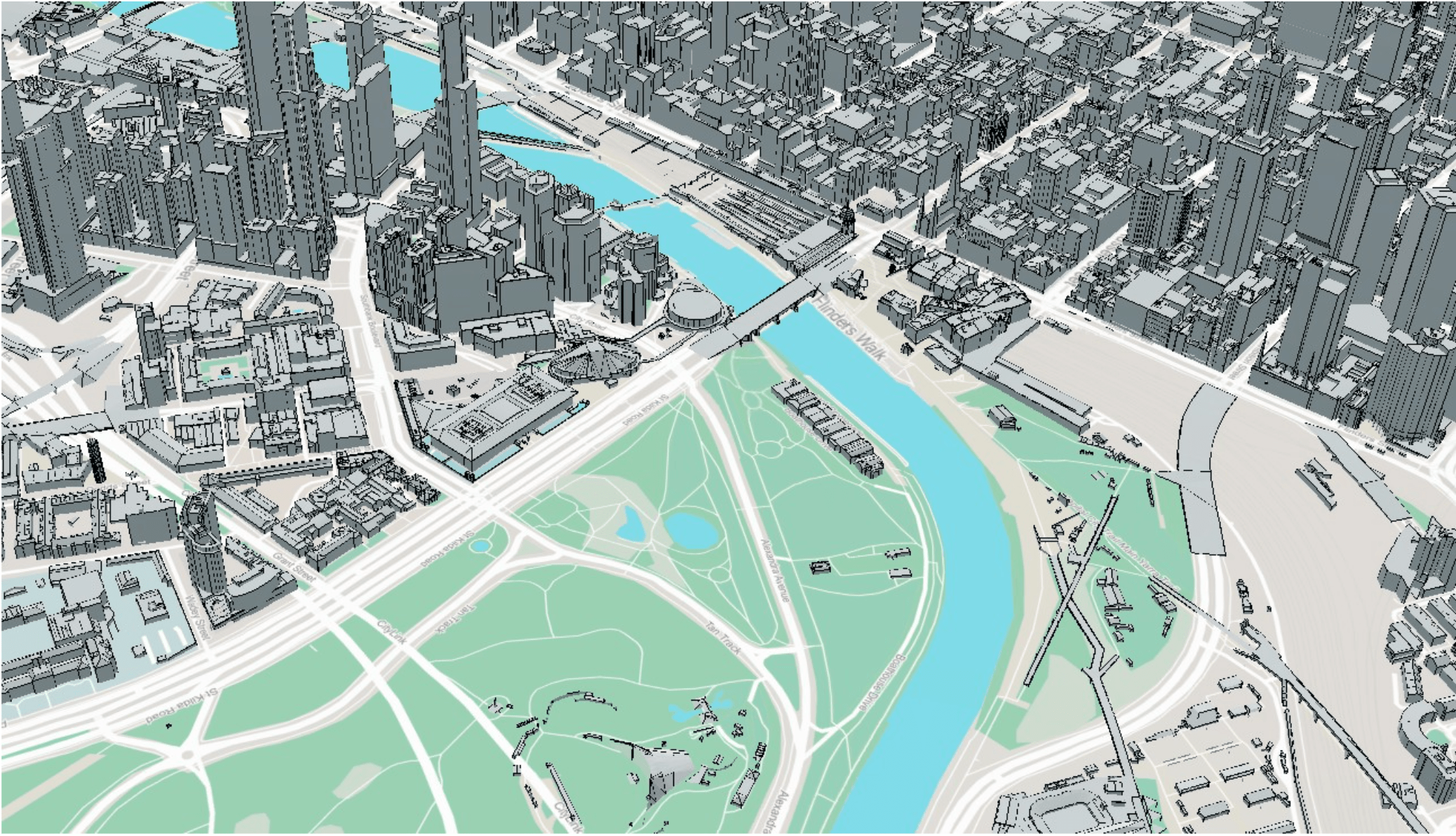
The platform will provide a wealth of data, from 3D buildings of Melbourne to the live habitat of Phillip Island penguins. It can be applied to assist with several scenarios:
- Develop smart cities with innovative transport systems, vegetation and buildings
- Provide disaster management support and help solve energy problems
- Help preserve natural resources and support climate change efforts
- Help planners and engineers investigate feasibility and solve issues
- Support automatic regulatory decision-making
This initiative is the perfect example of the depth and breadth of digital twins. With an innovative approach, anything is possible. See Digital Twin Victoria in action by trying it for yourself here.
Digital twins: Challenges and considerations
Digital twins offer dozens of benefits, but they can present challenges. Here are a few you should consider.
Data quality and availability
Digital twins rely on quality data. The information must be precise, timely, accessible and readily available. Because digital twins provide so much data, it can be challenging to sort through this information and discover what’s useful and what isn’t.
As such, it’s vital to implement robust data governance frameworks for cleaning, storing and analysing structured and unstructured data. This can be a significant investment; you may need to invest in staff or artificial intelligence to help with this process.
Technical complexity and costs
Digital twins have a relatively high barrier to entry. They can be technically complex and expensive to set up. While businesses that build virtual twins can significantly reduce long-term costs, the upfront investment is a hard roadblock to bypass.
However, as the technology becomes widely used, the entry cost should decrease, which will likely be a short-term challenge.
Interoperability
Your digital twin doesn’t operate in a vacuum. It needs to play nicely with all of your other systems, software and computers. While these integrations will become easier in the future, the road to seamless interoperability isn’t straightforward.
In the meantime, it’s essential to choose digital twinning solutions that work well together. For instance, Waylay Digital Twin integrates with Salesforce, allowing you to visualise and explore your IoT data directly in the platform.
Ethical implications
Lastly, there are two primary ethical concerns you should consider:
- Data privacy and security: If your digital twin generates sensitive information about your business, products or customers, you’ll need to implement data protection strategies to identify, classify, store and use this information in line with legislation. You may be required to implement access controls and a thorough code of conduct to secure sensitive data.
- Bias: Bias can stem from faulty sensor readings, incomplete datasets or even artificial intelligence models. This can create inefficiencies and lead to false outcomes. As such, it’s important to collect a diverse range of data to find outliers. You should also continually evaluate your model to ensure it’s reliable.
The future of digital twin technology
The digital twin market was valued at a respectable US$24.48 billion in 2023. By 2032, it’s forecasted to reach an astonishing $259.32 billion.
The application of digital twins is currently widespread in advanced industrial sectors. However, the new opportunities of Industry 4.0, 5G connectivity, cloud computing and generative AI capabilities mean businesses in various industries will soon look to leverage the wide range of digital twin use cases on offer.
The good news is that there are a few things you can do to ensure you’re prepared for the future. Here’s a quick checklist to show you how to get started:
- Strengthen data foundations. Ensure information is integrated within a data platform.
- Adopt IoT sensors. Begin collecting real-time performance data from assets.
- Upskill your teams in data science and AI in digital twins to build in-house expertise.
- Identify one asset or process where a digital twin could add value. Start small.
- Run simple pilot projects that you can test and scale once you can prove ROI.
- Invest in scalable cloud computing platforms that support continuous data flow.
Each of these steps will put you in the right position to build digital twins now and in the future, giving you the data and infrastructure to unlock the benefits at the right time.
Experience Salesforce with an interactive demo.
Get hands on with our products and explore real use cases and solutions built for agentic enterprises.
Get the best out of digital twins with Salesforce
Digital twins are redefining how businesses optimise their operations. By blending real-world data with virtual intelligence, organisations can make smarter decisions and reduce risk without incurring the costs that come with physical tests and prototypes.
Getting off the ground with digital twins means having the right technology stack to connect your systems, people and processes. Salesforce has the tools that can help you bring your digital twin prototype to life:
- Salesforce AI: Predict anomalies from IoT data and turn raw data into insights.
- MuleSoft: Connect OT/IoT gateways and cloud data stores into a unified API layer.
- Tableau: Monitor and visualise asset performance management in real-time.
- Field Service: Automatically route technicians when your twin detects an issue.
Together, Salesforce’s suite of solutions will help you turn every digital twin insight into real-world business outcomes. Try Salesforce for free today to find out more.
FAQs
What is a digital twin aggregate?
A digital twin aggregate combines multiple individual digital twins, such as component, asset and system twins, into one unified model. This lets organisations assess how different components and systems interact with one another in a broader network, leading to more complete insights.
What are some digital twin examples?
In the real world, digital twin examples range from Digital Twin Victoria to SpaceX’s Dragon Capsule. We’ve also seen Siemens and BMW use digital twins to power smart factories, and Shell has used digital twins to simulate conditions on offshore sites, improving staff safety.
Is implementing a digital twin expensive?
Costs will vary, depending on the scale and complexity of your digital twin initiative. That said, digital twins will typically deliver long-term savings through predictive maintenance, improved efficiency and the reduced need to create prototypes. The best advice is to start small with a single asset or process twins and gradually scale as you prove ROI.