


Let’s start with the good news. Ecommerce isn’t slowing down. In 2024, 9.8 million households shopped online – a new record. This means there are still plenty of opportunities for businesses and individuals to capitalise on the market and succeed as a seller.
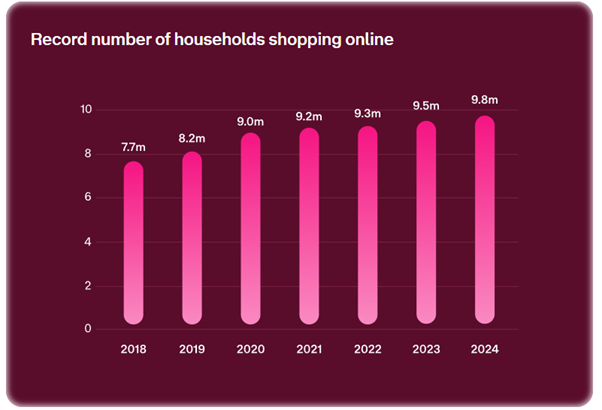
Source: Australia Post eCommerce Report 2025
One of the most tried-and-tested methods of getting your foot in the door is dropshipping, where you work with a supplier to fulfil your sales orders without holding inventory yourself. With dropshipping, you get the benefits of selling directly to consumers without the drawbacks of paying for stock up front.
In this guide to dropshipping, we’ll explore what dropshipping is and how it works, and we’ll share some best practices for building a successful dropshipping business in Australia, including the legal considerations you’ll need to be aware of.
What you’ll learn
- What is dropshipping?
- The dropshipping process
- Dropshipping vs. other online business models
- The benefits and drawbacks of dropshipping products
- How to build a dropshipping business in 2026
- Key legal and operational considerations in Australia
- Expert tips to make a profit with dropshipping
- What to look for in a dropshipping supplier
- Ready to start your dropshipping business?
- FAQs
What is dropshipping?
Dropshipping is a method of running an online store without holding physical stock or inventory yourself. When a customer buys one of your products, you pass the order to the supplier, and they send it directly to the customer.
Using this strategy, business owners can avoid many of the costs associated with running a business, including storage, packaging and logistics. Some suppliers will additionally offer things such as on-demand printing and branding as part of the packaging.
A dropshipping business model is a low-risk way to test out product ideas without buying stock up front. It means you don’t end up with inventory on hand if you’re not able to sell it, which allows you to focus your resources on other high-value tasks like product research and marketing.
Scale your dropshipping business with intelligent data and AI
Ready to accelerate growth? See how Agentforce Sales helps teams close deals faster, automate busywork, and unlock real-time pipeline insights.


The dropshipping process
The best thing about dropshipping is that, while it does require effort to master, it’s a very straightforward concept when you’re just getting started. Let’s see how dropshipping works:
Step 1: A customer places the order
First, a customer will see a product that they want to buy, either on your website or via your social media channels. This is why you need a great marketing strategy to pull off dropshipping; it’s down to you alone to draw customers in.
Step 2: The supplier receives the order
As soon as you receive notification of the customer order, you’ll pass the order details on to your supplier, including information about the quantity of each item, the customer’s address and shipping instructions.
Step 3: The supplier fulfils the order
Once the supplier has all the details, they’ll get to work and send out the order promptly. A reputable partner will provide you with inventory updates, lead times and tracking orders, which you can then pass along to the customer to keep them updated. This helps you build customer trust and a positive reputation for your business.
Step 4: You receive payment and keep the profit
You’ll receive the initial payment for the products at the point of transaction when the customer places their order. The supplier will then receive their cut once the order has been fulfilled. If you’ve planned successfully, you’ll make a profit from each sale.
Dropshipping vs. other online business models
Dropshipping isn’t the only business model available to you in 2026. There are a couple of dropshipping alternatives that can also be highly successful if implemented correctly.
One option is affiliate marketing, a model that allows you to earn a commission by promoting someone else’s product. You’ll receive unique product links from participating businesses that you embed in your website pages, blog articles and social media content. When someone clicks through your link, you’ll receive a small commission; in some cases, the consumer doesn’t even need to complete the sale. However, your earnings are typically less than you can get from dropshipping.
Another option is Fulfilment by Amazon, or Amazon FBA. This shares several characteristics with dropshipping; the main differences are that you’ll initially have to organise transferring your products in bulk to one of Amazon’s warehouses. All products are then bought via Amazon outlets exclusively rather than your own website, although you can still use your website for promotion and marketing.
Here’s a clear breakdown of the three methods and how they compare.
Comparison Table of Online Customer Fulfilment Methods
| Considerations | Dropshipping | Affiliate marketing | Amazon FBA |
|---|---|---|---|
| Inventory | Supplier or wholesaler looks after inventory | None; you simply promote the products | Business owner initially, then Amazon warehouses |
| Profit margins | 10%–30%; lower due to supplier cuts | Typically between 5% and 30%; wider for niche markets | 20%–40% |
| Start-up costs | Store setup and paid ads | Very low; only a website and some paid ads required | Upfront costs for inventory and FBA fees |
| Overall control | Control over product range and marketing, but reliant on suppliers | Low; simply advertise what other businesses are offering | Control over product range and marketing, but Amazon controls fees |
| Best for | Marketers looking to test product strategies without being burdened with stock | Content creators, marketers and those looking for a low-risk environment | More experienced entrepreneurs |
The benefits and drawbacks of dropshipping products
There are good reasons to build an online store through dropshipping. However, it’s not without risk, and there are some potential drawbacks that you need to be aware of. Let’s discuss both the dropshipping pros and cons.
Benefits
The primary benefit of dropshipping is that it levels the playing field and allows small and medium-sized businesses to compete with large enterprises for customers without an enormous upfront investment. The benefits include:
- Low startup costs: You don’t actually buy your own inventory, meaning there’s less of an initial investment. You’ll also keep lower overheads, potentially increasing profit margins over time.
- Scalability and flexibility: Dropshipping makes it easy to test new products and scale up without the pressure of holding stock. You can start small, add new items as you go and sell through your own site or through marketplaces like Etsy.
- Wide product selection: With dropshipping, there’s no real limit on the products you can sell, so long as you’re able to find a distributor to make it happen. Dropshipping offers you a creative way of doing business.
- Global reach: One common roadblock for small businesses is making products available overseas. Dropshipping gives businesses a global reach, allowing them to sell worldwide without jumping through logistical hoops.
- Time to focus on other high-value tasks: Best of all, dropshipping may make it easier to focus on areas of the marketing and customer experience that require greater attention and creativity.
Drawbacks
Dropshipping isn’t without its challenges. For starters, it’s a model that’s been around for a while, meaning you’ll face stiff competition from established businesses unless you’re able to target something particularly niche.
Some other notable challenges include:
- Loss of control: If you outsource your manufacturing, custom packaging and shipping to a supplier, you’re putting a lot of trust in that business. If there are supply chain issues or the supplier has problems, they can create disruptions for your business.
- Low profit margins: The fierce competition can make you feel like you’re in a race to the bottom in very crowded fields, as companies often aggressively undercut each other on pricing. This could lead to low profit margins on your sales.
- Building your brand: Carving out a brand identity is essential for building and maintaining customer loyalty and ensuring your business stands out. However, dropshipping can make it harder to fully customise products outside of suppliers that offer white label services. It can also make it more challenging to ensure quality.
- Shipping and returns: With a dropshipping model, you’re essentially the middle party in the sales chain, acting as the go-between for customers and suppliers. This means that if there’s an issue with shipping, or if the customer chooses to return a product, you’ll have to bear the brunt of it.
How to build a dropshipping business in 2026
While new technologies can help make things easier for businesses, the fundamental process of dropshipping is largely the same as it was when the model first hit the market. By following these steps, you’ll be able to start building a successful dropshipping business for 2026 and beyond.
1. Identify products to sell
As mentioned, there’s a high level of scope and creative potential for dropshipping businesses, with many entrepreneurs using this method to launch their passion projects.
You may wish to start a print-on-demand clothing business or target popular markets, such as fitness or pet products. You could write books or produce designs for posters and canvas prints. If you see a successful market trend that you think you can tap into, take advantage of it.
2. Choose a supplier
This is an important decision, as your supplier will become the lifeblood of your operation. Take your time to compare suppliers, and try to find reputable reviews to confirm their quality and reliability.
3. Build your brand
Once you have your products and your supplier, it’s time to build a brand. This is when you should create a website and develop a content marketing strategy that will build your brand identity and boost recognition with potential customers.
As well as creating your website, you can also turn to a platform like Agentforce Commerce. It’s a powerful way to manage all of your ecommerce business operations under one roof, from guided quoting for customers all the way through order management and processing.
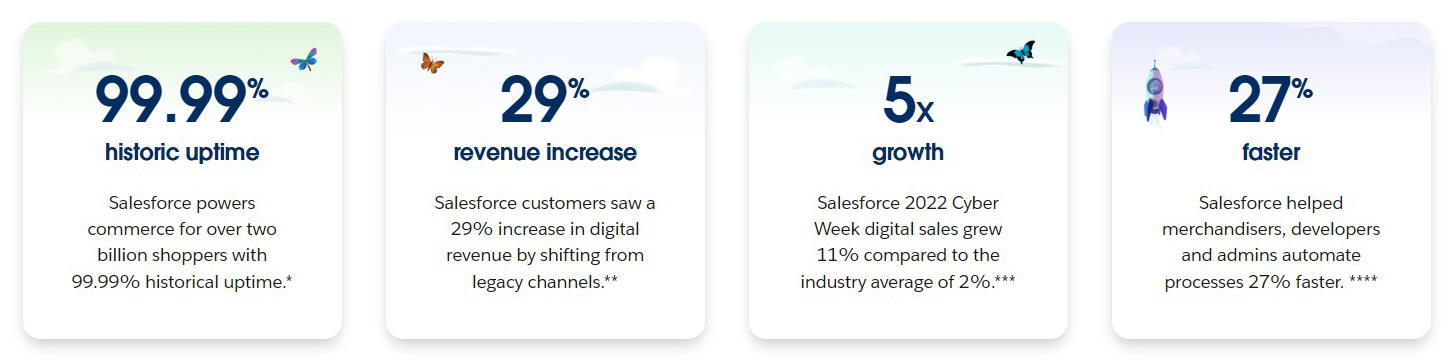
Source: Salesforce
4. Prioritise customer service
As soon as your website starts to generate traffic and your content marketing begins to have an impact, you’ll start to receive customer orders.
As you won’t have to worry about inventory, packaging or shipping, your priority should be to maintain a positive customer experience throughout the course of the sale. Keep your customers updated with regular emails, send across tracking details promptly and thank them for choosing your service. Each successful transaction will help you build customer loyalty and increase your brand recognition.
5. Add product lines and expand
Once you have a successful product line or two under your belt and you fully understand the process, you can start to think about expansion. However, you should give each potential product the same due diligence as your first to determine if it’s likely to be a success. It only takes one poor-quality product or service to derail your hard work.
Learn how to forecast revenue as your dropshipping business grows
Accurate forecasting starts with clear data. See how Sales Cloud helps you track performance, manage your pipeline, and make smarter decisions as you scale.


Key legal and operational considerations in Australia
While the process of creating a dropshipping business is universal, each country has certain legal caveats that you’ll need to pay attention to.
Some of the main areas that you’ll need to have a full understanding of include:
- Obtaining an Australian Business Number (ABN): All businesses require an ABN to trade in Australia. It’s your unique ID, and it’s required for things such as registering for tax (and the potential credits that come with it) and proving legitimacy. Even if you’re a sole trader or freelancer, you’ll likely need one.
- Meeting Goods and services tax (GST) requirements: The tax registration threshold for GST in Australia is $75,000. This means that as soon as your sales exceed this limit, you’ll be legally obliged to register for GST. Failure to do so can lead to penalties from the Australian Tax Office (ATO). As a dropshipping business, you may be eligible for certain tax reductions.
- Complying with Australian Competition and Consumer Commission (ACCC) laws: This is the organisation that protects consumers from unlawful business practices. Its primary purpose is to make sure dropshipping businesses are offering transparent, accurate information about their products and services.
- Creating a clear refund policy: You should clearly convey what a customer can expect in terms of a refund should the product they purchase not meet their expectations. This is a vital policy that helps establish a clear process and build customer trust.
Expert tips to make a profit with dropshipping
Dropshipping is a simple concept; however, like most business models, some companies are better at achieving success with it than others. That’s because they often go above and beyond to deliver a flawless customer experience, keeping things organised and optimised in the process.
Here are some of our expert tips to help you make a profit with dropshipping in 2026.
Invest in a quality CRM
As you start to bring in orders, you’ll want to store all of your customer information and sales history in one place. That’s where a reliable customer relationship management (CRM) platform can make things a lot easier.
Customer 360 from Salesforce gives you the ability to manage the customer experience from the beginning. And thanks to deep integration with third-party applications and Salesforce’s own range of products, you’ll be able to build an infrastructure tailored specifically to your dropshipping business needs.
Choose the right niche
The dropshipping market is saturated. Dropshipping businesses getting started in 2026 are more likely to succeed if they tap into an unexplored area or find unique ways to exploit existing ones. Research potential competitors in the areas that you may target. You should also choose a segment that you’re genuinely passionate about.
Engage with social media
Like it or loathe it, social media is essential for building a successful modern dropshipping business. Our Connected Shoppers Report reveals that 40% of Gen Z use TikTok to discover products, and they don’t hesitate to buy things that interest them. YouTube is also vital for product discovery, so consider finding a way of introducing video content (particularly short-form videos) into your marketing and content strategy.
Take accountability
Things will go wrong at some point. It’s happened to every one of today’s most successful businesses. So, when a product gets sent to the wrong address or your customer receives something that’s broken and complains, avoid sticking your head in the sand. Own the error (even if it’s not your fault) and offer solutions.
Track performance and improve
Data is critical for business success these days. You should use it to your advantage to track performance metrics and see what products are working and which lines aren’t generating sufficient sales and revenue. You can also use it to examine market trends, predict customer behaviours based on past buying history and forecast sales and demand.
You can achieve all of this with a powerful analytics application, such as Tableau, which will help you uncover key insights and potential strategy paths, all through the use of intuitive visualisation and dashboards.
What to look for in a dropshipping supplier
If you’re serious about getting started with dropshipping to launch and scale your ecommerce operations, vet potential suppliers carefully. They can make or break a fledgling business.
Here are some of the key areas to explore.
Dropshipping Partner Considerations (Checklist)
| Factor | Why it matters | Questions to ask | Do they fulfil it? |
|---|---|---|---|
| Flexibility | Marketing and customisation | Do they offer white label packaging and branding? | |
| Visibility | Inventory management | Do they offer visibility on live stock levels? Do they provide alerts for out-of-stock items? | |
| Integration | Workflow | Can I integrate their supplier portal with my CRM and analytics tools? | |
| Promotions | Marketing and customer satisfaction | Do they offer promotional bundles, sales, and offers? | |
| Quality of service | Customer trust and brand reputation | Do they offer a thorough set of quality controls on products? Can they guarantee consistent delivery speed? | |
| Safety | Customer trust and brand reputation | Do they facilitate low-friction sign-off options on delivery? | |
| Exchange and returns | Customer trust, brand reputation and profit margins | Will they accept refunded goods? | |
| Shipping speed | Workflow | Will their shipping speeds satisfy my own expectations? Do they have reasonable shipping costs? | |
| Reputation | Business security | Do they have positive, authenticated reviews from other clients? |
Get the latest sales tips delivered to your inbox.
Sign up for the Salesblazer Highlights newsletter to get the latest sales news, insights, and best practices selected just for you.
Ready to start your dropshipping business?
If you’re looking for a way to earn an income from home and you have the skills to curate a brand around a product, dropshipping is a great choice. If you’ve found a niche that you’re passionate about and you’re prepared to put in the work, go for it. Just be consistent with your marketing and stay accountable to your customers, and you’ll set yourself up for success.
At Salesforce, we can be with you every step of the way as you set out on your new business venture. With our extensive range of products and services, all integrated onto our Agentforce 360 platform, you’ll be able to:
- Launch your store and build your product pages with Agentforce Commerce
- Develop quality generative-AI content and lead scoring with Agentforce Sales
- Support and take care of customers with Agentforce Service
All of this makes the process of launching, maintaining and growing your new business easier, faster and more achievable. Start your free 30-day trial today.
FAQs
How will dropshipping change in 2026?
Dropshipping will remain a reliable customer fulfilment process in 2026. However, those looking to start a business will need to focus on differentiation and building an authentic brand. It’s a good idea to look to AI for help with things such as content marketing and workflow automation. And customer expectations will be higher than ever, with the personalised experience being key to success.
Is dropshipping profitable in Australia?
It certainly can be, but there’s no guarantee. The great thing about dropshipping is that you don’t need to pay for and store your products in advance, meaning it’s a fairly low-risk approach. As long as you stick to the fundamentals and remain consistent, you can achieve success.
Is dropshipping allowed in Australia?
Yes. Dropshipping is legal in Australia. You can run a dropshipping business as long as you follow the national business laws, such as registering for an ABN and GST. Make sure you understand your obligations, as you’re still ultimately responsible for product quality even if a third-party handles fulfilment.
How do I find reliable Australian dropshipping suppliers?
Start by using a trusted supplier directory or an ecommerce platform with vetted Australian suppliers. Working with local partners means faster shipping, better product quality and fewer customer issues. Look for clear plans and pricing, good communication and a product range that makes sense for Australian consumers.