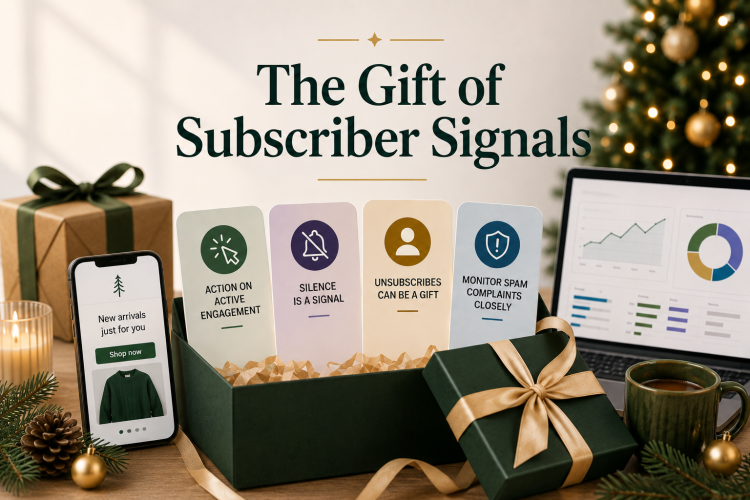




The holiday shopping season is the ultimate stress test for marketers. Inboxes are flooded, SMS channels are buzzing and consumers are suffering from a severe case of promotional fatigue.
As a marketer, it is easy to look at the massive influx of campaign data during Q4 and see nothing but chaotic noise. But if you shift your perspective, every subscriber’s behavior, whether active or passive, sends a signal, and that signal is a gift. Its value lies not in the action itself, but in what it reveals about customer needs, preferences and intent.
Every email click, SMS tap, period of inactivity and even an unsubscribe offers insight into how a subscriber wants to engage with your brand. Here are 4 tips to unwrap these subscriber signals and use them to fuel your holiday strategy.
State of Email 2026: From Batch to Behavior
See what’s top of mind for email marketers. Learn how to audit your lifecycle maturity and shift from low-impact batch sends to high-performance, behavior-based orchestration.



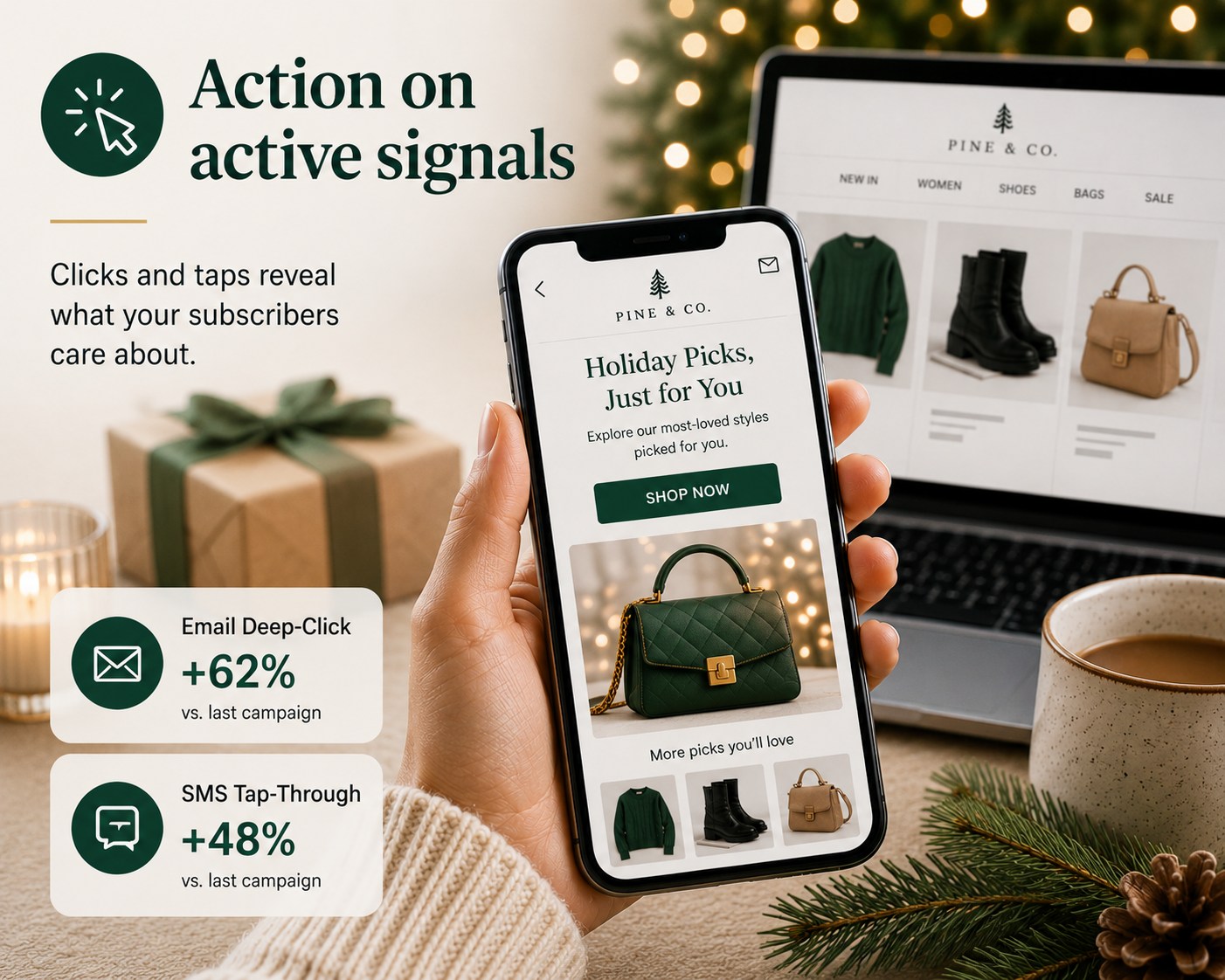
1. Action on active engagement signals
When a subscriber clicks a link, replies to an SMS or meaningfully engages with your brand, they are handing you a gift of insight.
- The Email Deep-Click: Rather than relying solely on open rates (which can be skewed by privacy features), look at clicks into specific product categories or product pages. These actions provide a clearer view into what matters most in their holiday shopping journey.
- The SMS Tap: If a subscriber clicks a link in an SMS, they are signaling active interest. Mobile screens are intimate real estate, so a click signals that your message has earned attention and may indicate purchase intent.
What engagement signals reveal
A click is only the beginning. The real value of subscriber signals lies in what it reveals about subscriber intent.
Every interaction provides another clue about where a customer is in their buying journey. A click on a product collection suggests exploration. Repeated visits to the same product category or product page indicate growing consideration.
Engagement with shipping deadlines, store locators or cart reminders often signals urgency and purchase intent.
Looking across your audience, engagement patterns also reveal broader trends. Tracking where and when clicks occur reveals which creative concepts drive intent and precisely when your audience is ready to buy during key sales windows.
How to use it
Once you’ve identified what those signals mean, respond while the interest is still fresh.
Trigger follow-up campaigns based on the specific behavior a subscriber demonstrated. Someone who engaged with a product collection can receive a personalized email featuring those products, related recommendations or recently discounted items. A subscriber repeatedly viewing the same product category may benefit from social proof, inventory updates or shipping reminders rather than another generic promotion.
The goal isn’t simply personalization. The goal is relevance. The closer your follow-up reflects the subscriber’s demonstrated interests and stage in the buying journey, the more valuable that engagement signal becomes.
2. Silence is a signal
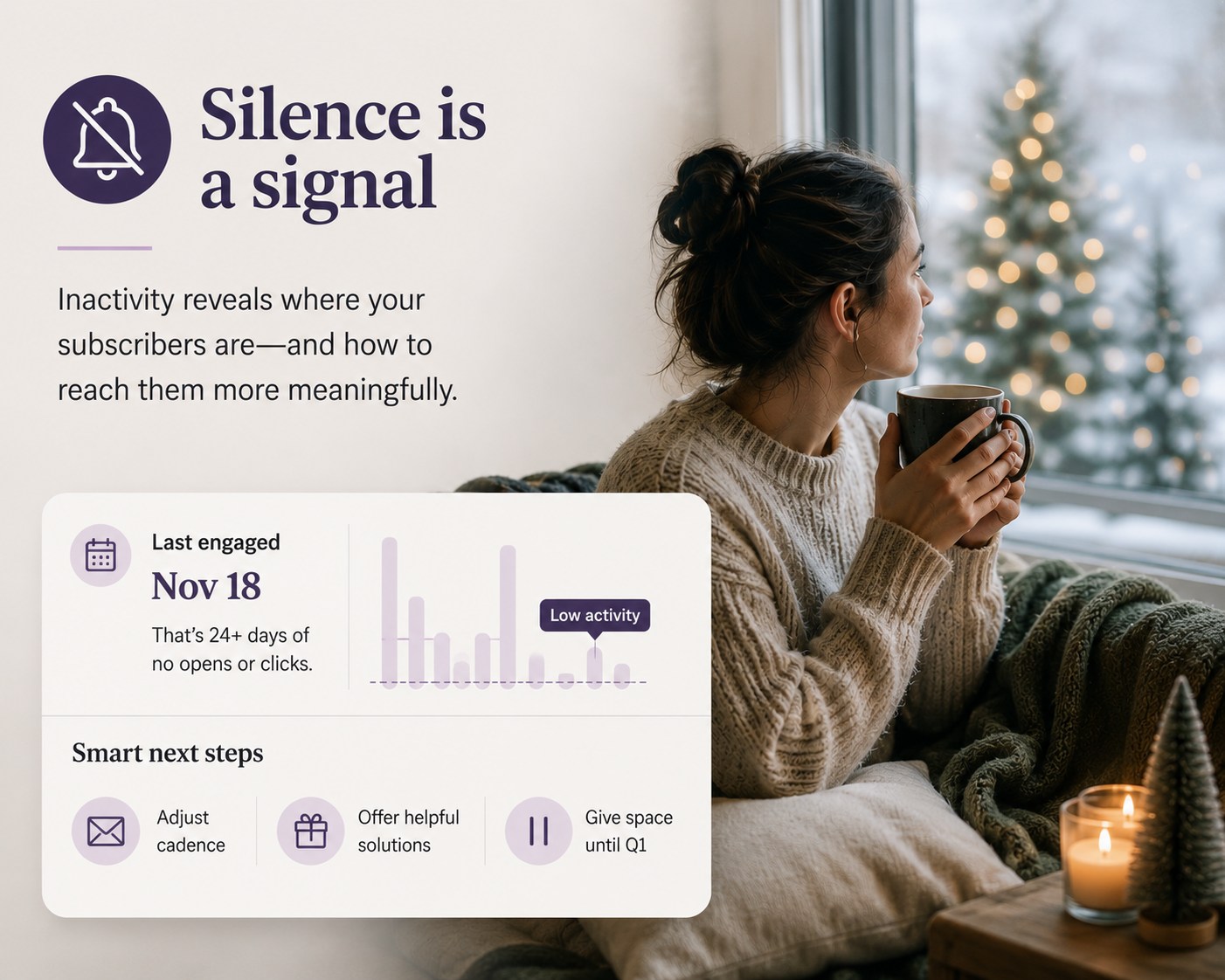
It hurts when a campaign you spend weeks designing gets met with nothing but crickets. But silence is a powerful signal in its own right. If a segment of your list has not opened an email or clicked an SMS link since before Thanksgiving, they are giving you a signal worth investigating.
What silence reveals
Silence is not the absence of a signal. It is a signal that requires context.
A subscriber who hasn’t engaged since before Thanksgiving isn’t necessarily losing interest in your brand. They may be overwhelmed by promotional volume, finished with their holiday shopping or simply waiting for an offer that better fits their needs.
The mistake is assuming every quiet subscriber is equally disengaged. Understanding the context behind inactivity helps determine whether they need a different message, a different cadence or simply a pause.
How to use it
Treat silence as a signal to adapt your strategy rather than increase the volume.
Reduce sending frequency for inactive subscribers, shift them toward content focused on convenience instead of discounts, or highlight gift cards, shipping deadlines and other solutions that match where they are in the holiday season.
If engagement still doesn’t return, give them space until Q1. Preserving sender reputation and focusing your efforts on engaged audiences often delivers stronger long-term results than continuing to chase inactive subscribers.
3. Unsubscribes can be a gift
It feels counterintuitive, but an unsubscribe during the holidays can provide a uniquely clear signal about the subscriber relationship.
When a subscriber chooses to opt out, they are telling you that something about the current relationship with your brand is no longer aligned with their expectations, needs or preferences. While it may feel like a loss, an unsubscribe provides clarity that other behaviors cannot.
What unsubscribes reveal
An unsubscribe is one of the clearest signals a subscriber can send.
Unlike inactivity, an unsubscribe removes the ambiguity. It tells you the current relationship with your brand no longer matches that subscriber’s expectations, whether because of message frequency, content relevance or changing priorities.
Looking across unsubscribe trends can reveal broader opportunities for improvement:
- Sending frequency has become too high.
- Content is no longer relevant.
- The value exchange is unclear.
- Subscriber needs or priorities have changed.
While losing an individual subscriber may feel like a setback, these patterns provide valuable feedback about the overall health of your customer relationships. The goal is not to keep every subscriber; it is to create value for the subscribers who want to continue the conversation.
How to use it
Instead of focusing only on the subscriber who left, analyze the pattern behind the departure.
Look for increases in unsubscribes after specific campaigns, promotions or audience segments. Review whether certain messages are creating fatigue or whether some customers would benefit from different content, cadence or channel preferences.
Use those insights to refine your segmentation, messaging and customer experience. A healthier, more engaged subscriber base ultimately delivers greater long-term value than simply maintaining a larger list.
4. Monitor spam complaints closely
A spam complaint is one of the clearest signals a subscriber can send. Unlike silence or inactivity, it indicates that the subscriber did not simply lose interest; they actively felt the message did not belong in their inbox.
What spam complaints reveal
Spam complaints can reveal friction in the subscriber experience:
- Sending frequency feels excessive.
- Content no longer feels relevant.
- The subscriber does not recognize or trust the sender.
- Expectations set during signup are not being met.
While a single complaint may be easy to dismiss, patterns in spam complaints across campaigns, segments or acquisition sources can reveal deeper issues with messaging, targeting or overall customer experience.
Spam complaints also carry consequences beyond the individual subscriber. As complaint rates rise, mailbox providers may begin placing more of your emails in the spam folder, making it harder for your messages to reach the inbox. That means even your most engaged subscribers, the customers most likely to click, convert and drive revenue, may never see your campaigns.
How to use it
Treat spam complaints as an opportunity to improve the subscriber experience before more customers reach that point.
Review the campaigns, audiences and moments that generate higher spam complaint rates. Use those insights to refine segmentation, adjust sending cadence and ensure subscribers continue receiving messages that feel expected, valuable and relevant.
By addressing complaint trends early, you protect more than your sender reputation. You improve inbox placement, preserve your ability to reach your most engaged audiences and maximize the performance of the campaigns that matter the most during the holiday season.
The Ultimate Holiday Wrap-Up
Q4 is not just a revenue moment; it is an audience intelligence moment. Holiday engagement reveals which customers are most likely to continue the conversation beyond the holidays, while disengagement reveals where your approach needs to evolve.
The most successful holiday marketers don’t simply measure clicks, silence, unsubscribes or spam complaints. They interpret what those behaviors reveal and respond in ways that reflect each subscriber’s needs and intent.
The holiday presents the best opportunity of the year to turn subscriber signals into stronger relationships. The true value extends beyond Q4, helping you build a smarter retention strategy and a more loyal, engaged customer base that lasts well into the new year.
Your subscribers are constantly telling you what they need. The marketers who win Q4 are the ones who know how to listen.



Take your mobile marketing up a notch
Kimberly Pope and other product experts will teach you how to deliver mobile messages that are rich, interactive and conversational at scale.