
Published for the Trailblazer Community 20th Anniversary Series.
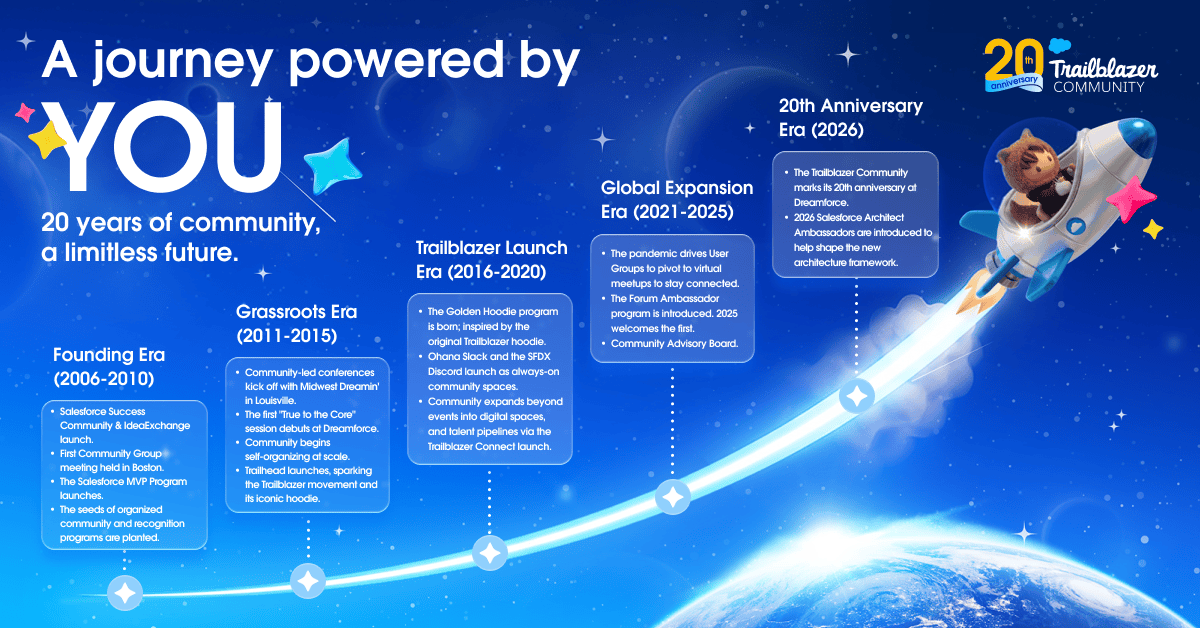
The founding era (2006-2010)
Back in 2005, when I first started using Salesforce, there was no Trailhead. There were no official certification tracks, no local meetups, and certainly no organized recognition programs. Most of us were “accidental admins”. We were handed the keys to a newly minted Salesforce org, given an owner’s manual (if we were lucky), and told: “Figure it out.”
I’m Steve Molis, though most of you know me as SteveMo. (A Salesforce support rep gave me that name while fixing a login issue caused by a special character in my username. It stuck.) I’m glad to look back on the first chapter of our 20-year story, the Founding Era (2006–2010), because I was there for it.
Where it started: Salesforce Success Community and the IdeaExchange
In 2006, Salesforce officially launched the Salesforce Success Community (the earliest iteration of the online community), bringing together online discussion message boards and the IdeaExchange. Together they gave customers a place to ask questions, share answers, and tell Salesforce what to build next.
Before these boards, if you hit an undocumented system limit or needed a tricky formula solution, you were on an island. Suddenly, we had bulletin boards where users across the globe could post technical questions, swap workarounds, and help each other troubleshoot.
For many of us solo admins, hitting these forums felt like winning the “Salesforce lottery.” It was a place where empathy met technical ingenuity. This mindset is still a part of the community today.
The IdeaExchange added another game-changing layer. For the first time, platform users could directly suggest platform features, upvote ideas, and influence the product roadmap. It gave the community a voice – and proved that Salesforce was listening. A notable example of a feature originally requested on the Salesforce IdeaExchange and eventually built and released by Salesforce is Dynamic Forms for Core Standard Objects.
It was on these early boards where I started answering questions about validation rules and custom formulas. One day, I helped an admin named Jane Isaac figure out a complex validation rule. To my surprise, a few days later, a carefully packaged bottle of wine showed up at my desk via FedEx with a thank-you note. That single moment sparked what eventually became the famous community mantra: “You owe me a beer!”
From screens to rooms: the first Community Group meetings
While the online boards were buzzing, a new movement was brewing: people wanted to connect face-to-face.
In the early days, if you wanted help, you had to seek out peers. In Boston, community members gathered for the very first official Community Group meeting (then called User Groups), proving that local, peer-led support was just as vital as virtual discussion boards.
Word quickly spread to other cities. When Eric Dreshfield entered the ecosystem in 2009 as an “accidental analyst” in a call center, his manager advised him to seek out others using the platform. Eric traveled to Chicago to attend a User Group meeting led by Denise Carbone.
“Denise provided a welcoming environment and made sure everyone knew there were no ‘stupid’ questions,” Eric recalls. Inspired by that experience, Eric went back home to launch the Evansville User Group, drawing attendees from across Indiana, Missouri, and Kentucky.
Around the same time, community members started connecting on Twitter using the #askforce hashtag. Figures like Mike Martin, who joined the ecosystem in 2008, used #askforce to network with peers, form early “Tweetups,” and organize informal gatherings at Dreamforce.
Whether in local conference rooms or on Twitter, the spirit of the community was identical: no one succeeds alone.
The first Salesforce MVPs
Around 2010, the Salesforce Trailblazer Community team launched the Salesforce MVP Program to recognize the people who were helping everyone else. The first class included builders and teachers like Jeff Douglas and Rhonda Ross. The program formalized what the community was already doing: sharing knowledge freely and lifting each other up.
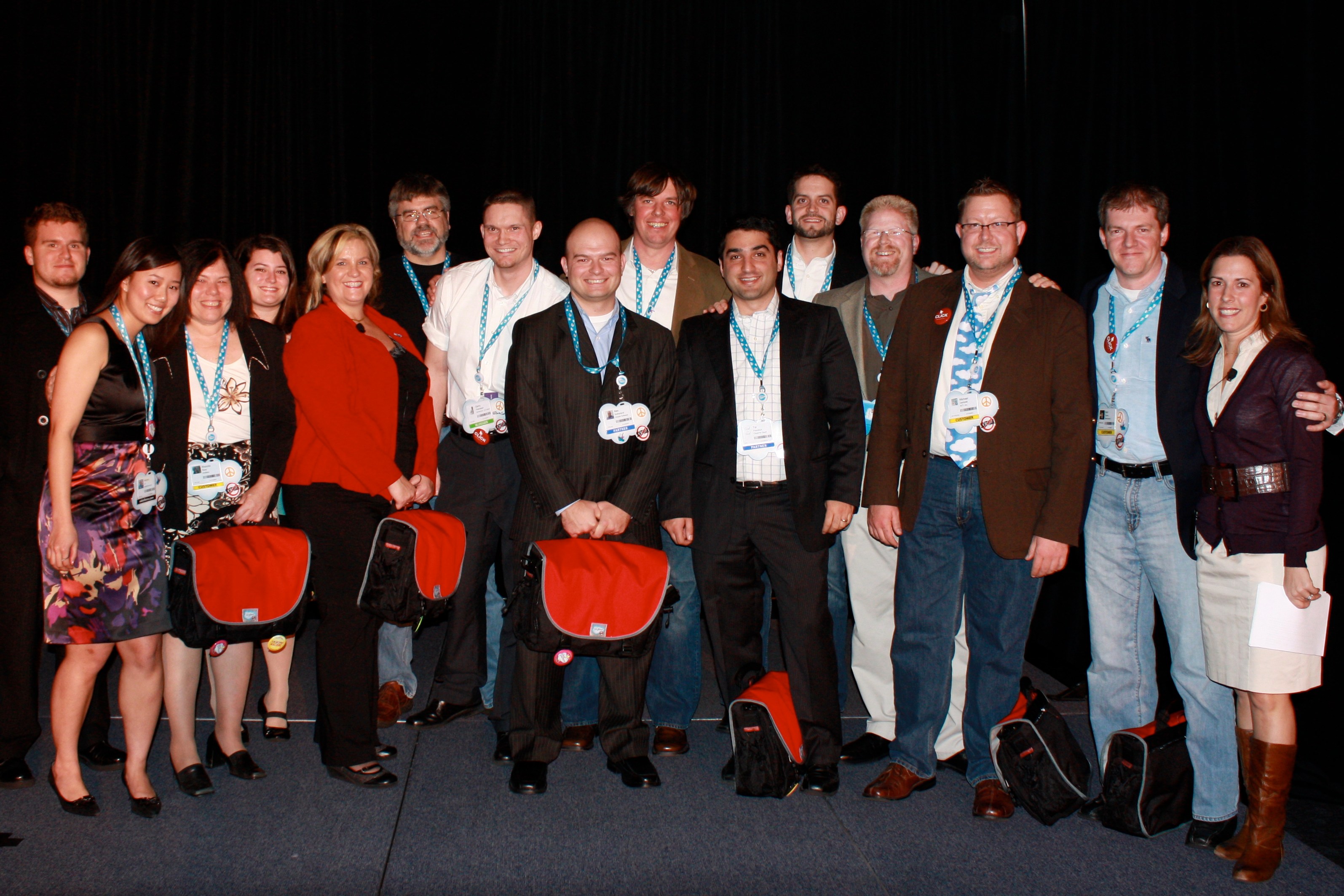
The Salesforce MVP title wasn’t about being the smartest person in the room – it was about leadership, knowledge-sharing, and an unwavering commitment to helping others succeed. Early MVPs became leaders in the ecosystem, with companies actively recruiting them for their deep expertise and passion.
Today there are more than 300 Salesforce MVPs, and the program recognizes the most technical and influential customers, consultants, and partners across the ecosystem. MVPs are chosen for their expertise, leadership, and generosity in educating and advocating for the ecosystem, and provide product feedback. And it all started with people answering questions on a board.
The legacy of the seeds we planted
Looking back, we didn’t have learning paths or trails to follow. What we did have was an incredible group of people who cared deeply about helping each other succeed, and this is still what makes our community so special 20 years later.
The seeds planted during those early years – discussion boards, the IdeaExchange, local user groups, and formal recognition programs – built the bedrock of what the Trailblazer Community is today. They transformed Salesforce from a CRM product into a global family where anyone, anywhere, can build a career.
Stay tuned for part 3 of our Trailblazer Community 20th Anniversary blog series, where we dive into the “Growth Era” (2011–2015) and the birth of regional Dreamin’ events and Trailhead!