


As India’s healthcare system scales, hospital and health system leaders are challenged by rising patient volumes, limited clinical capacity, and care journeys that are becoming longer, more fragmented, and harder to coordinate. This pressure is no longer driven by episodic surges alone, but by the steady expansion of outpatient care, chronic disease management, insurance-led access, and multi-touchpoint care pathways that stretch well beyond a single visit.
On paper, strain can still appear cyclical, tied to peaks or shortages. In practice, many hospitals are operating close to their limits every day. Long waits, compressed consultations, and exhausted care teams are no longer isolated warning signs. They are steadily becoming the baseline operating condition.
The invisible cost inside today’s operating models
India’s doctors, nurses, and care teams are the visible face of healthcare. They diagnose, decide, and shoulder responsibility in moments where there is little room for error. Increasingly, however, their time and attention are consumed by work that sits outside medicine itself.
Identity verification, pre-authorisations, TPAs, intake, follow-ups, and patient queries are no longer peripheral tasks. They now sit directly inside the care journey. Each handoff introduces delay, repetition, and recovery work that quietly eats into time meant for patients.
Beyond effort and mental load, this coordination work becomes a time problem. And in Indian healthcare, time is especially scarce, shaped by three structural realities.
First – The system operates under sustained demand.
India’s doctor-to-population ratio is estimated at 1:834, assuming 80% availability of registered allopathic doctors along with AYUSH practitioners. That equates to roughly 1.19 doctors per 1,000 people. At this level of demand, the system has little tolerance, and delays are felt immediately across the care journey.
Second – Delays accumulate before care even begins.
In many settings, outpatient waiting times can exceed 1-2 hours. As queues grow, clinicians are forced to compress consultation time simply to keep care moving. Studies of primary care in India have reported consultation times averaging around 2 minutes, among the lowest globally. When time compresses, risk increases.
Third – Insurance and benefits workflows now sit inside care delivery.
In FY25, insurers processed over 3.26 crore health insurance claims, paying out more than
₹94,000 crore in benefits. Each claim introduces eligibility checks, clarifications, and follow-ups that ripple through registration desks, care coordinators, and often clinicians themselves. The result is not just delay, but cognitive overload: decision-making under fragmentation.
Why efficiency gains alone no longer solve for scale
Most healthcare organisations have invested heavily in digitisation, adding systems, dashboards, and automation. Yet inside many hospitals, work often feels disorganised and more fragmented.
The reason is structural. Efficiency tools optimise individual tasks, but they leave coordination debt unresolved. In some cases, disconnected systems increase it by shifting work between teams without moving it forward.
For leaders, the question has changed. It is no longer how efficiently each function operates, but how work moves across the organisation and where it breaks down under sustained volume.
Why leadership attention must shift from tasks to workflow
At this level of scale, organisations do not need teams to work harder. They need systems that carry more of the load.
The most effective systems behave less like tools and more like operating allies. They assemble context before it is needed, absorb routine coordination, translate information into action, and surface only what requires human judgment. Used well, they do not replace people. They protect their attention.
This is where agentic AI systems matter at the leadership level. Not as a technology upgrade, but to redesign how work moves through the organisation under continuous demand.
Where leaders see the difference across the care journey
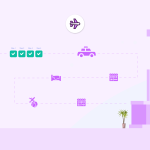
Before care begins: Fixing access before it reaches the clinic
At scale, the first bottleneck is rarely diagnosed. It is access.
Registration delays, unverified identity details, unclear insurance benefit coverage, and pending pre-authorisations can often surface just as a patient arrives for a scheduled procedure. The issue is not clinical, but it delays the visit, triggers escalation at the front desk, and pulls clinicians into conversations that should have been resolved earlier.
Agentforce for Healthcare helps address these access gaps earlier in the journey. Care coordinators can verify patient identity and benefits, manage intake digitally, and access a single, consolidated view of patient and coverage information. Eligibility checks and appointment information are available in one place, reducing last-minute surprises at the point of care.
Patients are supported as well. Through conversational self-service, they can find providers, verify coverage, and book, modify, or cancel appointments on their own. When exceptions arise, they are routed to care teams with the relevant context already in place. As a result, clinics start the day prepared, waiting rooms move faster, and clinicians meet patients with clarity rather than questions.
Transform healthcare for the agent-first era: Faster, smarter, always-on care
Learn how AI is helping Indian healthcare deliver better patient outcomes and a smoother provider experience.


During care: Decision context when minutes matter
During treatment, decision quality depends on speed and completeness. Yet patient context often remains scattered across systems: EMRs, claims platforms, labs, and referrals.
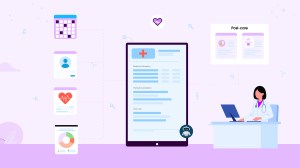
Agentforce for Healthcare brings patient management into a single, connected view through an interactive health timeline. Powered by Data 360 and MuleSoft connectors, it assembles clinical and non-clinical data in real time, allowing care teams to quickly access:
- Reconciled views of allergies and medications, with contraindications surfaced
- Recent encounters, behavioural events, and care milestones in one timeline
- Risk indicators combining clinical and social factors, updated in real time
The result is quicker decision-making. Clinicians apply judgment instead of chasing context, and coordination teams support care without slowing it down.
After the visit: Turning continuity into infrastructure
After the visit, continuity becomes a leadership risk. Lab results, medication questions, and evolving symptoms arrive over time and across channels. Managed manually, gaps surface later as complaints, complications, or erosion of trust.
Agentforce for Healthcare helps close loops reliably. Automated reminders and follow-ups, real-time updates when patient status changes, and agent-generated summaries for contact centres ensure patients are supported without repeatedly escalating issues back to clinicians. Collaboration tools keep teams aligned as care continues.
Healthcare organisations can build resilience by designing for future care journeys
As care journeys extend across settings, systems, and time, the defining capability is no longer capacity alone. It is whether organisations can absorb complexity without transferring it onto care teams.
Agent force for Healthcare reflects a shift from systems that track work to systems that carry it forward, allowing clinicians to focus on decisions that truly require their judgment.
Care at scale will always be demanding but it does not have to be chaotic
See how Agentforce for Healthcare supports care teams across the full care journey