
Key Takeaways
- Salesforce empowers its 76,000+ employees as “social impact experts” to guide corporate giving through 34 Employee Impact Councils, ensuring giving is hyperlocal, relevant, and fast, contrasting with traditional top-down charity partnerships.
- The model is a major cultural and talent draw, with 50% of employees volunteering in 2025, supported by a generous 56 hours of annual Volunteer Time Off (VTO) per employee.
- Individual employee-led initiatives, such as the DV Safe Phone program in Australia or a $63,000 Chicago children’s hospital fundraiser, are easily scaled into broader corporate efforts, demonstrating a methodology for turning institutional philanthropy into meaningful, large-scale community change.
The carpeted hallways of Salesforce Tower in New York City usually chitter with the quiet sounds of clicking laptops and distant meetings. But on a recent December morning, the air was filled with something different: children’s laughter. Two dozen elementary school kids from PS 119 in the Bronx had arrived to assemble Build-a-Bear furry friends, and their joy was evident.
At this Salesforce Giving Tuesday event – one of five held across the United States – the kids joined employees to pair the custom bears with books to donate to underserved schools. Employees had not only suggested which classrooms might participate in the event itself, they had also determined which schools would receive the completed bear-and-book packages.
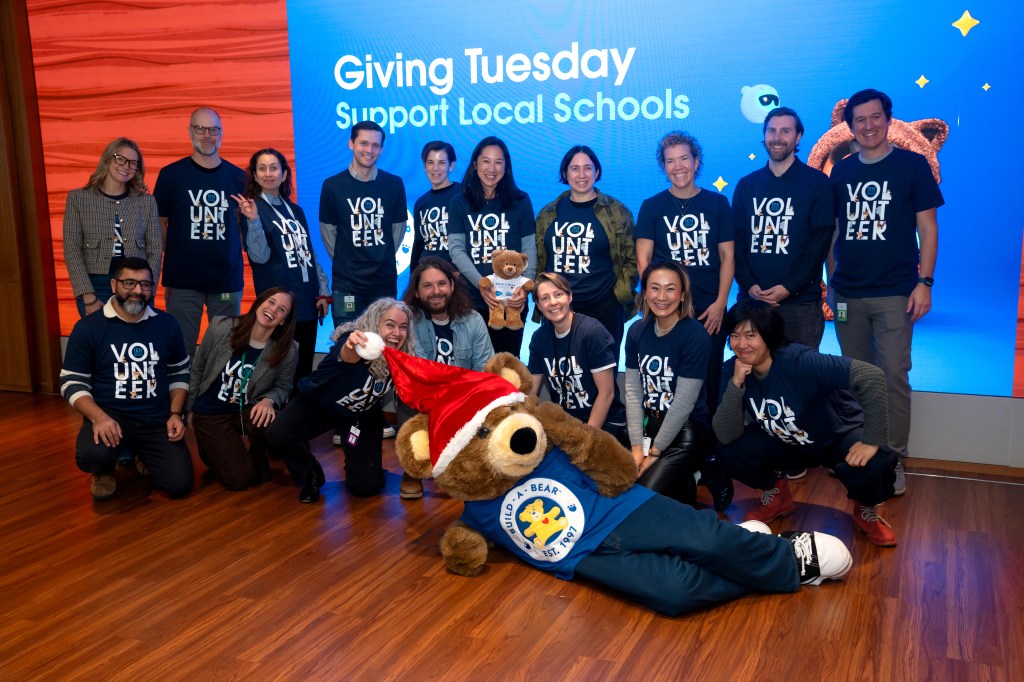
Employees, partners, and schoolchildren celebrate Giving Tuesday in New York City. 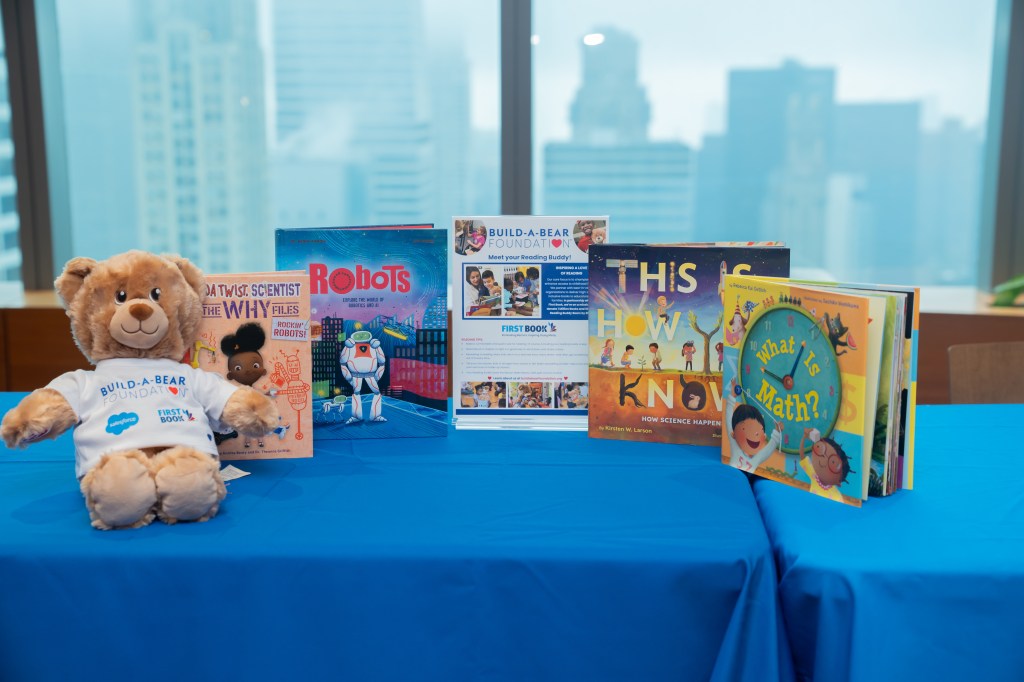
Employees, partners, and schoolchildren celebrate Giving Tuesday in New York City. 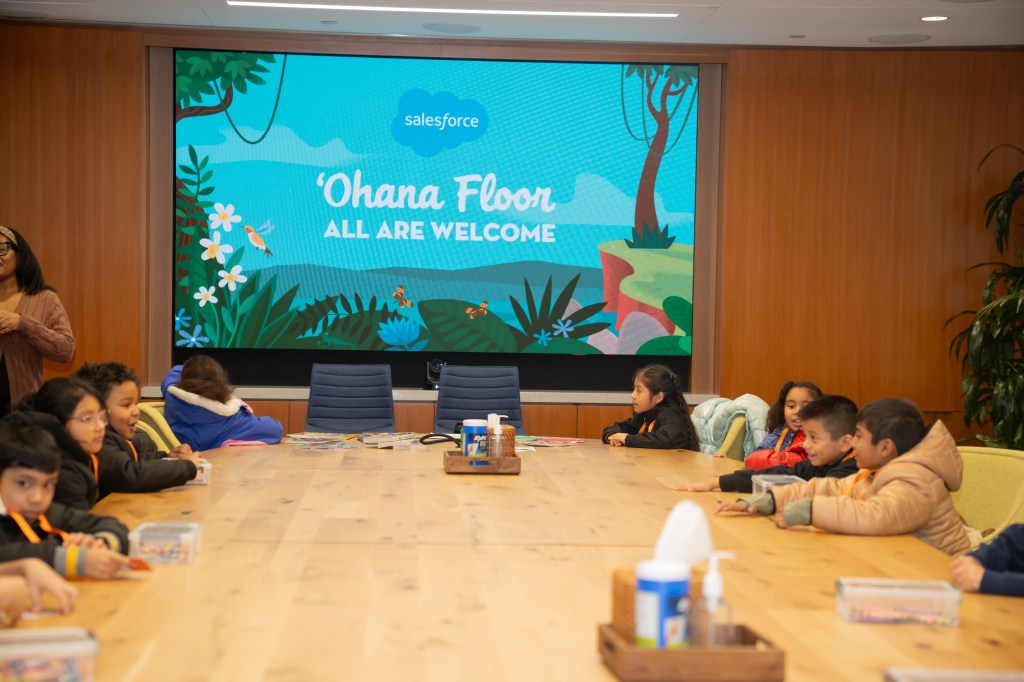
Employees, partners, and schoolchildren celebrate Giving Tuesday in New York City. 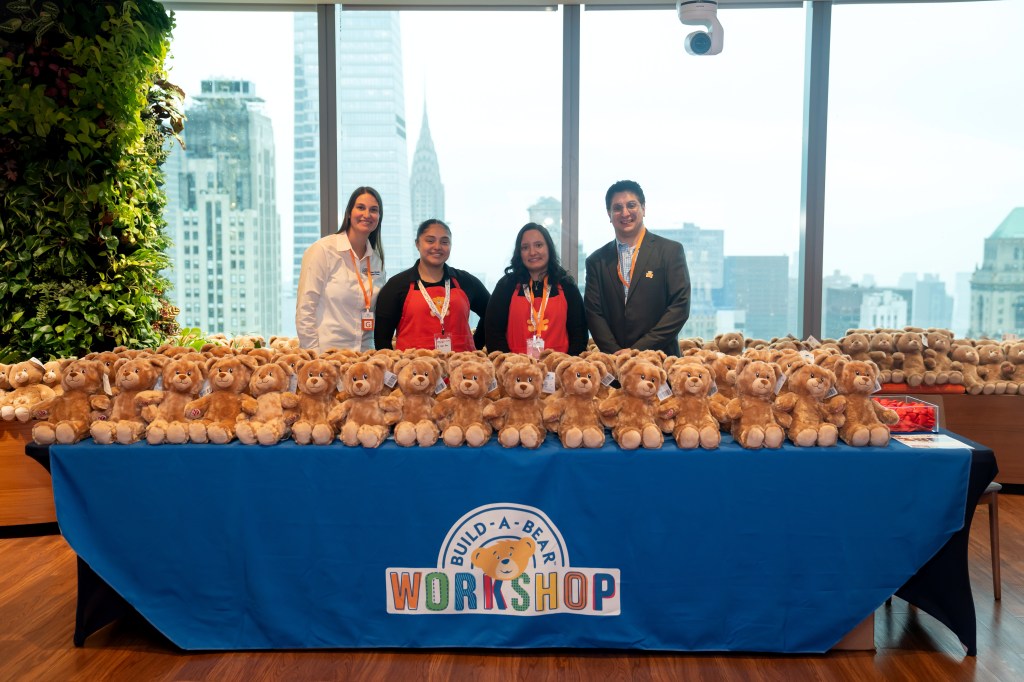
Employees, partners, and schoolchildren celebrate Giving Tuesday in New York City. 
Employees, partners, and schoolchildren celebrate Giving Tuesday in New York City. 
Employees, partners, and schoolchildren celebrate Giving Tuesday in New York City.
The event was just one example of Salesforce’s unique approach to corporate philanthropy: a model built to empower employees to decide how and where the company will devote its workers’ time and funds. From hosting food drives to mentoring students, the program leverages employees’ connection to their local communities to make a tangible impact where it matters most.
Flexible, Local, and Fast
Salesforce has embedded philanthropy into its business from the very start. Before the company was even a year old, its founders established a 1-1-1 model, pledging 1% of its equity, time, and products to scale philanthropy as the company grew. Today, giving back is a key part of its brand.
Corporate giving often starts from the top down. Companies select a handful of beneficiaries and dictate where funds or volunteer time can be donated. Salesforce, in contrast, uses employees’ local efforts to guide much of its giving, drawing on its philanthropy team, employee impact team, and engagement team to provide dedicated support in each area.
Employees have a lot of say in how we operate because it’s for them. It’s their program.
Angela Daniels, Senior Manager of Employee Impact Programs
“Employees have a lot of say in how we operate because it’s for them,” said Angela Daniels, Senior Manager of Employee Impact Programs at Salesforce. “It’s their program.”
As part of its model, Salesforce also has 34 employee-led Employee Impact Councils, which have the flexibility to manage their own volunteering and fundraising initiatives in each market.
“We really want to empower the employees to do what’s meaningful in their communities. If we’re sitting in Denver, we don’t know what’s meaningful in India,” explained Daniels.
For example, in honor of Childhood Cancer Awareness Month, employees in Chicago decided to raise funds for their local children’s hospital. The site’s employee council developed a multiday fundraiser and volunteer activity. The result: $63,000 in funds raised and donated to Lurie Children’s Hospital for lifesaving care.
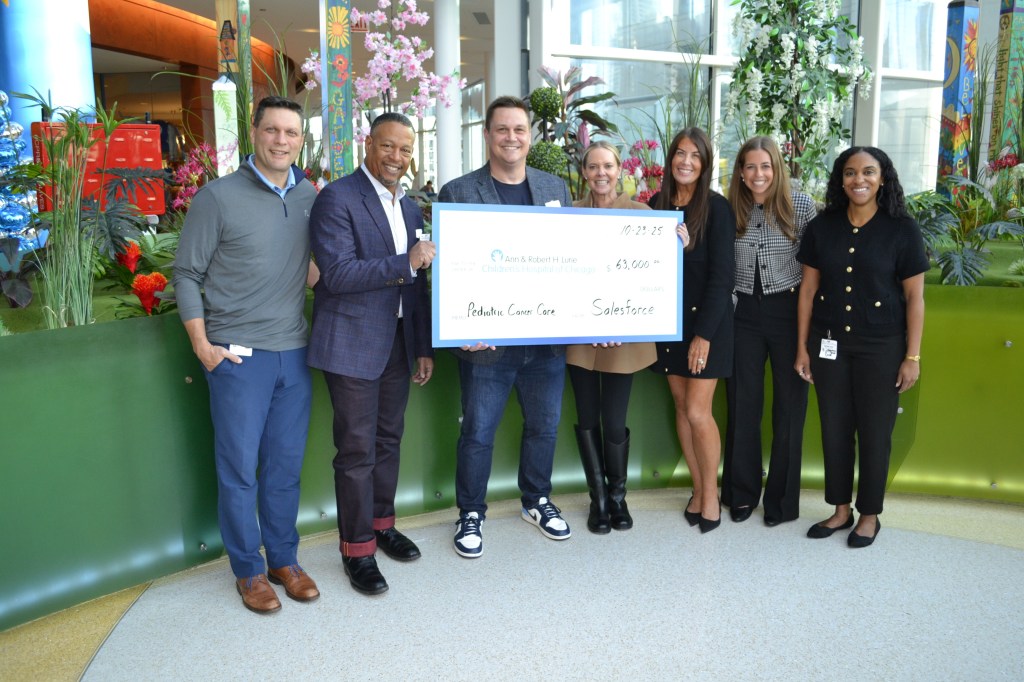
An employee-led approach allows the company to reach the most relevant causes in each market, fast. For instance, the same Salesforce Chicago office mobilized a November food drive to benefit a local food bank, gathering and donating 4,000 pounds of food in just a couple of days.
“When someone has an idea and it’s relevant, we work closely with our leaders to secure the necessary resources and funding,” said Senior Specialist of Employee Engagement and Events Lauren Prince. “We all come together so quickly to bring it to life.”
On the other side of the country, at Salesforce headquarters, a new executive wanted to make sure local residents were benefiting from the myriad AI companies conducting trainings around the Bay Area. So the Equality and Engagement team quickly created an all-day, hands-on event, built from a successful template used in Sydney. At the resulting “Agentforce Success for All” in Oakland, 300 community members received free, practical training in AI topics.
One thing that makes the Salesforce model so effective is that it’s easy to take one individual’s idea and scale it. Salesforce Solutions Engineering Director Troy Sellers initially volunteered his time as a consultant to help DV Safe Phone stand up Salesforce technology that would help the Australian nonprofit reach more people. Sellers’ work garnered attention from colleagues and snowballed into broader employee support.
“It’s not just me anymore,” said Sellers. “Folks have hands-on volunteering days. Other people have organized their own donation days, and that’s all been organized by someone else as well.”
They’ve helped us scale a simple idea into a national safety movement.
Ashton Wood, Founder and CEO, DV Safe Phone
For the small nonprofit, this support has been transformative. “Salesforce stepped in with extraordinary generosity — not just providing world-class technology but backing it with the expertise, passion, and commitment of its volunteer team,” said Ashton Wood, Founder and CEO of DV Safe Phone. “They’ve helped us scale a simple idea into a national safety movement.”
Attracting Talent
This work wouldn’t be possible without another key element of the company’s philanthropic approach: Salesforce gives every employee an eye-popping 56 hours of volunteer time off (VTO) every year.
And people use them. As of mid-November, 50% of Salesforce employees had volunteered in their communities in 2025, compared with an average of 15% logged by other companies using the same tracking system.
Sellers, a “boomerang” employee who left Salesforce for a few years and returned in 2024, missed the VTO when he was gone. “I noticed how much I enjoyed the concept,” he said. “It really has meaning for me at work.”
The model certainly attracts talent. “People come to work here because of this, because it is baked into the culture,” Daniels noted.
To close out 2025, Salesforce did one last thing to make a difference. The company provided $50 USD to each of its more than 76,000 employees to be donated to a nonprofit of their choice.
“It’s always been about the employees and philanthropy that they’re doing,” said Daniels.
More information:
- Learn more about Salesforce volunteering and giving opportunities
- Read how the Employee Impact program got started