



For APRA-regulated financial services firms, a customer data platform (CDP) needs to be more than a marketing activation layer. Your unified customer profiles inform everything from the products you recommend and the consent choices you follow to the advice you provide and the AI-driven experiences you deliver.
That’s why you can’t evaluate CDPs based on surface-level features. The ability to unify data across your business is one thing, but can the CDP do it without putting you at risk of data duplication, weakening your auditability, or fragmenting consent? If it can’t, every new insight creates another potential gap for your risk and compliance teams to bridge.
In this guide, we’ll examine what a CDP for Australian financial services organisations needs to support across APRA CPS 230, the Privacy Act, AFSL obligations, AUSTRAC expectations, data residency, and agentic AI. By the end of this article, you’ll have a clear framework for choosing a CDP that’s built for the unique realities of your financial institution.
Key Takeaways
What you’ll learn:
- Regulations ramp up the pressure on CDP architecture
- The core regulations behind CDP decisions
- The CDP architecture financial service teams demand
- A great CDP sets the stage for something even bigger
- A trusted CDP foundation starts with Salesforce
- FAQs
Explore the Connected Financial Services Report
Get insights from 9,500 consumers worldwide on how AI is reshaping trust, service, and expectations in the financial sector.
Regulations ramp up the pressure on CDP architecture
According to our Connected Financial Services Report, 93% of financial institutions think they should be getting more value from their data, and 91% say the need for trustworthy data is higher than ever, especially as teams move from AI tests to full-scale agent rollouts.
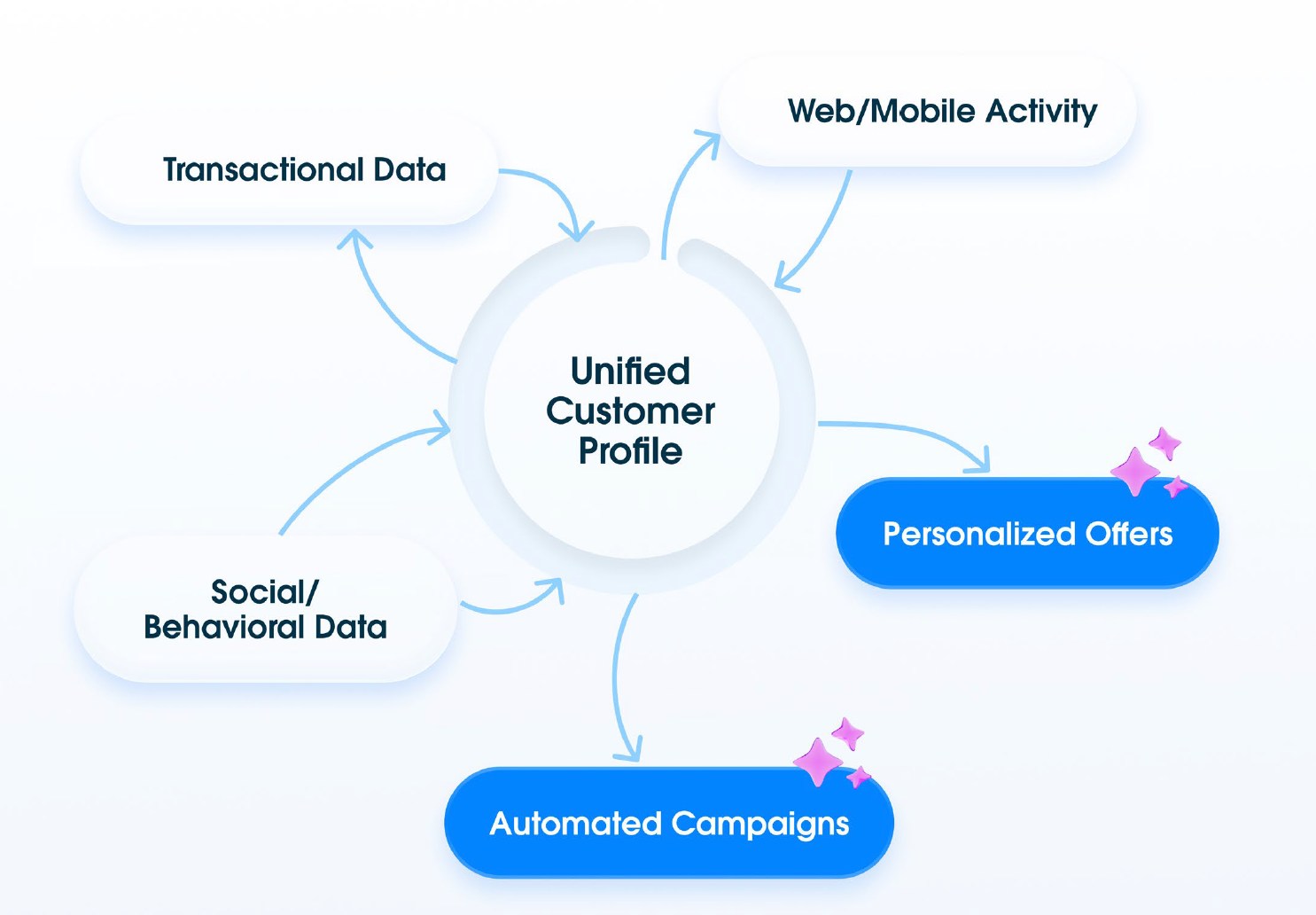
A customer data platform (CDP) can close that gap by bringing your data together into unified customer profiles and activating that connected context across your workflows. Done right, this supports smarter decisions, better analytics, real-time personalisation in banking, and AI agents that can think, reason, and act with trusted data and guardrails behind them.
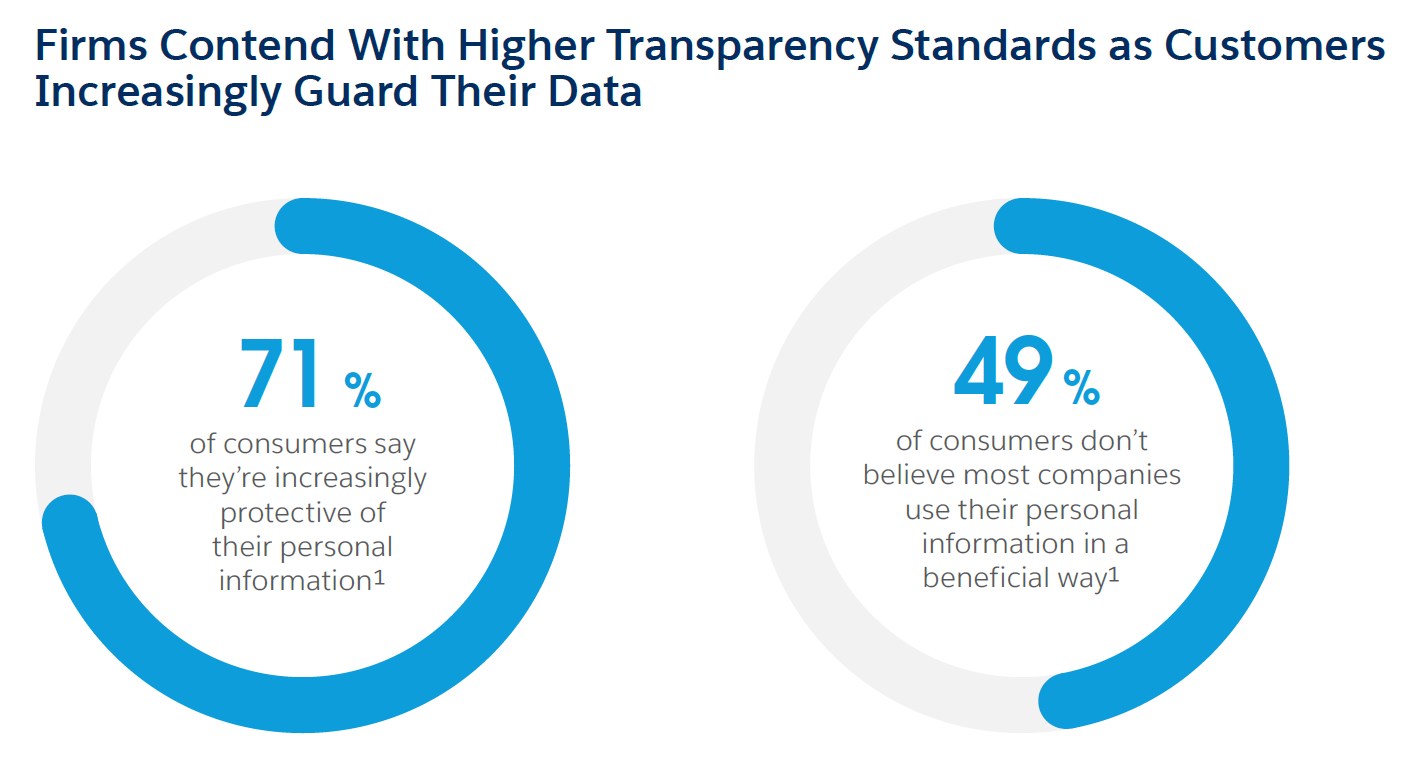
But it isn’t as simple as choosing a CDP with a strong activation layer. Data protection is another critical concern. Seventy-one per cent of consumers say they’re increasingly protective of their personal information, and just 49% believe companies use their data beneficially.
Your CDP is the central hub of your customer data ecosystem. If it’s reliable, it will transform how you understand and serve your customers. If it isn’t, those weaknesses carry into every workflow the CDP supports, putting privacy and trust at risk.
For many financial institutions, that trust issue can quickly become a regulatory burden. Your customer profiles inform and enforce consent rules, access controls, auditability, risk monitoring, and business continuity. As such, CDP architecture needs to be judged on how well it keeps data transparent and secure, not just how well it activates it.
The core regulations behind CDP decisions
APRA CPS 230, the Privacy Act, AFSL obligations, and AUSTRAC expectations all influence how your CDP needs to protect and govern customer data. Before we get into CDP buying criteria, let’s look at how these regulations will impact your decision.
APRA CPS 230 demands CDP resilience
APRA CPS 230 raises the bar for operational resilience in financial services. Regulated firms need to understand which systems, providers, and processes support customer workflows, as well as how they’ll stay resilient if one area breaks.
Your CDP isn’t a passive database. It collects data from source systems, standardises it, applies rules, and turns that information into unified customer profiles. Then it activates those profiles across your workflows to support marketing, service, analytics, AI, and more. In essence, it’s the connective tissue that turns raw inputs into trusted outputs.
This means your platform can’t be viewed in isolation. If a source system stops sending updates, an ETL flow gets delayed, or a third-party connector breaks, your unified customer profile doesn’t reflect the latest version of the customer anymore.
You end up with operational gaps where consent rules, access controls, and retention policies can fall out of sync. This can make it harder to meet APRA compliance requirements.
Privacy Act and APPs set the standards for personal information
The Australian Privacy Act and APPs mandate how financial institutions handle personal customer information. The more contact details, behavioural insights, consent preferences, complaints, and consent preferences your CDP brings together, the greater your responsibility is to keep that data trusted and reliable.
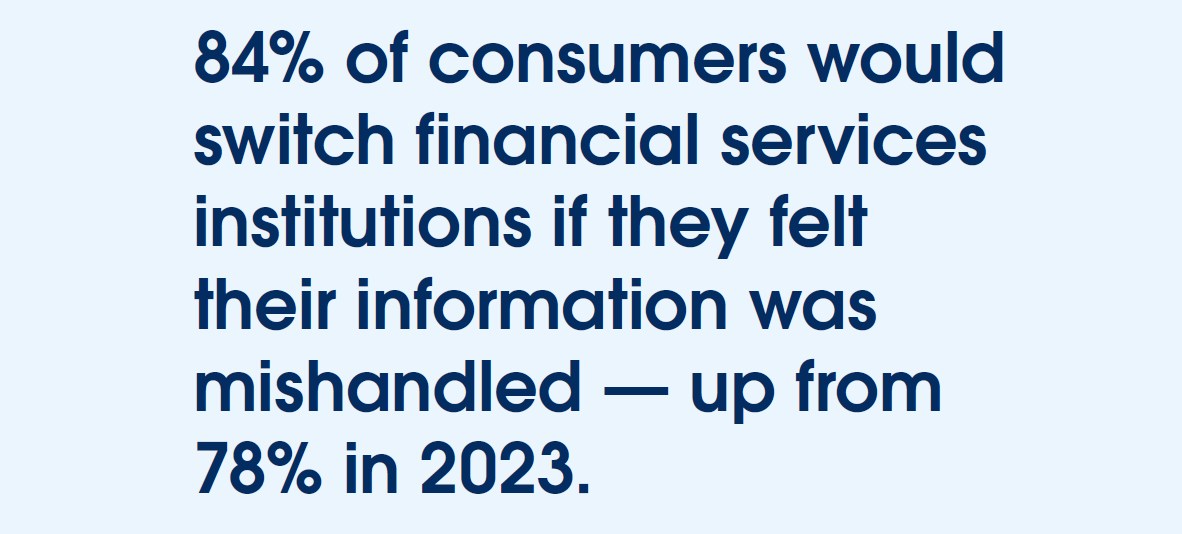
While 69% of consumers expect all financial services reps in a business to have the same information about them, 84% also say that they’d switch institutions if they felt their information was mishandled. Add in Privacy Act rules over how data is collected, used, disclosed, and protected, and you can see why there’s a fine balance to maintain.
That can be a fine tightrope to walk without a strong CDP architecture keeping everything in line. Once you’re activating data across multiple workflows, a preference change, consent withdrawal, or retention update has to be reflected wherever that profile is currently in use.
AFSL obligations enforce customer conduct
AFS licensees have a responsibility to provide financial services efficiently, honestly, and fairly. Teams can only deliver on those ideals when they have context.
Your CDP should make AFSL obligations easier to achieve. With a unified cloud infrastructure, reps can provide accurate advice, handle complaints in context, deliver outstanding service, and provide fair and honest assessments to every customer.
But the reverse can also be true. If your unified profiles are incomplete, duplicated, or out of date, teams might provide the wrong recommendations, treat customers unfairly, or miss important context around vulnerability, hardship, or eligibility, all of which put your AFS license obligations at risk.
AUSTRAC obligations require due diligence
AUSTRAC obligations add an extra layer around customer identity and record-keeping. Reporting entities need to understand who their customers are, assess risk, and keep that understanding current as behaviour changes over time.
The right CDP can be incredibly valuable for bringing identity data, transaction signals, and behavioural changes into one place. However, if the context becomes fragmented or outdated, your platform can just as easily give you the wrong view.
Trusted AI for Financial Services
Financial Services AI offers the essential building blocks for wealth management, banking, and insurance organisations to deploy trusted AI solutions powered by your data, personalised for your customers.

The CDP architecture financial service teams demand
Any CDP will promise a clearer view of your customers. But for a regulated financial services firm, the more important question is how that view is created, governed, and activated.
The distinction between generic marketing CDPs and platforms built for financial services institutions boils down to three architectural questions:
- How much data gets copied?
- How are integrations managed?
- Can the platform uphold enterprise data governance?
Customer profiles shouldn’t create another version of the truth
A unified customer profile should make your data easier to understand and govern, but that gets harder when your CDP creates a copy every time it needs to update the record.
An ETL-first CDP won’t cut it
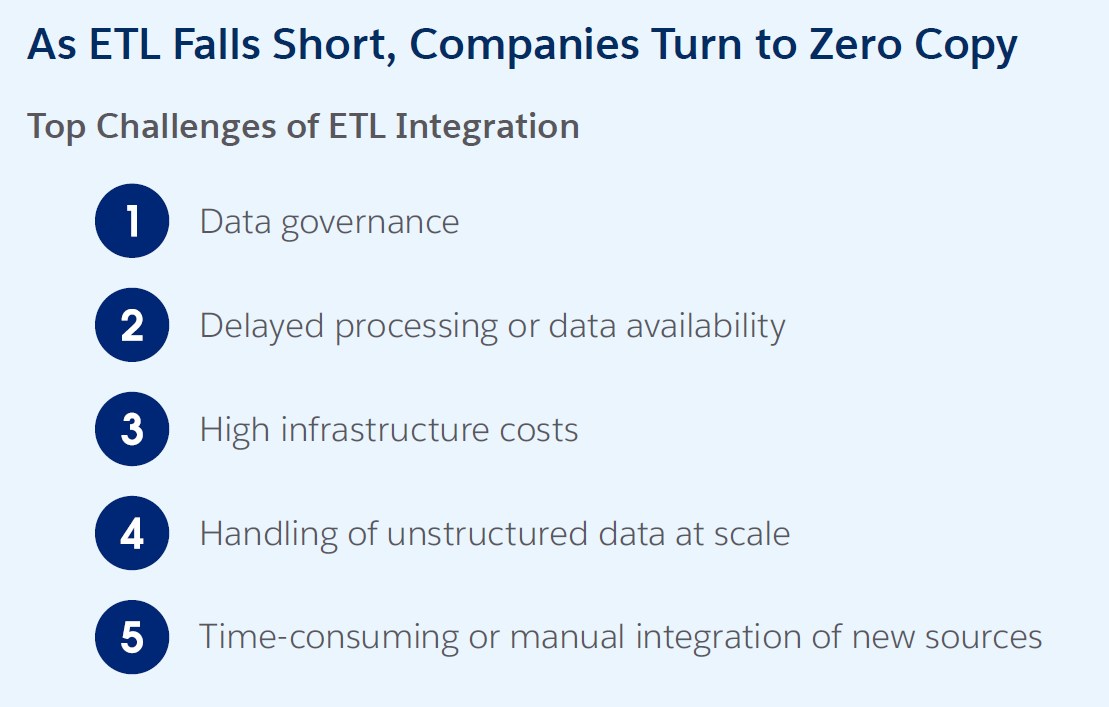
Legacy CDPs usually rely on ETL, where data gets extracted from source systems, transformed inside the CDP, stored as a new record, and then pushed back out to workflows. But there’s a problem with that process: It creates a new version of the same record.
Every duplicate becomes another silo teams have to secure, update, retain, and explain. And, with 69% of data and analytics leaders agreeing that data storage will likely become more expensive, it also adds costs and complexity you’d rather avoid.
A stronger CDP keeps data closer to the source
A stronger CDP architecture should prevent unnecessary duplication through a zero-copy approach. This will allow the CDP to access data in situ and make it visible for teams without ever actually extracting the data or creating a duplicate version.
Fifty-six per cent of organisations are already adopting a zero-copy data architecture, and the reason for that is obvious. Fewer duplicates mean fewer layers to govern and control, a narrower risk surface, and fewer chances of a compliance breach.
[https://www.salesforce.com/au/news/stories/video/zero-copy-video/]
Integrations shouldn’t create brittle API pipelines
Naturally, a CDP can only view and standardise data from your external systems if it can connect to those systems in the first place.
Every platform will offer integrations to some degree. However, if you have to manage each of them independently, you end up with a fragile web that can do more harm than good.
Point-to-point API sprawl expands the risk surface
Weaker CDPs often depend on a library of point-to-point integrations for popular cloud tools. Each connector acts as a link that lets data travel between that platform and your CDP.
But each of these integrations lives in a bubble. Your ERP might connect to your CDP, and your CDP might connect to your marketing platform, but neither integration knows the other exists.
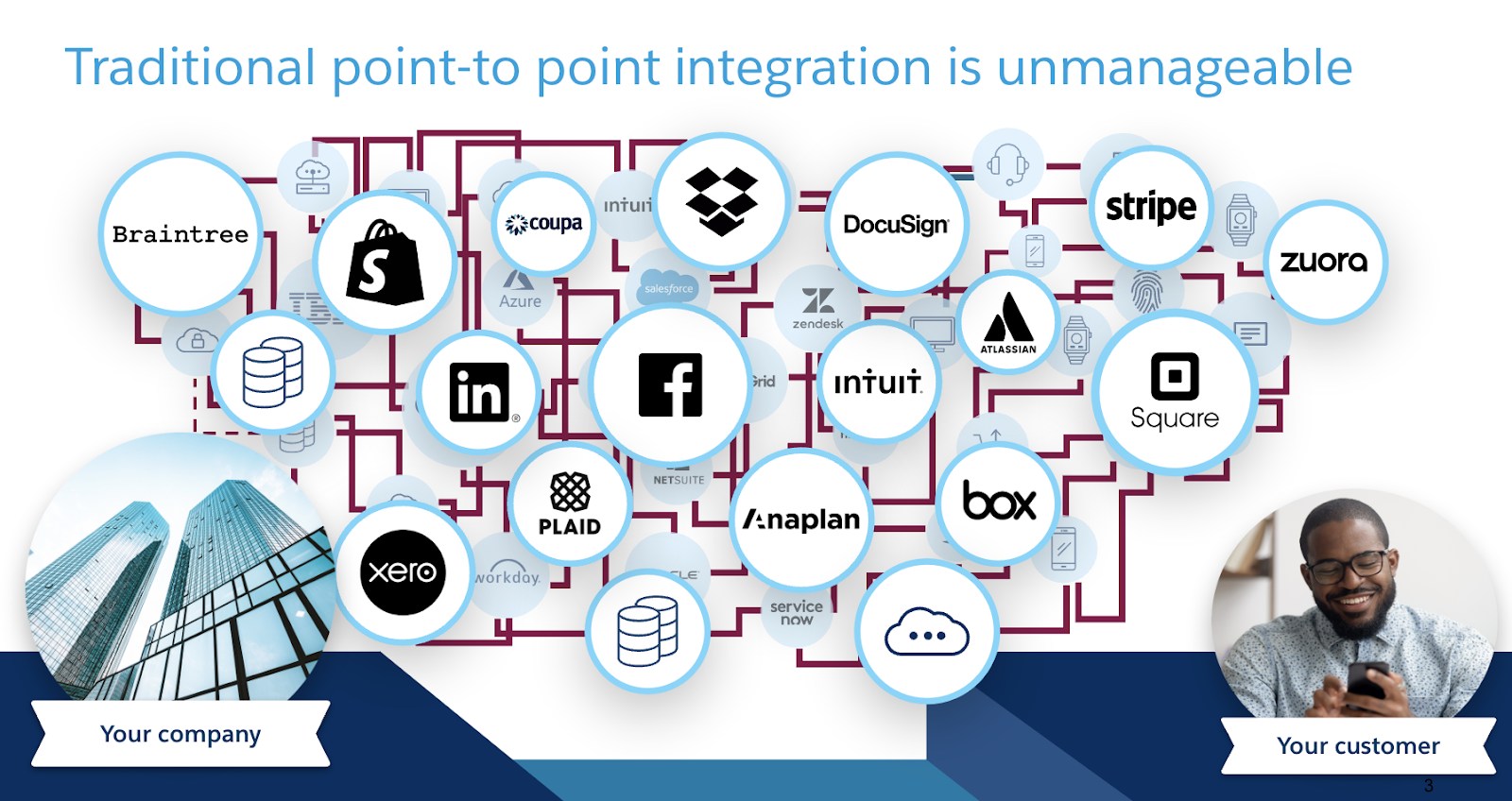
The result? Every connector operates with its own logic and permissions, lives by its own rules, and needs to be secured independently.
So, if you need to update a policy for one integration, you also need to update that policy in every other integration downstream. And if a connector breaks or drifts out of sync, the rest of the chain breaks too.
Strong CDPs treat integration as an underlying architecture
The best CDPs give businesses a shared foundation for API-led connectivity. Instead of treating every integration as a separate connection with its own rules and logic, it lets financial institutions build reusable APIs and manage all of them via a governed control layer.
This gives your business the ability to build custom integrations between legacy systems, data warehouses, cloud apps, and workflows and reuse the same API logic repeatedly. A shared management layer also means CIOs can apply policy-based access rules, consent logic, approval processes, and monitoring across the entire stack, all in one place.
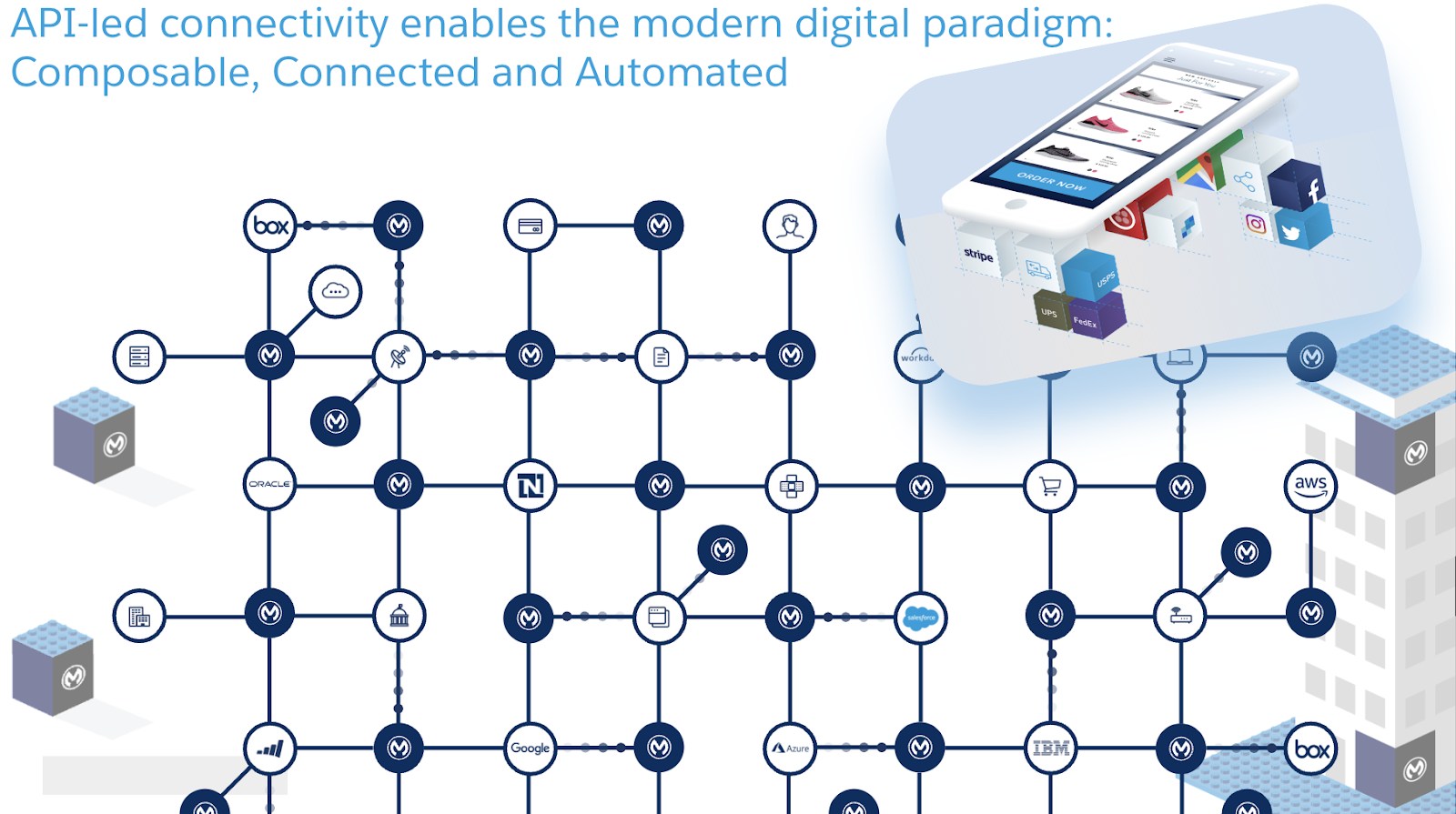
Here’s the real benefit: An update in one place updates the entire architecture without breaking any APIs or dependencies downstream. The result is a more resilient model that, when paired with zero copy, leads to fewer errors, fewer duplicates, and less risk of customer context slipping through the cracks.
The right CDP will make audit trails easier to maintain
Connecting customer data is only half the challenge. When context is flowing through profiles, workflows, APIs, and platforms, you also need a reliable record of every change.
Weaker CDPs force teams to reconstruct the narrative
A standard customer record will show you the latest version of the truth. That’s handy on a day-to-day basis, but it leaves compliance teams exposed when they need to reconstruct an earlier moment.
For instance, if a customer’s consent status changed before a campaign, is the previous value maintained? If a risk flag appeared before a service interaction, can the team prove when it appeared in the profile?
Without a clear history, teams will need to piece together the story from siloed logs, screenshots, and platforms, which takes time and leaves room for human errors.
Auditability should be built in from the beginning
A compliance-ready CDP will preserve customer data history by tracking previous and new values, field-level changes, timestamps, user activity, and access consistently across your entire customer ecosystem.
This gives risk, compliance, and security teams a stronger basis for audit preparation, breach investigations, and customer complaints. It also helps your data stand up to scrutiny and support APRA and AUSTRAC reporting compliance during spot checks.
Context shouldn’t depend on platform hopping
The next big test of a CDP is whether it can take all of that unified, governed context and provide it to teams and workflows. In financial services, bank tellers, brokers, advisers, and service reps need access to real-time insights without having to hunt for them manually.
Basic CDPs make teams gather the insights
Basic marketing CDPs often excel at audience segmentation and campaign optimisation. But live customer experiences are a lot more demanding. A service rep needs to understand their customer’s recent complaint, while a financial adviser needs to pull product history, household context, and risk signals into the same view.
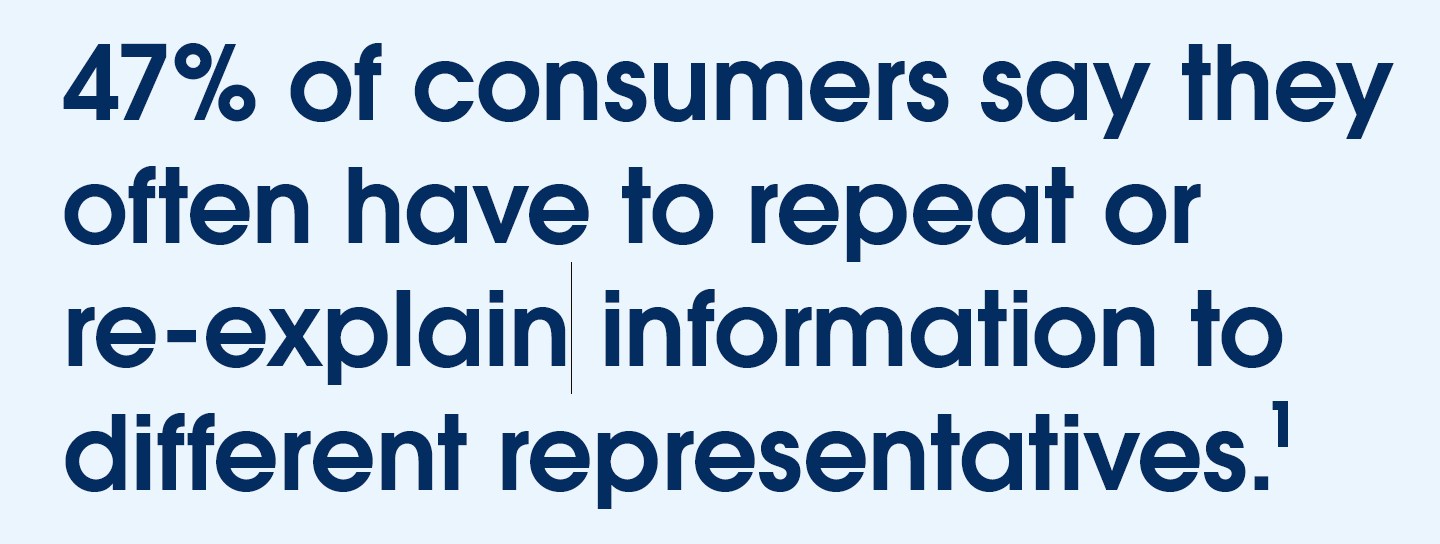
If those insights sit inside your CDP, teams have to rely on incomplete context when they lack the time to switch platforms. Aside from being a compliance risk, this is also why 47% of financial consumers say they often have to re-explain information to different reps.
A great CDP brings the insights to your teams
Your whole business benefits when your CDP can activate customer context directly inside your CRM, service console, adviser solution, claims platform, or branch system.
Teams shouldn’t need to switch between tools or wait for manual syncing to understand the customer they’re speaking to. The goal is real-time insight at the point of contact. A teller should get customer context as soon as they verify their identity. An adviser should get the latest interaction history and risk context before a meeting starts.
That activation layer makes AFSL obligations achievable at scale. When teams can get the trusted data they need, when they need it, they can deliver accurate, fair, personalised recommendations without losing time to platform hopping and syncing delays.
Get the latest financial services insights straight to your inbox
Stay ahead of the curve with expert takes on AI, customer expectations, and the future of finance.

A great CDP sets the stage for something even bigger
Choosing a robust CDP architecture is essential for compliance and customer trust, but the even more compelling advantage is how it powers every AI workflow that comes next.
At our 2026 Financial Services Cloud Summit in Sydney, we heard from the innovative financial services firms that are moving from isolated AI pilots towards unified ecosystems where humans and AI agents manage complex workflows together.
Here are just a handful of ways platforms like Agentforce can revolutionise your financial services institution:
- For mortgage brokers, AI agents could guide borrowers through loan discovery and product comparisons, gather data on eligibility, provide personalised recommendations, and route the lead to a rep with context attached. Customers get instant support, and reps start every conversation with the full picture.
- For banking teams, an AI agent could help customers report and replace lost cards, support fee reversals, and stop cheque payments. For teams, it can also support deeper customer relationships by drafting meeting prep notes, organising follow-ups, and providing a single customer view for banking workflows.
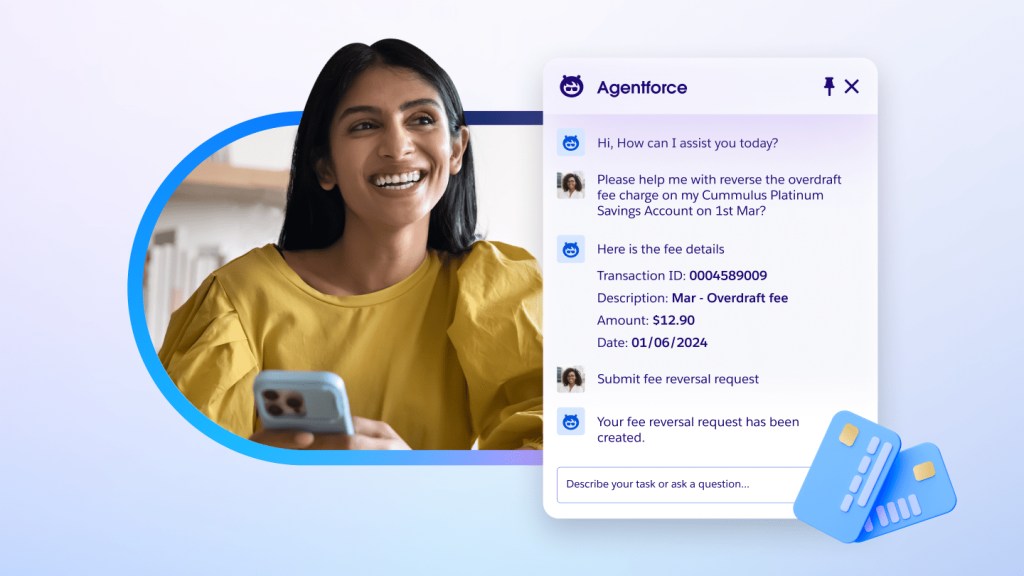
- For collections teams, your agent could prepare personalised talking points, capture promises to pay, send out secure payment links, and update contact or risk information automatically after every conversation.
- In wealth management, AI agents can prepare advisers for client reviews by summarising household context, current and past portfolio performance, asset allocation, financial goals, and risk appetite. This means clients get more relevant conversations, and advisers can spend less time digging through records.
That’s just a small sample of what’s possible. If you’d like to find out more, see the full range of Agentforce use cases for financial services teams here.
The catch is that, just like your teams, AI agents need trusted customer context, clear permissions, live updates, and clear guardrails to do their best work. Without that foundation, they’ll amplify the data problems your CDP was built to solve.
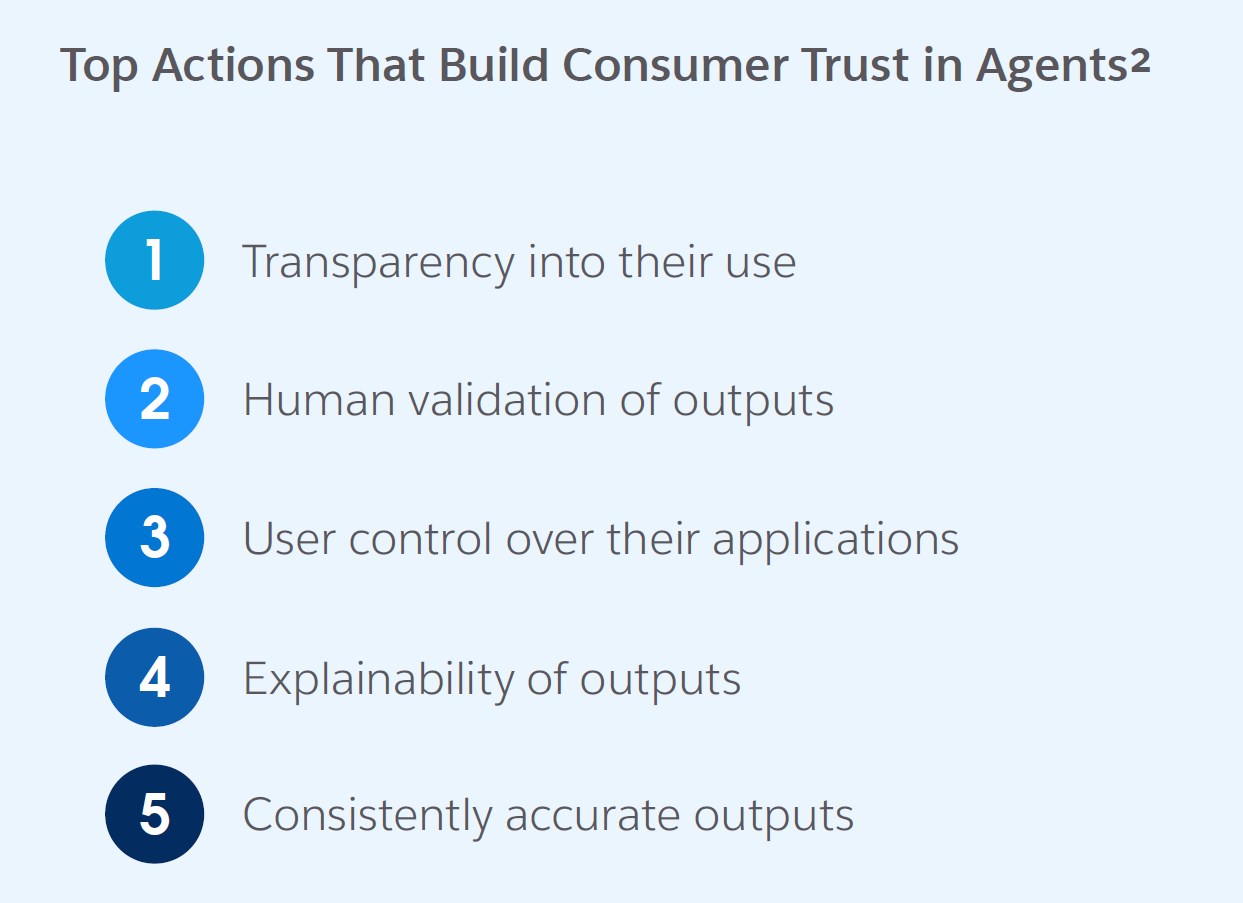
You’ll also need to consider public scepticism. Currently, only 54% of consumers either somewhat trust or completely trust the use of AI agents. You need to prove to customers that you’re implementing AI responsibly with guardrails, accountability, and trust from day one.
Focus on the architecture first, such as zero copy, API integrations, clear auditability, real-time profile harmonisation, and integrations. From that baseline, look for a platform with the toolkit to help you build and deploy governable, auditable AI agents that stay reliable at scale.
A trusted CDP foundation starts with Salesforce
In APRA-regulated environments, CIOs need to think of a CDP as the connective tissue for the entire customer environment, rather than a database. It needs to shape how data moves, how rules are applied, and how reliably context will reach the workflows that need it.
We’ve discussed exactly what to look for in this guide. All that’s left is to find a platform that can deliver on that wishlist at scale.
Agentforce 360 for Financial Services is a purpose-built ecosystem for financial institutions that want to bring data together, make it trustworthy, and use it to build their agentic enterprise and transform how they protect, serve, and support customers. Here’s how our suite of products can help:
- Data 360 for Financial Services helps you bring all of your business data together into a unified profile, govern that context with policy-based controls, and then activate that data across workflows, teams, and agents. With zero copy capabilities, you can also access data where it already lives. No duplicates required.
- Agentforce MuleSoft gives financial institutions an open integration layer to connect every system, cloud or otherwise, in a unified environment. With reusable APIs, plus a marketplace of pre-built templates and connectors, you can discover or build anything, save the logic, and then govern the whole stack in one place.
- Agentforce Shield, Privacy Centre, and Hyperforce help you manage consent, keep sensitive data encrypted and secure, stay ahead of evolving compliance regulations, preserve audit-ready records, and support Australian data residency, resilience, and recovery requirements.
- Agentforce for Financial Services helps you activate your trusted context across your Customer 360 app ecosystem, deliver real-time insights where your teams work, and deploy governed, observable AI agents that can take action, recommend next steps, and deliver outstanding customer experiences in the flow of work.
If you’d like to learn more about how to turn customer context into a trusted, governable advantage, read our Financial Services Data Maturity Playbook to start laying the foundation for trusted AI, stronger compliance, and agentic transformation.
Or, if you’re ready to get started, watch the Financial Services Cloud demo today to discover how the world’s leading agentic enterprise platform can help you unify customer data, govern regulated workflows, and deploy trusted AI agents at scale.
FAQs
A customer data platform (CDP) for financial services brings customer data across the business into unified, governed profiles. Done well, it supports identity resolution for financial services, strengthens your first-party data strategy, and gives teams trusted context for service, marketing, advice, risk, and AI workflows.
Customer profiles often support regulated decisions. If data is copied, delayed, or poorly governed, it can increase operational risk under CPS 230 and make it harder to meet AFSL regulatory obligations, privacy rules, and internal governance standards.
Basic CDPs can rely on brittle API pipelines and repeated data movement, which creates ETL data replication risks. Every additional copy of customer data becomes another place you have to secure, update, monitor, and explain, especially when sensitive information moves through multiple systems.
A compliance-ready CDP should support a strong data minimisation strategy, protected information data security, clear controls for cross-border data routing, and an immutable field audit trail. These controls are becoming even more important as the execution of autonomous AI agents becomes a core business objective.