



Sales methodologies are structured approaches to guide salespeople in their interactions with customers. They are the blueprints that guide the sales process, informing how you engage with prospects, nurture relationships, and shift deals towards completion.
They still have a key role to play in influencing business success, but they need to be adaptable. As circumstances change, sales methodologies need to shift in response.
The biggest challenge facing today’s sales staff is changing customer expectations. Clients want more personalisation, more evidence of ROI, and more information tailored to their specific situation – all while salespeople’s time is limited.
The solution is combining sales methodologies with AI. Working with sophisticated AI agents – becoming “agentic” – takes the busywork away from salespeople. They can then focus on applying the right sales techniques at the right time for their clients. This reaps benefits, with 94% of sales leaders using AI agents saying they are critical for meeting business demands.
In this article, we are going to cover the methodologies sales teams are using in 2026 and how to choose the right one for your business, all backed by research from our latest State of Sales Report.
Key takeaways
- Sales methodologies are far from obsolete
- AI can enhance the effectiveness of your methodology
- The best results come when you share execution between AI agents and humans
- A methodology can become a part of your sales system, not just a blueprint
Discover top sales trends, AI agent use cases, and growth strategies — from over 4,000 sales reps worldwide.

Why sales methodologies still matter today
Sales methodologies have long been key tools for salespeople across many industries. They provide structure to help guide customer relationships, from prospecting to deal management.
They also underpin sales processes. A sales methodology defines the overall approach you take to sales, while the sales process outlines the stages used to put that methodology into practice.
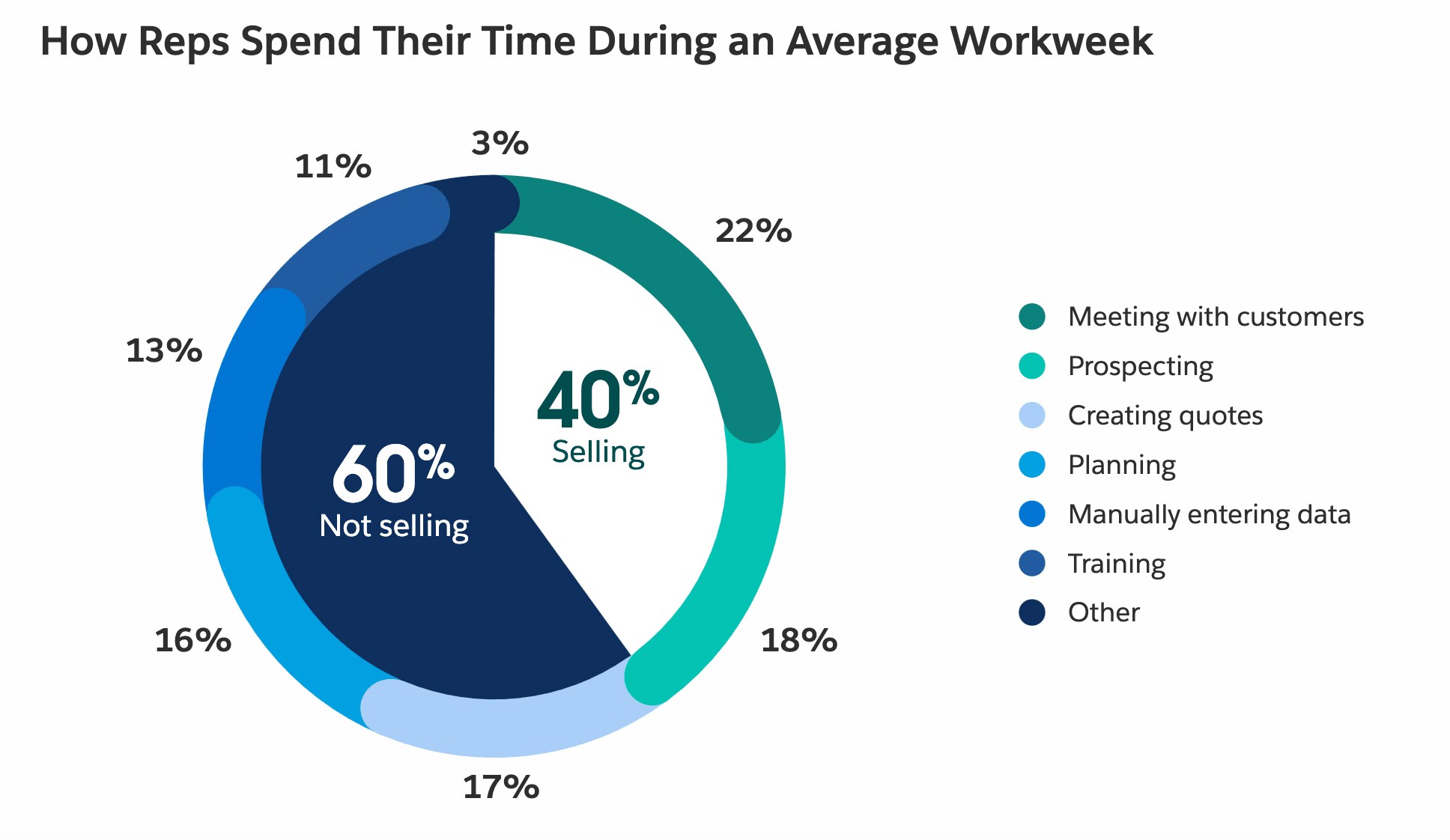
Taking that process and adding in the power of AI ramps up the effectiveness. One of the central ways it does this is by freeing up sales pros to focus on the core part of their role: actual selling.
Source: Salesforce State of Sales Report
Given that currently reps spend less than half of their time actually selling, the benefits of AI tools taking on a lot of the tasks that eat into their selling time – data entry, admin, planning – become clear. Less admin means more time for customer relationship building, equalling better results.
For example, Expert Wealth used AI agents to automate lead qualification and meeting scheduling, helping cut the amount of back-and-forth with potential clients by 50%.
The most effective methodologies now are those that allow AI to handle breadth and humans to handle depth.
From frameworks to flow: how AI transforms execution
In the agentic era, the biggest shift is not which sales methodology you use, but how you execute and scale it.
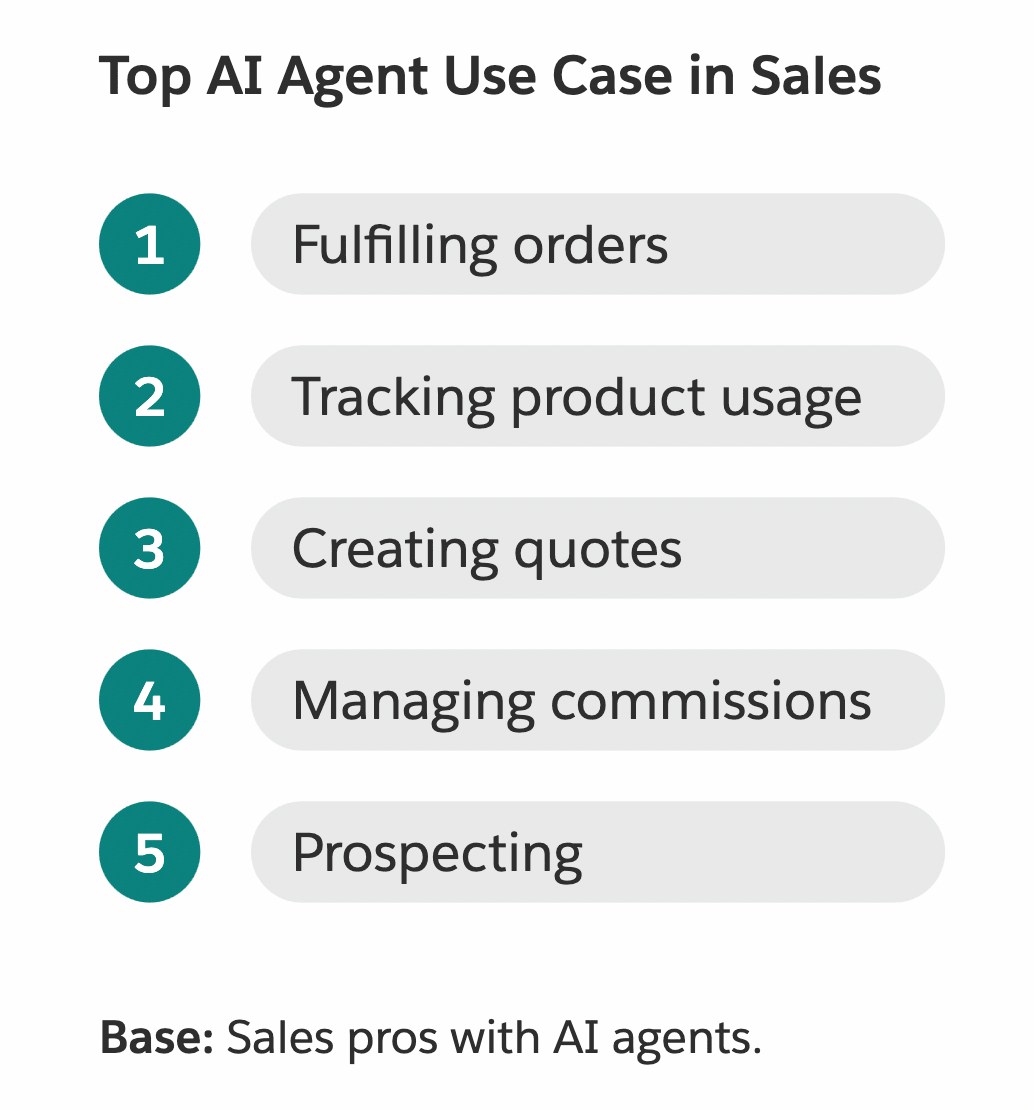
In the agentic model, your methodology can become a real-time layer across every deal, one that is updated by data signals and behavioural markers. It can also be refined as it gets more data regarding how certain prompts or workflow pivot points help or hinder the sales cycle. It becomes structured and repeatable at scale. Top sales agents are already using AI to do a lot of the heavy lifting.
Source: Salesforce State of Sales Report
Plus, it embeds lessons – coaching – into every project. Rather than being episodic, training becomes a continuous process reacting to prompts and lessons raised in real time. The most important parts of the sales process remain human, though. The nuanced conversations, the deep understanding of individual needs, and office politics.
This means that AI agents take on the busywork, while humans handle judgment and building trust.
Data hygiene: the key to unlocking AI agents
There is one critical dependency for making the agentic era work: data quality. After all, AI agents are only as effective as the data you give them.
If your tech stack is inundated with misleading or out-of-date information, partial qualification logic or weak personalisation parameters, you won’t see the benefits. A consolidated tech stack helps by integrating data and processes across tools, but sales methodologies can also help keep your data healthy.
Using a defined sales framework like MEDDIC gives sales teams a consistent framework for capturing and qualifying customer data. This means you can then ensure your AI agent is getting consistent, accurate data, and you can trust its outputs.
Six proven sales frameworks, rewired
Sales methodologies still have a big part to play in influencing business success, but they are not static ideas. They shift and evolve as circumstances change. Agentic salespeople can add AI tools to the sales methodology mix to improve their effectiveness.
Here are some of the key sales methodologies, and where they can take you when your sales team works with AI.
| Methodology | Best when | What humans own | AI enhancements |
| SPIN selling | The problem is unclear | Championing development, navigating politics | Stakeholder mapping, risk prediction |
| Consultative selling | Trust needs to be built | Empathy, trust and specific advice | Admin tasks, research synthesis |
| MEDDIC | There are long sales cycles with many stakeholders | Championing development, nurturing stakeholders | Stakeholder mapping, project comparison |
| Challenger Sales | The market is saturated, and differentiation is hard | Delivering insights at the right time with credibility | Insights generation |
| NEAT selling | Qualifying leads to focus resources | Validating urgency, accessing authority | First-pass qualification, timeline plotting |
| Gap selling | Buyers are stuck in inertia | Challenging complacency, translating data into a narrative | Benchmarking current performance, modelling future states |
SPIN selling
SPIN (Situation, Problem, Implication, Need-payoff) selling is a questioning framework. It investigates a customer’s situation, problem, implication, and need-payoff. It then suggests the most appropriate solution. It’s often used in the early stages of the sales cycle to help the customer articulate their needs better.
AI enhancements: Prospecting tools like Agentforce AI sales agents come into their own in the Situation layer. They can research company data, market conditions, and identify likely pain points before the sales consultant even begins the first conversation. And when that conversation occurs, AI can pose questions to uncover the whole picture.
The human touch: Salespeople read emotional cues and react to nuance in conversations. They also work to build trust and credibility in the customer’s eyes. They know when to push and when to hold back. These are human traits not replicable with AI.
Relevance today: SPIN selling is still relevant because successful sales still fundamentally rely on understanding customer problems and clearly connecting them to a solution.
Consultative selling
This is a relationship-led approach, where the salesperson devotes time to understanding the customer’s needs and solving their problems. They become a trusted adviser, suggesting tailored solutions to meet the client’s goals. It is often used when sales cycles are long, which is happening more and more. Today, customers expect more personalised information and evidence of ROI before committing.
AI enhancements: AI tools can take on much of the administrative burden, such as note-taking, research summaries and follow-up suggestions – leaving the salesperson to spend more time in client liaison, backed by detailed information.
The human touch: Empathy, trust-building, ethical judgement, navigating ambiguity and emotion.
Relevance today: Enduring, as building trust is important in any relationship. It becomes even more valuable as AI takes on more of the subsidiary tasks.
MEDDIC
The MEDDIC sales process is often used for B2B selling, especially when there are a lot of stakeholders. It explores the viability of a sale through performance metrics, economic buy-in, decision criteria, decision process, and identifying pain and champions. This thorough analysis is ideal for prioritising leads and high-value deals.
AI enhancements: AI agents can map stakeholder networks, identify which aspects of the MEDDIC system might be lacking (and so showing where resources could be better deployed), and compare patterns of deals across projects.
The human touch: Nurturing internal champions. Navigating relationships and competing requirements. Exercising judgment on when and with whom to engage at various stops along the funnel.
Relevance today: Essential as MEDDIC is the backbone of agentic forecasting.
Challenger Sales
It sounds combative, but Challenger Sales is actually about sharing insights. Its focus is teaching a customer something new, a way to differentiate themselves in a tight market. Rather than repositioning to a client’s stated needs, challenger selling reframes their thinking to suggest something novel.
AI enhancements: AI tools can analyse the company’s performance, that of their competitors, and the broader market trends to challenge assumptions and suggest opportunities, backed up by data rather than a hunch.
The human touch: Delivering the insights in a way that matches the customer. Building credibility. Reframing opportunities in the face of resistance.
Relevance today: More relevant than ever. We live in a time of information abundance; being able to interpret and reframe that information is very valuable.
NEAT selling
NEAT stands for need, economic impact, access to authority and timeline. It’s a questioning framework to help salespeople understand the client’s needs before proposing the best product as a solution. It functions well as a methodology to inform lead qualification. As such, it is often deployed early in the sales cycle.
AI enhancements: AI tools can feed data into each of the four NEAT criteria and analyse past deal velocity to propose timelines.
The human touch: Reading the nuance of the signals and fostering institutional access.
Relevance today: Strong as NEAT Selling is more scalable in the agentic era because AI can identify customer needs and intent faster.
Gap selling
If there’s a discrepancy between a customer’s current state and their desired future state, that’s where gap selling comes in. Salespeople then provide solutions to bridge that gap.
AI enhancements: Providing depth of discovery in gap analysis, benchmarking current performance and modelling future-state outcomes.
The human touch: Navigating institutional inertia. Fostering urgency. Helping the customer feel the gap, rather than just understand the data.
Relevance today: Very high. AI agents can strengthen the evidence base, while salespeople can help influence change.
Support your sales team to do their best work with Sales Cloud
Give your team the tools, data, and AI insights they need to stay focused, build stronger relationships, and close more deals, all in one platform.


Choosing the right sales methodology in the agentic era
Selecting an appropriate sales methodology for your business involves answering some fundamental questions – queries that have always needed answers. However, in the agentic era, there’s a new layer to add to the questioning: how well the methodology works with AI.
Start by analysing these key questions:
- Deal complexity: Are your deals simple transactions or multi-stakeholder enterprise affairs?
- Buyer sophistication: Do buyers need guidance, or challenging?
- Sales cycle length: Do your deals tend to be short and transactional or long and consultative?
- Team maturity: Can your team execute structured frameworks consistently?
- Coaching capacity: Do you have the bandwidth to reinforce behaviour?
- AI fit: Can AI meaningfully support execution?
- Data readiness: Do you have clean, structured CRM data? The more structured your data, the better AI can amplify your methodology.
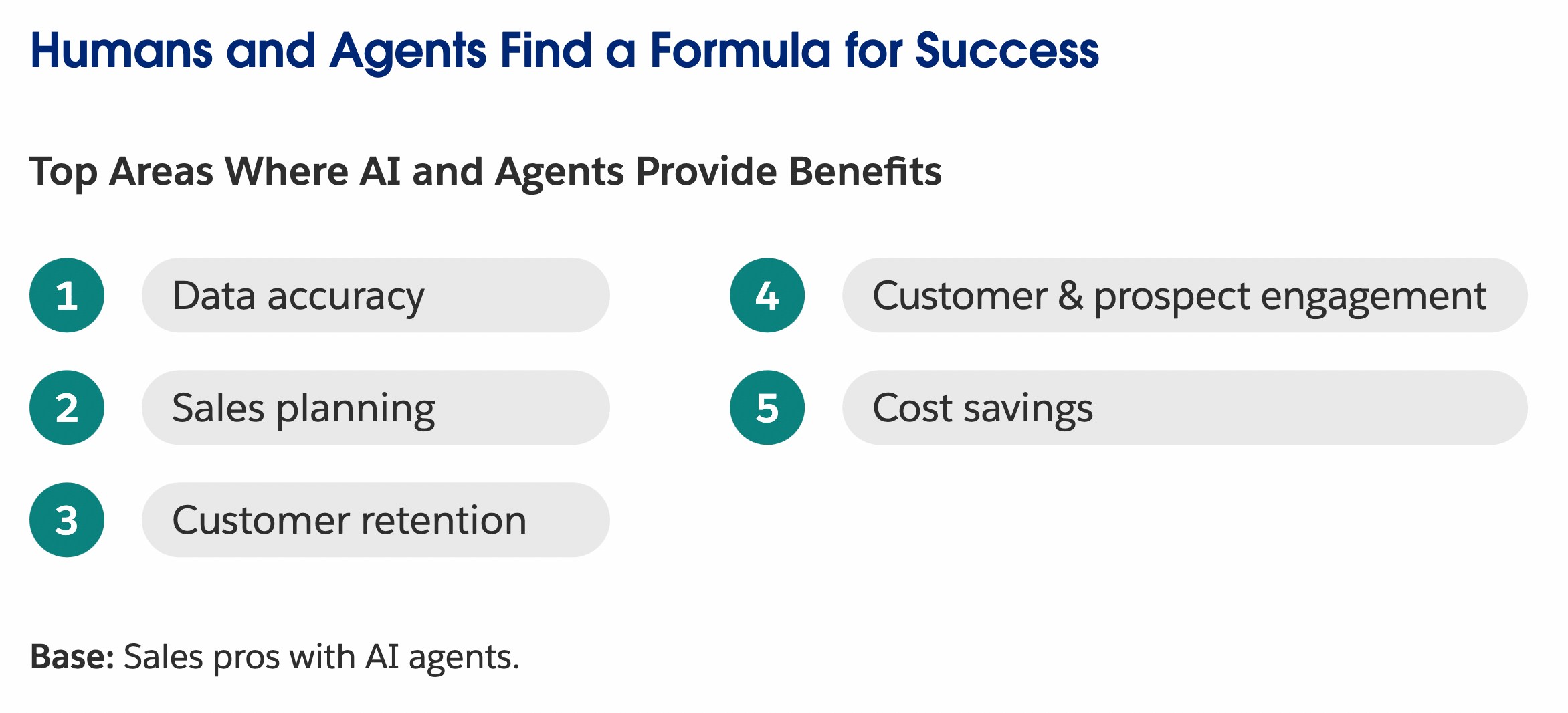
Answering these questions can help you choose the right methodology for your business and provide benefits across the board.
Source: Salesforce State of Sales Report
Now that we’ve defined the questions to ask, let’s dive into them in a bit more depth.
Managing complexity
While applying a specific methodology based on the industry you operate in can be effective, in the agentic era, with growable AI tools, a more telling question is the level of complexity your deals tend to have.
- Low complexity, fast sales: NEAT Selling, enhanced by AI automation
- Mid complexity: SPIN or Consultative Selling, supported by AI company analysis
- High complexity: MEDDICC, Challenger or Gap Selling, strengthened by AI market research and account intelligence tools like Sales Cloud.
Buyer behaviour
Consider how much help your buyers actually need to move through a decision. If buyers are early in their thinking and need guidance, a consultative approach like SPIN selling works well, supported by AI-driven discovery and insight.
More sophisticated buyers already understand their problem and expect you to provide a benefit. In these cases, methodologies like Challenger or MEDDICC are more effective. AI can surface insights that strengthen your ability to guide or challenge appropriately in real time.
Sales cycle length
Start by looking at how long it typically takes for a deal to move from first contact to closure. If your sales cycles are short and transactional, you’ll benefit from lighter methodologies like NEAT, where AI can help with speed, qualification and follow-ups. If your cycles are longer, you need a more structured framework like MEDDICC, where AI can support ongoing discovery and stakeholder mapping.
Team maturity
If your team is still developing, overly complex methodologies may break down in practice. More mature teams can handle frameworks like MEDDICC or Challenger because they have the resources to deploy and act on a new method at scale.
Coaching capacity
If coaching capacity is limited, AI becomes essential in filling the gap by providing real-time prompts, call feedback and automated insights. Where coaching is strong, AI acts as an amplifier, reinforcing good behaviour and helping managers focus on higher-value guidance rather than routine correction.
Data readiness
Look at the quality and structure of the data in your sales platform, because this is what AI systems depend on. Clean, well-structured data allows AI to track, for example, MEDDICC fields and so generate reliable insights. If your data is messy or incomplete, even the best AI tools will struggle to add value.
The best choice isn’t the most popular methodology. It’s the one that fits your deals – and your data.
Implementing your sales methodology, without turning reps into robots
So, you’ve selected a sales methodology. Now it’s time to get it implemented. In the agentic era, implementation isn’t about training people to follow a methodology; it’s about building a system that they can work from. Here are the steps you can take.
Step 1: Map your process to data
Start by translating your methodology into structured data fields. Identify what you need to know, such as pain points for a client or what their decision criteria are, and then use Agentforce to flag any gaps, infer the missing information, and provide a diagnosis of the health of each deal.
Step 2: Get prompting
With AI tools, a sales rep doesn’t need to remember the details of a sales methodology; they can receive prompts and briefing notes that agree with the methodology throughout the sales cycle. Again, the methodology becomes part of the system of sales.
Step 3: Take action
Sales Cloud can then track what information is missing, identify risks early, and recommend next steps as a deal progresses. This helps sales teams take action based on the information pulled by their AI agent.
Step 4: Embed methodology in coaching
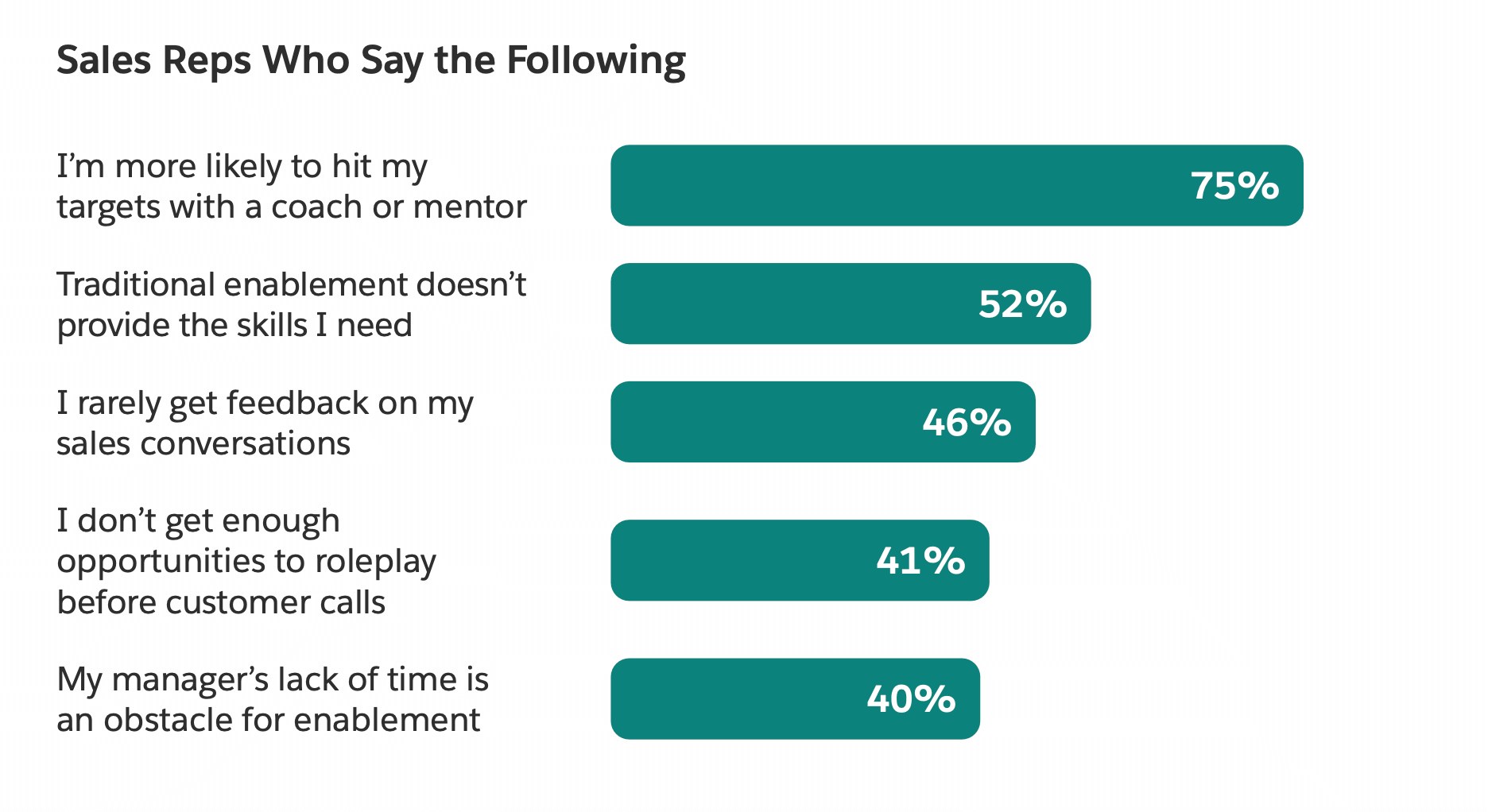
AI tools allow you to move from a situation where training happens when people can find the time, to it becoming part of your day-to-day. With 75% of reps more likely to hit targets with coaching, and a third of teams already using AI for it, this is a major plus point.
Source: Salesforce State of Sales Report
Step 5: Operationalise quotes and proposals
Carry your methodology through to the proposal stage by using AI to generate tailored outputs. You can fit your messaging to a stakeholder’s priorities, ensuring consistency between discovery intent and closing techniques.
Step 6: Automate follow-up with intent
Use AI to trigger and personalise follow-up sequences based on a customer’s behaviour and the context of the deal. Follow-ups should reinforce your methodology by clarifying pain points, strengthening urgency or expanding customer engagement.
Step 7: Set measurable milestones
Define stage progression using clear, data-backed criteria, and not gut feel. AI can confirm this progression and, over time, improve the accuracy of your forecasts.
Step 8: Generate continuous feedback
You can use data and insights to track results and refine execution. With 91% of sales professionals saying AI improves their planning, you can move from reactive reviews to proactive optimisation, and still reinforce learning through team discussions and one-on-ones.
Methodology still matters, but it’s evolving
Sales methodologies aren’t going away. They can still play a major role in guiding your sales processes and helping your sales reps. What’s changed in the agentic era is how those methodologies come to life.
Frameworks like SPIN, MEDDICC, Challenger, NEAT and Gap Selling still reflect the fundamentals of how people make buying decisions. However, today, AI agents help turn these methodologies into continuous, data-driven systems that guide reps through the sales process.
With Sales Cloud, you can embed your methodology into your workflows, turning your blueprints into living systems that guide every deal in real time. From intelligent lead qualification and dynamic follow-ups to in-the-moment coaching and account management, Sales Cloud helps your team sell with confidence – without adding more manual work.
To see the software in action, watch our Sales Cloud demo here.
Drive pipe faster with a single source of truth
Discover how Sales Cloud uses data and AI to help you manage your pipeline, build relationships, and close deals fast.
FAQ
What is a sales methodology?
A sales methodology is a structured framework that guides how sales teams approach each stage of the sales process, from discovery and qualification through client acquisition to closing. Think of it as a blueprint for putting your sales process into action.
Can sales teams use more than one methodology?
Yes, most high-performing teams already do. Different methodologies will suit different stages of the funnel or types of buyers. For example, you might use SPIN in early discovery, then apply MEDDICC later on in the deal. AI can help decision makers choose when and how best to deploy a methodology.
How do you use AI without making sales feel robotic?
The key, as with many things, is balance. AI should handle the busywork – the research, admin and pattern recognition. Humans should focus on empathy, trust and judgment. When used well, AI actually makes interactions more human by freeing reps up to focus more time on meaningful conversations.
How does AI change the role of a sales manager?
Working with AI agents, sales managers move towards system-level coaching. Instead of reviewing every deal in detail after it has completed (or fallen away) and analysing win rates, they use AI-generated insights throughout the sales cycle, focusing on exceptions, coaching opportunities and guidance on strategic selling.