Closing the Handoff Void: How Agentic AI is Helping To Solve Australian Healthcare’s Capacity Crisis

The core question posed at the Digital Health Festival 2026 in Melbourne this week was simple: Can AI save Australian healthcare? According to Dr Bryan Tan, Salesforce’s Chief Health Officer ANZ, the answer is a pragmatic ‘no’. Or at least, not on its own.
“It’s not tech alone that saves health and care,” Tan told attendees, “but people equipped with agents can.”
As the industry grapples with a global labour shortage and fiscal challenges, the conversation has shifted from experimental pilots to Agentic Healthcare, where autonomous AI moves beyond administrative assistance to owning the complex clinical handoffs, supporting patients that typically fall through the cracks.
The Governance Mandate: Building a Trust Layer for Agentic AI
For years, the industry standard for patient digital interaction has been the portal. However, for health-system CIOs, the move to agents in supporting these interactions requires more than just clinical promise, it requires governance.
Tan emphasised that Salesforce’s unified ‘trust layer’ has created a way for clinical leaders to govern AI, providing the means to monitor what the AI agents do and review their actions step-by-step. This ensure they are safe and transparent during piloting.
Closing the Gaps in Australian Care
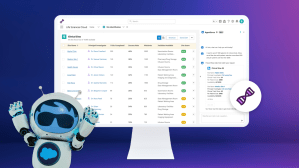
At this year’s Festival, Tan illustrated the power of Agentforce by focusing on three critical gaps in Australian care. This includes speeding up the referral loop by automatically triaging and booking appointments, as well as acting as a safety net for high-risk patients discharged over the weekend to prevent issues like medication confusion from escalating.
The third gap looked at proactively bringing critical, ‘invisible’ data, such as key lab results or radiology reports, to the attention of specialists sooner, ensuring complete and timely insights inform follow-up care..
“The implications on efficacy of population health programmes, waitlist management, clinic non-attendance, medication adherence and other gnarly problems in health are transformational,” reflected Tan.
The Customer Perspective
The transition to agentic care is already underway across the ANZ landscape, with major providers seeking a unified view of the patient to solve fragmented care. Jonathan Jackson, General Manager, Enterprise Architecture & Transformation for mecwacare, told attendees to the Digital Health Festival that establishing a comprehensive patient view was essential to good outcomes.
“By consolidating our operations onto Salesforce, we are laying the groundwork for a unified, 360-degree view of every individual we support. This single view of the customer is absolutely vital, as it gives our teams the real-time context necessary to provide proactive, wraparound services to clients across all care settings while building the data foundation required to safely run future AI tools.”
For others, like Tony Holland, General Manager at DonateLife Victoria, agentic AI is already on its way to providing a real impact on day-to-day operations. ”In a clinical environment where minutes literally separate a successful organ transplant from a lost opportunity, our frontline coordinators cannot afford to navigate fragmented data or manual protocols”.
“By using Salesforce to instantly surface verified medical and logistical answers, we are not only protecting our on-call staff from fatigue but reclaiming thousands of critical care minutes to fulfill our ultimate mission: saving more lives.”
This momentum was further underscored at the Festival by the release of Telstra Health Corus, a new cloud-native care intelligence ecosystem built with Salesforce to ensure health insights follow the person across the continuum of care rather than remaining locked in isolated systems. Salesforce serves at the core of Corus, providing the clinical data model and agentic AI capabilities required to bridge gaps across hospitals, aged care, primary care, and community services.
“Too many patients still retell their story at every point of care, and too many clinicians make decisions without the full picture,” noted Dr Tan, reflecting on the work being done with Telstra Health. “Corus is built to change that, providing an AI-ready platform designed to help clinicians safely act on insight, not just access it.”
The Bottom Line
The old norm of healthcare relies on humans to digest vast quantities of information and manage every handoff, but it’s a model that is no longer sustainable. “This is the last generation of health and care professionals that have relied solely on our own physical capabilities of time, skills and care” concluded Tan. “AI agents will tirelessly enable us to work at the top of our scope.”
More information:
- Read the guide to agentic AI in healthcare
- Find out why agentic AI is the end of healthcare paperwork
- Learn more about how Telstra Health is working with Salesforce
- Discover how Simplyhealth is using Agentforce