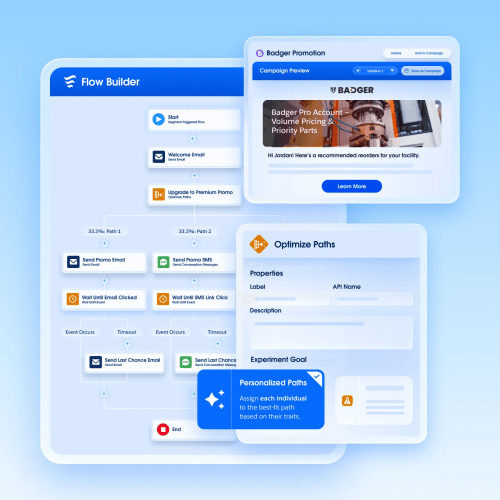



Salesforce Flow is a powerful automation tool that helps you automate and streamline workflows, but with nearly 100 flow types, knowing where to start can feel like a project in itself. However, as a marketer, you really only need to get comfortable with a handful of them. Below, I’ll walk through four flow types you’ll use most often in Marketing Cloud Next, so you can start automating your processes with confidence.
New to flow? Check out my previous blog post, 5 Tips for Marketers to Get Started with Salesforce Flow.
Audience Flow
Audience Flows target a specified audience to send scheduled messages, nurtures, journeys etc. Audience flows let you choose between the four audience sources below:
- Data 360 Segments Members: target unified individuals based on profile and attribute data.
- Actionable List members: target a specific, user managed list of Leads or Contacts.
- CRM Records: target Leads or Contacts based on CRM field values.
- Campaign Members: target members of a specific campaign.
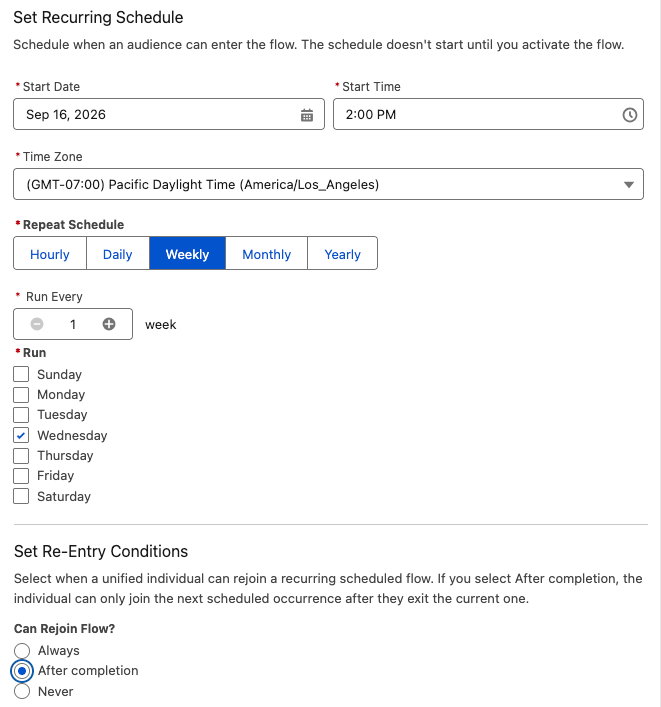
Audience Flows can also be scheduled to run once or be set to recur. When recurring, multiple options are available to customize when the flow runs and if audience members can re-enter the flow.
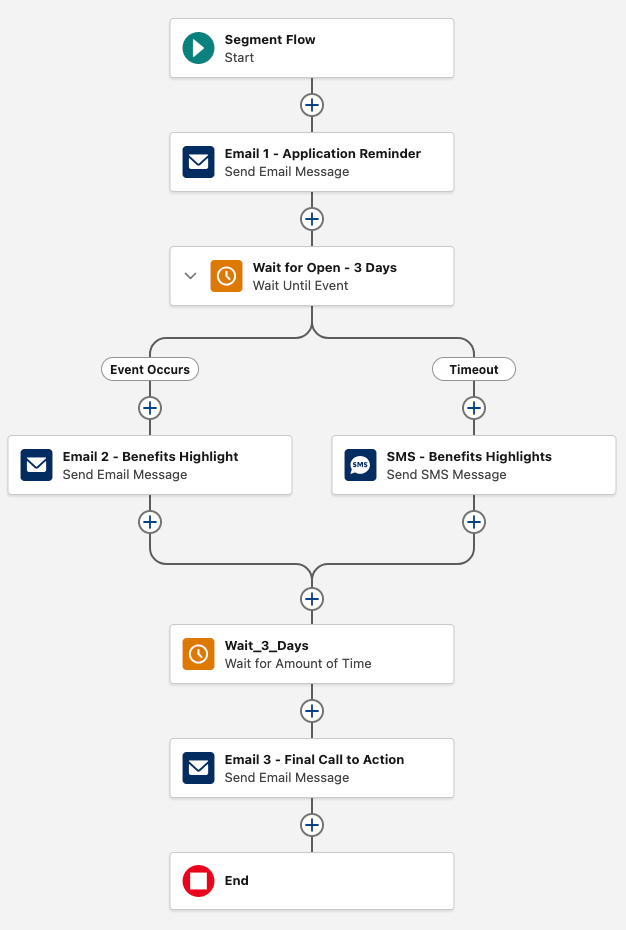
Below is an example of a simple Audience Flow nurture.
Learn more about Audience Flows.
Automation Event-Triggered Flow
Automation Event-Triggered Flows automatically trigger when an event, such as a form fill, new subscription, email click, or order takes place. Many events are provided out of the box, but custom event triggers can also be created for use with this flow type.
Once activated, the flow types run in the background, waiting for the event to occur. These flow types are a great way to kick off nurtures, route leads to the correct Sales rep, or automate processing and updating records in your CRM.
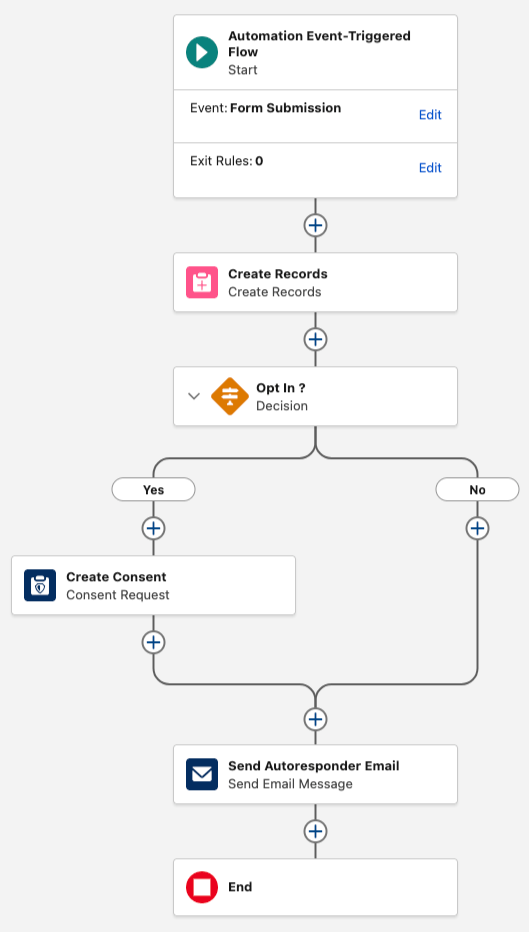
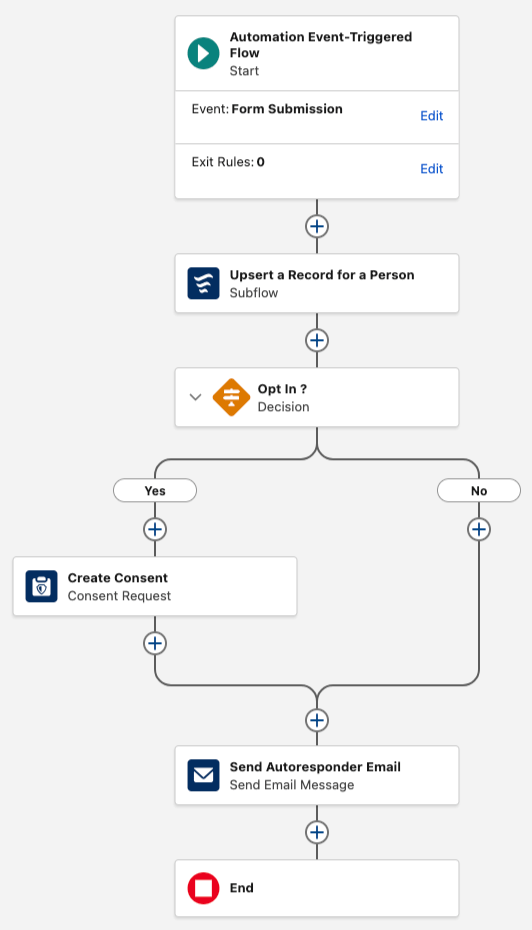
Below is an example of an Automation Event-Triggered flow for a Marketing Cloud Next Form.
Learn more about Automation Event-Triggered Flows.
Data Cloud-Triggered Flow
Data Cloud Flows trigger based on conditions within your Data Model Objects (DMOs). These flows can be triggered when a Data Cloud record is created or updated or based on a Calculated Insight. For example, use a Data 360 Flow to convert a Prospect into a Lead when they meet an engagement score threshold.
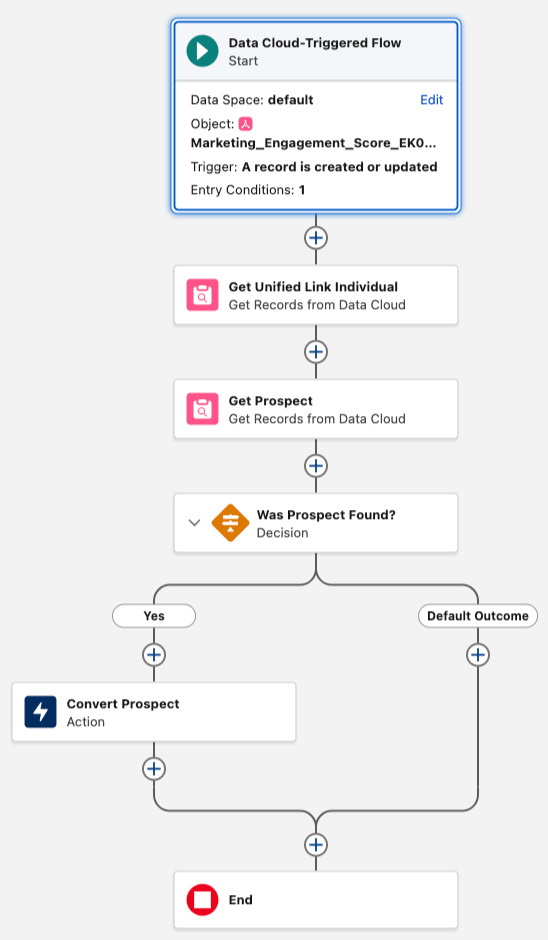
To build Data Cloud-Triggered Flows, ensure your Marketing users are assigned the Data Cloud Marketing Admin permission set.
Learn more about Data 360 Flows.
Autolaunched Flow
Our final flow type might be my favorite as they are a real time saver. Autolaunched flows are background automation triggered by subflows, APEX, or REST API. Typically I use them as subflows, which means they are called, or triggered, by other flows. If you have a repeatable process, for example how records are located and/or created post form fill, create an autolaunched flow to standardize this process.
Using the Form Fill example above, customize the “Upsert a Record for a Person” flow template to start building your standardized process. This flow will look for existing Contact and Lead records or, if none are found, create a new record. You can also standardize field values, send notifications to sales, or add any other elements that need to fire every time a form is completed.
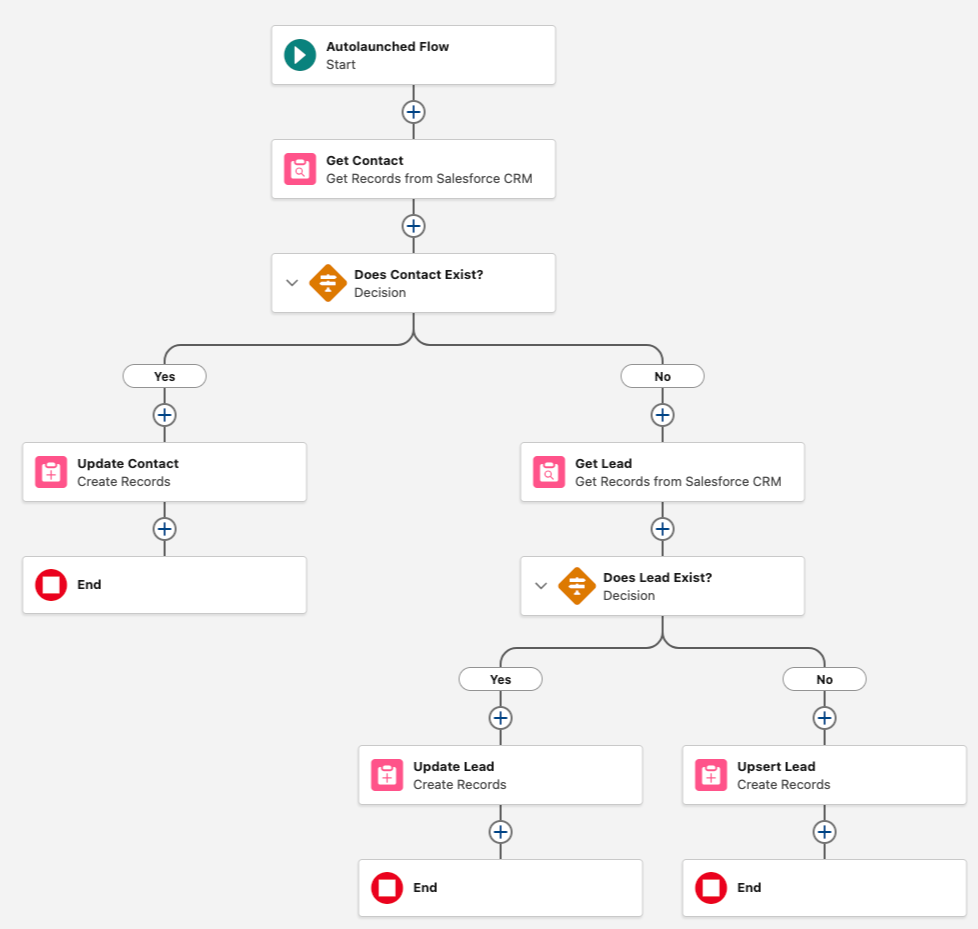
Next time you create an Automation Event-Triggered Flow for a Marketing Cloud Next form, replace the “Create Records” element with a “Subflow” element to use the “Upsert a Record for a Person” flow.
Learn more about Autolaunched Flows.
That’s it! Four flow types, and you’re well on your way to automating the processes that matter most to your marketing team. Start small: pick one process you repeat often, whether it’s a nurture, a form-fill, or a record update, and try building it out with the flow type that fits. The more you experiment, the more intuitive these will become.
Want to dig in further?
I’ll be covering this topic in more detail at Dreamforce this September — I’d love to see you there!
Not currently on your schedule? Add it to your agenda today.
See how agentic AI can help your brand
Don’t miss the latest evolution of Agentforce Marketing. Can’t make the event? Then join us online.