How the Architect Vista Brought Architectural Thinking to Life at TDX 2026
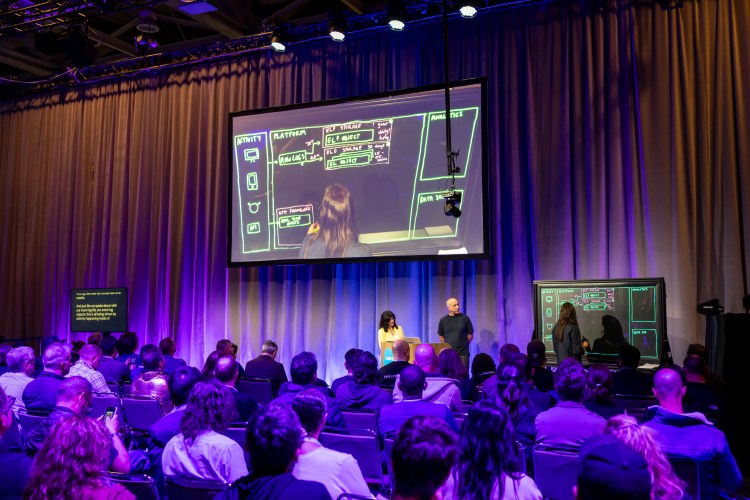


Learn how Architect Vista sessions at TDX 2026 brought architectural thinking to life with live lightboard diagramming, audience engagement, and real-world design decisions.



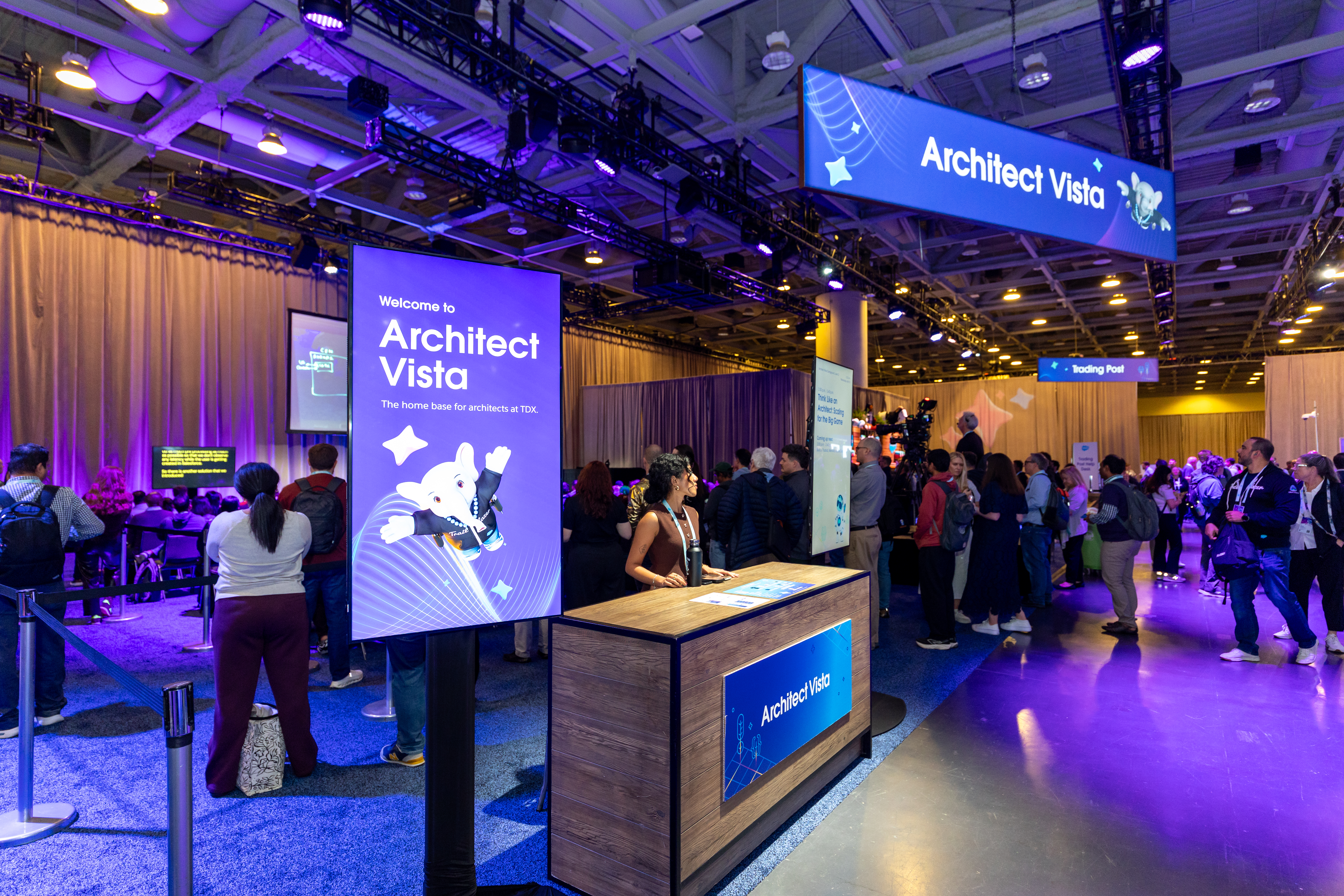
Architect Vista was the home for Salesforce Architects at TDX 2026. With 16 packed, interactive sessions, the format moved away from a traditional lecture-style session and brought the audience directly into the architectural challenges being discussed.
The audience saw how an experienced architect thinks through a problem in real time, from the decisions being made, to the anti-patterns getting ruled out, and the tradeoffs identified. Because the Q&A ran throughout the session, audience questions shifted the direction of the diagramming. The diagram at the end reflects not just the presenter’s thinking, but the questions, constraints, and tradeoffs the audience brought into it.
Sessions focused on the problems architects are working through right now: designing for agentic AI, building trusted data foundations, securing enterprise deployments, navigating multi-cloud complexity, and understanding where the Well-Architected Framework is headed next. Every topic landed on the lightboard in real time, shaped by the questions and challenges brought into the room.
This interactive format matters because architecture is a thinking sport. The best decisions come from externalizing your reasoning, pressure-testing it against real constraints, and iterating fast. The Architect Vista was designed around that reality, and the turnout reflects how much the community is looking for exactly this kind of engagement.
All sessions are available on Salesforce+. Keep reading for a curated list of favorite Architect Vista sessions from the Architect Evangelism Team behind the Architect Track.
Miriam’s pick: Think Like an Architect: Scaling for the Big Game
Karishma Lalwani and I put a genuinely hard scenario in front of the Architect Vista during Think Like an Architect: Scaling for the Big Game, and the reactions and interactive Q&A told us it landed.
Why this session stood out
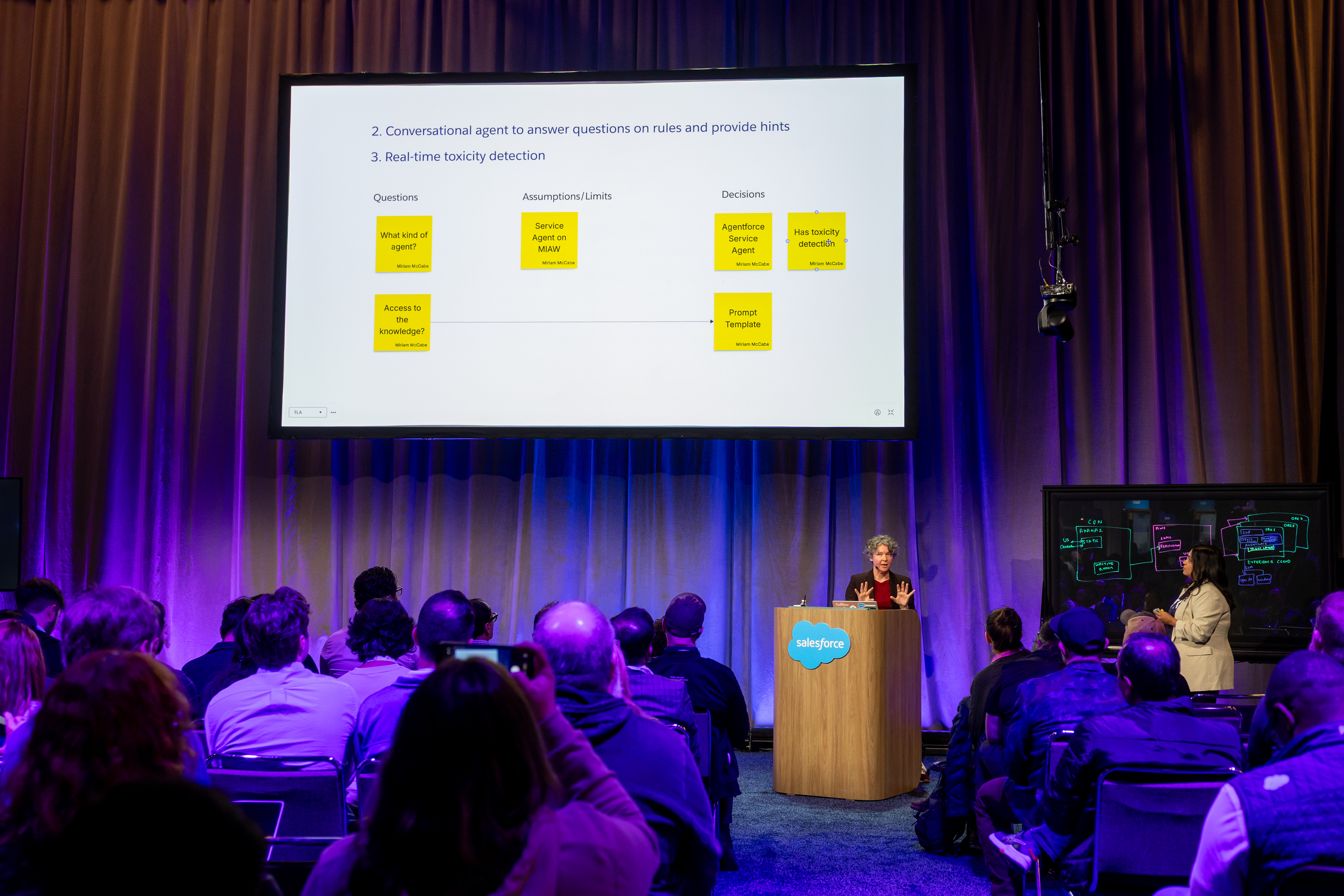
A prime-time televised contest. Up to 8 million total registrations. One million concurrent users on Experience Cloud. A conversational agent with real-time toxicity detection. Zero downtime. When we walked the audience through the requirement they knew immediately this wasn’t a simple problem.
What it covered
We used the What/How/Why method, starting by highlighting key phrases in the requirement to surface the HLRs we’d be solving for:
- Scale and routing: A single org won’t hold 1 million concurrent users on Experience Cloud. That forces a multi-org strategy and immediately raises questions about how to route players, where to store routing information for returning players, and how to ensure low latency for content delivery. The decisions: multi-org, Akamai CDN, AWS load balancing with DynamoDB for routing, and a waiting room for surge management.
- Agent architecture: We scoped to Service Cloud Agent on MIAW, grounded in a prompt template deployed across the orgs. The toxicity detection requirement was covered by the Salesforce Trust Layer.
- Testing for scale: Run scale tests at 3x expected load. Use Scale Center and Apex Guru to analyze findings. Test against full copy sandboxes so you’re as close to production as possible.
What to take away
The lightboard diagram captured the full architecture in a single view. The sticky notes captured the questions, assumptions, and decisions along the way. That’s your Architectural Decision Record (ADR) in real time: architectural thinking made visible, traceable back to the requirements.
Watch Think Like an Architect: Scaling for the Big Game on demand.
Lilith’s pick: Build a Trusted, Well-Architected Data Layer
My favorite session in the Architect Vista was Build a Trusted, Well-Architected Data Layer, presented by Angelica Buffa and Mehmet Orun.
Why this session stood out
Providing insights for both seasoned architects and those just starting their journey is not easy. On a topic as complex and critical as the data layer, it’s challenging to find the right balance between too high level or too detailed. However, by providing hypothetical scenarios and highlighting best practices grounded in the Salesforce Well-Architected Framework, Angelica and Mehmet did just that.
What it covered
Channeling real-world stakeholder expectations, Angelica and Mehmet engaged the audience to think and architect with them through hypothetical customer scenarios. They used the lightboard to highlight the important pieces of information architects need to gather and consider to build a suitable solution, along with what a possible solution for this challenge could look like.
Each scenario surfaced important considerations, decisions and tradeoffs architects should account for, along with traps or anti-patterns to avoid. They also shared insightful lessons learned and connected back to resources like the Well-Architected Framework to help architects build solutions that are trusted, easy and adaptable. Specific use cases, like a customer ordering items to a corporate address where other employees might share the same name, helped illustrate the challenges of creating unified profiles. Watching experienced architects like Angelica and Mehmet draw and explain solutions step by step, while incorporating input from the audience, made it easy to think along and learn from each other.
What to take away
Key takeaways include concrete topics to uncover during discovery when architecting the data layer, like data retention by system, data recency, and identity gaps. The session also surfaces specific anti-patterns and architecture traps to avoid, along with how to mitigate them, such as assumptions around static customer data or reliance on enrichment services. It also shows how the Well-Architected Framework helps avoid costly mistakes, like filtering out bad contact points prior to match.
Watch Build a Trusted, Well-Architected Data Layer on demand.
Watch the Architect Vista sessions on demand
All 16 Architect Vista sessions from TDX 2026 are available on Salesforce+. Watch the live diagramming and technical discussions at your own pace.



Scott’s pick: The Next Chapter of the Well-Architected Framework
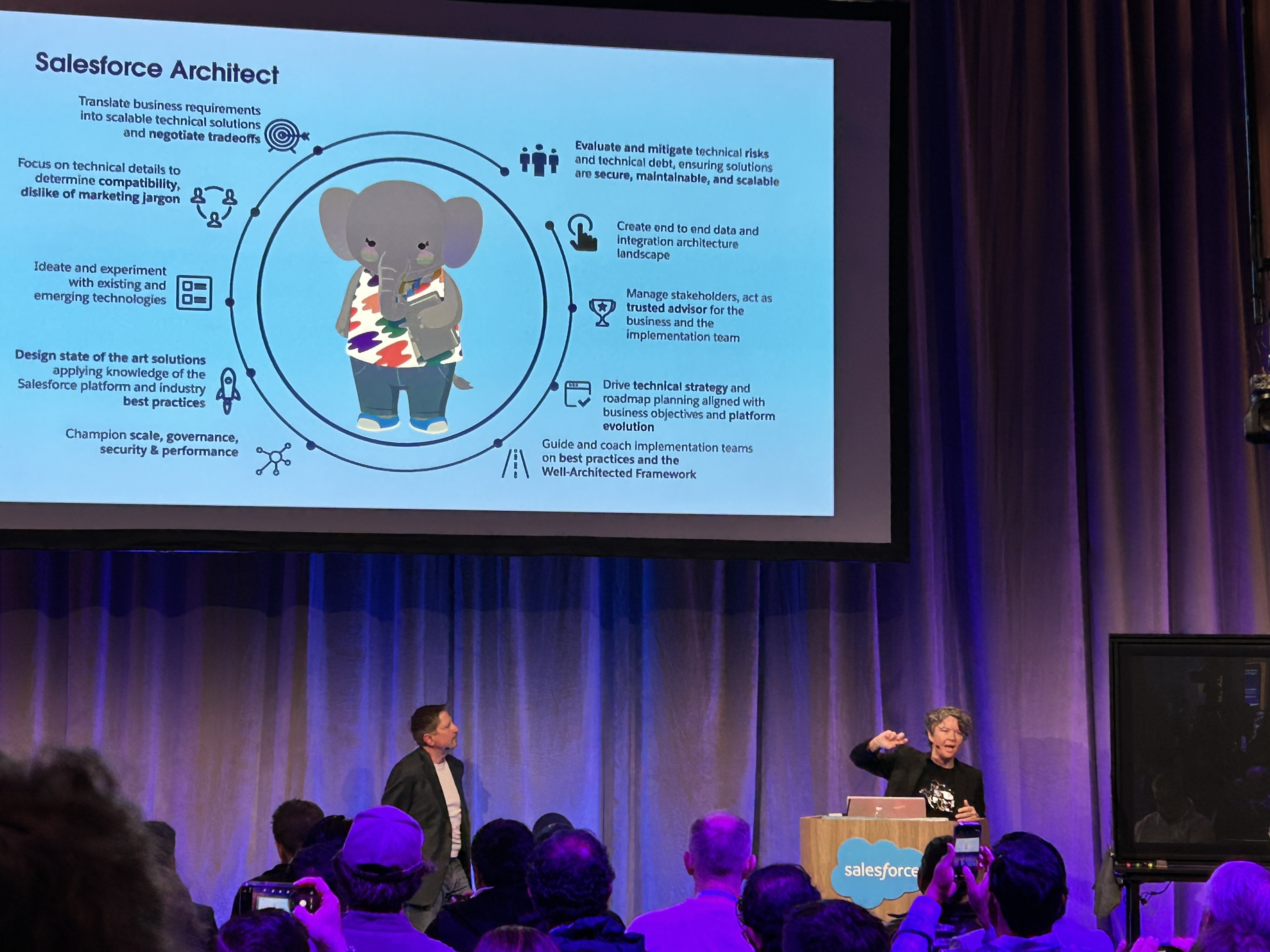
My favorite session at this year’s TDX was The Next Chapter of the Well-Architected Framework with Tim Breeden and Miriam McCabe.
Why this session stood out
I found this session compelling for a couple of reasons. First, the Well-Architected Framework is changing, and as Agentforce becomes more central to Salesforce, architects need to understand how this shapes our approach and daily decisions Second, it reinforced the impact the Salesforce Architect community has on the Salesforce Architecture Program. Being able to participate in building the new framework makes the connection feel real.
What it covered
The session began with an overview of the Salesforce Architect teams and the Architecture Center. The discussion then moved into the new Well-Architect Framework, with a focus on how it is evolving to address agent considerations. Each pillar was reviewed in detail, highlighting what has changed and why. A memorable moment was getting input from the live audience on where to place new architectural concepts within the framework.
What to take away
There are a few great takeaways from this session. The first is that the framework is ever changing, and the Salesforce Architecture Program team is committed to listening to feedback and to keeping it up to date. Next is that the Salesforce Architecture Center is working on some exciting roadmap items, including a new agent experience, to help architects engage with its resources.
Watch The Next Chapter of the Well-Architected Framework on demand.
David’s pick: An Architect’s Guide to Event Monitoring
My favorite TDX Architect Vista session was An Architect’s Guide to Event Monitoring, presented by Poorva Kaushil, Hayley Morris, and Dave Norris.
Why this session stood out
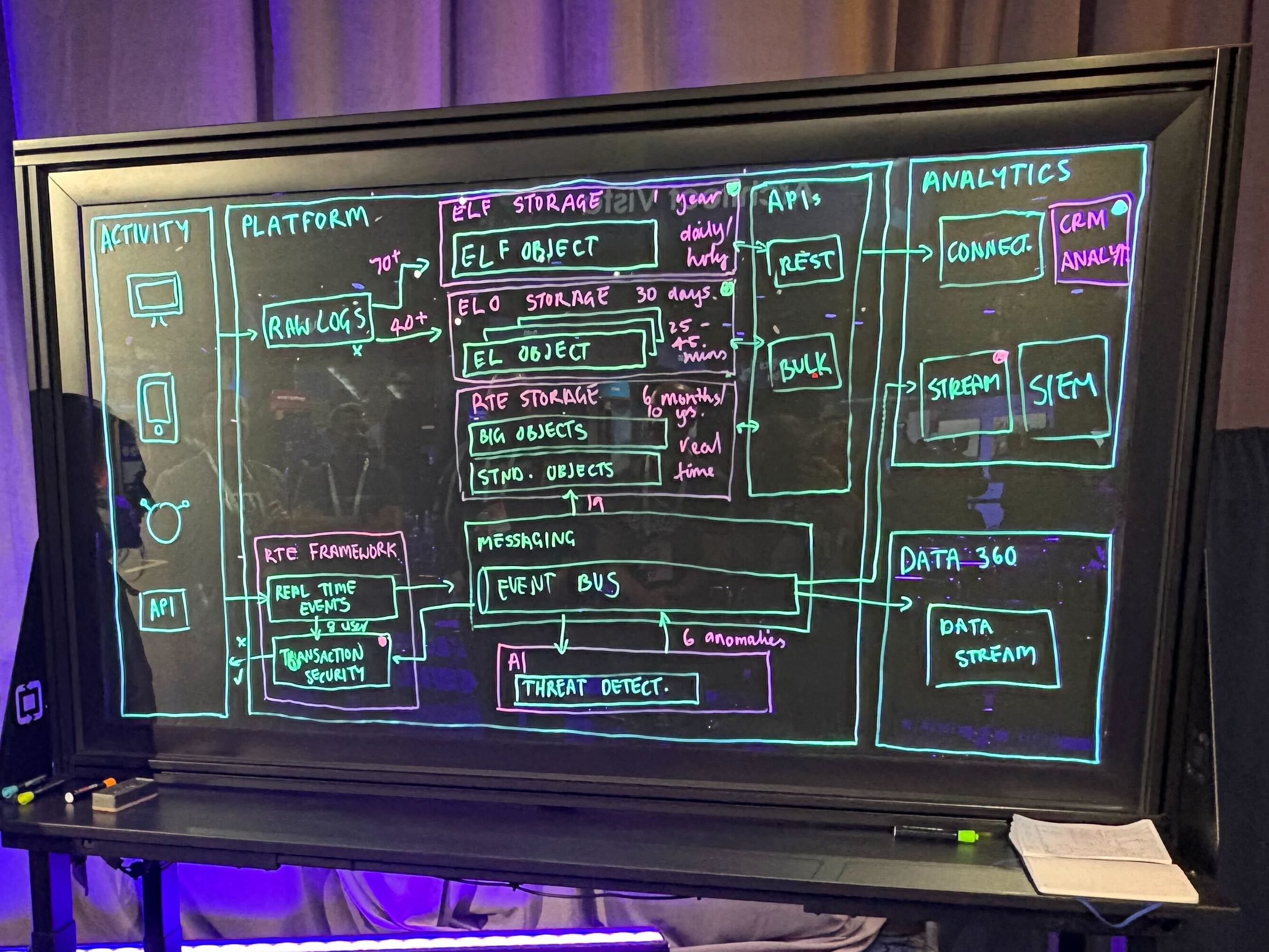
Event Monitoring is one of those capabilities architects know they should be using but don’t always have a complete picture of. This session fixed that. The lightboard diagram Hayley built live mapped out the entire Event Monitoring framework in a single, cohesive view. It’s the kind of diagram you want to screenshot and bring to your next architecture review. I did. Check out the photo below.
What it covered
The session broke the framework into three layers. Event Log Files (ELF) provide the broadest coverage across 70+ event types, while Event Log Objects (ELO) cover 40+ of those same event types in structured, queryable objects. The Real-Time Event Framework addresses latency by streaming events through an event bus with ML-powered Threat Detection to flag anomalies like credential stuffing and guest user irregularities.
The team also covered Transaction Security Policies, which let you act on those events proactively by blocking sensitive report exports, triggering MFA, or sending notifications when something looks off. Poorva closed with the roadmap, including Agentforce anomaly detection, zero-copy ELO integration with Data 360, and profile and role ID support in TSPs.
What to take away
Event Monitoring is an architectural decision that belongs in your design conversations from day one. As AI agents access, process, and act on data across your orgs, understanding that activity in real time is integral to establishing a firm security and compliance foundation. If this session isn’t already on your watch list, it should be.
Watch An Architect’s Guide to Event Monitoring on demand.
Submit your architect session for Dreamforce 2026 by May 27
The architect track is looking for compelling, high-quality session proposals that inspire and teach. Showcase your expertise through technical deep dives, architecture patterns, real-world designs, interactive sessions, and innovative business solutions.
Explore architectural thinking in practice
16 sessions, two days, and a format that stood out by pairing live lightboard diagramming with continuous audience interaction. The Architect Vista created space for architects to work through complex challenges in real time, surfacing the decisions, tradeoffs, and patterns behind each solution.
Watch the sessions from TDX 2026 on Salesforce+ to see that thinking unfold on the lightboard.
If you’re working through your next architectural challenge, this is a chance to see how solutions take shape, one decision at a time.
Subscribe to the Salesforce Architect Digest on LinkedIn
Get monthly curated content, technical resources, and event updates designed to support your Salesforce Architect journey.