Architecting the Future, One Community Event at a Time

The Salesforce Architect Evangelism team shares key takeaways from recent community events and how that feedback is shaping the future of the Salesforce Architecture Program.



There’s a specific kind of electricity found only at community-led events: a unique blend of deep technical grit and the shared joy of solving the impossible.
“Architecting the future, one community event at a time” is not only the title of this article; it is the core philosophy of our team. While we spend a large part of our days building resources, we know that the direction of the Salesforce Architecture Program is shaped by what we hear directly from the architect community.
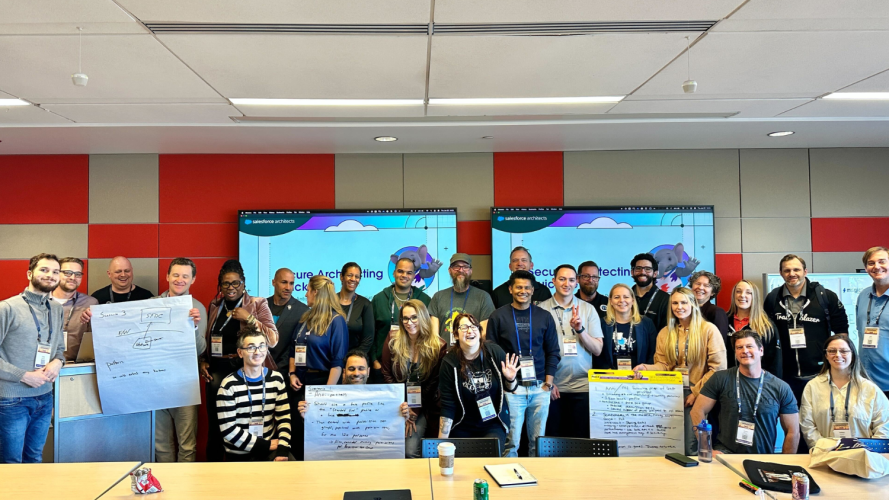
Our recent trip to Architect Dreamin’ Americas in Scottdale and Cactusforce marked a significant milestone: it was the first official outing for the full Architect Evangelism team. These community-led events bring the Salesforce ecosystem together for hands-on learning, knowledge sharing, and open discussion. Across multiple days of community-led sessions, we hosted workshop beta sessions, facilitated feedback conversations, attended sessions, and observed a live Certified Technical Architect (CTA) mock presentation, all while spending time listening to architects share what they’re seeing in the field.
We joined these events to test ideas and have meaningful, face-to-face conversations with architects to ensure that the program is moving in the right direction and delivering what is needed. Rather than going to teach, we went to listen, learn, and be “architected” by the real-world challenges you face every day.
It’s impossible to do justice to two packed events across three days, and you can find the agenda with all the sessions on the respective event websites. Instead, we asked every team member of the Architect Evangelism team to reflect on what they heard from the community and what resonated most for them.
How the Salesforce Architect Role Is Evolving in the Agentic AI Era
Explore the evolution of the Salesforce Architect in the age of AI, with a focus on how judgment, communication, and enterprise oversight are shifting in the agentic era.


Lilith’s highlights
Architect Dreamin’ and Cactusforce were a series of “firsts” for me: first visit to Scottsdale, first team outing with the full Architect Evangelism Team, and even my first “three sisters” salad.
But the true standout was participating in the opening keynote panel alongside my Admin and Developer Relations counterparts, Kate Lessard and Charles Watkins. Guided by Joshua Birk, we explored what innovations like Agentforce and MCP mean for our roles as we look forward and how the community is beginning to navigate these shifts.
My two biggest takeaways from the keynote are:
- Even when AI shifts our focus from manual execution to intentional orchestration, the “secret sauce” remains the humans at the helm.
- Communication and critical thinking are now more vital than ever. Without them, we simply cannot effectively instruct AI or accurately vet its output.
Ultimately, my advice for thriving in this era is to ensure that technology enhances your work rather than becomes it. Stakeholder connections and collaborative discovery remain deeply human activities; they should be empowered by technical expertise, not replaced by it. As the ecosystem evolves, the need to adapt and keep learning remains as true as it ever was.
David’s highlights
Architecting trusted, secure solutions is hard. That’s exactly why we developed two workshop formats focused on best practices for architecting such solutions. At Architect Dreamin’ and Cactusforce, we asked participants to serve as beta testers, so we could gather feedback before bringing these workshops to architects across the community. And we’re glad we did — the amount of actionable feedback we received on the format, content, and our facilitation was amazing, and it will directly shape how these workshops evolve.
My two biggest takeaways are:
- Architects are at different stages in their learning journeys. The community needs access to beginner, intermediate, and expert level workshops to meet them where they are, while helping them grow.
- There’s often more than one path to a well-architected solution. Architects shine brightest when they’re exposed to multiple approaches and ways of thinking. Diversity of thought builds the most robust systems.
We’ll be using the live feedback and the survey comments to re-architect these workshops for future Dreamin’ and Salesforce events. Stay tuned to our social channels, LinkedIn and X, to learn where we’ll be offering them next.
Discover Trailblazer Community Conferences
Community Conferences, also known as Dreamin’ events, are learning events created exclusively by Trailblazer Community members. Learn from peers, build your Salesforce network, and give back to your community.
Von Clark’s highlights
The journey to becoming a CTA is a long one, and understanding the mechanics of the board exam can help to feel a little more prepared. One way candidates prepare is through mock exams: timed challenge scenarios where they solve a scenario and then present their solution to one or more judges. After the presentation, judges conduct a Q&A to solicit additional information or to help candidates adjust their solution.
Performing a live CTA mock has been a tradition since the very first Architect Dreamin’ event in Paris. At Architect Dreamin’ Americas in Scottsdale, I attended my first CTA mock presentation of this kind, and I was impressed by the candidate’s resilience: presenting for 30 minutes followed by a 30-minute intense Q&A in a room full of people.
My two biggest takeaways are:
- Maintain composure and a logical approach when under pressure. It is important to possess a comprehensive, end-to-end understanding of the solution, so that all architectural decisions can be clearly explained and justified when challenged.
- Effective time management is essential. It is crucial to manage your time efficiently throughout the entire process, whether you are solving the mock in a backroom or presenting your solution back to the judges. Even in Q&A, succinct and to the point answers increase the opportunity to address as many questions and open items as possible.
Observing the in-person, live CTA mock presentation was a privilege. I left the room with clear insights into the expectations and levels of readiness required when pursuing this certification.
Miriam’s highlights
Distilling two events of high-intensity exchange into a single highlight is nearly impossible. Beyond the excitement of our inaugural team presence at Architect Dreamin’ and Cactusforce, a real standout for me were the two feedback sessions we hosted. We received direct, unfiltered input from the community on the future of the Salesforce Architecture Center.
My key takeaways are a few of the messages we received from the community:
- You want less “it depends” and more prescriptive guidance
- You would like to see data models that allow for deep technical drill-downs
- You also want the ability to move seamlessly from high-level business processes into specific object-level details
- You’d like ways to contribute to the body of knowledge available
More than anything, this experience underscored the incredible strength of the Salesforce community. We are fortunate to have such a passionate and vocal group of experts, and we are committed to nurturing that connection — both through the content we create and by continuing to show up at the events where architects thrive. Your feedback is actively shaping how the Salesforce Architecture Program evolves.
Bridging the gap from feedback to framework
After seeing the strong community engagement and feedback in Scottsdale, we continued the conversation with visits to the Madrid and Utrecht Salesforce Architect Groups.
In addition to gathering fresh perspectives on Salesforce Architecture Center content, we asked how architects prefer to engage with our resources and what topics they want us to explore next.
The insights we gathered aren’t staying in our notebooks. We are already channeling this direct feedback into our roadmap and sharing it with the Office of the Chief Architect to help inform the Well-Architected Framework.
That same feedback also influenced the refreshed Salesforce Decision Guide format, designed to help architects make decisions faster and with greater clarity and confidence.
Likewise, Think Like an Architect topics are guided by community feedback, focusing on the real-world challenges architects are actively navigating.
To make this feedback loop visible, we share weekly highlights on our social channels through Feedback Friday, where we surface themes we are hearing from the Salesforce Architect community and what we’re doing in response.
The ongoing, two-way exchange helps ensure our roadmap is shaped directly by the real world experiences of the architects who use these tools and resources daily.
We are incredibly fortunate to have a community that is as passionate as it is vocal. We are committed to nurturing this connection by continuing to show up where you thrive, both through the content we produce and at the events you lead.
Help shape the future of the program
Your voice is the most important tool we have. We invite every architect in our community to help us shape the future of the Salesforce Architecture Program:
- Share your feedback: Connect with us to tell us what’s working and what isn’t
- Vote on challenges: Help us prioritize the topics we cover in Think Like An Architect
- Join the conversation: Connect with your local community groups and stay engaged with our latest resources
Together, we’re building a stronger, more prescriptive foundation for the entire ecosystem. We can’t wait to see you at the next event.
Subscribe to the Salesforce Architect Digest on LinkedIn
Get monthly curated content, technical resources, and event updates designed to support your Salesforce Architect journey.