



If there’s one thing that small business owners can agree on, it’s that things rarely go according to plan. Markets shift overnight. Customer expectations evolve faster than release cycles. And yet, the pressure to deliver better experiences, faster than ever, keeps building. In this constant cycle of change, Agile methodology can help sift through this noise helping teams stay focused and ready to adapt when things don’t go as planned.
In this guide, we’ll explore what the Agile methodology means, how it works in different settings, and how you can use it to stay responsive in a world that never stops moving.
What is Agile methodology?
Agile methodology is a way of working that helps teams adapt quickly to change. This approach focuses on short cycles of planning, building, and testing so you can respond to feedback as it happens. It doesn’t follow a long, fixed plan; agile teams learn and adjust with every step.
Agile works like this: Plan → Design → Test → Deploy → Review → Launch
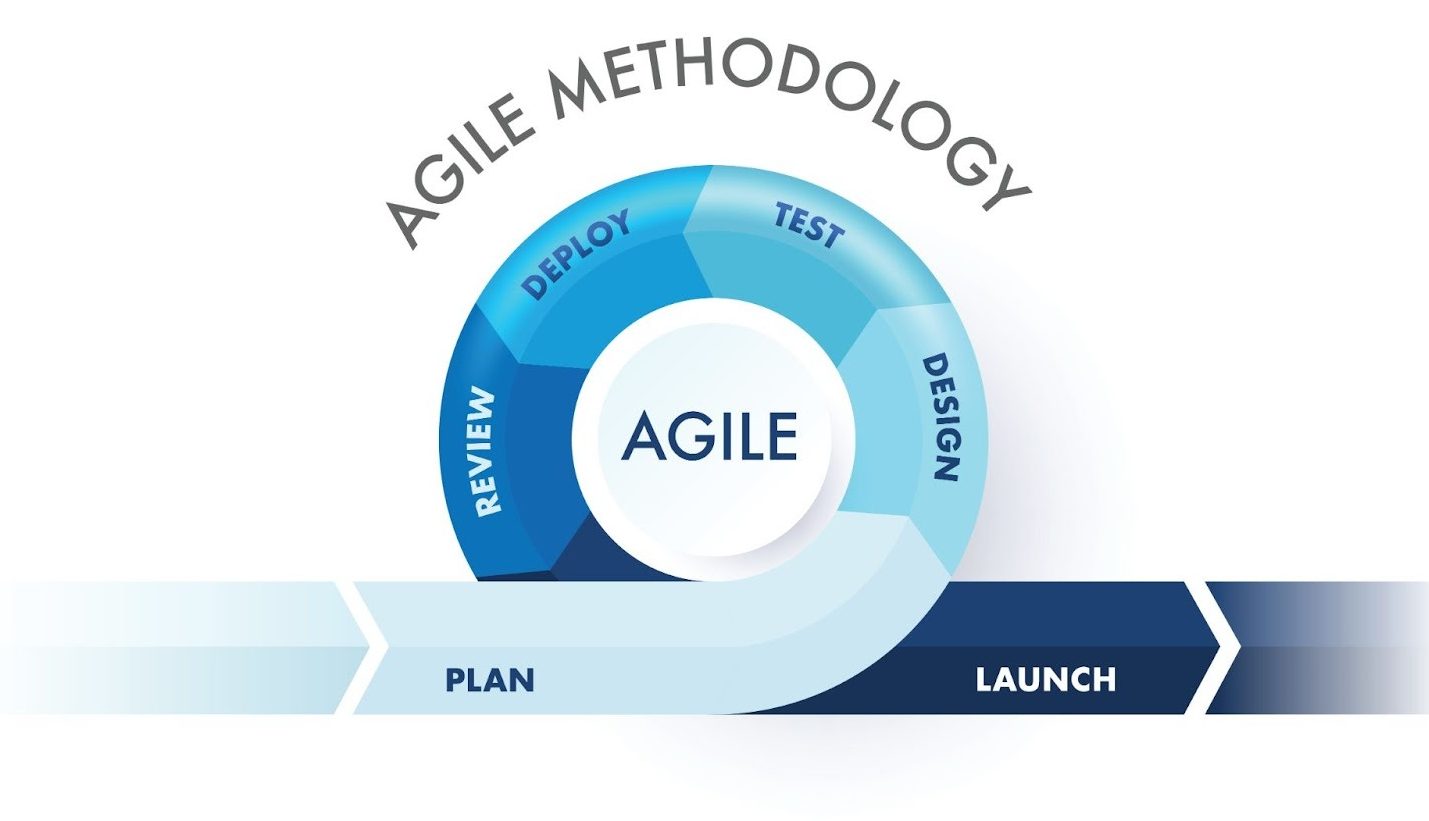
(Source: Adobe)
Agile methodologies like this provide a toolkit of techniques supporting this adaptive mindset, enabling you to navigate complex and fluctuating project requirements easily. It’s built around popular frameworks (like Scrum or Kanban) that help you stay transparent and aligned. Each framework has its own rhythm, but they all share one goal: to help you deliver faster and better.
Start with Small Business Basics



The birth of Agile: From the manifesto to mainstream
Here is a quick breakdown of the Agile methodology timelines from it’s inception to present day:
2001: The Agile Manifesto: A new approach to software built on collaboration and adaptability written by 17 Silicon Valley software engineers.
2002–2010: Scrum and Kanban: Scrum is formalized by Sutherland and Schwaber for software development, while Kanban originated in the Toyota Production System and is later applied to knowledge work, with both frameworks giving teams structure and flow.
2011–2018: Scaling frameworks: Models emerged to help large organizations coordinate multiple teams.
2019–2023: Agile beyond engineering: Marketing, design, and operations began using Agile ways of working.
2024–Beyond: AI and hybrid work: Agile expands across business functions, powered by artificial intelligence (AI) and flexible teams.
Agile vs. traditional project management
Traditional project management follows a straight path — every detail is planned with deadlines and moves step by step until the final delivery. It works well when goals are fixed and requirements don’t change. But today, that approach can slow teams down.
The agile mindset takes a different route. They use a path like: plan, design, test, deploy, review and launch methodology. Instead of predicting every outcome, your team will learn through small experiments and ongoing feedback. This way of work keeps teams open to change and focused on what customers actually need, not just what was planned months ago.
Boost team productivity with Slack
Bring together your team, your customers, and your tools to help take your business to the next level with Slack — it’s where business gets done.

What are the pillars of Agile?
At the heart of Agile are four simple ideas that guide how teams think and work. These pillars are the foundation of the agile mindset. Let’s take a look:
1. Individuals and interactions over processes and tools
Teams succeed from open communication and genuine teamwork. Processes and tools support this collaboration, but they can never replace it. When team members share ideas freely and solve challenges together, they make faster decisions and create better products.
2. Working software over comprehensive documentation
Agile values outcomes that customers can use. A working prototype or live feature offers far more insight than a long report or plan. Clear documentation still matters, but it should exist to support delivery, not slow it down. This focus on tangible results keeps momentum high and feedback loops short.
3. Customer collaboration over contract negotiation
Agile teams treat customers as active partners in the process. They communicate frequently to confirm that each release or deliverable aligns with real needs. Flexibility replaces rigid agreements, allowing teams to adjust priorities when new insights arise.
4. Responding to change over following a plan
Plans give direction, not limits. Market trends, technology, and customer expectations evolve quickly, so plans must evolve too. Regular reviews help teams assess progress and refine direction based on what they learn. This adaptability keeps organizations resilient, helping them respond to challenges and seize new opportunities faster.




What are the principles of Agile?
The four pillars of the Agile methodology set the mindset, and the principles show you how to put it into practice. Here’s how you can deliver meaningful work that customers love.
1. Satisfy the customer through early and continuous delivery of value
Agile teams deliver value in small, usable increments. It can be a new product feature, an improved service, or a process update. Each release gives your customers something they can actually use, not just a promise of what’s coming. This steady rhythm of delivery helps you gather feedback faster and stay aligned with your customers’ evolving needs.
2. Welcome changing requirements, even late in development
Agile teams see change as an opportunity to make the product better. When new insights come in, you adjust your scope and keep the project aligned with current goals. This flexibility is what keeps your work useful instead of outdated.
3. Deliver working outputs frequently
Long projects without visible results drain motivation. Agile fixes that by breaking work into smaller, testable chunks. Each sprint ends with something functional like a feature or an update. Frequent delivery keeps progress visible and reduces the risk of surprises later.
4. Work together every day
Business teams understand the “why,” and technical teams understand the “how.” Both need to stay connected to keep progress steady. Daily syncs or stand-ups help align priorities and uncover blockers before they slow things down. Many teams use Slack to make these conversations easier. With channels for each project and quick check-ins, Slack keeps communication flowing even when teams aren’t in the same room.
Collaborate faster with one sales workspace
Find experts, get approvals, and take action without switching apps — use Agentforce Sales and Slack together.



5. Build projects around motivated people
Agile teams perform best when individuals are motivated and trusted to take ownership. Leaders should create an environment that supports autonomy and accountability. Teams need the right tools and the freedom to solve problems in their own way. Motivation grows when leaders provide regular feedback, recognize achievements, and remove obstacles that slow teams down.
6. Value face-to-face conversation
Written updates and tickets have their place, but real-time conversations solve problems faster. Agile encourages direct communication, whether it’s in-person or over video calls. The goal is clarity. The faster information moves, the faster the team can act.
7. Measure progress through working results
Agile replaces reports and status slides with real outcomes. Progress is measured by what’s delivered and how well it performs, not by how much was planned. To track this effectively, teams can use tools like a customer relationship management (CRM) to connect work outputs with customer impact.
8. Pay attention to technical excellence and good design
Quality is what allows you to stay Agile. When products are built with care and precision, it’s easier to make updates and add new features without causing issues. Focusing on good design, clear structure, and consistent standards helps teams work faster and maintain long-term reliability.
9. Let teams self-organize
When people own their process, they take more responsibility for results. Self-organization encourages accountability and innovation. It also helps leaders step back and focus on removing obstacles instead of micromanaging. Tools like Jira, Asana, or productivity tools such as Slack help teams track progress and stay aligned without losing autonomy.
10. Reflect and adapt regularly
Every sprint ends with a retrospective for a reason. It’s your moment to pause, reflect, and improve. Agile is all about learning from what worked and fixing what didn’t. Small, consistent adjustments keep teams sharp and your process evolving with every cycle.

Webinar: How to use Slack and Salesforce to win new deals and deliver better customer service
What are the types of Agile methodologies?
Agile comes in many forms and each framework interprets the same principles in a slightly different way. Here are six of the most common Agile methodologies and what makes each one unique:
1. Scrum
Scrum is the most popular Agile framework and the one most teams typically start with. It organizes work into short, repeatable cycles called sprints that usually last two to four weeks. Each sprint focuses on delivering a working piece of the product, not just progress on tasks. The flow is clear: plan, build, review, and improve.
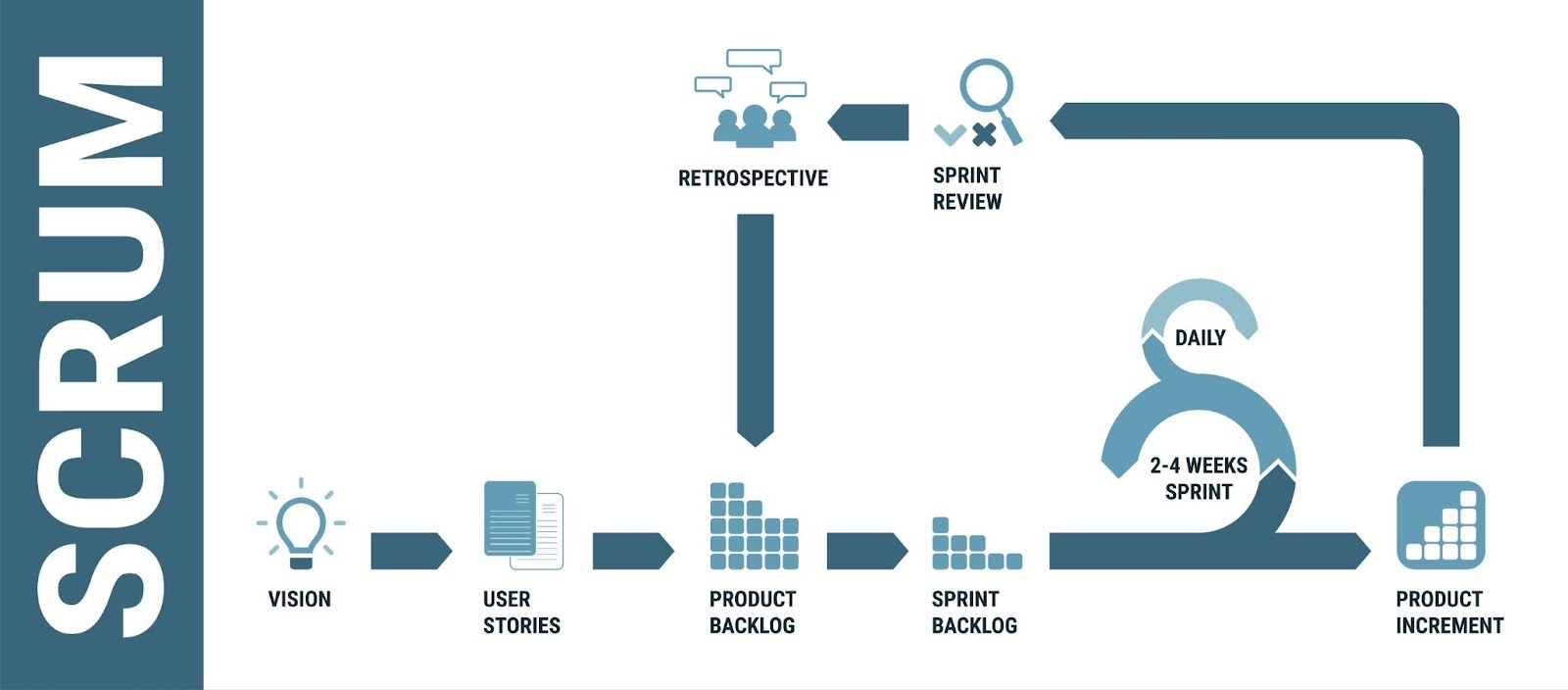
(Source: Adobe)
2. Kanban
Kanban focuses on visualizing work and managing flow. It uses a board with columns that represent stages of work, like “To Do,” “In Progress,” and “Done.” This gives everyone instant visibility into who’s working on what and where things might be stuck. The core goal of Kanban is to reduce bottlenecks. You limit how many items can be in progress at once, which forces teams to finish work before starting something new.

(Source: Adobe)
3. Dynamic systems development method (DSDM)
DSDM is one of the oldest Agile frameworks and emphasizes the full project lifecycle, from planning to delivery. It’s highly structured but still flexible, making sure that business goals stay aligned with what the team delivers. DSDM suits larger organizations that need a balance between governance and agility. Core principles include:
- Active user involvement throughout the project
- Frequent delivery of usable products
- Integrated testing from start to finish
- Collaborative decision-making among all stakeholders
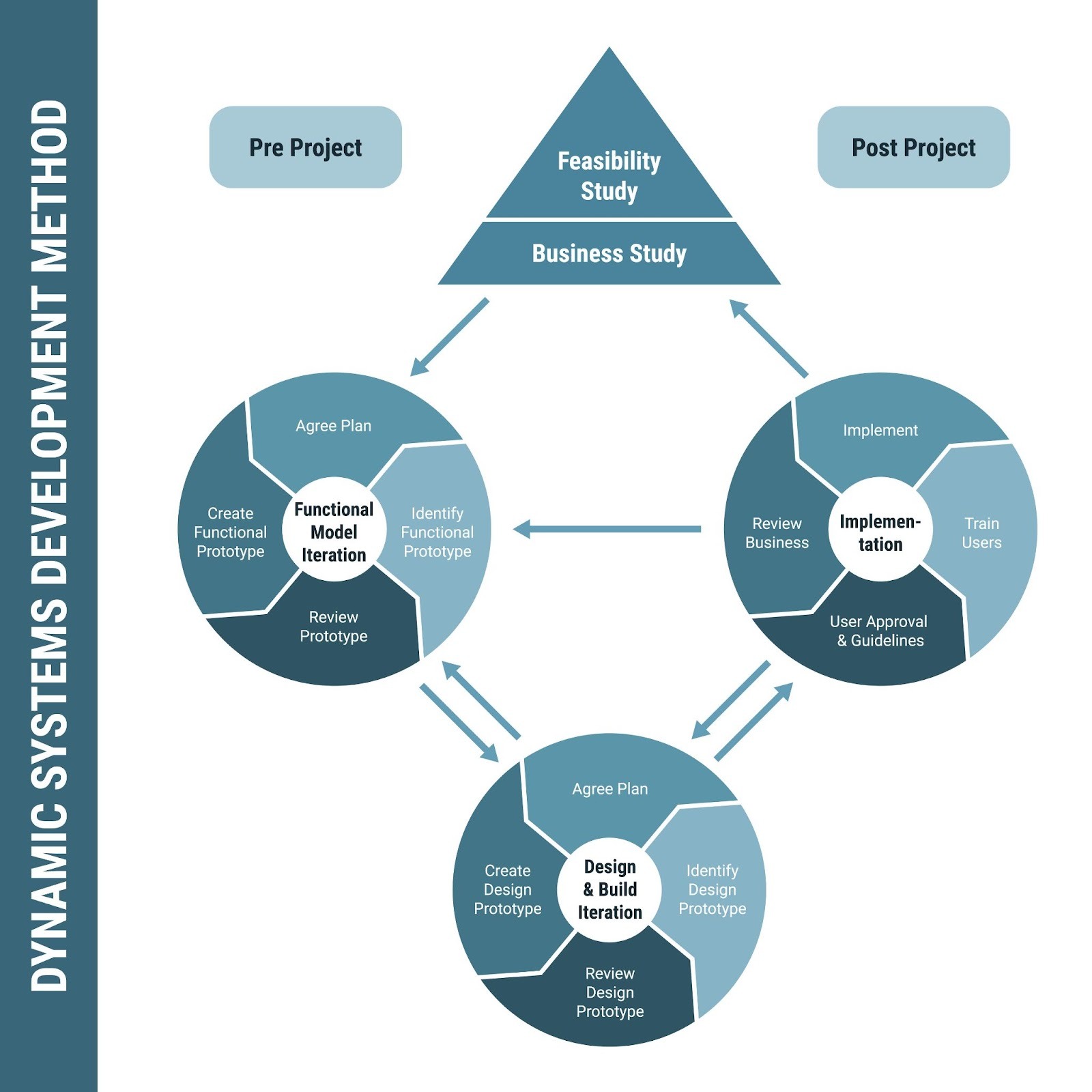
(Source: Adobe)
4. Extreme programming (XP)
Extreme programming is designed for software development teams that need both speed and reliability. It emphasizes technical excellence and short feedback loops to deliver high-quality software fast. XP encourages constant communication between developers and customers so that requirements stay relevant as the project evolves. If your team works in high-pressure environments where software quality can’t be compromised, XP gives you a structure to move fast while staying confident in every release.
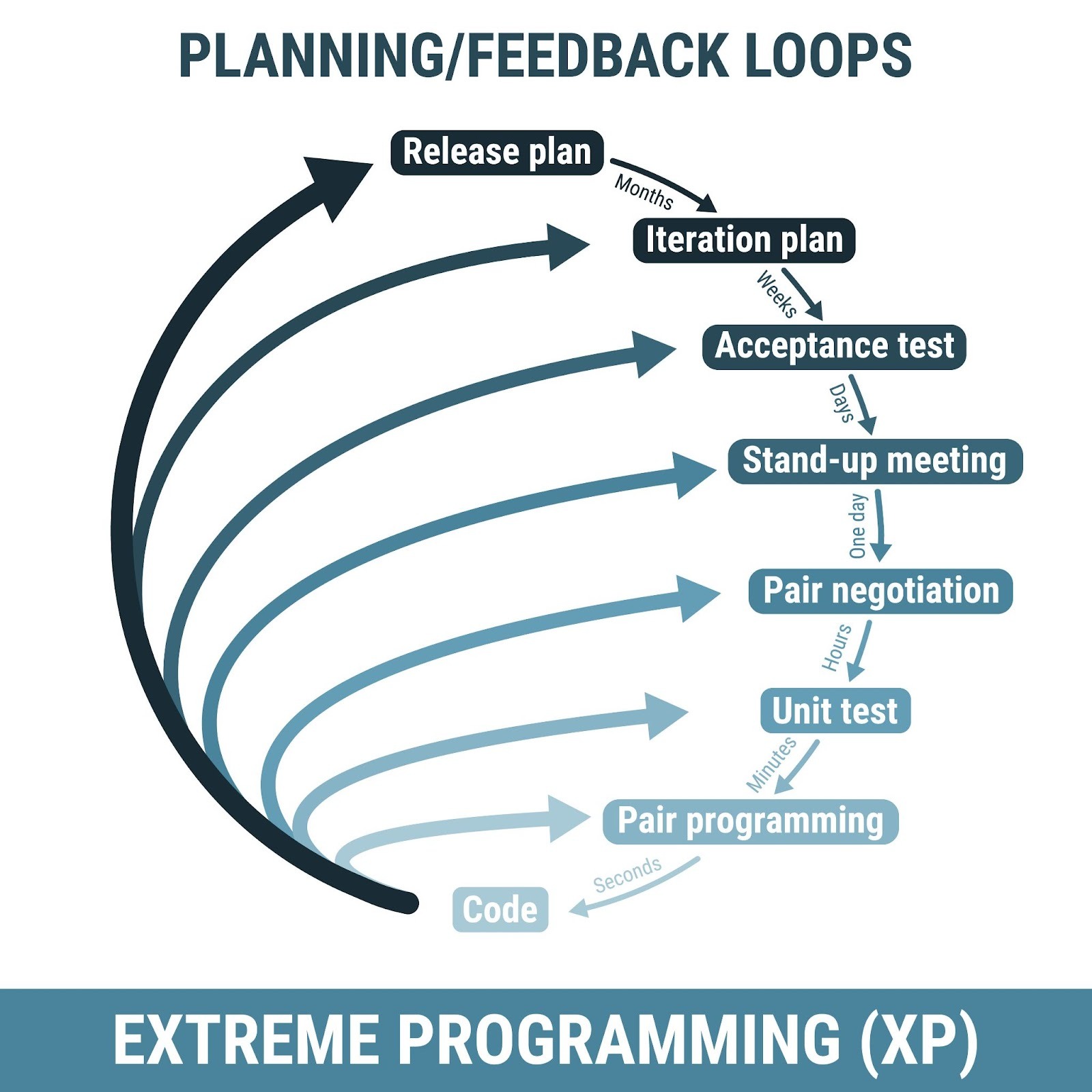
(Soure: Adobe)
5. Crystal methodologies
Crystal is about tailoring Agile to your team’s size and environment. It works best when you need flexibility and creativity. It’s ideal for teams that value communication and trust over heavy documentation or strict roles. Key traits of Crystal include:
- Focus on people and interactions over processes
- Emphasis on frequent delivery and reflective improvement
- Adaptability to team size and project needs
6. Lean software development
Lean software development is rooted in manufacturing principles from Toyota’s production system. Its focus is simple: eliminate waste and maximize value. Every task, feature, or process should contribute to the end goal. If it doesn’t, it goes. Lean encourages small teams that make decisions quickly. You deliver in smaller batches and learn from customer feedback. The key is to move ideas from concept to delivery with minimal friction.
What are the key practices for software development teams?
Agile provides software teams a flexible structure to move fast and learn continuously. Here are a few core practices that make it work:
- Daily stand-ups: Short, focused team check-ins to share progress and identify blockers.
- Sprint planning: Define what the team will achieve in each sprint, making sure goals are realistic and measurable.
- Continuous integration and delivery (CI/CD): Automate testing and deployment so updates reach users faster and with fewer bugs.
- Pair programming: Two developers work together on the same code, improving quality and knowledge sharing.
- Retrospectives: Regular reviews after each sprint to reflect on what worked, what didn’t, and how to improve.
Customer feedback for Agile projects
Customer feedback sits at the center of every Agile project. After each release, teams invite users to share what’s working and what’s not. That feedback guides the next sprint, making sure every feature adds real value. This helps you build trust and keeps your product aligned with real-world expectations.
You can bring customer input into your process in several ways:
- Create a small customer panel for consistent feedback.
- Review user analytics after each release to spot trends.
- Use surveys or in-app prompts to capture quick responses.
- Prioritize features that directly address customer needs.
Maximize Your CRM Productivity
Learn how small and growing businesses are taking productivity to new levels with Salesforce CRM in this free e-book.
Thank you for downloading the free e-book!
Here's your free e-book!How does Agile work for non-engineering teams?
Any team that works on projects or collaborates across functions can benefit from Agile. For example, marketing teams can use Agile to manage campaigns through sprints and stand-ups. Sales teams use it to review pipelines weekly and experiment with outreach strategies. The same approach applies to HR when building new onboarding programs or employee initiatives. When everyone sees progress in one place, it builds accountability and reduces back-and-forth communication.
The biggest shift, though, is cultural. Adopting Agile means accepting that plans will change and progress sometimes looks messy. But that flexibility is what helps teams stay relevant. In cross-functional environments, teams often depend on each other’s deliverables. By working in short, transparent cycles, you can align goals early and avoid last-minute surprises.
How to implement Agile: A practical checklist
Agile works best when it’s applied with intention. You don’t need to change everything overnight, so start small and build a rhythm that fits your team. Here’s a six-step checklist to help you put Agile into practice the right way.

How can you tie Agile to customer outcomes?
In many organizations, customer insights sit in one system, while product work happens in another. Sales hears one piece of feedback, support hears another, and product managers have to piece together the full story from multiple tools. That disconnect makes it hard to know whether what you’re building actually solves real customer problems. What you need here is a CRM that connects what customers say with what teams build and how those changes perform after release.
Here’s the flow in simple terms: Customer signal → CRM capture → Product backlog → Sprint → CRM measures impact
Let’s look at an example: Enterprise client flags a critical bug
Your customer service team logs the issue in CRM and tags it as high priority. The product team incorporates it into the next sprint to resolve it quickly. Post-release, the CRM shows improved customer satisfaction scores (CSAT) and reduced escalations for that account.
With Salesforce, this loop becomes much easier to manage. Agentforce Sales helps your teams capture customer requests and deal insights. Agentforce Service collects support feedback and case trends. Agentforce Tableau connects it all, showing how every release affects satisfaction, retention, and revenue. Together, they form a connected system that ties product decisions to customer outcomes.
Wherever you are — just get started.
No matter where you are on your journey as a business owner, you can get started with Starter Suite for free — the CRM made for growth.

The next step in your Agile journey
Agile reminds us it’s not about the destination, it’s about the journey. The real progress starts when every sprint and story connects to what your customers actually need. That’s where a strong CRM foundation helps. Salesforce helps scaling teams with feedback, data management, and team communications all in one system, so your team can spot patterns and act with purpose. That’s how Agile grows from a framework into a culture of continuous improvement.
Start your journey with the Free or Starter Suite today. Looking for more customization? Explore Pro Suite. Already a Salesforce customer? Activate Foundations to try out Agentforce 360 today.
AI supported the writers and editors who created this article.
Frequently asked questions (FAQs)
The core values of the Agile Manifesto are individuals and interactions over processes and tools, working software over comprehensive documentation, customer collaboration over contract negotiation, and responding to change over following a plan.
Yes, Agile methodology has been successfully implemented in various industries, such as finance, marketing, and construction, proving its adaptability and effectiveness beyond software development.
Agile certifications are important as they validate expertise in Agile principles and practices, enhancing career opportunities and competitiveness in the job market potentially leading to increased income.
Agile methodologies prioritize customer feedback, integrating it into the development process after each iteration to ensure that the product evolves to meet user needs and adds real value. This makes customer feedback an important part of the iterative development process.