
Key Takeaways
As we move into an Agentic AI world, the stakes for enterprise data security have never been higher. Today’s AI agents don’t just sit on the sidelines waiting for instructions; they interact with live systems, mine years of historical data, and scan forgotten archives to generate insights. While this unlocks immense potential, this autonomous behavior fundamentally expands your threat perimeter far beyond traditional boundaries.
Companies operating in regulated industries like healthcare, financial services, or the public sector are facing heightened scrutiny from governing bodies and increasingly strict zero trust mandates across your technology stack. The primary challenge is how to secure this expansive, agentic landscape without sacrificing the speed, agility, and functionality these AI tools promise.
The case for data encryption
Ensuring sensitive data is protected is a critical step in any data strategy, and how you do it matters. That’s where data encryption can help. Data encryption transforms information into unreadable formats, protecting it from unauthorized access and securing sensitive data across devices and servers.
Not encrypting all your data isn’t just a technical gap; it’s a significant business liability. It directly exposes the organization to severe non-compliance penalties, heightens data exposure risks, jeopardizes brand reputation, and can lead to intellectual property or financial loss.
90% of organizations reported a breach in the last year, and the average cost of non-compliance has reached $14.8 million. Modern threats are clearly outpacing traditional, perimeter-based defenses.
On the flip side, the benefits of encrypting your data are significant. It transforms your overall security posture from reactive to proactive, enables regulatory compliance, ensures strong data integrity, and—most importantly—builds durable customer trust. In today’s landscape, that trust is a major competitive advantage.
While the case for encryption is clear to most IT and security leaders, many organizations are currently facing a “data protection gap,” which manifests itself most in four critical areas:
Expanded attack surface
Active data is often heavily guarded by state-of-the-art firewalls, active monitoring, and strict access controls. However, backups and archives are frequently moved to secondary infrastructure where that same level of visibility and rigor doesn’t exist. This creates a blind spot for security teams, especially as AI agents begin querying these historically overlooked repositories to fuel their insights.
Protection against ransomware
Modern ransomware attackers no longer try to lock you out of live systems; they target your backups too. If your backups and archived data are unencrypted, attackers may threaten to publish your sensitive data online unless you pay the ransom. However, if you encrypt all your data—including backups and archives—stolen data remains unreadable and useless for blackmail.
Regulatory compliance
Regulations like GDPR, HIPAA, and PCI-DSS require the active protection of personally identifiable information (PII) at all times. Regulators do not differentiate between live customer data and archived customer data. A breach of unencrypted archived or backup data triggers the same mandatory reporting requirements, reputational damage, and fines as a breach of live production data.
Long-term retention
As data ages, it often naturally drifts out of security focus. You need to ensure that data remains protected, regardless of how long it’s stored or where it lives in its lifecycle. Simply moving old records into cold storage is no longer a viable security strategy when those archives still contain years of sensitive customer information.
Closing the gap: Shield Encryption for Archive and Backup
Regulated organizations in financial services, healthcare, and the public sector face persistent compliance gaps when archived records and backed-up data fall outside their Shield: Platform Encryption coverage.
That’s why Platform Encryption now extends native BYOK and customer-managed encryption keys to Salesforce Archive, and BYOK to Backup & Recover. This means continuous, uncompromised encryption across both archived and backed-up records.
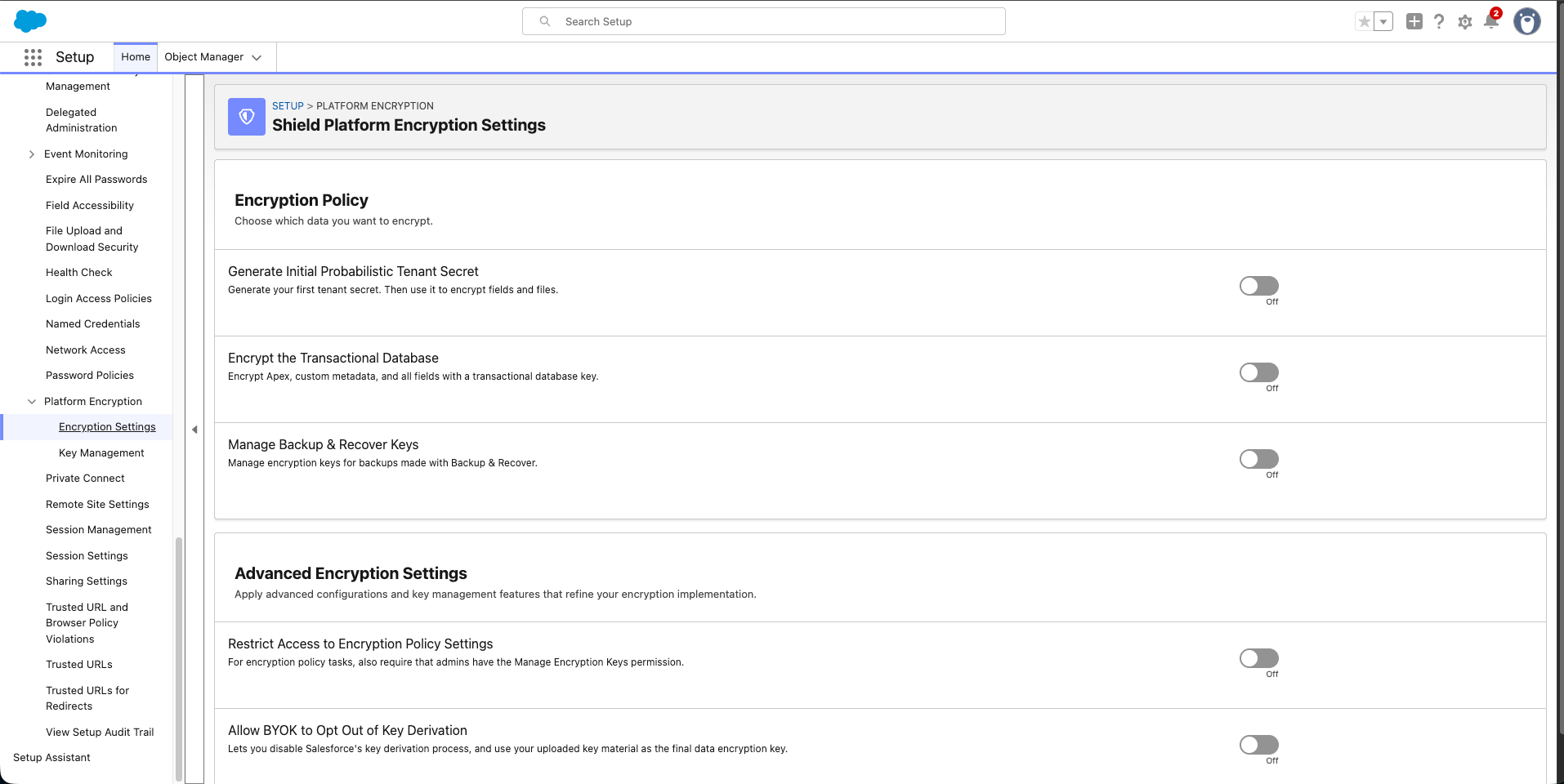
With these new capabilities, your security auditors gain verified, end-to-end proof of encryption across every single stage of the data lifecycle. And because archived and backed-up data is fully protected with customer Shield keys, AI agents accessing historical records stay fully bounded by enterprise-grade security.
To learn more, check out the following resources: