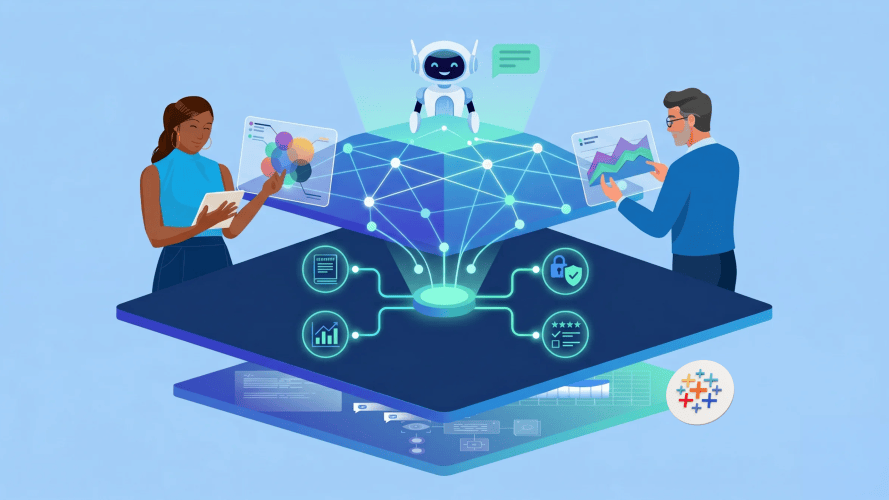

We are seeing a significant shift in how people think about business intelligence (BI) at Tableau. AI Agents have changed the interface, but more importantly they’ve exposed a gap in how knowledge is represented. The existing stack is not built for systems that need to reason.
What is emerging is a new kind of knowledge engine. Not a static semantic layer, and not a standalone knowledge graph, but something that sits across systems and can actually be used at runtime by an agent.
Without it, your AI isn’t analyzing your business with accuracy, it’s guessing. In an enterprise environment, the cost of an AI agent guessing or hallucinating a revenue metric isn’t just a typo; it’s a failed strategic decision.
What’s more is that, in large part, the knowledge already exists. The challenge is that it’s all over the place. It’s encoded in visualizations, workbooks, and datasources; it’s fragmented across structured and unstructured sources; it’s in out-of-date wikis; and in large part, in people’s minds. This is years of accumulated knowledge completely invisible to your agents.
Take Salesforce as an example of a modern agentic enterprise. Across its clouds, a large part of the business is already captured and modeled. Sales Cloud tracks pipeline, opportunities, and account structure. Service Cloud captures cases, SLAs, and support workflows. Marketing Cloud and Data 360 bring in behavioral signals and customer profiles from a wide range of sources.
On top of that, Tableau is where teams have spent years building semantic models, defining metrics, and curating dashboards that reflect how the business actually operates.
This isn’t in raw form. It is already shaped, interpreted, and aligned to the business. But it was built in layers: semantics in Tableau, operational logic in the CRM, business operations in their wiki. Each system is logical within itself, but they do not form a coherent structure that an agent can traverse or reason over.
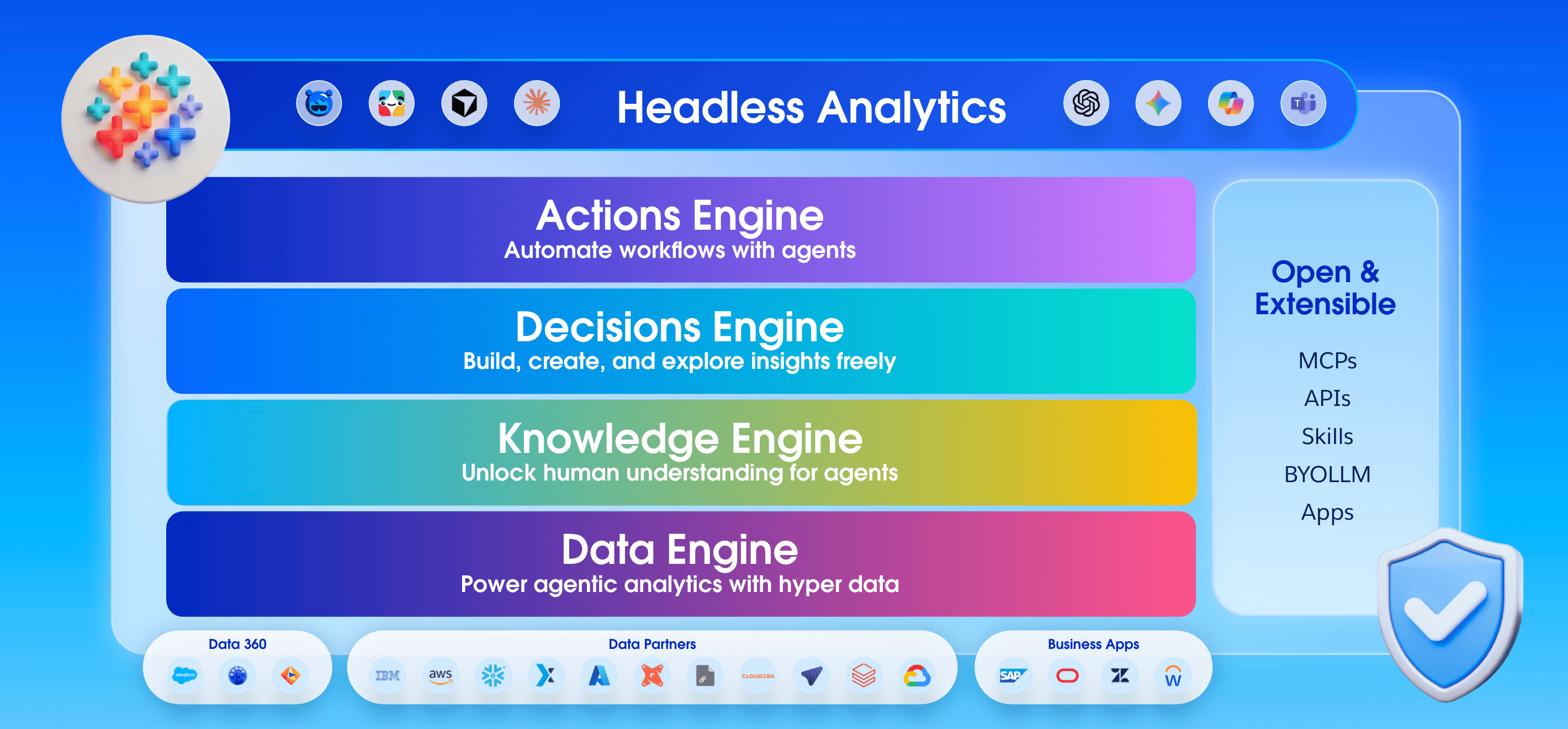
The runtime advantage: How semantics, ontology and knowledge graphs prevent hallucinations
Many organizations make the mistake of throwing raw data at an LLM and hoping for the best. We believe that metadata alone is insufficient; true agentic intelligence should speak the language of your business, not just your database.
The knowledge graph we derive from enterprise systems is not just a representation — it becomes the structure that enterprise agents operate on.
The distinction between semantics, ontology, and knowledge graph is often explained in abstract terms. In practice, the difference shows up in how an agent executes a task. These are not three separate systems. They are different views of the same underlying knowledge.
Agents are not just answering questions. They are given objectives: prepare for a customer meeting; investigate a drop in pipeline; identify accounts at risk. These require multiple steps, decisions, and iteration.
Semantics maps language to business concepts. In Tableau, this comes from semantic models, metrics, and naming conventions that reflect how teams understand the business. When an agent is given a task, this is what allows it to interpret terms like “pipeline,” “active customer,” or “at risk” in a consistent way.
Trailhead: Tableau Semantics


Ontology defines relationships and constraints. It captures how entities connect, which joins are valid, and which definitions must hold. Some of this is encoded in schemas and models. Some of it reflects business rules and expectations that are not always explicitly modeled, but are still enforced in practice.
The knowledge graph connects these concepts, entities, data assets, and processes by relationship, creating a traversable structure that mirrors how the business works. Given a task, the agent explores possible paths, selects a sequence of steps, executes them, and adjusts based on results.
The shift is that the system is no longer retrieving an answer. It’s constructing and executing a plan: mapping intent to concepts, expanding through relationships, executing against data and tools, and iterating as needed.
Without this structure, the agent falls back to shallow patterns. With it, the agent reasons over the actual operations and structure of the business.
Example knowledge in action: Proactive daily sales briefing
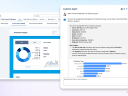
Overnight, the agent generates a briefing for a sales leader triggered by knowledge: unread Slack threads about sales performance, scheduled pipeline review approaching, and CRM activity.
The steps the agent takes:
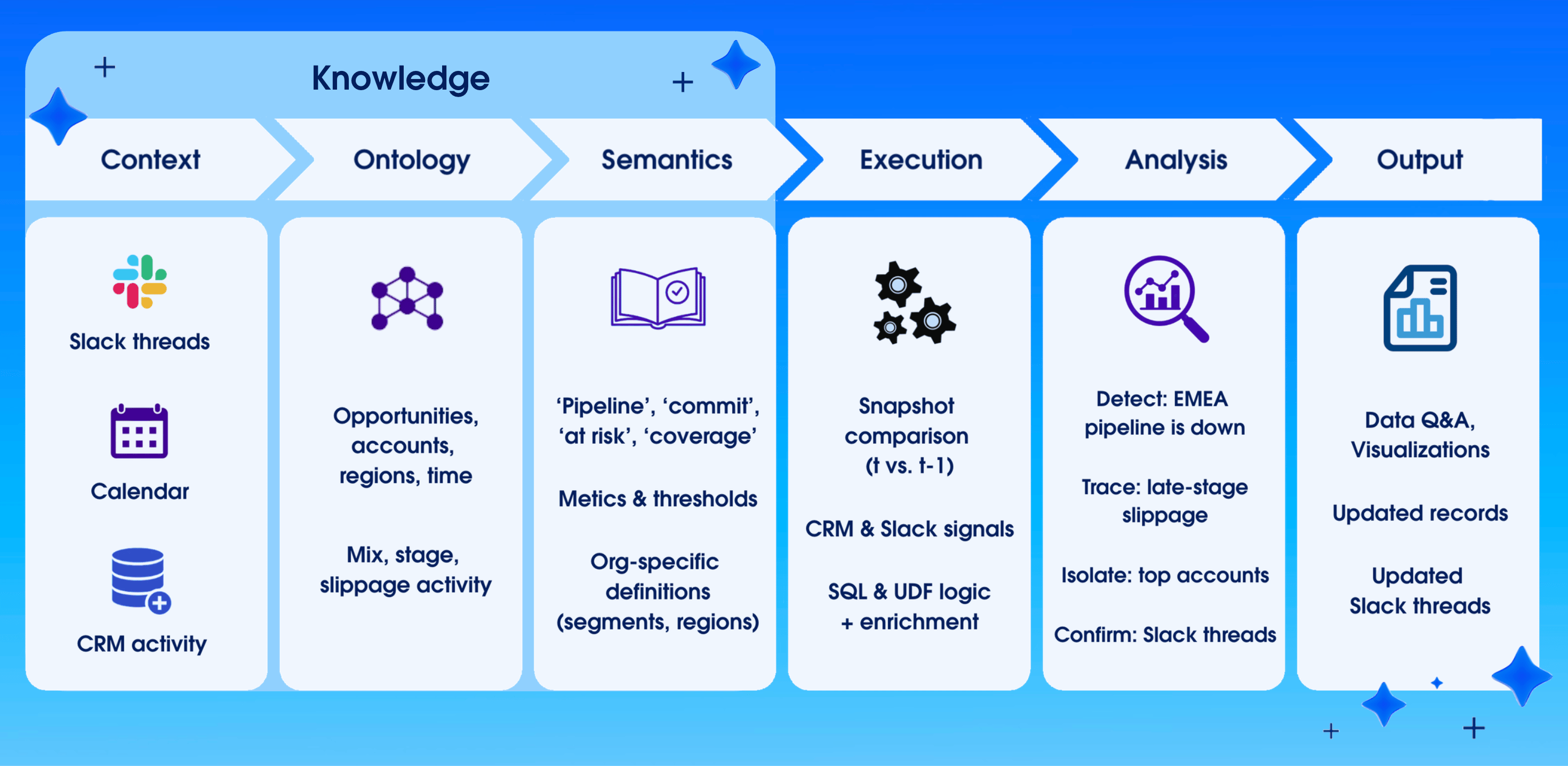
What’s delivered to the sales leader:
- Pipeline is down 12% day-over-day in EMEA.
- It’s driven by three enterprise deals slipping out of the quarter.
- Coverage remains stable, the win rate unchanged.
- Activity on affected deals is below baseline.
- Relevant Slack threads are linked for follow-up.
Knowledge gravity: How knowledge graphs get smarter with every query
Once the graph is derived and used at runtime, the next question is how it evolves. Models and knowledge graphs drift. Business definitions change. New data sources appear. The gap between how the system is modeled and how the business actually operates grows over time.
Here, the graph is not static. It is continuously shaped by both usage and direct input.
Every task the agent executes produces signals: which paths were selected; which queries succeeded or failed; where the agent had to retry or adjust. These traces expose gaps in the current structure, missing relationships, or ambiguous mappings.
At the same time, people contribute explicitly: Tableau semantic models are curated; metrics are defined and refined; verified queries anchor correct interpretations; users correct outputs when the system gets things wrong; business documentation and workflows continue to encode how the organization operates.
These two sources of input reinforce each other. Usage reveals where the model is incomplete, while human input stabilizes and corrects it.
Over time, this creates what we refer to as knowledge gravity. The system becomes easier to operate because the paths it needs are already present and validated. New tasks are less about discovery and more about traversal.
From theory to tooling: Making knowledge operational with Tableau Knowledge
Enterprises already encode how they operate across schemas, published data sources, workflows, and documents. Tableau Knowledge unifies all of this as semantics (meaning), ontology (structure), context (jargon, process), and connections (relationships) into knowledge graphs, which are shaped through usage and human input, operationalizing knowledge for AI agents.
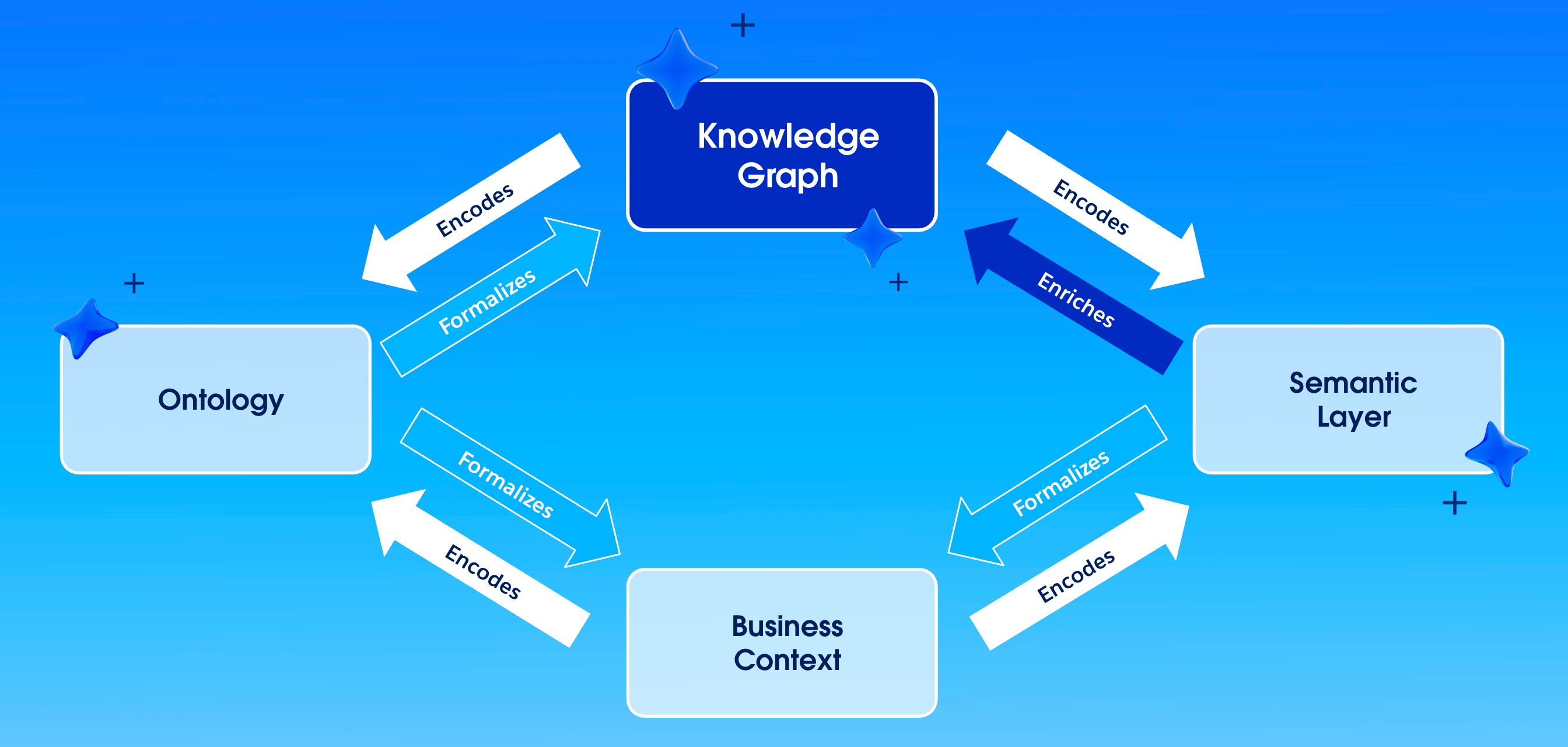
Think of an uncontextualized geographical map — it’s just a blank grid of nameless roads and gray building outlines. Without knowledge, an AI agent searching for a specific answer has to knock on every door and inspect every room from scratch, wasting valuable compute and risking hallucination.
Ontology provides the foundational spatial framework: the road networks, zoning rules, and structural boundaries (entities, joins, and constraints) that dictate who can go where. Data semantics acts as the building directory, defining what is inside (metrics, tables, definitions). Business context adds the operational layer, explaining why a team uses that location and what process to execute there. The knowledge graph brings this all together as a live, interactive GIS map of your enterprise data.
In an agentic system, you don’t need to over-engineer the map by exhaustively coding every sidewalk curb, brick, or door handle in rigid machine math. The system maintains a minimal formal core of the non-negotiable road layout and structural addresses and wraps it in flexible, human-readable descriptions and business language. Because the AI agent already possesses common-sense reasoning, it reads this contextual map to navigate directly to the exact “room” it needs on the first try. The knowledge engine turns a random search through nameless buildings into a direct, high-speed route, driving the accuracy and efficiency of your AI agents.
Ready to see the knowledge engine in action?
Watch the Tableau Keynote at Dreamforce 2026 now on Salesforce+ to see how we are delivering a trusted knowledge for trusted agentic analytics.
Join the webinar
Learn how you can turn your data and semantics into trusted knowledge for AI agents with Tableau Knowledge.