




Salesforce AI Research has been building Launa-Omni, a voice model that holds real-time, two-way conversations. The latest evaluation results came in this week, and this post covers what we built and how it scores.
Voice is the oldest interface people have, and it is the hardest one to get right when a conversation has to end in real work. Built for the demands of enterprise work, Launa-Omni aims to make talking with AI feel more direct while preserving the accuracy and visibility teams need to trust an answer and act on it.
Launa-Omni is, true to its name, an omni voice model. Its core is a text model retrofitted for audio, so speech and language share a latent space. Outside that core model, an in-house-trained text-to-speech (TTS) model produces the spoken reply. Although generalizable, Launa-Omni was developed and trained for experiences in Salesforce and Slack, where conversations need to feel natural and enterprise tasks demand accuracy and reliable instruction following.
The model is significantly smaller than other leading voice models, and we have carefully balanced voice quality with the speed and cost of serving conversations at enterprise scale.
Built for work
A good conversation has to hold up to real work.
Enterprise voice agents need to respond promptly, handle precise information, and make their behavior visible and steerable. Those qualities matter when a conversation leads to a customer record, a workflow, or a decision.
- Responsive
Launa-Omni’s real-time harness detects speech and determines when a person’s turn is complete, helping the system reply promptly and keep conversations moving.
- Accurate
Launa-Omni can be customized and fine-tuned to better handle named entities, dates, alphanumeric IDs, and industry jargon.
- Interpretable
Launa-Omni produces a text response before anything is spoken, so the reply is visible at the moment it is formed and teams can inspect and correct it. That keeps a system that acts on what it heard under human direction.
The Approach: How we give AI a voice
To understand how Launa-Omni works, we first need to share how it doesn’t work. Earlier voice systems made talking with AI possible. And later, they were improved to seem more natural. Each approach brought tradeoffs in responsiveness, serving cost, and how much of the response teams can inspect—choices that shaped Launa-Omni.
Previous approaches
Most voice systems on the market today follow one of two methods:
1. Cascaded voice systems
Separate speech recognition, language, and speech generation models process each turn in sequence. Their handoffs keep the text visible, but can lose details from the original voice and add pauses that make replies feel slow and stilted.
2. Speech-to-speech models
A single model takes speech in and produces speech out, often making the exchange smoother and more natural. The tradeoff can be higher serving cost and less visibility into how a reply was formed, making errors harder to inspect and correct.
Launa-Omni’s approach
A voice system built for work
Launa-Omni brings speech and language together in one audio-adapted text model, then adds a separate in-house TTS model to speak the reply. The text response stays visible and easier to steer.
That structure comes from a deliberate choice about where transcription belongs. Once speech becomes text before the model reasons about it, most of what makes speech useful is already gone. Pace, hesitation, and emphasis all carry meaning that a transcript cannot hold, and a cascaded system discards every bit of it at the first handoff.
Evaluations: Launa-Omni’s results
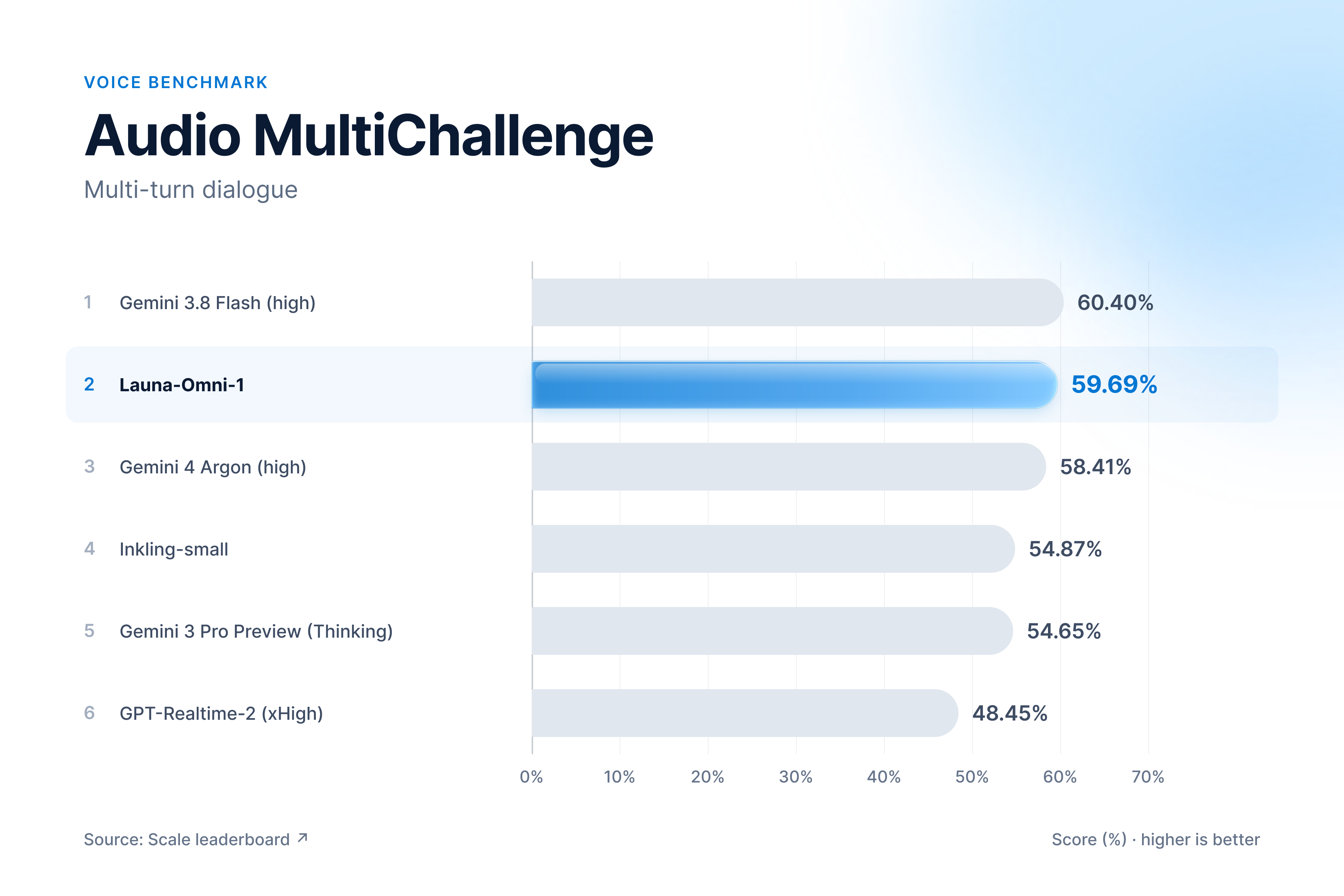
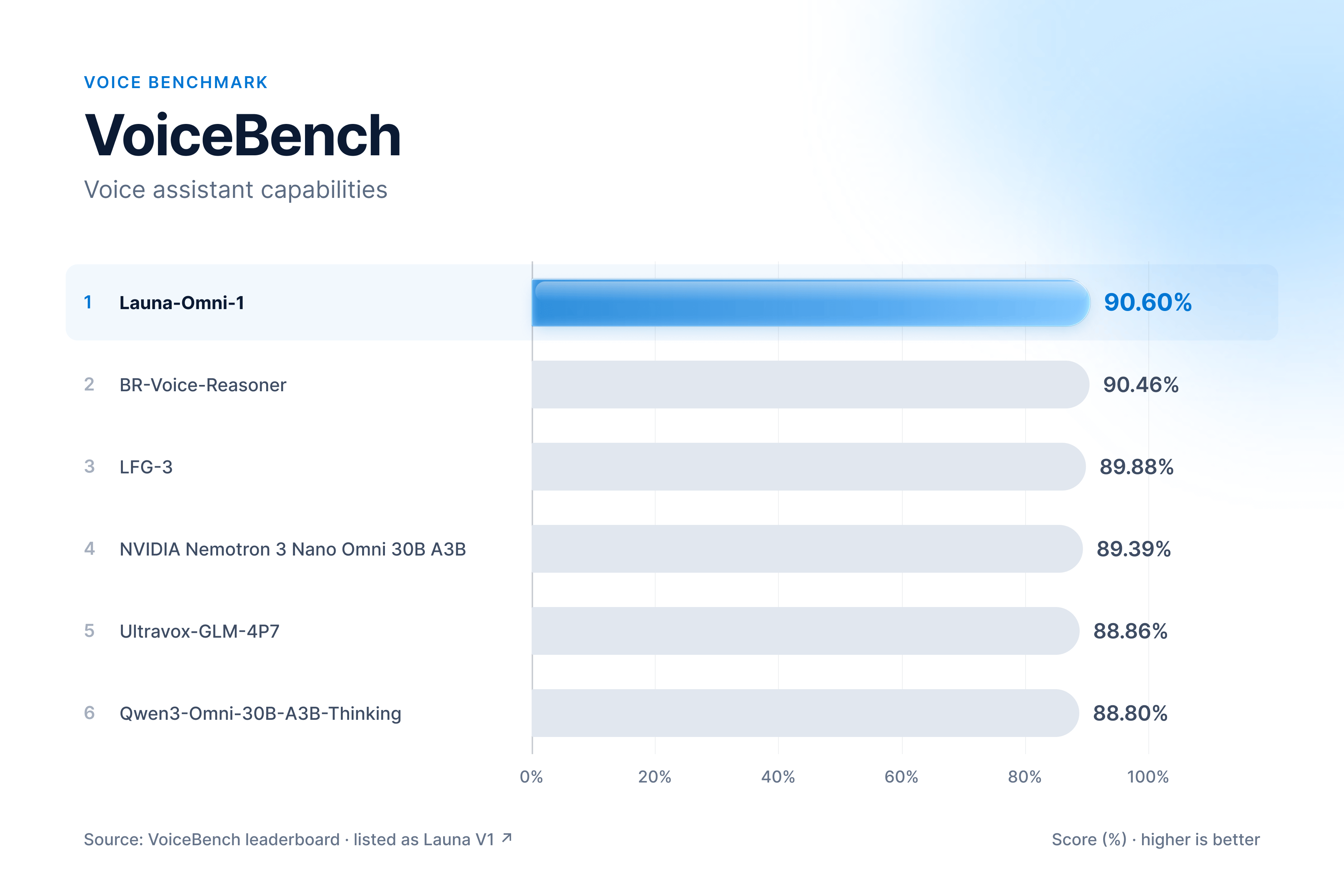
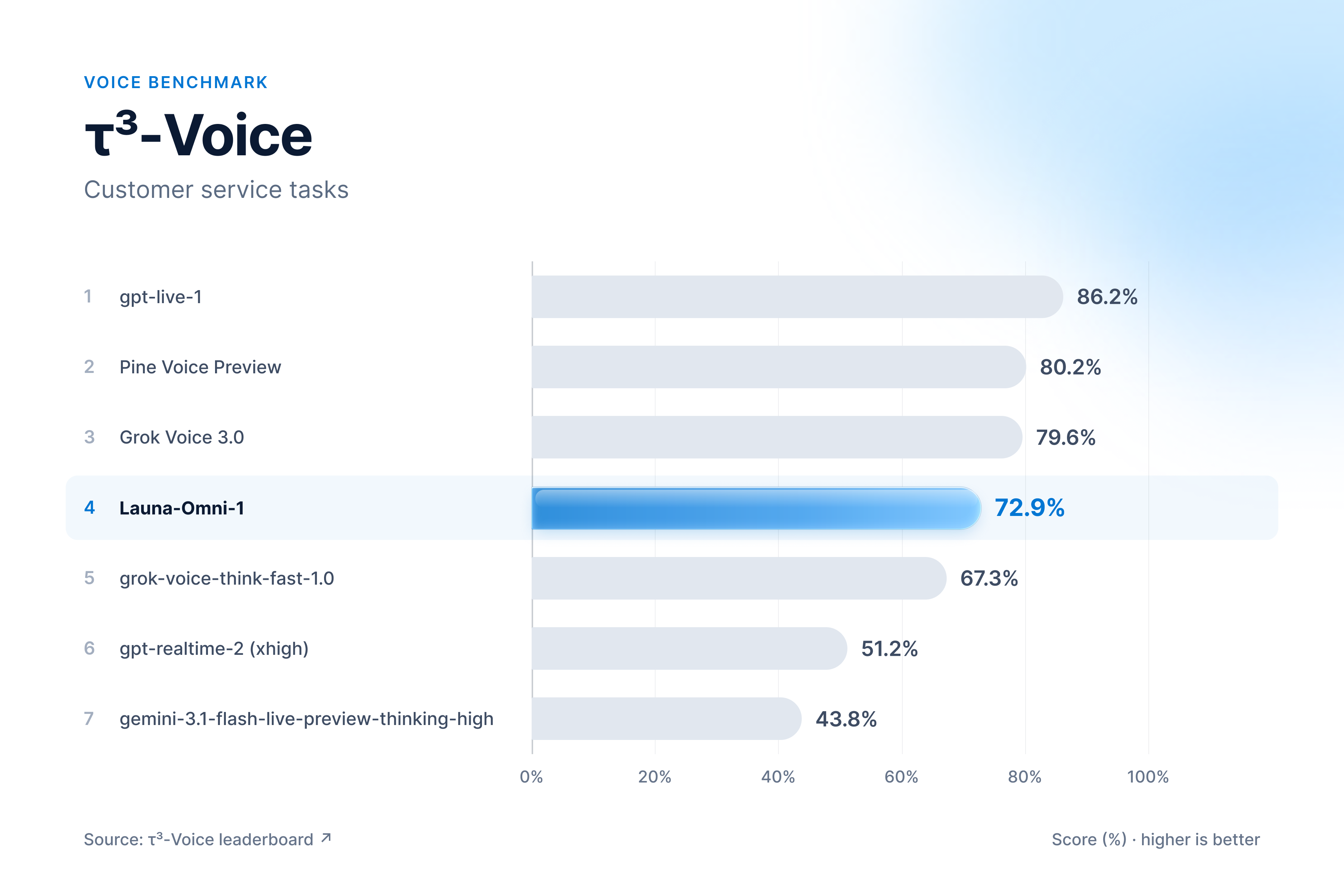
Launa-Omni shows competitive results across spoken instruction following, multi-turn dialogue, and customer-service tasks—three capabilities that matter when voice agents move from conversation to work. The model is competitive against several significantly larger in size. Here’s how it stacks up in the leaderboards:
The right model for the conversation. The right model for the work.
Some requests need longer reasoning, search, or an agent that can carry out a complex task. Launa-Omni can be paired with a frontier model behind the experience, keeping voice as the point of interaction while deeper work is routed to the system best suited to it.
That flexibility is a deliberate design choice, as voice becomes the way people direct their digital labor. Getting it right means systems fast enough to feel natural and accountable enough to trust with real work. That combination is what we at Salesforce AI Research are building toward.
Slack users can already experience a simplified version of this model in its speech-to-text dictation feature, Slackbot Voice Dictation. Learn more about our proprietary AI models and how they’re transforming our products and our customers’ enterprise businesses at Salesforce AI Research. You can also download a subset of our industry-leading models for research purposes on Hugging Face.