You Can Be an Agentic Enterprise No Matter What Size Business
Small businesses can now reach enterprise-level efficiency by using autonomous agents that handle complex tasks across their entire team.

Small businesses have always found ways to do more with less. It’s not a limitation — it’s a competitive instinct. The founders and operators we talk to aren’t looking for a shortcut; they’re looking for leverage. And right now, the most powerful form of leverage available is the agentic enterprise.
This isn’t a concept reserved for companies with hundreds of engineers and enterprise IT budgets. The shift to autonomous AI agents — systems that can reason, make decisions, and complete multistep work on their own — is happening at every scale. And honestly? Lean teams are often better positioned to move fast with it than large organizations slowed down by legacy infrastructure.Here’s what that looks like in practice. Here are a few ways you can consider your growing business to be an agentic enterprise (no matter what size you are).
What is the agentic enterprise, exactly?
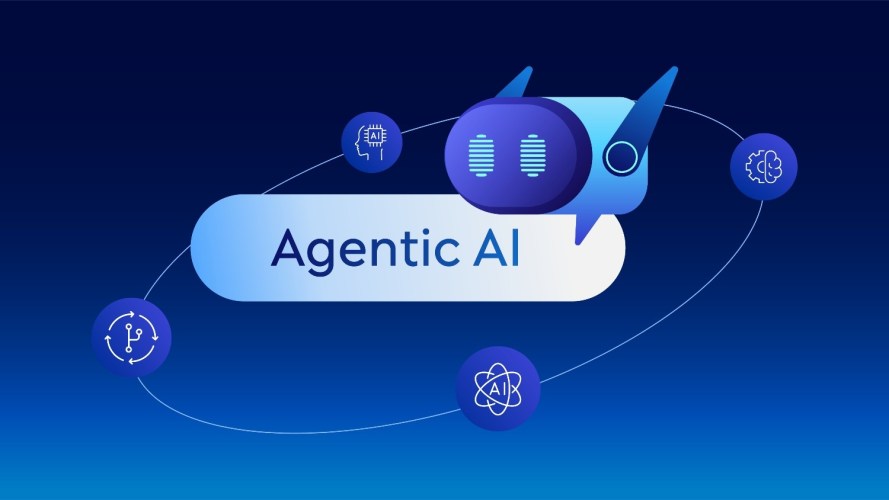
An agentic enterprise is a new operating model where teams and autonomous AI agents collaborate continuously inside governed business systems. This is more than just simple automation; it means deploying intelligent artificial intelligence (AI) that can reason through problems, use business data, make decisions, and execute multistep tasks independently, all with accountability and trust. It’s a structural shift where intelligence participates directly within your workflows, rather than sitting on the surface.
For SMBs, adopting the agentic enterprise model is the key to achieving enterprise-level efficiency and velocity. This shift allows lean teams to activate autonomous AI agents to handle administrative busywork, from qualifying leads to processing returns. By freeing up teams from mundane tasks, SMBs can focus on high-value, growth-driving activities. This allows smaller businesses to compete with larger brands.
Benefits of agentic AI for lean teams
When you embrace agentic AI, you’re adding a layer of digital assistants that never sleep and never get tired. This helps you maintain a high level of quality even as your customer base grows. It also helps you stay organized within your AI CRM by ensuring every interaction is logged and every follow-up is scheduled.
For many startups, the biggest win is the ability to compete with much larger brands on service speed and personalization. You can provide the same “white-glove” experience that a big corporation offers, but with a fraction of the overhead. This efficiency is what makes being a “small business agentic enterprise” so impactful for the modern entrepreneur.
How to become an agentic enterprise for small business
Becoming an agentic enterprise starts with moving beyond simple chatbots that just repeat pre-written scripts. Today, an AI system can understand your business goals and take action to achieve them. This involves deploying agents that can reason through problems, use your specific business data, and execute multistep tasks like scheduling meetings or processing returns.
For a growing business, this means you can have digital labor that works across your entire portfolio to keep things moving. Instead of just flagging a new lead, an agent can research the company, qualify the prospect based on your criteria, and even draft a personalized outreach email. This allows your sales team to focus only on the most promising conversations, which is a hallmark of a successful agentic enterprise (for any sized business).
Activate an AI CRM to scale your operations
The secret to making these agents work is having them sit right on top of your customer data. An AI customer relationship management (CRM) ensures that your agents aren’t just guessing; they’re looking at real-time facts about your customers. This level of agentic AI integration means that if a customer asks about a shipment, the agent can check the order status and update the record simultaneously. Here are a few examples of agentic AI in the flow of work:
- Always-on support: Service agents can handle routine inquiries at midnight so your human team doesn’t have to.
- Smarter sales management: Sales agents can score leads and route them to the right person based on expertise.
- Proactive marketing: Marketing agents can identify which customers are likely to churn and trigger a loyalty offer automatically.
- Collaboration in the flow of work: Slack is at the heart of your business with it’s CRM integration and powerhouse collaboration tools.
Get Salesforce free for 30 days.
No credit card required, no software to install.

Get “agentic” with Agentforce
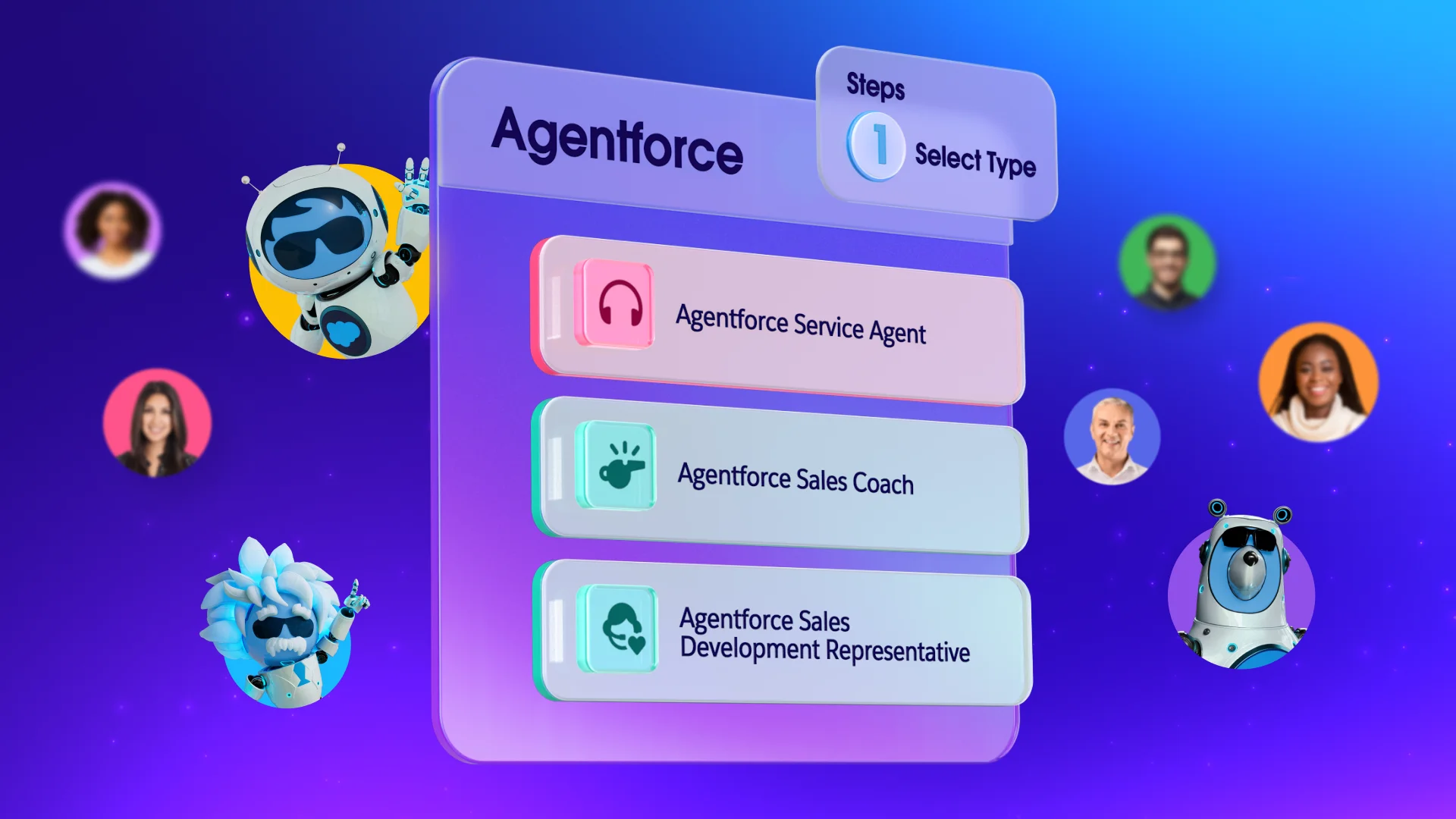
To truly see these results, you need a platform that connects all your departments in one place. With Agentforce, you can build and manage these agents across your sales, marketing, and service apps. This ensures that everyone in your company — from the founder to the intern — is working from the same source of truth.
Asymbl’s use of AI features in Salesforce Suites provides a clear example of an agentic enterprise in action. By activating native Agentforce features — including Search and Summarize, Record Summarization, Update Record, and Draft with AI — they established a single source of truth across their sales, customer success, and operations teams.
As Greg Symons, Founder and COO, puts it: “Record Summarization killed the ‘let me look that up’ pause in meetings. Update Record keeps data clean because changes happen when things happen, not later. It’s how we actually operate now.” By running 92 AI agents across the business, Asymbl eliminated context switching, reduced meeting prep time, and ensured data is captured in the moment — freeing their team to focus on growth.
Asymbl Scales Like a Company 10x Their Size with Agentforce
Find out how a digital labor force company used AI in Salesforce Suites to run 92 agents across their team.

By using Agentforce, you can customize how your agents interact with customers to ensure they always reflect your unique brand voice. This isn’t about replacing your people; it’s about giving them the tools to do more meaningful work. When your team is freed from the mundane, they can focus on building the relationships that will define the future of your agentic enterprise for small business.
Here’s what that looks like for teams actually using it day-to-day:
- Sales: Instead of chasing down lead status in a spreadsheet, an agent qualifies prospects, drafts outreach, and routes the right conversations to the right rep. Your team shows up to calls already informed.
- Service: Routine questions get answered at midnight without burning out your support person. When a customer issue escalates, the agent has already pulled the history so your human can step in with full context.
- Marketing: Rather than blasting the same message to everyone, agents identify who’s at risk of churning and trigger a personalized offer before they leave. You’re not guessing; you’re acting on data.
- Operations: Data gets updated when things happen, not in a Friday catch-up session. That means your whole team is always working from the same source of truth.
The through-line? Your people stop being the connective tissue between systems — and start doing the work only they can do.
The businesses I’m most excited about right now aren’t waiting to feel “big enough” to adopt this model. They’re building it now, while they’re still nimble. That’s the real advantage of the agentic enterprise for small business — you don’t have to undo a decade of technical debt to get started. You just have to decide to move.
If you’re curious where to begin, Agentforce is designed to scale with you — start with what you need today and expand from there.
AI supported the writers and editors who created this article.
What’s the difference between a chatbot and an AI agent?
A chatbot usually follows a fixed set of rules or scripts to answer questions, whereas an AI agent can reason, make decisions, and take actions like updating records or scheduling tasks. These agents are designed to be autonomous and goal-oriented within your business workflow.
Do I need a large data science team to use agentic AI?
No, modern platforms are designed for small businesses with low-code or no-code tools, meaning you can set up and manage agents without specialized technical skills. This allows startups to deploy advanced technology without the cost of a massive IT department.
How does an agentic enterprise protect my customer data?
Trusted platforms use a dedicated trust layer to ensure that your business data is never used to train public models and stays within your secure environment. This means your sensitive customer information remains private and protected while the AI performs its tasks.
Can AI agents actually close sales for my startup?
While agents excel at qualifying leads and handling initial outreach, they’re most effective when they partner with your human sales team to handle the administrative tasks. This frees your reps to focus on the high-level negotiations and relationship building that close deals.
Is it expensive for a small business to become an agentic enterprise?
Salesforce offers tiered suites that allow you to start with the basics and scale your AI capabilities as your business grows. This ensures that you only pay for the features you need while still having access to powerful enterprise-grade tools.