

You didn’t set out to be the only leader in the room. But somewhere between your first hire and your tenth, you realized that growth doesn’t just require more people — it requires more leaders. And sometimes it’s not always top-down, it’s emergent.
Emergent leadership is what happens when team members naturally step up to lead, not because of a title, but because of their skills, relationships, and initiative. For small business owners and startup founders, spotting and supporting these organic leaders is one of the smartest moves you can make.
Let’s find out what it means to be emergent in leadership, the benefits, and some ways business leaders are showing up for their teams.
What is emergent leadership?
Emergent leadership describes how individuals take on management roles organically within a team, without being formally appointed. It’s a dynamic model where leaders gain influence and guide their peers without holding a formal leadership title. Driven by initiative and expertise rather than corporate hierarchy, these leaders naturally surface to reduce bottlenecks and inspire innovation.
Understanding how to lead a team starts with recognizing that leadership isn’t always top-down. Emergent leaders possess a distinct blend of behavioral traits that set them apart. Here are a few:
- Influence: They sway team decisions and morale through respect and proven results, not authority.
- Self-motivation: They’re self-starters who take action and build momentum on projects without waiting for directives.
- Creative problem-solving: They bring innovative ideas to the table and aren’t afraid to voice actionable solutions during ambiguity.
- Adaptability: They adjust their communication and actions to serve the exact needs of the team at any given moment.
In a small team, this could look like the customer service rep who starts mentoring new hires, or the sales lead who rallies the team during a tough quarter. Unlike top-down leadership, emergent leadership grows from within — and it tends to be more trusted because of it.
Why it matters for small businesses
Small and medium businesses (SMBs) operate differently than large enterprises. Teams are leaner, roles overlap, and every person carries more weight. When one leader wears too many hats, things can slip. Emergent leaders lighten that load and make teams more resilient when things get busy or unpredictable. Businesses that encourage emergent leadership help teams make agile decisions, which limits delays and builds a self-learning culture.
To learn more about cultivating this model in your own workplace, explore resources with Slack and their Guide to Emergent Leadership.
Signs of “emergent-cy” on your team
You don’t have to guess who your emergent leaders are — they tend to make themselves known. Look for the team member who others naturally go to for answers, who speaks up in meetings with solutions instead of just problems, or who takes ownership of a project without being asked.
How to support emerging leaders
The best thing you can do is give them the tools and space to grow. That means investing in leadership coaching and extending that same development mindset to your team. Mentorship, stretch assignments, and regular feedback all go a long way toward building the emergent leadership pipeline your growing business needs.
Why emergent leadership is a growth strategy, not just a people strategy
Here’s something worth sitting with: Emergent leadership directly affects your bottom line. When team members feel empowered to lead, they’re more engaged, more productive, and more likely to stay. According to the latest Small and Medium Business Trends Report, SMBs that invest in their people and technology see stronger growth outcomes than those that don’t.
Building a culture where leadership can emerge
Culture is where leadership either thrives or dies. A team culture built on psychological safety — where people feel comfortable sharing ideas, flagging problems, and stepping up — is fertile ground for the kind of organic leadership that scales with you.
Trailhead, Salesforce’s free online learning platform, offers hundreds of training sessions on leadership. The cross-disciplinary collaboration Trail is a great place to start thinking about how to build teams where everyone contributes their best.
How FairBuild AI put people-first leadership into practice
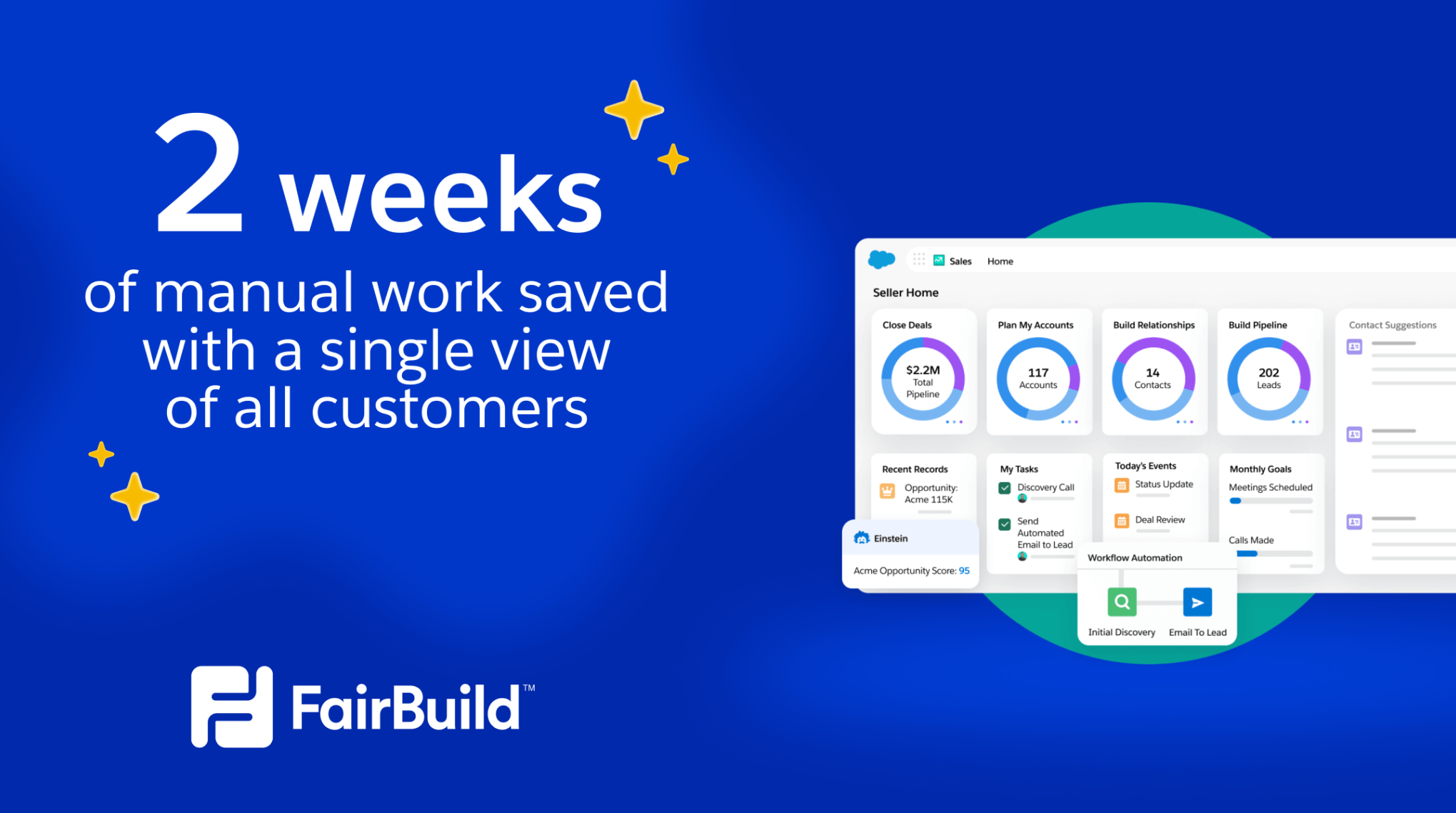
FairBuild AI, a construction technology startup, knew early on that their small team had big ambitions. When they outgrew spreadsheets and needed a smarter way to manage leads and customer data, they turned to Salesforce.
With centralized data and automated workflows in place, their team — including Customer Service Manager, Sherry Lee — could stop spending time tracking down information and start focusing on the higher-value work that actually requires human judgment and leadership. That’s what the right tools do: They free your people up to lead.
How FairBuild AI Transformed Their Sales Pipeline
FairBuild AI organized 500+ launch leads, speeding follow-ups, and saving weeks of admin time with Starter Suite.
How technology supports emergent leadership in growing businesses
Emergent leadership doesn’t happen in a vacuum. Leaders need visibility into what’s going on across the business — customer conversations, sales data, service trends — to make confident decisions. That’s where a business operating system like customer relationship management (CRM) becomes a true enabler. When your team has access to the same real-time data, anyone with the initiative to lead has the information they need to do it well.
A CRM can help leaders understand their teams, their customers, and their partners as well as analyze insights and make bold decisions with clarity. But having the data at your fingertips, you can lead with confidence.
The role of AI in developing leaders
Artificial intelligence (AI) is changing what leadership looks like inside growing businesses. AI handles the repetitive, time-consuming work — data entry, follow-up reminders, pipeline updates — so your emerging leaders can spend more time on the work that actually requires human judgment: coaching teammates, building customer relationships, and making strategic calls.
According to our research, 92% of SMB marketing teams are already using CRM tools and AI technologies. That adoption signals a shift in how SMB teams are structured and led.
Emergent leadership and AI agents
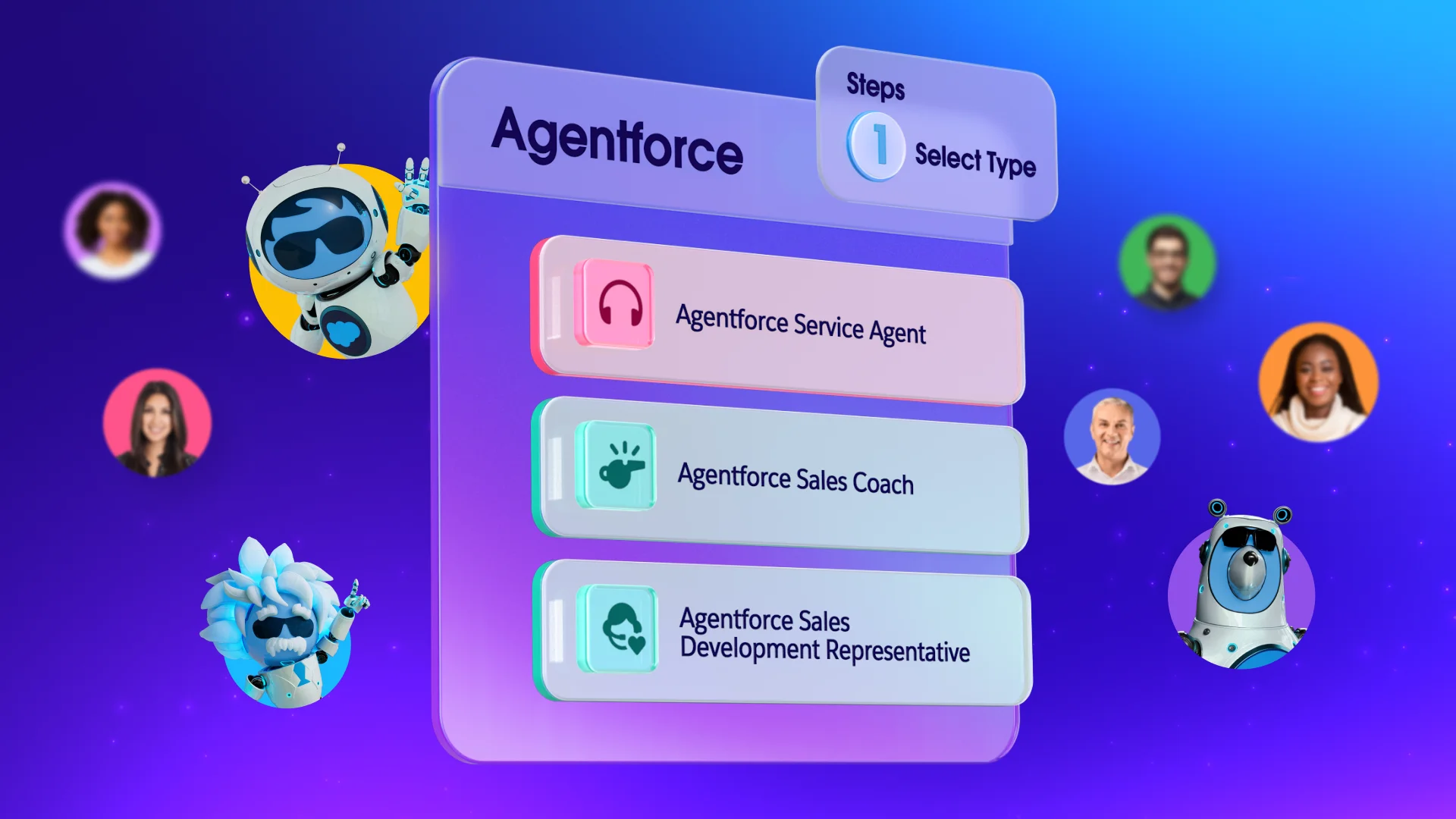
As your team grows and your processes get more complex, AI agents can play a meaningful supporting role. Agentforce, autonomous AI tools, are helping small teams automate workflows across sales, service, marketing, and commerce — giving your emerging leaders more bandwidth to focus on building relationships and solving real problems instead of managing manual tasks.
Take the next step in building a team of leaders
Growing a business means growing your people — and emergent leadership is one of the most powerful ways to do it. If you’re ready to give your team the training and tools they need to step up and lead with confidence, why not start today?
Get started with Salesforce for free or activate Foundations to try out Agentforce today.
AI supported the writers and editors who created this article.
What is the difference between emergent leadership and assigned leadership?
Assigned leadership comes from a formal title or role, while emergent leadership develops naturally when someone steps up based on their skills, relationships, or initiative. In small businesses, emergent leaders often carry as much influence as formal ones — sometimes more.
How do I identify an emergent leader on my team?
Look for team members who others turn to for guidance, who take ownership without being asked, and who consistently bring solutions to problems. These behaviors are reliable indicators of emergent leadership potential.
Can emergent leadership work in a very small team?
Absolutely. Even in a team of five or ten people, someone naturally takes on a coordinating or mentoring role. Recognizing and supporting that tendency — rather than expecting everyone to simply follow one leader — makes small teams much more adaptable. Learn more about building a team to support your business on Trailhead.
What role does technology play in emergent leadership?
When your team has shared access to real-time data through a CRM, anyone with leadership initiative has the visibility to act on it. Technology removes information bottlenecks that can stifle organic leadership from taking root.
How do I build a culture that supports emergent leadership?
Start with psychological safety — make it clear that ideas, questions, and ownership at every level are welcome. Pair that with regular feedback, mentorship opportunities, and tools that give your team the information and autonomy they need to lead.