

Key Takeaways
The truth is, even the best products don’t sell themselves. They need a strategy. For nearly a century, that strategy has been distilled into four deceptively simple concepts: The four P’s of the marketing mix.
The four P’s — product, price, place, and promotion — are the fundamental building blocks of a business that doesn’t just survive, but truly scales. They are the difference between shouting into the void and speaking directly to the customers who are ready to buy.
So, are you ready to stop guessing and start strategizing? Let’s tap into the marketing mix mastery that will finally connect your business’s value to the customers who need it most. Here are the four P’s of marketing and how Salesforce can help you with each one.
The 4 P’s of the ‘Marketing Mix’
To successfully launch any offering, businesses must master the strategic “marketing mix,” famously known as the four p’s: product, price, place, and promotion.
First proposed by Harvard professor of advertising Neil Borden in the 1950s, these four interconnected pillars still serve as the foundational framework that guides every decision to bring a product or service to market. The success of any promotional campaign hinges on the harmony and strategic alignment of all four elements, not just the “promotion” component.
Let’s break down each of the four P’s and explore how Salesforce can help you master each element and amplify your promotions.
1. Product: The core of your offering
What it is: The actual good or service you are selling. This includes its features, design, quality, packaging, branding, and its ability to meet a customer’s needs. Your promotion is only as strong as the product it advertises.
Key consideration for product: Does your promotional message accurately reflect the unique value, quality, and benefits of your product?
Market your SMB with Salesforce AI
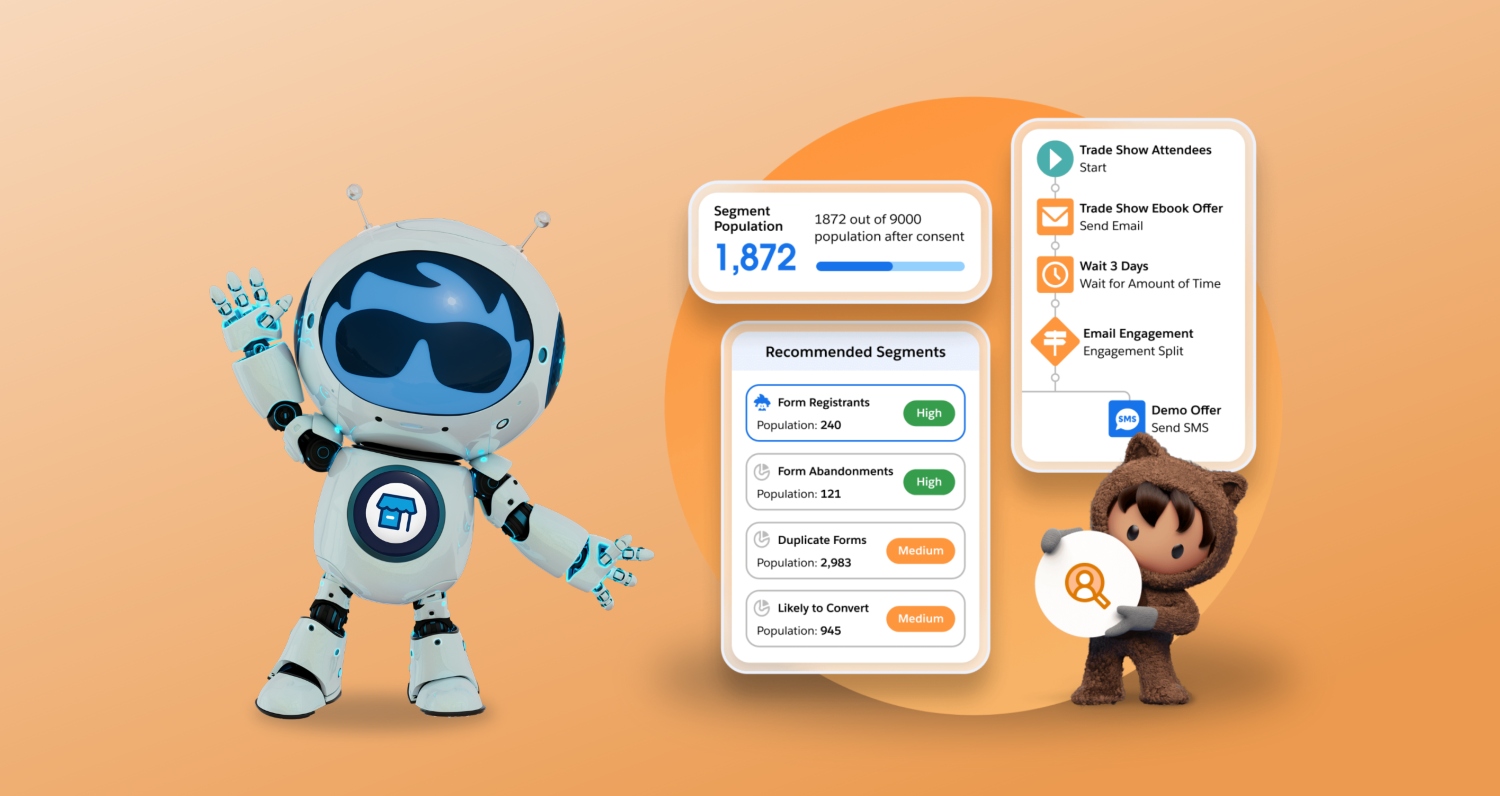


How Salesforce helps with product
Salesforce Suites capabilities help you understand how your product is perceived and valued by the customer, which is critical for crafting compelling promotions.
- Starter and Pro Suite: Use Account, Contact, Lead, and Opportunity Management to track customer feedback, sales notes, and service cases related to specific products. This qualitative data informs your promotional messaging, ensuring it addresses real customer pain points and highlights valued features.
Wherever you are — just get started.
No matter where you are on your journey as a business owner, you can get started with Starter Suite for free — the CRM made for growth.

2. Price: Establishing value
What it is: The monetary value your customer exchanges for your product. This includes your list price, discounts, allowances, payment terms, and financing options. The price point must align with the perceived value established in your promotional content.
Key consideration for price: How do sales, discounts, or special pricing models factor into your communication? Promotions often involve a temporary change in price.
How Salesforce helps with price
Salesforce helps you manage your pricing structure and integrate it seamlessly with your promotions and sales efforts.
- Starter and Pro Suite: Both Suites include Products and Price Books. This allows you to define standard pricing and special pricing variations, which are essential when running price-based promotions. They also both include Direct Payment Links and a Payment Portal for transactions of any price-based promotion (for example, a limited-time discount code sent via email).
Ready to go Pro?
Level up your CRM with the top-rated Pro Suite — the customer platform that scales with you.
3. Place: Where and how you sell
What it is: The channels, locations, and methods of distribution you use to make your product available to the customer. This covers retail stores, online stores, direct sales, distributors, logistics, and inventory. Your promotion needs to guide customers to the right ‘Place’ for purchase.
Key consideration for place: Is your promotional message directing the customer to the easiest, most accessible place to buy?
How Salesforce helps with place
Salesforce commerce for small business features enables you to manage your distribution and commerce channels, linking your promotional efforts directly to the point of sale.
- Starter and Pro Suite: Both suites include storefront website design and product and category workspace for setting up an online store. This directly supports the “Place” element for ecommerce, ensuring your promotional messages can lead customers directly to a point of purchase.
Start selling online with Starter Suite
Set up your digital storefront, engage customers, and sell more using a commerce-ready platform with integrated tools for every sale.
4. Promotion: Communicating your value
What it is: All the activities you undertake to communicate the merits of your product and persuade target customers to buy. This is where your campaigns — advertising, public relations, email, social media, and sales — live. Promotion is the visible link between your product, price, and place, and your customer.
Key consideration for promotion: Are you targeting the right audience with the right message at the right time?
How Salesforce excels with promotion
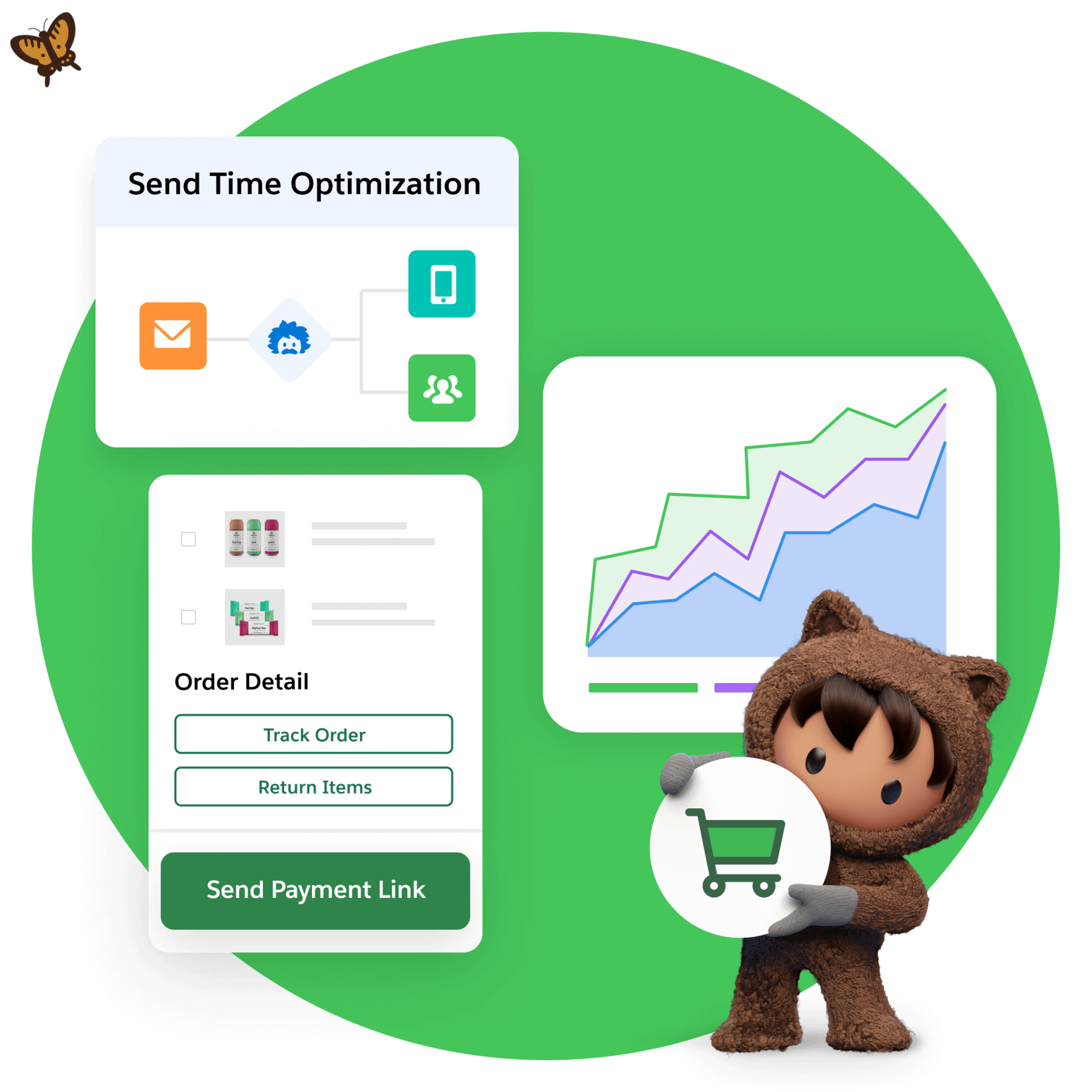
This is where Salesforce’s marketing CRM for small business truly shine, offering small businesses the tools to execute modern, data-driven promotional campaigns.
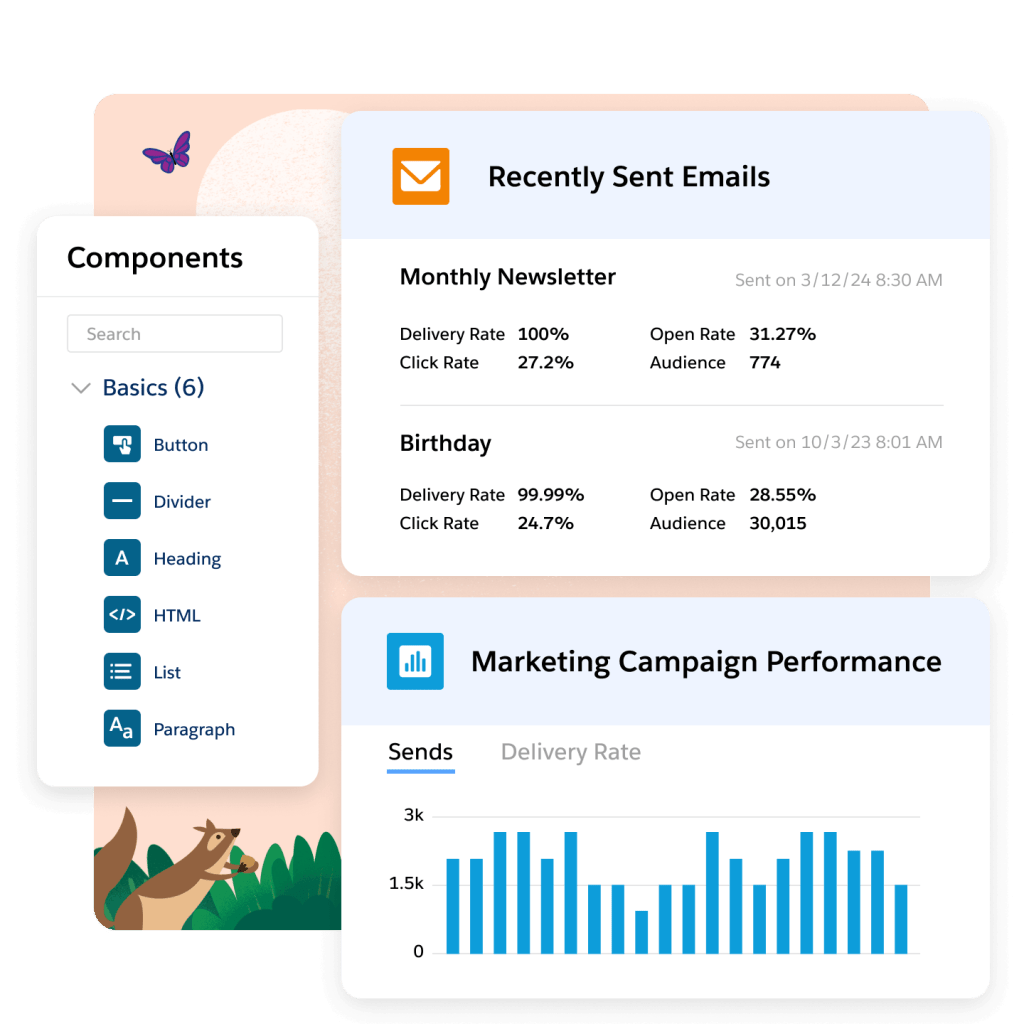
Starter and Pro Suite: Both suites offer core marketing capabilities like Email Campaigns, Smart Segmentation (to target specific customer groups), and the ability to track campaign performance, which are essential for executing and measuring promotional efforts.
- Einstein Conversation Insights (ECI) automatically pulls in call transcripts and meeting summaries — enabling faster deal preparation and ensuring important details are captured in one place.
- Email Builder Lite is for branded email content creation with ready-to-use layouts, custom templates, email previews, and a streamlined authoring experience — making it easier for SMBs and generalists to launch campaigns without complexity.
- Marketing App in Free Suite includes access to email marketing to engage leads from day one — with simple single-email campaigns, up to 100 marketing email sends per month, and expanded capabilities unlocked upon upgrade.
What can you do with a CRM built to reach more prospects?
Automate your marketing campaigns with a CRM built to grow. It all starts with Starter Suite.

Ready to start running smarter promotions for your SMB?
Mastery of the four P’s isn’t about excelling at a single P, but about achieving cohesive, data-driven alignment across all four. A compelling promotion means nothing if the product is lacking, the price is out of sync with value, or the point of sale (place) is inconvenient.
For modern small businesses, the key to mastering this mix lies in centralizing customer data. Salesforce provides this connectivity, transforming the abstract concept of the 4 P’s into an actionable, unified strategy.
Start your journey with the Free or Starter Suite today. Looking for more customization? Explore Pro Suite. Already a Salesforce customer? Activate Foundations to try out Agentforce 360 today.
AI supported the writers and editors who created this article.
Frequently Asked Questions
The marketing mix is a foundational business tool that refers to the set of actions, or tactics, a company uses to promote its brand or product in the market. It is most commonly known as the four P’s: Product, Price, Place, and Promotion.
For small businesses, the 4 P’s are a critical strategic framework. They help allocate limited resources effectively by ensuring the product is right, the price is competitive, the distribution channels (Place) are efficient, and the promotional efforts are targeted and cohesive. Mastering this mix is essential for sustainable growth.
No. While Promotion is the most visible ‘P’ and focuses on communicating value, it is not more important than the others. A brilliant promotion for a flawed product, an uncompetitive price, or a difficult-to-access place will fail. All four P’s must be aligned and optimized for success.
A customer relationship management (CRM) platform connects the four elements. It centralizes data on customer needs (informing Product), tracks sales and revenue (informing Price), manages customer interactions across sales channels (informing Place), and provides the tools for targeted outreach and campaign execution (Promotion).
Both suites offer essential features like email campaigns and smart segmentation. However, the Pro Suite provides access to the AppExchange, which allows for integration with advanced third-party marketing and advertising tools, significantly expanding a growing business’s promotional capabilities beyond the core built-in features.