


Key Takeaways
When was the last time a brand caught your attention? Was it a clever Instagram reel, or maybe a billboard on your commute? Or it could have been a recommendation from someone you trust? However it happened, that moment was marketing in action.
Great marketing doesn’t just sell: It builds connections, earns trust, and keeps customers coming back for more. It’s the engine behind brand loyalty, product launches, and business growth. No matter if you’re a small and medium-sized businesses (SMBs) or a startup, you can get in on the action too. Here’s what you need to know about the different types of marketing, and how they can work for you.
Marketing basics for smaller teams
Marketing is the process of creating, communicating, and delivering messaging about the products and offerings your business sells. It’s a comprehensive practice, stretching from research to retention. Because businesses, audiences, and communication channels vary so much, marketing efforts are typically categorized into specific approaches or “types of marketing.”
And, most importantly, marketing is done through a series of business tools, often starting with a customer relationship management (CRM) platform, to help create campaigns that speak to your whole customer journey. This includes integrations and tools like email marketing, social media amplification, personalized marketing agents, and team planning. Now that we are caught up, let’s review the different types of marketing and how they work.
TThe two big marketing families
Think of all the ways a business tries to get your attention as two big families: the analog, traditional marketing family, and the newer, always-evolving digital marketing family. You see both of them every single day, and campaigns often use a mix of tactics from both.
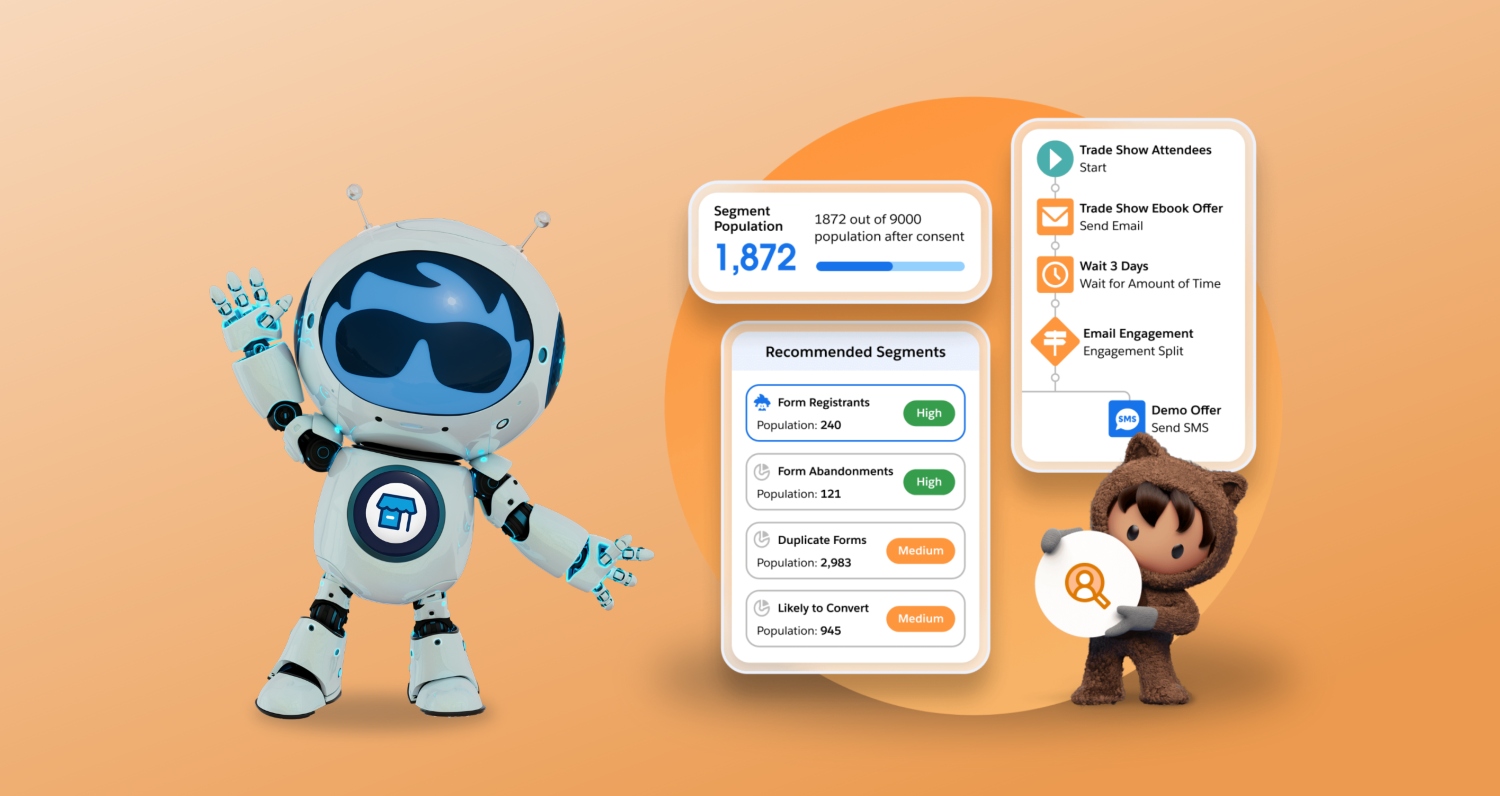
Market your SMB with Salesforce AI


Traditional marketing uses offline channels to get your attention: a billboard on the highway, an ad on the radio during your commute, a flyer in your mailbox, or a commercial break on TV.
Digital marketing, on the other hand, is marketing that happens online: scrolling through social networks, getting a personalized email offer, seeing a video ad, or finding an answer on search.
Two types of marketing approaches
Most marketing strategies fall into one of the two categories, depending on the target audience, and those are business-to-business (B2B) or business-to-consumer (B2C).
B2B marketing: Building trust and value for businesses
With business to business marketing (B2B), you’re selling to other companies. The goal of B2B marketing is to generate qualified leads from business teams and turn them into long-term customers. The typical messaging focus is on problem-solving, efficiency, and return on investment (ROI). Buyers are often teams evaluating long-term partnerships, so messaging needs to be clear, data-backed, and tailored to their needs.
B2B marketing tactics commonly include:
- Case studies and white papers
- Email campaigns and webinars
- LinkedIn and professional network advertising
- CRM and marketing automation tools
Small businesses succeed in B2B marketing by focusing on specialized strategies that build trust and authority. For instance, an accounting firm can use industry-specific content, like offering a compliance guide for local finance branches, which builds authority with the community, boosting referrals.
Local partnerships are also effective; for example, an IT consultant can offer a risk assessment to local law firms. Just by simply being an expert in their corner, you can build authority. This is where creating resources and a knowledge base will help your B2B marketing efforts.
Boost sales with a CRM made for growing businesses
Try Starter Suite for free to close more deals and win more customers, today.

B2C marketing: Speaking the customer’s language
In business to consumer (B2C) marketing, brands sell directly to the customer. As a result, it is more emotionally driven, faster-paced, and built for scale. The goal here is to capture prospect’s attention quickly and turn that interest into action with your marketing campaigns.
Popular B2C marketing tactics include:
- Social media and influencer marketing
- Seasonal campaigns and promotions
- Storytelling through video and interactive content
- Personalized email and SMS campaigns
- Billboards and digital marketing
Where B2B marketing focuses on logic, B2C leans into experience. The messaging is designed to resonate with everyday moments and personal motivations.
With a marketing CRM tool, you can personalize marketing messages and track which tactics — from email campaigns to social media interactions — are most effective for sales. By maintaining a single, unified view of the customer, a CRM ensures all marketing efforts are timely, relevant, and aligned to nurture long-term relationships and increase retention.
What can you do with a CRM built to reach more prospects?
Automate your marketing campaigns with a CRM built to grow. It all starts with Starter Suite.

The differences between B2B and B2C marketing
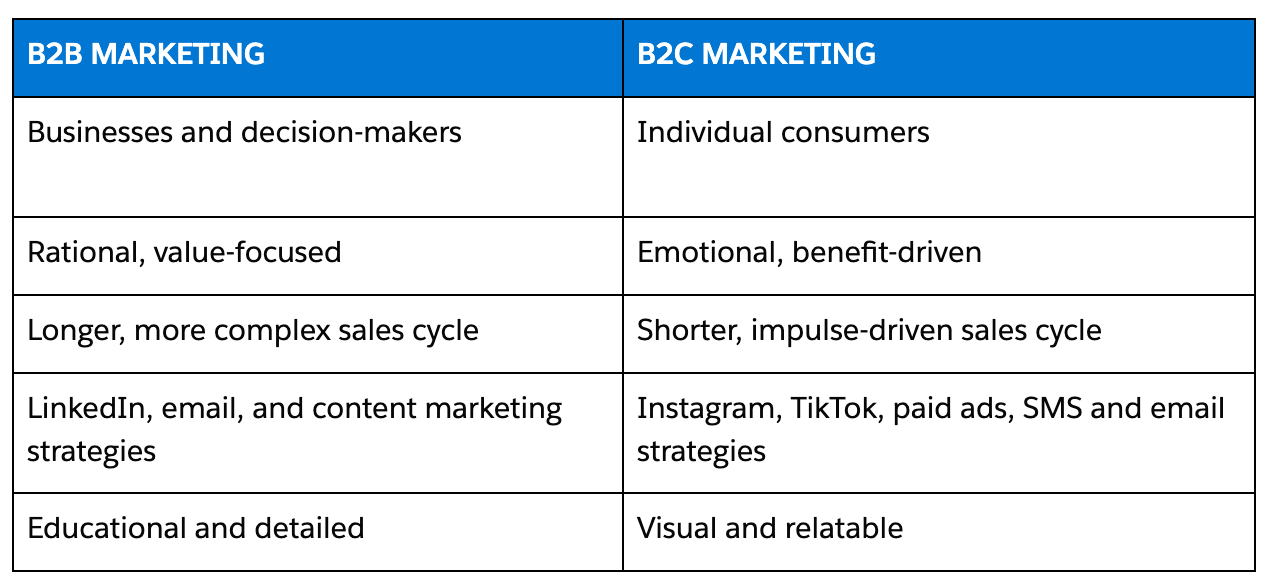
While both B2B and B2C marketing aim to fuel sales, their approaches, target audiences, and messaging strategies differ. The table below breaks down the key differences between B2B and B2C marketing across five dimensions.
Digital marketing strategies and tactics for growing teams
As a small business owner, you need to know which marketing tactics to prioritize. These digital marketing tactics are listed here for brand visibility, customer acquisition, and integrations with CRM. Let’s get into it.
1. Social media marketing (SMM)
Social media is arguably the most common platform for small business marketing in the U.S., using platforms like Facebook, Instagram, and TikTok to connect with the customer base daily. Small businesses use it to build brand awareness, engage with their community, provide customer service, and, increasingly, to impact direct sales through social commerce features.
2. Search engine marketing (SEM)
Search engine marketing (SEM) ensures the brand is visible when customers are actively searching, which includes both paid search advertisements and free search engine optimization (SEO). For small businesses, local SEO is critical, which involves optimizing their Google Business Profile and website for “near me” searches, ensuring they rank high when local customers are ready to buy.
3. Email marketing
Email marketing still delivers one of the highest returns for growing businesses. It allows for personalized, direct communication with customers on a platform that’s owned by your business, not an algorithm, meaning you have more control over your content getting seen. SMBs and startups use it to send targeted offers, automated welcome series, and re-engagement campaigns, nurturing leads and retaining current customers.
Pro Tip: Try Salesforce for some of these marketing campaigns:
- Einstein Conversation Insights (ECI) automatically pulls in call transcripts and meeting summaries — enabling faster deal preparation and ensuring important details are captured in one place.
- Email Builder Lite is for branded email content creation with ready-to-use layouts, custom templates, email previews, and a streamlined authoring experience — making it easier for SMBs and generalists to launch campaigns without complexity.
- Marketing App in Free Suite includes access to email marketing to engage leads from day one — with simple single-email campaigns, up to 100 marketing email sends per month, and expanded capabilities unlocked upon upgrade.
4. Content marketing
Content marketing involves creating valuable, educational, and engaging materials, such as blogs, guides, and short-form videos (perfect for Instagram Reels or TikTok). This positions you, the business leader, as the expert, builds authority, and serves as the fuel for both SEO and social media campaigns.
5. Inbound marketing
Rather than interrupting customers with ads and messaging (outbound marketing), inbound marketing attracts customers by creating content that solves their problems. This strategy is highly popular for small businesses because it builds trust and generates high-quality leads that are actively looking for your solution.




Key traditional marketing tactics to know
While digital marketing dominates, certain traditional tactics remain highly popular, especially for local and service-based small businesses. Here are three worth exploring for small businesses.
6. Word of mouth (referral marketing)
Word of mouth marketing is often cited by small business owners as their single best source for new customer acquisition. It’s the organic endorsement that comes from a friend or colleague, carrying immense credibility. Small businesses actively encourage this through excellent customer service and implementing simple, cost-effective referral programs. You can also use customer testimonials in your marketing campaigns to show your brand in action.
7. Partner marketing
For local businesses, partnering with (non-competing) businesses is a common way to combine customer lists and gain access to a new, trusted audience without a huge budget. This partnership collaboration often happens through joint promotions or co-hosted local events. If you can’t meet them in real life, you can at least collaborate with them online if you’re values sync up.
8. Personalized, multichannel marketing
While the large-scale print or direct mail portion is less popular, the personalized, human-touch elements remain highly effective for small businesses. This includes handwritten thank-you notes, personalized local delivery experiences, and focused, in-person customer service that larger brands can’t replicate. This helps to build strong, local customer loyalty and long-term success.
Pro tip: Try AI to help personalize your marketing with AI agents.
9. Pay-per-click (PPC)
Pay-per-click (PPC) is a model of internet marketing and an auction-based strategy where advertisers bid on keywords, and only pay when a user clicks their advertisement. This makes it a cost-effective way to get targeted traffic quickly and appear at the top of search results for specific queries.
10. Affiliate and influencer marketing
Affiliate marketing involves enlisting brand champions to earn a commission by promoting your products. Influencer marketing focuses on using key (popular) individuals to expand a brand’s message to the larger market.
Boost team productivity with Slack
Bring together your team, your customers, and your tools to help take your business to the next level with Slack — it’s where business gets done.

11. Mobile marketing (SMS and app-based)
SMB-based marketing is based on engagement conducted through mobile devices, like smartphones and tablets. This includes marketing through SMS text messages, mobile apps, and mobile-friendly websites. Marketing includes text discounts, community invites, and upselling opportunities through promotional challenges and interactive surveys.
12. Account-based marketing (ABM)
Account-based marketing (ABM) is a strategic approach where a brand treats individual high-value accounts as markets in their own right. ABM focuses resources on a set of target accounts within a market and applies personalized campaigns to them.
13. Social commerce (direct shopping via social apps)
Social commerce is a strategy to sell directly through shopping and social apps online. The use of social networking websites to promote and sell products and services directly. This allows users to complete a purchase transaction without leaving the social media platform.
14. Outbound marketing (print, TV, events, and billboards)
Event and experiential marketing involves creating face-to-face engagements, like workshops, conferences, pop-up shops, or product demonstrations, designed to be memorable and interactive. This approach is highly effective for small businesses targeting local communities or niche industries because it builds direct personal relationships and strong brand recall.
By hosting or participating in events, smaller companies can showcase their unique value proposition and build trust immediately. Tools like Agentforce 360 can help manage attendee data, personalize follow-up communications, and track each event.
15. Direct mail marketing
Direct mail marketing involves sending physical materials like postcards, catalogs, and flyers directly to potential customers’ mailboxes. This traditional channel is for any business looking to reach a specific geographic area or demographic that may not be active online. For smaller businesses, direct mail offers a unique benefit by cutting through the digital noise and creating a tangible, memorable presence in the local community. CRM tools can help segment recipient lists and track response rates for better targeting.
16. Public relations (PR)
Public relations (PR) is the strategic process of managing a brand’s public image to build positive relationships with the media and the community. It’s primarily for businesses of all sizes looking to shape public perception, whether they’re launching a new product, managing a crisis, or simply working to maintain a favorable reputation.
A marketing CRM is a helpful tool for tracking media contacts, managing outreach campaigns, and monitoring the impact of press mentions.
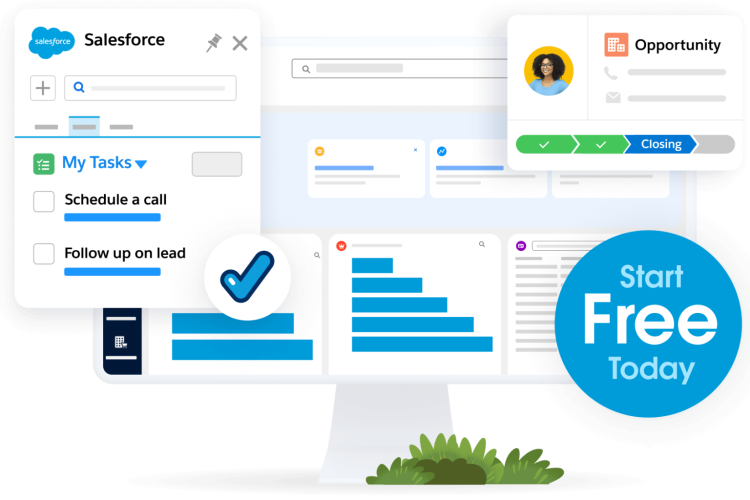
Seeing is believing. Try Salesforce for free with a 30 day trial.
See how small businesses are using Salesforce CRM to scale fast. No credit card required, no software to install. It all starts with Starter Suite.
Thank you!
Try for freeAI and modern marketing innovations
AI and immersive technologies now shape the modern marketing landscape, changing how brands connect with consumers. AI strategies are mandatory for optimizing content and personalizing user experiences.
This includes:
- Generative engine optimization (GEO): Makes content tailored for AI search engines like Perplexity or Gemini.
- Hyper-personalized marketing: Uses AI to customize marketing campaigns like website layouts, emails, and offers in real-time for individual users.
- Predictive analytics marketing: Uses machine learning to anticipate when customers might leave and what their lifetime value will be.
17. AI marketing and conversational agents
Automation and intelligent interaction are major trends. Programmatic advertising uses AI for automated buying and placement of ads in real-time auctions, ensuring efficient spending. Conversational AI marketing focuses on smart chatbots and voice-search optimization, allowing for immediate support.
As the digital and physical worlds merge, brands are using immersive marketing, which uses augmented reality (AR) and virtual reality (VR) to create digital “try-before-you-buy” experiences.
These are some examples of autonomous systems of the future:
- Agentic marketing prepares brand data for AI agents that shop on behalf of consumers.
- Synthetic data modeling (data generated by AI, not from real-world sources) allows brands to test entire marketing campaigns using AI-generated consumer profiles before launching to real audiences, offering a low-risk way to gain insights.
- AI CRM uses personalized content, optimizes targeting, automates complex workflows, and tracks every customer interaction for a hyper-personalized journey.
Bringing all types of marketing together with Salesforce
Knowing the types of marketing is one thing — executing your campaigns consistently across teams, timelines, and tactics is another. We’re here to help. Salesforce brings your entire marketing ecosystem together with tools to build effective campaigns — all in one place. Whether you’re just kicking off or running multichannel campaigns, a CRM helps teams stay aligned, efficient, and focused on what matters: impact.
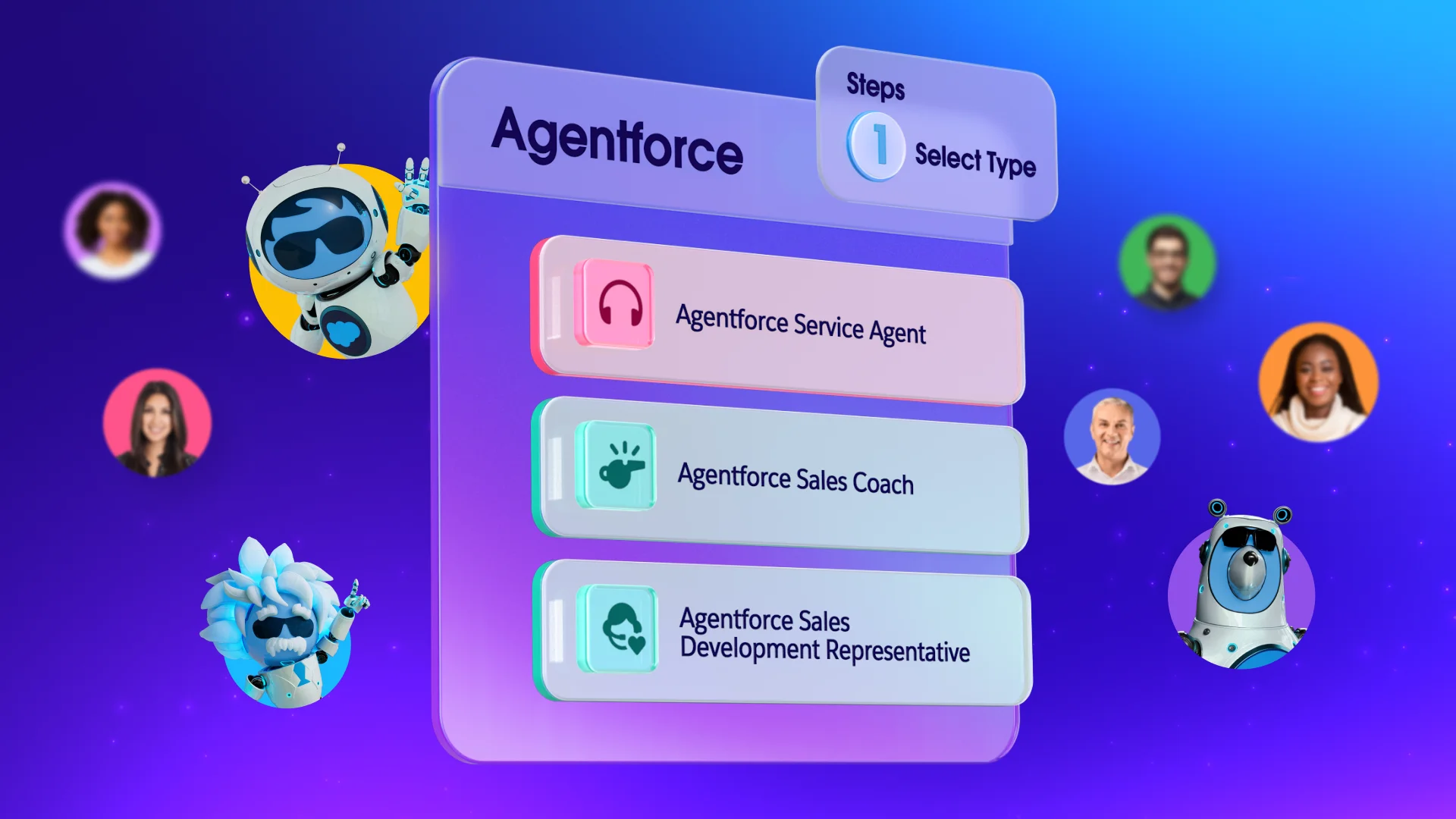
Start your journey with the Free or Starter Suite today. Looking for more customization? Explore Pro Suite. Already a Salesforce customer? Activate Foundations to try out Agentforce 360 today.
AI supported the writers and editors who created this article.
Frequently Asked Questions (FAQs)
B2B (business-to-business) marketing targets other businesses and focuses on rational messaging, efficiency, and ROI, typically involving a longer, more complex sales cycle. B2C (business-to-consumer) marketing targets customers on an individual level and relies more on emotional, benefit-driven messaging with a shorter, often impulse-driven sales cycle.
While ROI can vary by industry and execution, email marketing consistently delivers one of the highest returns on investment for small businesses. It enables highly personalized, direct communication and allows businesses to own the channel, bypassing social media algorithms.
Inbound marketing attracts customers by creating valuable, problem-solving content (like blogs, guides, and SEO-optimized pages) that pulls leads toward the business when they are actively searching for a solution. Outbound marketing proactively pushes messages out to the masses through print ads, billboards, or cold calls.
A blended approach maximizes reach and impact. Digital marketing offers precision, trackability, and high-engagement channels, while traditional tactics build stronger local credibility and customer loyalty that digital channels alone cannot replicate.
To manage diverse marketing channels consistently and efficiently, a business should use a customer relationship management (CRM) platform. Salesforce offers the Starter Suite to bring the entire marketing ecosystem together, enabling teams to plan, prioritize, track progress, automate campaigns, and align all tactics in one place for maximum impact and a unified customer view.