


Australia’s energy market has served as the definitive “canary in the grid,” offering a direct, predictive model for the challenges and opportunities facing the UK utility sector today. The core conflicts that define Australia’s experience, and the ones that the UK is now rapidly approaching, are the pace mismatch and the in-human scale and complexity the transition brings.
Australia’s transition has been largely bottom-up and consumer-led, deploying assets at a ballistic pace. This rapid deployment of Distributed Energy Resources (DER) has completely outstripped the planned top-down rollout of utility-scale infrastructure and transmission, creating a significant generation gap and systemic instability.
The good news for the UK is that while grid physics are universal and the systemic stresses are identical once a critical tipping point is reached, the UK currently benefits from a crucial, but limited, 3-5 year grace period. This window must be used to build the necessary digital backbone before the looming consumer boom creates a crisis.
The Australian Blueprint: Scale and Sophistication
Australia provides a clear blueprint of the scale and behaviour that drives this transformation:
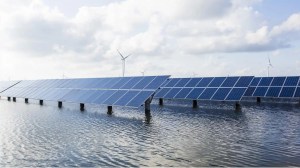
- The Solar Juggernaut: Australia boasts over 4.2 million rooftop solar systems, representing a cumulative capacity of 26.8 GW. This consumer-owned fleet met 14.7% of the National Energy Market’s total generation in Q1 2025.
- The Battery “Ignition Event”: Consumer interest was weaponised by a circa 30% federal battery subsidy (the Cheaper Home Batteries programme), triggering a ballistic adoption rate that saw 160,000 new systems (3.5 GWh) installed in 5 months (July – December 2025).
- The Sophisticated Consumer: The average installed battery size (25–27 kWh) far exceeds simple household daily consumption. This reveals consumers are acting as sophisticated market participants, engaging in grid arbitrage by storing cheap midday solar to sell back during high-priced evening peaks .
The UK’s Imminent Crises: The Canary’s Warnings
The unmanaged proliferation of DER in Australia created three cascading crises that directly threaten UK participants:
- The Wholesale Crisis (Price Cannibalisation): The massive, unmanaged solar surge “hollows out” grid demand, pushing operational demand to historically low, and often negative, levels (e.g., -205 MW in South Australia). This price volatility collapses the economics of traditional generators and results in price cannibalisation. The implication for the UK is that future utility-scale generation must be hybrid i.e. co-located with Battery Energy Storage Systems (BESS) to shift energy and survive price collapse.
- The Physics Crisis (Invisible Threat): As synchronous coal/gas plants are displaced, the grid loses essential stabilizing services like inertia and system strength, becoming “lighter, weaker, and more fragile”. The crucial warning is that this is not a future problem: the National Energy System Operator (NESO) is already grappling with this exact loss of inertia via its Stability Pathfinder programmes, proving that balancing the grid’s physics is now a core, multi-billion-pound market.
- The Distribution Crisis (Inhuman Scale): At the local level, unmanaged solar exports cause debilitating voltage spikes, forcing residential inverters to trip offline. This operational problem manifests as an unmanageable customer service nightmare. The definitive signal is that South Australia Power Networks faced a 276% increase in customer interactions over five years related to these technical issues. This sheer volume is the “canary in the coal grid” for UK Distribution Network Operators (DNOs).
From Installation to Orchestration: The Era of the Agentic Utility
If Australia is the testing ground for the global energy transition, the lesson for the UK is clear: we are moving from a race for installation to a complex challenge of integration and choreography.
As the grid faces an exponential rise in complexity, from negative pricing to voltage spikes, it is becoming clear that legacy IT architectures cannot cope. This inhuman scale of data requires a new approach: the specialised software and Agentic AI that Salesforce provides.
The Salesforce Difference: Connecting the Whole Value Chain
Salesforce is uniquely positioned to support this transformation because it looks beyond isolated silos. It offers a unified enterprise platform that operationalises Agentic AI across the entire energy value chain:
- Marketing & Sales: Identifying the right customers for flexibility offers.
- Quote-to-Cash: Managing complex product bundles and tariffs.
- Field Operations: Streamlining installation and maintenance.
- Customer Service: Using AI agents to handle complex energy queries.
- Asset Integration: Connecting the commercial layer to physical control.
Enabling the Ecosystem
By spanning these domains, Salesforce acts as the Orchestration Engine that enables industry participants to manage the inhuman scale of complexity the energy transition brings, adapt in real-time as market structures and technologies flex, and rapidly launch the new solutions required to meet demand while ensuring grid stability. For Example:
- For Retailers & Aggregators (The Commercial Engine) As the market shifts from simple commodity sales to complex services, Salesforce provides the Product Bundling Capabilities needed to rapidly launch tiered Virtual Power Plant (VPP) products. By merging tariffs, arbitration payments, and flexibility incentives, retailers can optimise the VPP customer experience. This secures loyalty and maximises DER asset value by directly linking the commercial offer (Quote-to-Cash) to asset control.
- For Infrastructure & DSOs (The Grid Engine) For DSOs facing a deluge of data, Salesforce offers the Agentic AI and automated workflows necessary to manage the grid’s inhuman scale. From streamlining grid connections to managing assets in real-time to eliminate unnecessary curtailment, Salesforce ensures regulatory compliance and operational resilience.
The Result: The Agentic Utility
This transformation heralds the Era of the Agentic Utility, a future where human expertise is seamlessly integrated with intelligent agents to manage system complexity, ensuring a stable, profitable, and net-zero compatible grid.
If you would like further information on Salesforce Solutions please visit our Energy & Utilities website.