


We have entered the era of the polycrisis: a cluster of related global risks where the whole is more dangerous than the sum of its parts. A single event in a single geography now cascades across digital and physical domains with unprecedented speed.
The Anatomy of a Cascade
To understand why traditional insurance models are struggling, we must look at how a single event triggers a multi-domain crisis:
- Energy & Agriculture: Supply disruptions lead to immediate price volatility. This isn’t just an oil problem; it’s a food security problem, as fertilizer production is inextricably linked to energy markets.
- Tech & Manufacturing: While eyes are on oil, trade corridors are often vital for specialised gases. Helium constraints, for instance, can immediately stall semiconductor production, hitting the tech and automotive sectors.
- Infrastructure: Geopolitical friction often manifests as physical attacks on undersea cables or cloud infrastructure, triggering immediate operational and regulatory consequences.
- Cyber Warfare: Digital attacks often precede or follow physical conflict, turning a regional dispute into a global cyber event.
Each function inside an insurance firm sees a piece of this. Underwriting sees the accumulation; Claims sees the incoming notices; Risk sees the model volatility. Yet, very few can see or act on the whole.
The Gap is Not Data—It is Coordination
Most insurers today are not suffering from a lack of information. They have the risk data and the sophisticated models. The failure is a constraint of organisation.
Currently, insurance functions operate in parallel. Underwriting, Claims, Operations, and Compliance move like separate ships in the same sea. In a polycrisis, this sequential structure breaks down. When events move at the speed of a digital signal, waiting for a weekly risk committee meeting is a recipe for irrelevance. We must move from siloed risk visibility to enterprise orchestration.
Building a Polycrisis-Ready Operating Model
To bridge the gap between “knowing” and “acting,” insurers need a digital operating layer that connects signals to decisions. This requires five core capabilities:
- A Unified Signal Layer: Bringing exposure data and external risk indicators into a shared context.
- Cross-Functional Workflows: Ensuring work moves across Underwriting and Claims as a single process.
- AI-Supported Decisioning: Using AI to identify affected portfolios instantly.
- Governed Execution: Maintaining clear auditability and ownership across jurisdictions.
- Scaled Communication: Providing proactive, data-driven updates to brokers and partners.
Why Salesforce is the Operating Layer for the Modern Insurer
Salesforce provides the orchestration engine that closes the gap between a signal in one region and a decision in another.
Breaking Silos with Financial Services Cloud
Salesforce moves the industry from parallel processing to concurrent action. By using Financial Services Cloud, insurers can house their data in a single Source of Truth. When a crisis event is detected, it triggers a unified workflow. Underwriting can review accumulation limits while Claims prepares for a surge in notices—all within the same shared context.
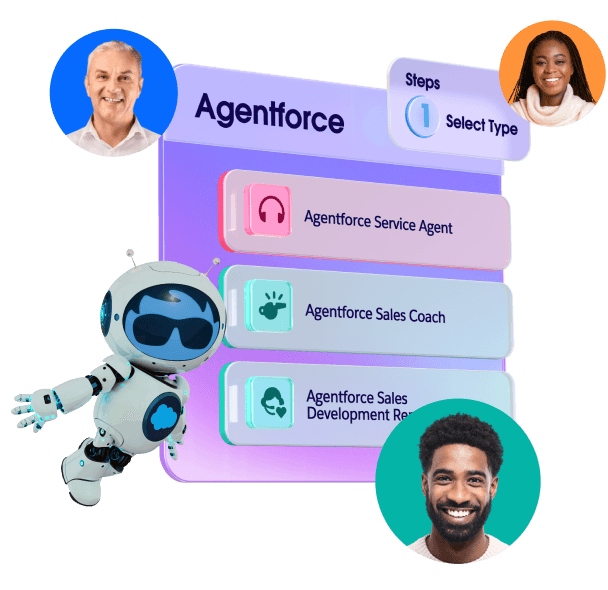
Agentic Orchestration with Agentforce
As we look toward the future of 2026 and beyond, the polycrisis-ready insurer uses AI agents. Agentforce doesn’t just automate tasks; it identifies affected portfolios across jurisdictions and proposes governed next actions before the manual process even begins. It acts as the “connective tissue” that alerts the right people at the right time.
Trust Through Transparency
By integrating policy data with real-time event signals, Salesforce enables proactive, coherent updates to brokers. This shifts your firm’s brand from being a “reactive payer” to a “resilience partner.”
The Call to Action: The global risk environment is no longer a series of isolated incidents; it is a permanent state of interconnected reality.
Explore how Salesforce for Insurance can help you achieve enterprise orchestration.
Salesforce for Insurance
Power sales, service, marketing, and data operations on a deeply unified, agentic AI platform