Reaching Customers in the Age of AI: 5 Hard Truths from the Latest State of Marketing Report

We surveyed 4,450 marketers on their progress with AI and where they think the industry is headed. The results point to a shift towards more personalised, customer-led marketing. Read on to learn more.

Personalisation at scale has been a challenge for marketers for many years. It can improve campaigns, yes, but the infrastructure hasn’t been up to scratch. We bought the tools, we integrated the clouds, but at the end of the day, we were still broadcasting messages – not having conversations.
Our new Tenth Edition State of Marketing report confirms that the old playbook of “broadcast and hope” marketing is broken, and yet 83% of marketers in Australia and 90% in New Zealand are still running these generic campaigns.
The gap between what marketers do (campaigns) and what customers want (conversations) has never been wider. However, for the first time, we have the technology to close it. AI agents can now interpret nuance and deliver truly personalised content at scale. Brands no longer have to send messages into the void. They can now realistically have meaningful two-way conversations with thousands of customers across channels, at any given time.
On that note, here are the five hard truths about this shift to agentic AI, and why 13% of your competitors are already using them to get ahead.
Key Takeaways
See the latest trends in AI, data, and personalisation, based on insights from nearly 4,500 marketers worldwide.
1. It’s time to stop generating noise and start taking action
If you’re only using AI to churn out copy and images, you’re playing the 2024 game. While many marketers are “using AI”, most aren’t getting the most out of its capabilities.
The real line in the sand is agentic AI. While only 13% of marketers have made this leap, the difference in performance is clear. We also found that high performers are 1.7 times more likely to use customer data to create relevant experiences and 1.7 times more likely to have unified their data sources.
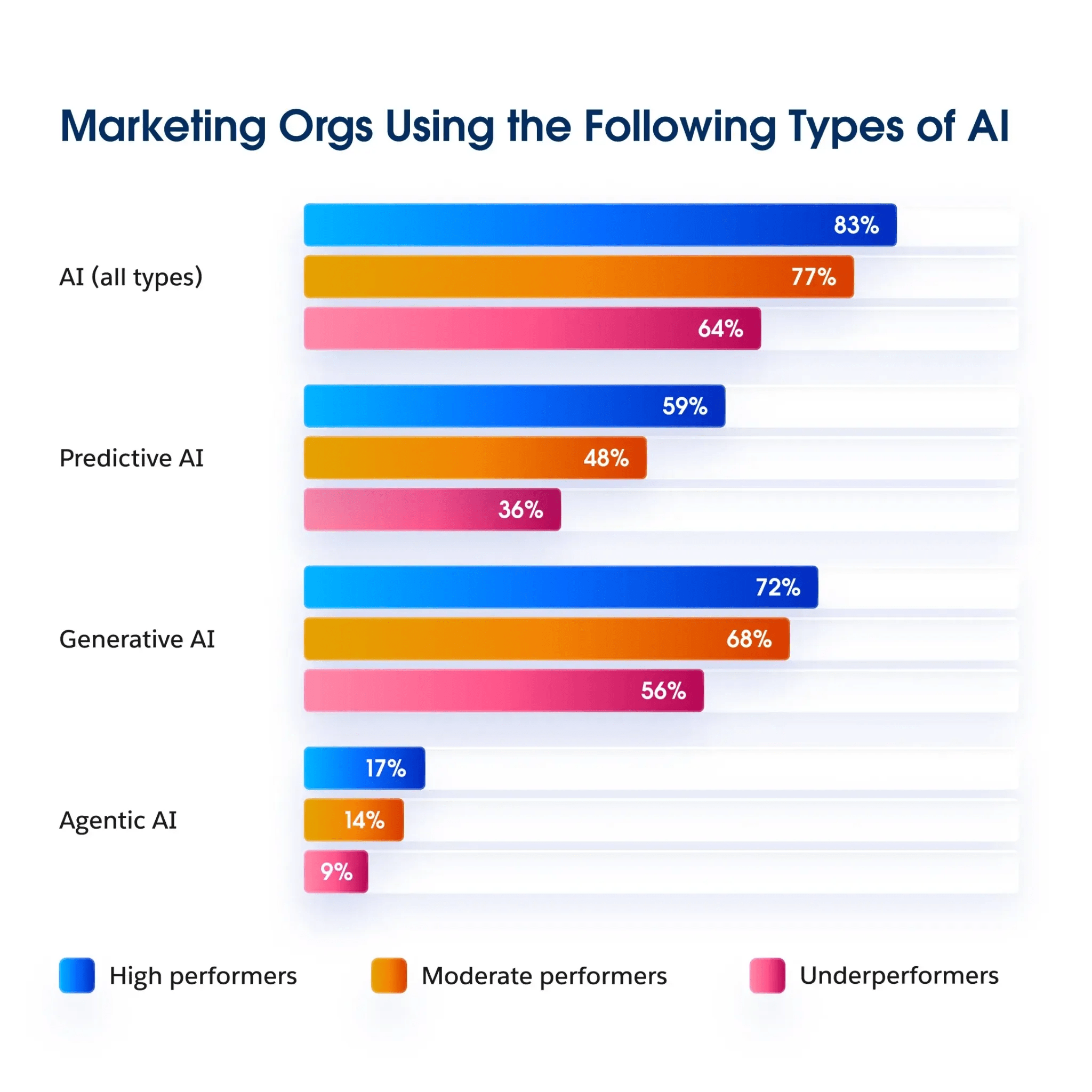
That’s because these marketers have AI tools that can do more than draft emails. They’re deploying agents that can understand customer details and nuance, and take action. With a 20% average bump in ROI, the math is simple: you’re either agentic, or you’re behind.
You can see how this shift is already happening in ANZ through the Salesforce Partner Program, where partners are seeing firsthand how agentic AI is improving outcomes for their clients.
2. Your data isn’t a “foundation” — it’s a moat
We’ve spent a decade talking about breaking down silos. Agentic AI has now made it a survival requirement. An AI agent is only as smart as the data it can see. If it can’t access things like service history or an abandoned cart, it’s just another hallucinating chatbot.
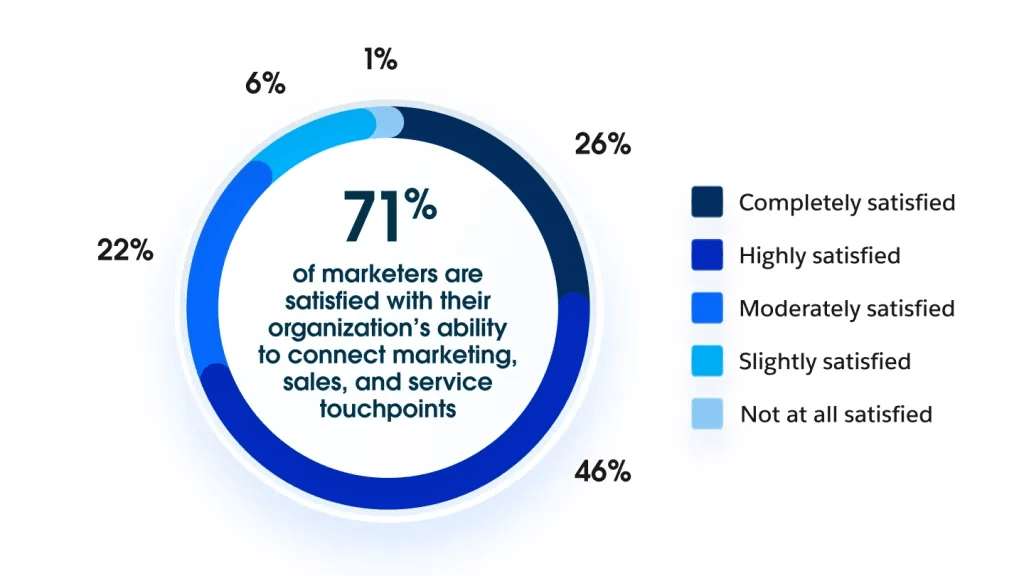
We found that only 26% of marketers are completely satisfied with their data unification.
In Australia, only 59% of marketers have full access to sales data, 60% to service data, and 55% to commerce data.
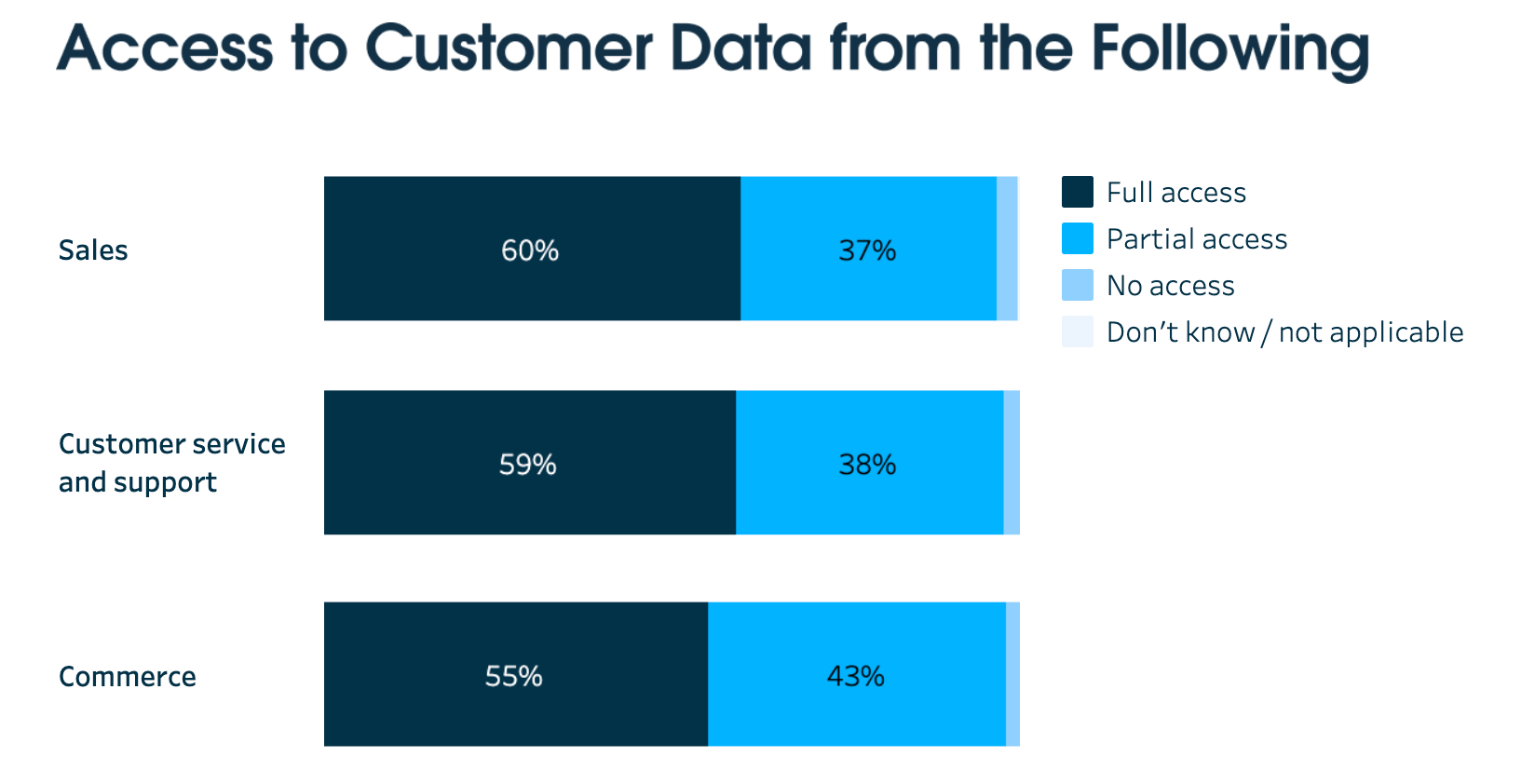
While in New Zealand, it’s slightly ahead with 63% for service and sales, and 57% for commerce.
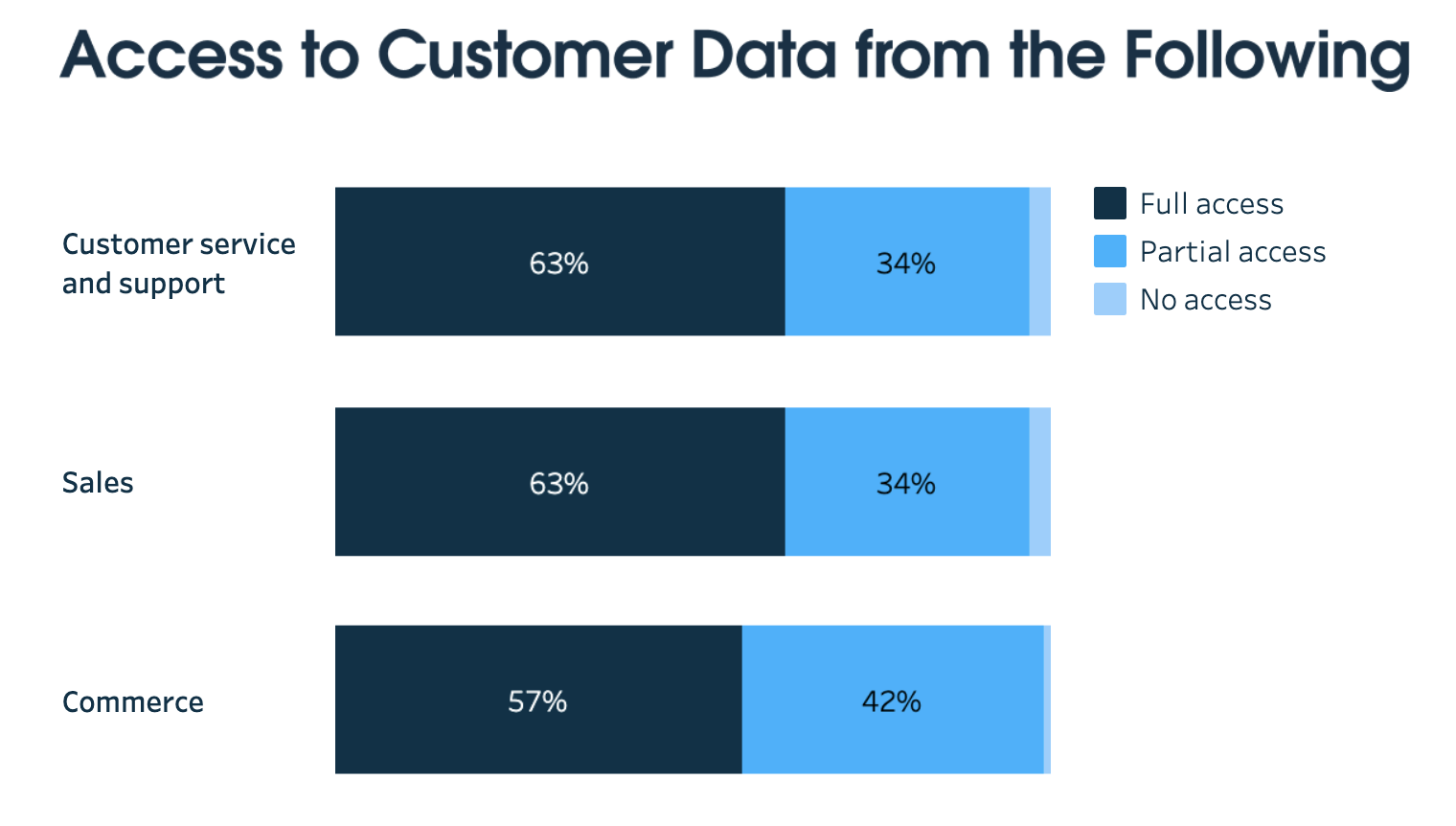
These numbers point to a massive vulnerability. Without the right data, your AI could be feeding you incorrect information. On the flip side, when your data is connected, AI can do its job. This means personalisation in real time, responding to customers with context, and supporting faster, more accurate decisions.
3. Step aside, SEO. Hello AEO (Answer Engine Optimisation).
The era of “renting” traffic from Google is fading. With ChatGPT and Google’s AI Overviews, getting a click is no longer guaranteed because people can get an answer without one. SEO strategy has always been a moving target, and once again, it needs to be rethought.
If your strategy relies on traffic coming from a blue link after a Google search, you’re in trouble. People are increasingly getting what they need directly from AI-generated answers, without ever visiting a website.
In Australia and New Zealand, this shift shows up in the numbers. We found that 86% of Australian marketers and 71% of New Zealand marketers say AI is changing the way they do SEO, while 92% of marketers in Australia and 89% in New Zealand have already started optimising for AI-generated responses.
Those who are ahead of the pack are focusing on creating high-quality, structured content that AI models can summarise and surface. Put simply, in today’s world, if you aren’t the source of an AI answer, you don’t exist.
4. It’s time to end the “Do Not Reply” email once and for all
Few things stunt a relationship more than telling someone that they aren’t allowed to talk back. Yet this has long been the case with brand email and text communications.
In our latest marketing report, we found that 83% of customers want a two-way dialogue. Yet most brands are still sending one-way SMS and email blasts, with 69% of marketers admitting that they struggle to respond quickly to inquiries.
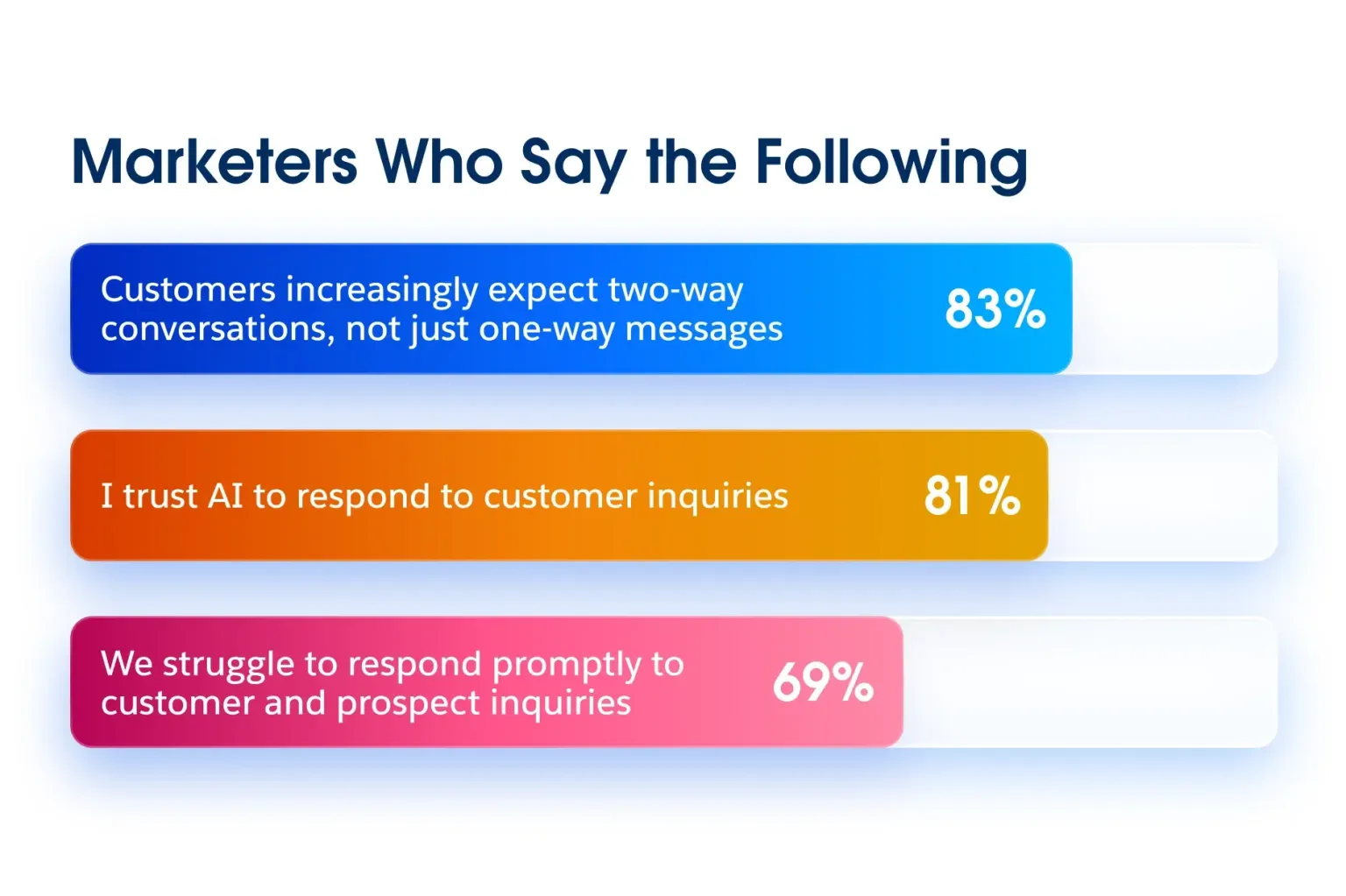
In 2026, the “tech isn’t there” excuse has expired. Currently, 84% of marketers in Australia and 80% in New Zealand trust AI to handle customer enquiries, which removes the biggest barrier to responding. With such a large number of teams using this technology, the bar has been raised for all businesses.
5. Efficiency is a trap. Instead, focus on “found time”.
There is a big gap between the desire for personalisation and the ability to execute it. We found that 80% of marketers in Australia and 70% in New Zealand say they need more personalised content than they can currently produce, with 72% and 91% respectively already turning to AI to help close that gap.
The results are strong when these blocks are overcome. Our survey found that high-performing marketing teams are 1.5 times more likely to frequently reply to customers over email and text.
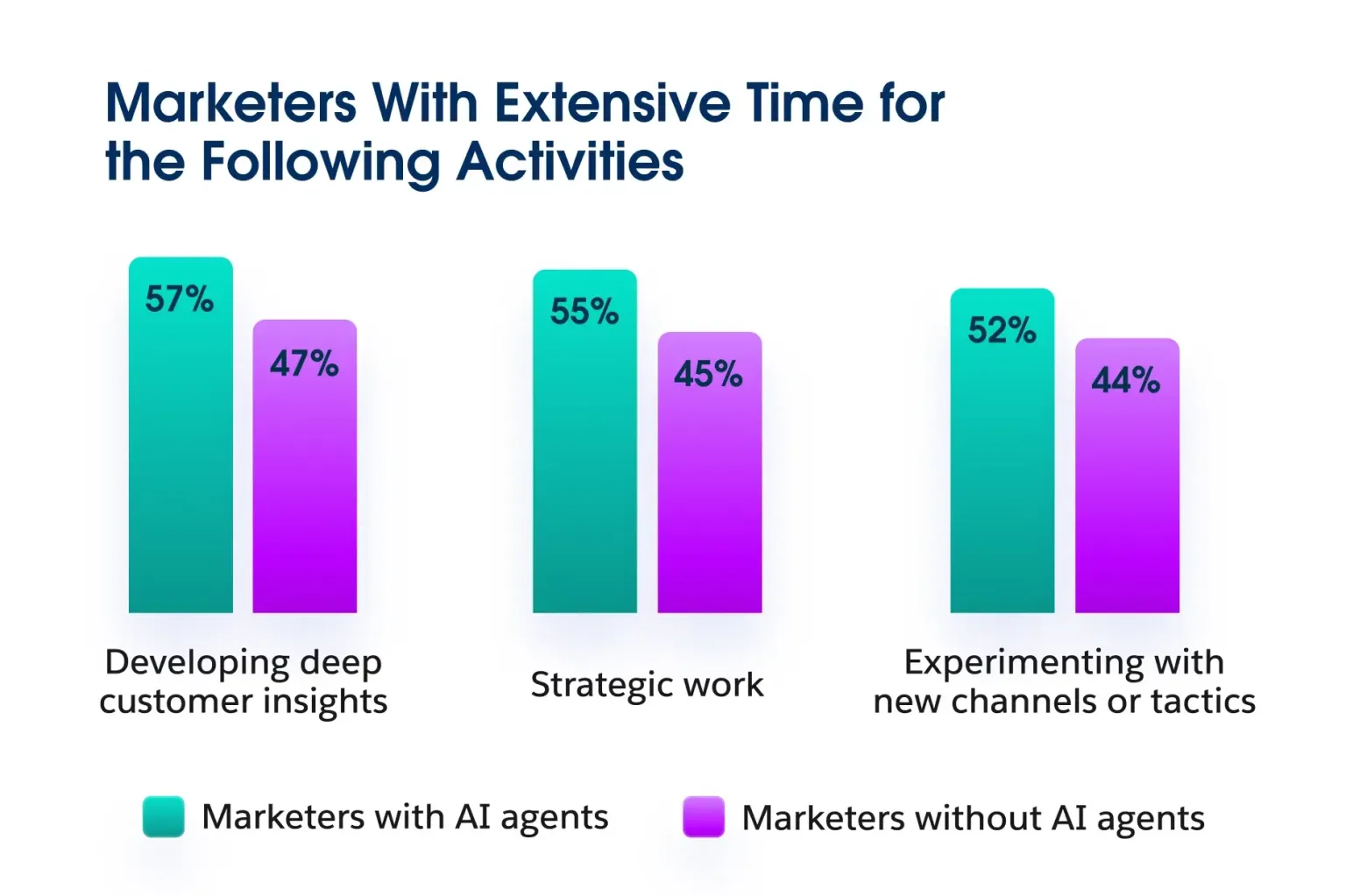
Plus, by using AI agents to automate the “busy work” of content variation and data analysis, marketers expect to reclaim roughly eight hours per week. This time is being reinvested into developing deeper customer insights, strategic work and creative experimentation. (The reasons we became marketers in the first place, right?)
So, where to next?
If your team is wondering how to join the next generation of marketers, here’s how to get started.
Start with your data
As we’ve covered, AI agents are ineffective if they’re not given the right data to work with.
Before making any grand changes, audit where your data sits and fix the errors in your system. This might be duplicate data, a poor integration that’s only syncing part of the story, or a lack of a single source of truth.
Pick one AI use case
AI is exciting, but asking it to do everything at once creates chaos. Most teams don’t want their workflows overhauled overnight. They want support in the parts of the job that slow them down.
This is where starting small makes all the difference. It gives your team time to get comfortable with AI agents, builds trust in how they work, and makes it easier to measure real impact without everything changing at once.
A strong place to start is campaign reporting. It’s low risk and sits alongside existing workflows, rather than disrupting them. At the same time, it shows the kind of insights AI can pull from your data and gets the team thinking about how agents could start acting on those insights.
Set governance early
Technology has a Wild West reputation right now, and no one is stepping in to take the reins. You need to be the sheriff in town. When it comes to using AI in your business, lock it down. Make it as secure as possible. There’s no margin for error, especially in industries like healthcare and finance.
The first step is choosing a tool, like Agentforce, that’s built for business with security baked in. From there, it’s about putting clear rules in place. These could be:
- When to escalate to a human
- What AI is allowed to do and where human review is required
- How customer data is used and protected
- What sources AI is allowed to pull from
- Who owns and maintains the system internally
- What happens when AI gets something wrong
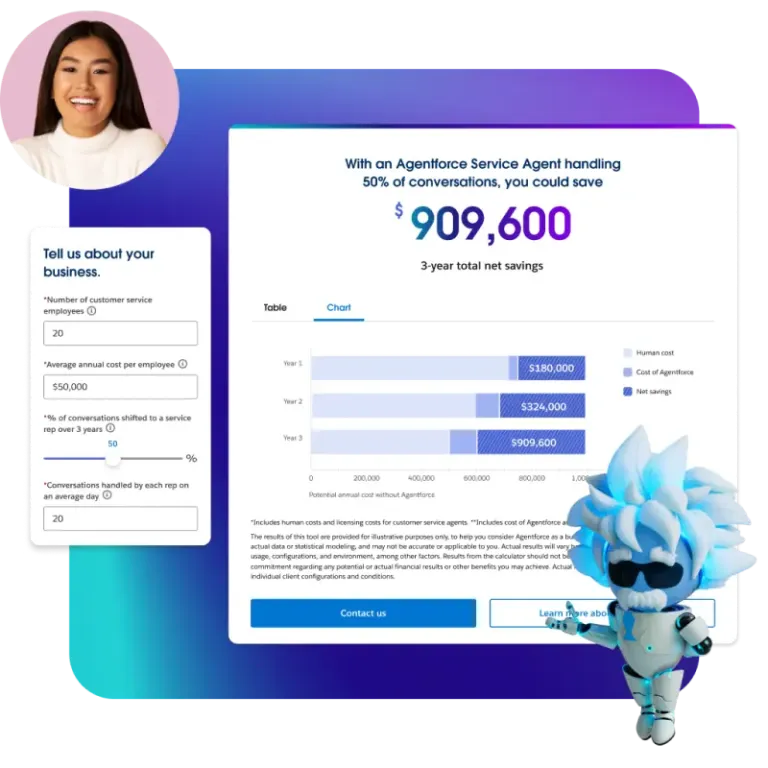
Calculate your ROI with Agentforce.
Find out how much time and money you can save with a team of AI-powered agents working side by side with your employees and workforce. Just answer four simple questions to see what’s possible with Agentforce.
How leading brands are using agentic AI
Looking for inspiration? Take a cue from brands that are already using agentic AI to connect data, automate actions, and deliver more relevant experiences across every channel.
Fisher & Paykel
Fisher & Paykel has built an experience that mirrors the quality of its products – consistent, intuitive, and premium across every interaction.
Customers can research and compare appliances online, experiment with design tools at home, and then walk into a showroom and continue the same journey in person. Staff have visibility into what each customer has already explored, so conversations pick up naturally instead of starting from scratch.
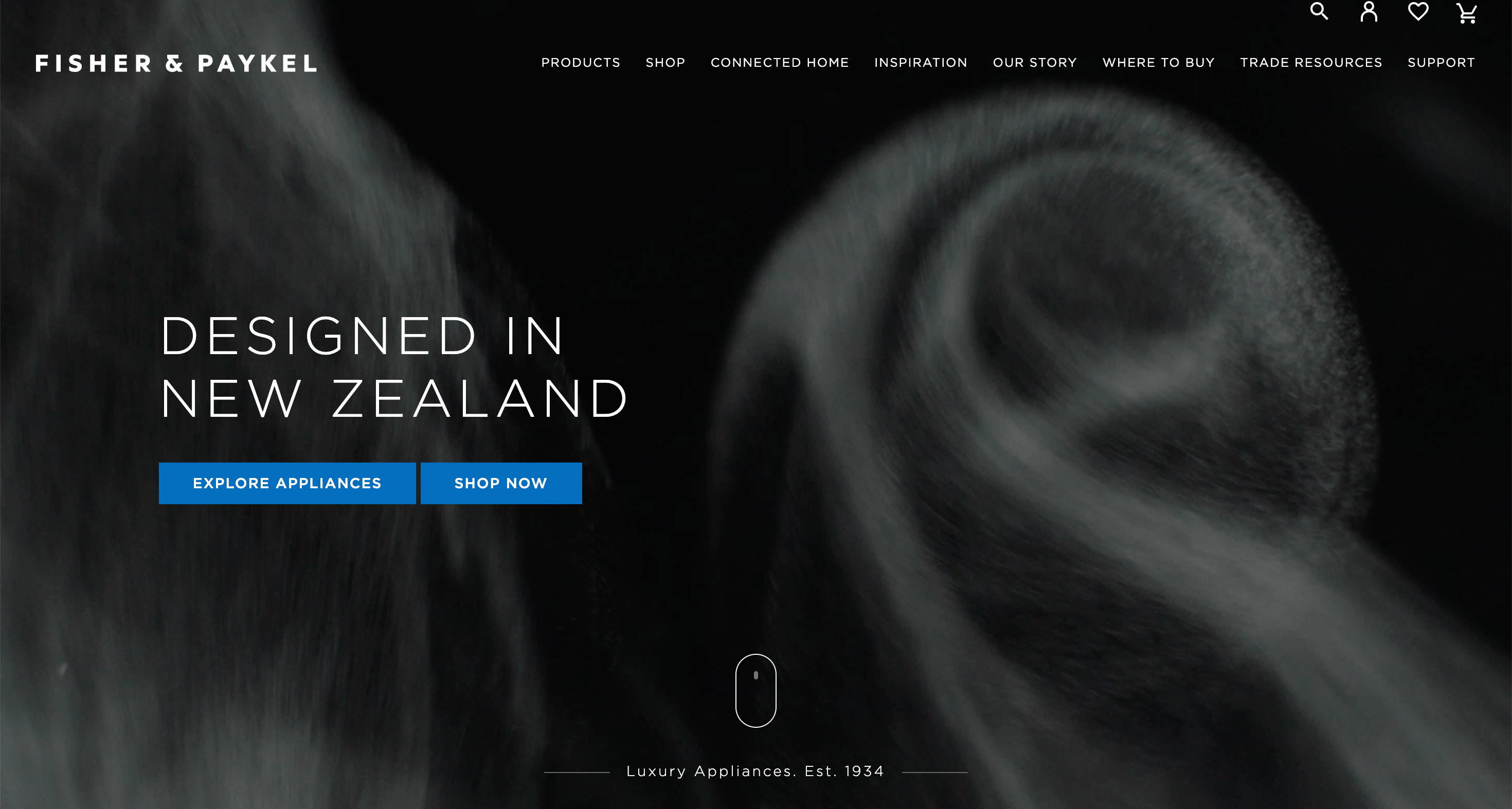
Fisher & Paykel does this by using Data 360. The software gives them a single view of each customer, while Marketing Cloud personalises recommendations and follow-up journeys based on browsing and buying behaviour. Commerce Cloud also powers a connected storefront that links browsing, orders, and fulfilment in one place.
Using AI agents, they are able to provide support faster and more accurately across every touchpoint. As a result, self-service rates have increased to 65%.
Geocon
Geocon is one of Australia’s fastest-growing property developers. They build large-scale residential and mixed-use projects all across the country.
However, as the business grew, defect management became a bottleneck. Enquiries were spread across multiple systems and inboxes, making it difficult to capture complete information and route cases quickly during high-volume periods.

To solve this, Geocon implemented Agentforce alongside Data 360. This gave them AI agents that were able to automate defect logging, capture data, and route cases through a single portal.
As a result, case routing time dropped from 6.5 hours to near-instant, while data compliance increased from 33% to 100%.
How to prepare your content for AI discovery
It’s time to put down the old SEO handbook and start rethinking your strategy for discoverability.
Since Google introduced their AI Overviews, organic click-through rates have dropped by 50% to 60% on affected queries. At the same time, around 37% of consumers now start their search journey with AI tools instead of traditional search engines.
If this is where your customers are searching, you need to be there for them to find you. This is where GEO (Generative Engine Optimisation) comes in. Here’s how you can get started optimising for AI:
- Provide clear and direct answers: Lead with the takeaway, then expand. AI prioritises content that answers a query immediately without needing to dig.
- Use descriptive headings: Make each section explicit. This helps AI understand the structure of the article and what your content covers.
- Write with an FAQ style: Frame sections around real questions people might type into AI chat.
- Have structured pages: Use logical flow, short paragraphs, and lists. Well-formatted content is easier for AI to take in and get key information from.
- Pull from trustworthy sources: Back up claims with credible data and link to their original sources. Both authority and accuracy increase the likelihood of being referenced in an AI answer.
- Content depth and completeness: With AI being able to answer basic questions, you will need to go beyond surface-level topics. Instead, try to fully answer the topic with examples and expertise so that AI sees your content as unique and authoritative.
Ultimately, your content now needs to be clear, unique and credible to be selected and summarised by AI.
Stay up to date on all things marketing.
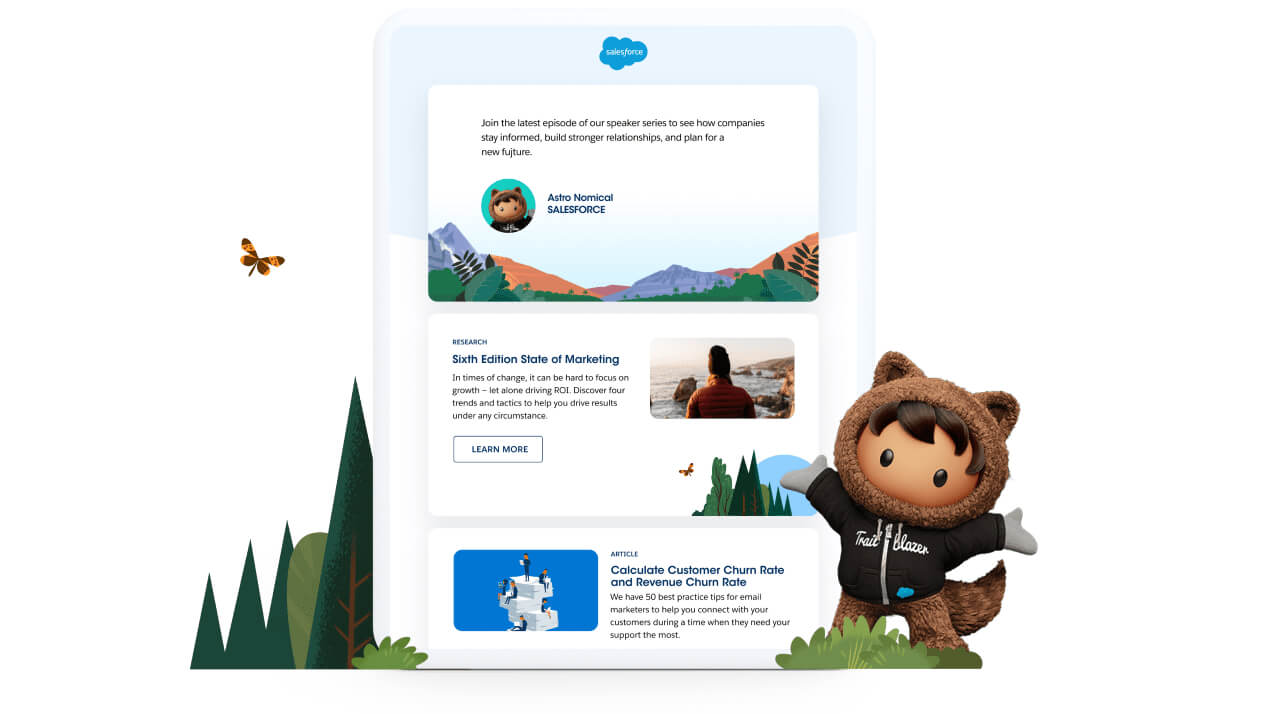
Sign up for our newsletter to get the latest research, industry insights, and product news delivered straight to your inbox.
What this means going forward
The transition to agentic AI isn’t as simple as flipping a switch. It requires a strategic commitment to upskilling (specifically in data analysis and AI tool management) and a relentless focus on data integration. For those brands that take the right steps, the future of marketing will see a more productive workforce and more meaningful relationships with customers. Every single one of them.
If you want to learn more about where this is heading, read the full State of Marketing Report (10th Edition). As a double-blind study, it offers an unbiased view of how marketing teams are evolving.
If you’re looking for AI agents built for marketing, Salesforce Agentforce is worth exploring. Watch the demo to see how it could transform your process.
FAQs
Combining your data (Data 360) with AI agents (Agentforce) allows agents to act based on all real-time customer context.
For example, if you want to personalise a nurture campaign, an agent can adjust messaging based on someone’s browsing behaviour, past purchases, or recent service interactions, without you having to manually segment or rebuild journeys each time.
The five biggest trends we identified from our latest report are the following:
- Teams are moving from generative to Agentic AI
- Connected data becomes a competitive advantage
- SEO shifts to AEO (Answer Engine Optimisation)
- Two-way engagement replaces one-way campaigns
- Efficiency shifts to “found time”
Yes, but it’s a fast-moving discipline. Now teams need to spend more time on strategy, data, and AI-enabled decision making, rather than only campaign execution.
At the same time, the fundamentals of marketing still stand. Creative thinking, strong writing, and a deep understanding of your customers’ motivations are what make a great marketer. AI doesn’t replace that. It changes how you apply it.
You can get the full State of Marketing report here. It’s based on a survey of 4,450 marketers, and since it’s a double-blind study, it offers an unbiased view of what’s happening across the industry.