5 Principles for Managing Your Data’s Compliance Lifecycle
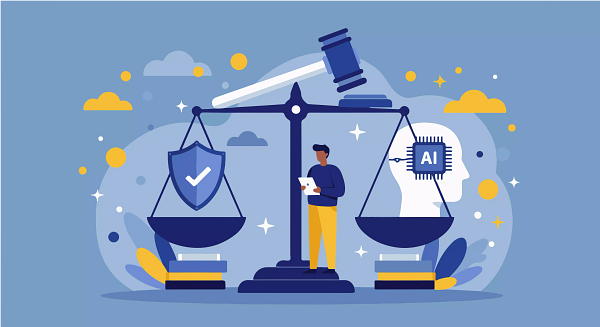
From minimization to auditability, learn how to move from reacting to regulations to proactively building a compliant data strategy.

Key Takeaways
In the race to lead with artificial intelligence (AI), every company is facing the same challenge: how to manage a surge of data while mitigating risk.
At the heart of this challenge is the sheer scale of the data itself. By 2028, the world is projected to store nearly 400 zettabytes of data. To put that into perspective, a single zettabyte is enough storage for approximately 30 billion movies. Businesses are driving this trend, harnessing every type of data imaginable, from personally identifiable information (PII) and health data to web and social logs, to feed the AI models that create deeply personalized customer experiences.
Harvesting all of this data creates a natural tension: the drive to innovate versus the critical responsibility to manage it all safely, stay compliant, and maintain customer trust. Balancing these challenges is the new reality every business operates in.
Navigate compliance with
Salesforce Guardian
Learn how to approach the changing regulatory landscape, maintain customer trust, and avoid compliance fines.



The stakes have never been higher
AI is a major accelerator of change for businesses today. While AI unlocks incredible opportunities, it also fundamentally complicates the data landscape, introducing entirely new security and privacy challenges. The risks are tangible and significant:
- Financial: We’re seeing an increase in security spending as companies scramble to get AI-ready. The cost of getting it wrong is staggering, with non-compliance fines averaging nearly $15 million.
- Reputational: 59% of consumers already don’t believe AI is secure. A single misstep doesn’t just cost you money; it can also damage or diminish customer relationships.
- Regulatory: The global web of regulations (i.e. GDPR, HIPAA, SOX, FINRA) was already complex before AI. With new laws emerging and current ones evolving, compliance is a moving target that’s becoming impossible to address manually.
So, how do you navigate growing data, new AI risks, and increasingly complex regulations? We believe the best approach is putting in place practices for our customers and empowering them to do with our solutions that result in both entities protecting customer data.
Data security and privacy is a shared responsibility
At Salesforce, trust is our #1 value, and we provide a powerful, secure, and highly reliable platform. Your side of the partnership is to be the expert on your business and your data, and implement the specific controls your company requires. Critically, you control who has access to your data and what they can do with it. Ultimately, you’re responsible for ensuring your data’s integrity and resilience — making sure it’s protected and recoverable, no matter what happens. Salesforce provides the secure platform, but you hold the keys to your data.




A five-principle framework for compliance
To help you manage your data’s entire compliance lifecycle—from collection to archival—we use a framework guided by five key principles. This framework moves you from reacting to regulations to proactively building a strategy that is secure, compliant, and builds trust.
1. Minimization
A core tenet of regulations like GDPR, data minimization means you should only handle data that is essential for a specific purpose. Storing inactive or unnecessary data clutters your org, increases storage costs, and significantly elevates compliance risk.
Ask yourself: Can we confidently prove to an auditor that we’re only retaining what’s necessary?
2. Confidentiality
Data confidentiality means protecting your sensitive data (especially PII) from unauthorized access across its entire lifecycle. Doing so is crucial not just in production, but also in your backups, archives, and development environments where PII can be exposed.
Ask yourself: Are we equipping users with the data they need while ensuring sensitive information remains secure?
3. Integrity
Data integrity is about ensuring your data remains complete, accurate, and trustworthy. For any business in a regulated industry, proving data integrity is a compliance mandate (e.g., SOX). A data loss event, whether from human error or a system failure, puts your company at risk.
Ask yourself: Can we confidently prove our data is reliable and that we can restore it accurately after any disruption?
4. Availability
Data availability is fundamental to business continuity and means more than just preventing downtime. It’s about having a resilient and reliable system to promptly recover data. Many regulatory frameworks require dependable business continuity plans, including backups.
Ask yourself: Is our stored backup data accessible at any moment?
5. Auditability
Data auditability is your ability to maintain comprehensive logs and records to demonstrate adherence to policies and regulations. It’s not enough to have the data— you must be able to prove how it’s being managed.
Ask yourself: Can we produce a clear trail to answer an auditor’s questions about who accessed data, what changes were made, and how we fulfill privacy requests?
Protect your data with a plan B
Watch the Dreamforce session to learn how to back up your data, archive inactive records, manage privacy requests, and mask or seed data.



From principles to practice
Companies like Goosehead Insurance are proactively tackling these data compliance challenges by using Salesforce. They turned their data into a well-managed asset by archiving 112 million inactive quote records to minimize risk and using Data Mask to protect PII in development environments.
“The efficiency gain is huge,” said Stephanie Lyle, Senior Manager of Salesforce Solutions at Goosehead Insurance. “We have reusable templates that save a significant amount of time because we don’t have to manually create dummy data for every sandbox. But the biggest impact is on risk reduction. Anonymization is built right into the process, so it’s guaranteed that our sensitive client and policy information will be masked when seeded. If that were a manual process, the risk of human error — like forgetting to mask a field — would be much higher.”
You can follow a similar path by mapping Salesforce solutions to your data’s compliance lifecycle:
- For Data Minimization & Confidentiality: Use Archive to offload inactive data from production and Data Mask & Seed to protect sensitive PII in development.
- For Data Integrity & Availability: Use Backup & Recover as your safety net, providing automated, independent backups for peace of mind and precise data restoration.
- For Data Auditability: Use Privacy Center to automate and track Data Subject Requests, while leveraging Backup & Recover and Archive to search historical data and demonstrate compliance.
Data growth is inevitable, but the challenges that come from data loss, compliance fines, and broken customer trust are optional. By addressing each of these principles, you can build a resilient data foundation, reduce risk, and confidently innovate in your journey to becoming an Agentic Enterprise.