Entering a New Era of Salesforce Development with AIforce
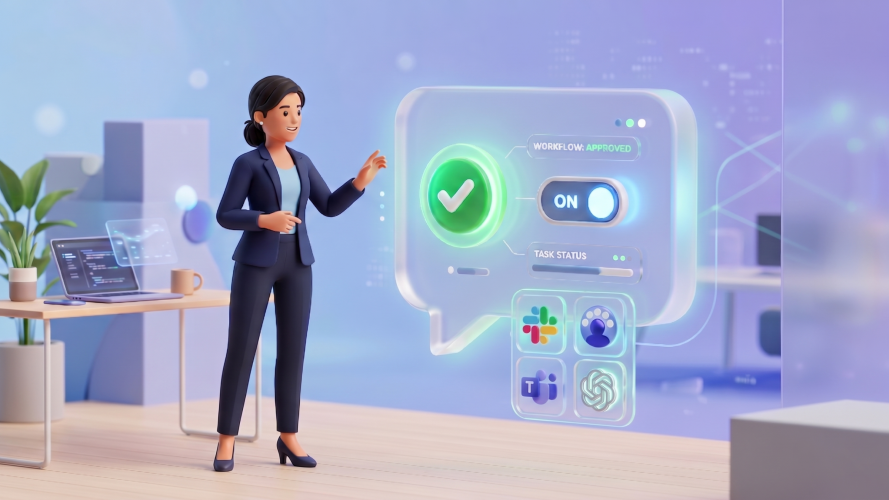
Together with Multi-framework and the Headless Experience Layer, developers can deliver the unified, secure, and premium experiences their users demand.

Two and a half years ago at TDX 2023, Salesforce made a bet that the future of software development wouldn’t be humans alone or agents alone, it would be both, building together. That meant one thing: Rebuild the platform from the ground up for agents and humans to work side-by-side.
Today, that vision is a reality. We are entering a new chapter for Salesforce development. One that is more modular, scalable, and designed for human and agent collaboration.
Introducing AIforce, where every platform capability is accessible via API, MCP, or CLI, and agents and humans can build together using the same data, logic, and governance your business already runs on.
Building and iterating
To understand why this matters, it helps to remember what building used to look like.
Historically, it could take weeks for a team of developers to build a new custom tool for a single workflow. Environments were tightly coupled, and system updates frequently broke existing dependencies. Every new surface — a Slack integration, a mobile app, a customer portal — meant rebuilding the same logic from scratch. The process produced highly customized solutions, but it also struggled to keep pace with the rapid speed of modern business demands.
The introduction of low-code tools began to change that equation. And then came vibe coding — describing what you need in plain language and letting AI generate the code, queries, and configuration files for you — which continues to accelerate innovation.
But these advances were still happening in a world designed for human developers alone. The agentic moment demands something more.
A turning point: Model Context Protocol (MCP)
Salesforce now hosts MCP servers that tools, like Claude Code and Cursor, can connect to directly with no custom integration work required. Through these servers, agents can orchestrate your apps, your workflows, and your business logic, inheriting all of it without having to rebuild any of it.
That’s possible because of Model Context Protocol (MCP), the emerging standard for how agents access tools, data sources, and systems. MCP packages data, business logic, and governance rules together so agents have the context to make informed decisions in real time.
AIforce is now available
AIforce seizes the agentic moment and manifests true human-agent collaboration. It is built on three principles that together define what modern, agentic development looks like:
- Agents and humans can build together. Humans are not the only ones building apps and agents — many developers are building alongside agents. These agents should have full access to the platform to do their best work.
- Scaling is secure. When deploying AI agents across an enterprise, secure scaling requires robust governance and oversight. This ensures that as agents interact with sensitive data, they maintain compliance, role-based access controls, and transparent audit trails.
- Deployment can happen on any surface. Agents and apps will only drive value if they show up where users already work. Whether that is Slack, Teams, ChatGPT, or a custom app. AIforce ensures those experiences are unified, consistent, and built once — not rebuilt for every channel.
To bring AIforce to life, there are a few key components.
The foundation
At the core of AIforce is the Headless Experience Layer. The Headless Experience Layer separates what an agent does from how it appears, define your business logic once — like a rebooking workflow, a case escalation, or a renewal alert — and Headless Experience Layer renders it natively in Slack, on mobile, inside ChatGPT or Teams, without rebuilding anything for each surface.
One definition of intent. Consistent, governed experience everywhere.
The Headless Experience Layer serves as your single source of logic and business intent for your agents and apps – translating governed logic into a consistent premium experience for every user, on every channel.
The accelerator
While Headless Experience Layer is the backbone, Salesforce Multi-framework is the engine. For years, developers had to choose between the frontend frameworks they already know, like React, or build inside Salesforce’s governance model. Multi-framework ends that tradeoff.
Developers can now build native Salesforce apps in React. It takes care of security and user authentication automatically so developers can focus on building solutions with the tools they already know.
Vibe coding speeds up development even more. With Agentforce Vibes, every developer’s personal, AI-powered coding partner, developers can simply describe what they need, and it instantly writes the code, data queries, and configuration files for you.
Turn IT backlogs into breakthroughs
Learn how enterprise vibe coding empowers teams to build innovations their way – without ever compromising on trust and security.



From ideation to deployment
Consider a developer building a customer renewal alert the headless way. Before AIforce, this same alert would have required separate logic for each surface — one build for Slack, another for mobile, another for the customer portal. Now, a developer describes it once.
Step 1: Describe it
The developer describes the alert logic, conditions, and escalation path in plain language. Agentforce Vibes writes the code, data queries, and configuration files instantly — and because it’s connected to the Salesforce environment via MCP, it understands the actual data models and governance rules already in place. No boilerplate. No starting from scratch.
Step 2: Build the front end
Salesforce Multi-framework lets the developer build the alert dashboard in React without stepping outside Salesforce’s governance model. Security and authentication are handled automatically.
Step 3: Deploy everywhere
The Headless Experience Layer publishes it natively to Slack, mobile, Teams, ChatGPT, and any other surface from a single definition, without rebuilding anything.
And that’s AIforce in practice.
It’s time to pivot your agent & app dev strategy
Get framework designed to tackle AI complexity, providing actionable insights and clear guidance so your teams can innovate faster and more securely.



Start building today
Over the past 27 years, Salesforce development has evolved and changed to meet the needs of every new era. From Lightning Web Components (LWC) to low-code builders, like Agentforce Builder — we strive to bring the most premier developer experience to our technical community.
And in today’s agentic landscape, we’re doing that again.
Developers are not starting from scratch or building on their own. By working alongside agents, developers can now deliver the unified, secure, and premium experiences their users demand.
The future of the Agentic Enterprise is here, and you can start today with Salesforce AIforce.
Resources
- Enter the Headless Experience Layer playground
- Build your React apps on Salesforce
- Explore Agentforce Vibes
- Connect your first MCP server today