

Startups and small or medium businesses (SMBs) all over the globe are going all in on artificial intelligence (AI). But what does it really mean to become an AI business? We’re finding it’s less about building complex technology from scratch and more about using AI in ways that make your work better, faster, smarter, all around. Think about your business today — you juggle sales, marketing, service, and commerce with limited time and most likely resources? Adding AI can be as simple as trusting the right digital tools, and focusing your energy on what matters most.
When you truly become an AI business, you’re building more than efficiency. You’re creating room for loyalty, trust, creativity, and growth. Whether you’re running a one-person startup or leading a growing team, AI is your digital labor partner that supports your daily operations and helps you move forward with confidence. Let’s dig into what it means to become an AI business in four unique phases.
What does it mean to become an AI business?
To become an AI business is to bring artificial intelligence into the center of how you work — helping you run smarter, faster, more personalized, and more sustainable operations without needing to build your own AI from scratch. You don’t need to be a coder or have a large tech team behind you. What matters is how you use trusted AI tools day to day, whether that’s writing better prompts, organizing customer data, or connecting your sales, marketing, commerce, and service into one smooth experience.
Here are the key benefits you can expect when AI becomes part of your business:
- Efficiency: AI reduces repetitive work, like entering data or following up on tasks, giving you more time to focus on growing your business and building stronger relationships.
- Better customer experiences: With AI insights, you can personalize your sales conversations, shape timely marketing campaigns, design relevant commerce offers, and deliver service that builds long-term loyalty.
- Lower costs: By automating routine tasks and spotting areas where resources are being wasted, AI helps you cut expenses while keeping quality high.
- Scalable growth: As your small business or startup expands, AI tools grow with you — helping you add services and adapt quickly without overwhelming your team.
AI Tools for Small Business


Phase 1: Your AI toolkit buildout
Every AI business begins with the essentials. Before you build new offerings or scale, you need a foundation that helps you understand how to work with AI in a practical way. This first phase isn’t about investing in expensive software or hiring experts — it’s about shaping how you think about technology and how to choose tools that match your business needs.
What to include in your AI toolkit:
- Get the right mindset: Look at AI as an assistant that can extend your effort rather than as a replacement for your skills. With this approach, you decide where AI adds value, and you keep control over how your business grows.
- Master the prompt: The way you give instructions shapes the quality of the results. Learning to write prompts that are specific, clear, creative, and structured helps AI respond with insights that actually move your work forward.
- Choose tools with purpose: Start with simple options that solve one problem at a time, such as drafting content, analyzing customer data, or managing contacts, and scale up from there.
- Build consistent habits: Treat AI like part of your daily routine. Use it to draft emails, test new ideas, track tasks, and organize notes. With steady practice, you’ll develop confidence and see where AI fits best into your business model.
Grow Your Small Business With AI Agents
Learn how autonomous artificial intelligence (AI) can scale your small business for efficient growth with this free e-book.
Thank you for downloading the free e-book "Grow Your Small Business With AI Agents"
Here's your free e-book!Phase 2: Your AI business model
Once your AI toolkit is ready, the next step is to consider how it can shape the way you offer services and generate revenue. Becoming an AI business isn’t just about using tools — it’s about rethinking your business approach so you can offer more value and scale effectively without overwhelming yourself.
Ways to apply AI to your business model:
- The AI-enhanced consultant: Offer your expertise with AI as a support system. This approach lets you provide faster insights, generate reports, manage client data, and create tailored recommendations without spending hours on manual work.
- The AI agency: Build a service-based business where AI handles repetitive or analytical tasks. With AI, you can deliver campaigns and solve client problems efficiently, giving you the ability to take on more projects.
- The AI content creator: Launch content-driven offerings like blogs, newsletters, courses, or guides. AI helps you draft ideas and organize publishing schedules, letting you focus on strategy and audience engagement.
- The hybrid approach: Combine multiple AI-driven services to create a unique business model. For example, you could provide consulting insights and manage marketing campaigns — all supported by AI to save time and maintain quality.
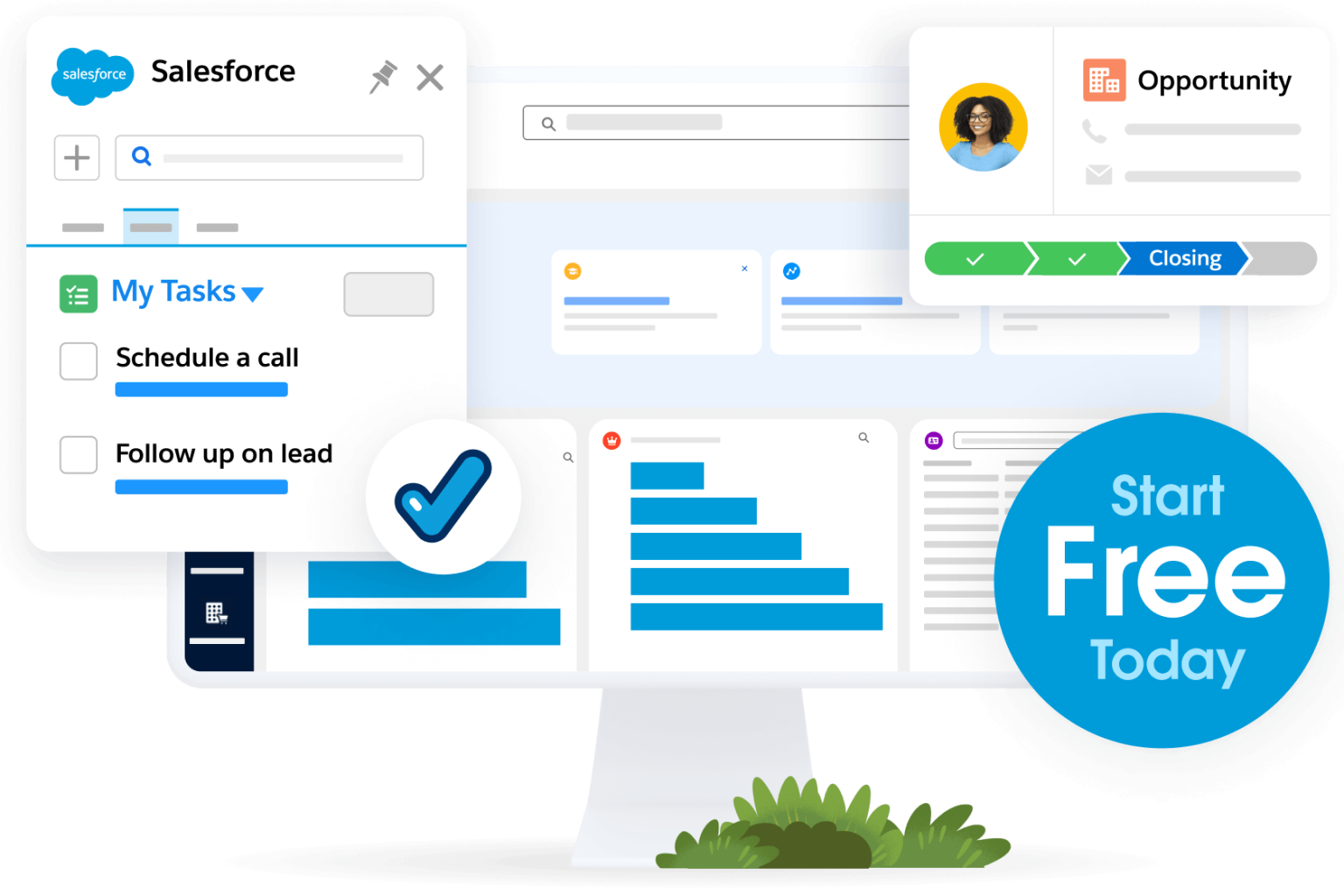
Kickstart your SMB with Starter Suite
See results from day one with a CRM designed for SMBs — the all-in-one suite for productivity. It all starts with Starter Suite.
Phase 3: Your AI integration setup
An AI CRM is more than a contact list — it’s your central hub for customer data and interactions. It collects and organizes information from leads, contacts, accounts, and past conversations so you always know the status of every client. For a small business or startup, this hub gives you the clarity to prioritize tasks and make decisions based on accurate insights.
How AI tools help you run your business:
- Generative AI: Features like Agentforce Assistant act as an AI-powered assistant to help draft personalized content and automate research, letting you focus on the work that matters most.
- Code Builder: A web-based integrated development environment (IDE) that provides intelligent code suggestions and completions, helping you build and maintain Salesforce workflows more efficiently.
- Salesforce Code Analyzer: Scans code for vulnerabilities and performance issues, while tools like ApexGuru use AI to suggest optimizations, keeping your systems reliable and fast.
- Third-party integrations: The Salesforce AppExchange connects you to partner tools that enhance AI capabilities, such as Spekit’s AI Sidekick for sales reps, providing in-the-moment guidance, content recommendations, and workflow support.
Phase 4: Your AI growth plan
Once your AI toolkit, business model, and CRM tools are in place, the next step is to focus on growth. At this stage, AI helps you expand without adding unnecessary complexity, letting your small business or startup scale in a sustainable and manageable way.
Ways to grow and scale with AI:
- Niche down: Focus on a niche where your AI tools and expertise give you a clear advantage. This helps you become the go-to expert, build loyalty, attract the right clients, and stand out in a crowded market.
- Automate more: Identify repetitive tasks and processes that can be handled by AI agents. Automation saves time, reduces errors, ensures consistency, and frees you up to focus on strategy and growth.
- Expand offerings: Introduce new products or services powered by AI, such as content creation, personalized marketing, or analytics support. This helps you diversify revenue and create additional value.
- Use insights: Use AI to analyze customer behavior and market opportunities. These insights allow you to make data-driven decisions, anticipate needs, optimize campaigns, and continuously refine your approach.

Becoming an AI business: Your path forward
Becoming an AI business means using smart tools to work faster, serve customers better, and grow with confidence. With these four phases complete, you can truly become an AI business, ready for the future.
Start building stronger customer relationships with Salesforce. Already a Salesforce customer? Activate Foundations to try out Agentforce 360 today.
AI supported the writers and editors who created this article.
Frequently Asked Questions (FAQs)
An AI business uses artificial intelligence for their business operations to run smarter, faster, more personalized, and more efficiently without building AI from scratch.
You can begin by learning how to write effective prompts, selecting simple tools, automating routine tasks, and gradually integrating AI into daily operations.
AI helps manage customer data, automate repetitive work, provide insights for decision-making, and create more engaging sales, marketing, and service experiences.
Start with tools that organize customer interactions, generate content, suggest improvements in workflows, and integrate easily with other platforms like Salesforce CRM.
AI allows you to specialize in a niche, expand services or products, automate more workflows, and track performance to make informed, data-driven decisions.