
Key Takeaways
If the title of this piece made you do a double take, perfect. That reaction is exactly the problem. The truth is, most people who are a great match for tech sales have no idea they’re a match for tech sales and tend to scroll straight past. You stopped. That’s a good sign.
Tech sales has a reputation for being, well, techy. Acronym-heavy, built for people who already speak the language. But ask the best account executives at Salesforce what actually makes them good at their jobs and they won’t talk about product knowledge first. They’ll talk about relationships. About trust. About showing up for customers the same way they’d show up for a friend. Those skills don’t require a technical background. They require the right kind of person.
Riley is that kind of person, and we sat down with her to hear her story. Without a tech background, Riley built her career on a genuine passion for people and a relentless drive to keep learning, growing across four roles and two clouds in six years. Today she is a high performing account executive (AE) and a member of the prestigious AE Excellence Academy, which recognizes the top 5% of AEs globally.
She shares her honest take on breaking into tech sales, building a career that’s entirely her own, and why she still can’t imagine a better place to do it.
We can’t wait to meet you!
Join our Talent Community and be the first to know about open roles, career tips, events happening near you, and much more.


You didn’t come from a traditional tech background. How did you end up at Salesforce?
I’ve always loved working with people and building relationships came pretty naturally. Between working in hospitality and interning in commercial real estate, sales felt like the obvious fit. But I always thought I wanted to sell something tangible, something I could see, feel, understand, and speak to confidently.
Then COVID hit, and real estate froze overnight — but software didn’t. I found myself increasingly drawn to the pace, innovation, and opportunity in tech and there was really only one company I had in mind.
I grew up in the Bay Area, so I had a clear view of the Salesforce Tower. It was always this larger-than-life company to me, a gold standard, an aspirational place to work. I took a hard look at the skills I had: moving fast, being coachable, getting genuinely excited about something and going all in … and so I did. I applied, went through a multistage interview process, and joined as a business development representative (BDR) supporting MuleSoft.
Did you worry that you weren’t a “tech person”?
Starting as a BDR on a very technical product was new to me. I thought the learning curve would be steep and that I had to know everything to be successful. But really, understanding the customer and their problems was the biggest part of the job, and that came naturally. So I kept learning different ways to help them until the knowledge caught up.
Not sure where to start? Explore a breakdown of every sales role, from SDR to AE to Account Manager, and discover the path that’s right for you.
Honestly, I was less worried about the product and more about what it meant to work in tech, especially for a company as prestigious as Salesforce. I worried I was going to have to stop doing all the things I love, like smiling and laughing and being lighthearted and just walking into a room with energy. I thought I’d have to be more reserved. It couldn’t be farther from the truth. I’ve never had anybody at Salesforce tell me to be any more or less of myself. It’s always been super supportive.
And then we started going back into the office (post-Covid) and I got to go to Dreamforce, and I loved seeing all the characters, all of that Salesforce joy. It became really real to me that the people who work here are equally serious and unserious. What we do is exciting and fun and we should act like it. We should be having fun together, and we do.
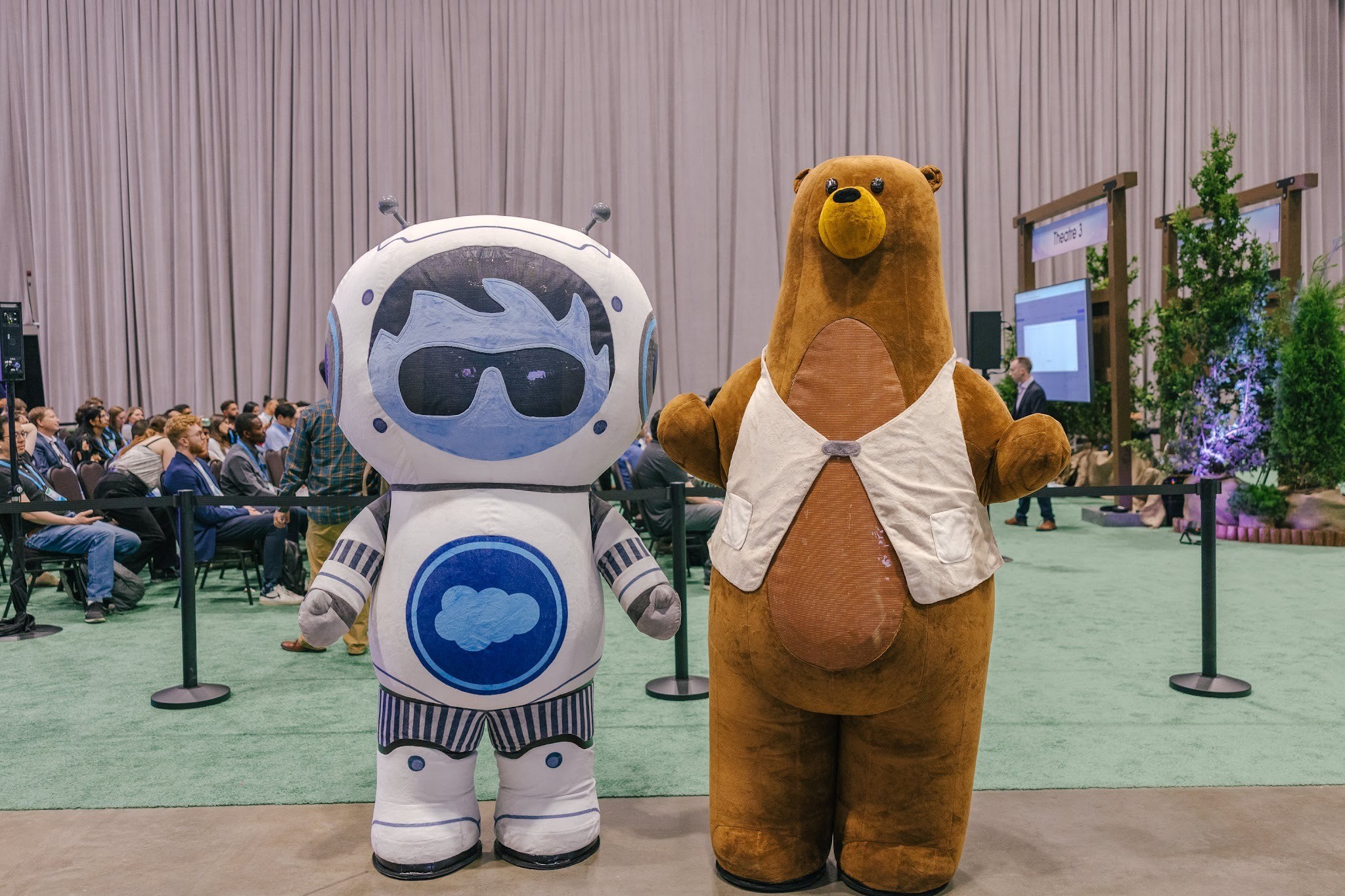
In a world full of characters, Riley has always fit right in. Say hello to Astro and Codey! [Image Credit: Salesforce]
What’s one of the first times you remember realizing that this is where you were meant to be?
The biggest thing was knowing I was completely supported in how and where I wanted to grow. I wanted to become an account executive (AE) as fast as possible, so I treated every day like an opportunity to level up. I absorbed everything from the AEs and leaders I was supporting, always with the encouragement of my manager.
I had previously supported a Core Salesforce sales team before getting moved to a new territory, and in that time the team got a new manager. When I started looking at Core AE roles, where sellers work across the full Salesforce platform rather than a single product, I reached out to him just to introduce myself. He asked his team if they knew me and they all came back with an enthusiastic ‘YES, you have to meet her.’
That moment meant everything to me. It showed that the relationships and reputation you build every day matter, and I have been learning and growing so much in this Core role ever since. Everyone on my old and new team was just as excited for me as I was. I guess that’s when it all clicked that I knew I could — and wanted to be — here for a very long time.
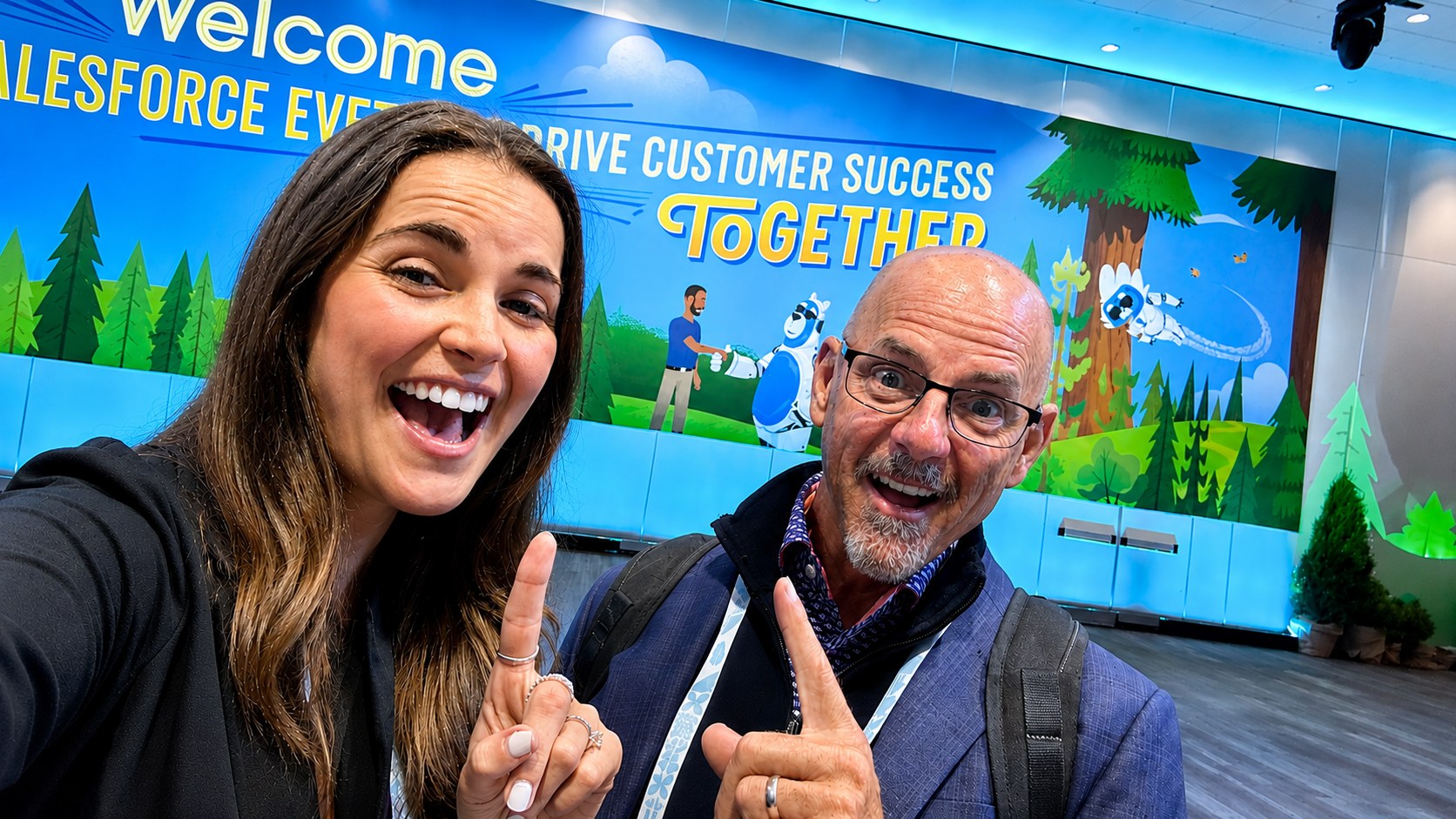
In a fun twist, Riley’s dad Chris was an AVP at Tableau and joined Salesforce through the acquisition. Together, they made Dreamforce a family affair. [Image Credit: Riley]
Want to see where a sales career at Salesforce can take you? Follow Rachel’s journey from a sales development representative (SDR) to a senior director.
What makes selling at Salesforce different from selling anywhere else?
I mean, there are so many things! But these are probably the ones that set this apart for me:
- Customer Success: This should be obvious, but I know it’s not. At Salesforce, I’m not just selling customers something; I’m building something with them. From day one, I strive to be their trusted advisor. When a customer feels like they can tell you what a project truly means to them, to their career, to their team, that’s when you know you’ve built something real.
- AI Tools and Training: AI is new for everybody right now, but working here means you’re going to be supported in a way no other company can match. I literally use Agentforce and Slackbot every day in my own business and that makes my sales strategies that much more authentic. What used to take me 45 minutes of call prep I can now do in five, and that time goes back into the creative, strategic work that actually moves deals forward. That’s the work I want to be doing.
- Trust: Trust is baked into everything here, in our technology, of course, but also in the way we’re encouraged to manage our own business. Our bar is really high, I won’t pretend otherwise, but no other company provides the support to clear it. I always want to be challenging the bar. I love figuring out where it is and what it’s going to take to jump over it and raise it again. I think we all share that excitement.
And honestly? We’re working with the best companies in every single industry, every single day. We’re not using a playbook, we’re writing it. We host Salesforce-on-Salesforce sessions where other executives come to learn how we run our business, and they’re genuinely taking it and applying it. So why wouldn’t you want to be part of the company that’s creating what everyone else is trying to do?
Find out how top AEs are using Agentforce and Slackbot to close more deals in less time. Steal their playbook.
You talk about always wanting to raise the bar. What’s actually helped you do that?
At Salesforce, if you’re someone who wants to keep getting better, there is genuinely no shortage of ways to do that.
- AE Excellence Academy: The AE Excellence Academy, a yearlong investment Salesforce makes in its top-performing AEs, was probably the biggest turning point. It’s designed to level you up technically and strategically, and for me it accelerated everything I had already been working toward. I came out with a much sharper perspective on executive selling, value-based conversations, and building a real business case. It made me more confident going into C-suite meetings because I now had a framework to pair with my natural instincts. And some of my best relationships at Salesforce came from that cohort, people from all across the world who I’m still close with. We keep each other sharp.
- Internal resources: Salesforce also gives you incredible resources that are there for you to use. Trailhead for keeping up with the product and constantly learning, and BetterUp, which is one-on-one coaching I genuinely lean on. When you have access to tools like that, there’s no excuse not to keep getting better.
- Mentorship and managers: My managers have been huge for my growth, the best ones made feedback an ongoing conversation. I’ve been intentional about finding mentors and putting myself in the right rooms. But mentorship is two-way. Being that person for someone else keeps you asking questions yourself. The second you stop, you’ve done yourself a disservice.
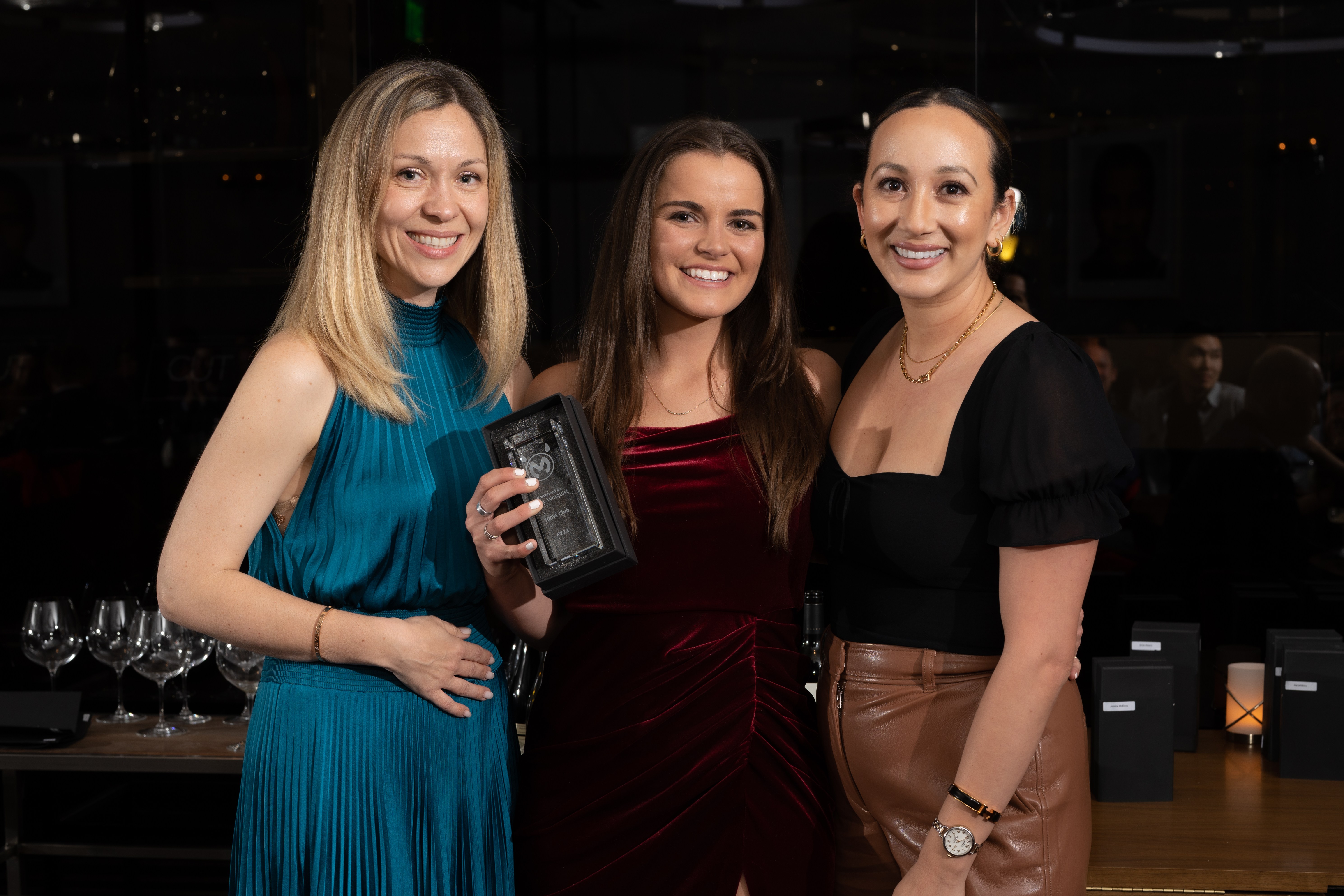
Riley celebrating her 100% Club win, a prestigious Salesforce recognition awarded to top sales performers. [Image Credit: Riley]
What advice do you give to people coming up behind you?
I think this advice holds no matter where you are in your career. I still give myself this same advice:
- Say yes: Whether it’s a new role, a coffee chat, a project, or an opportunity to learn something new, raise your hand. Keeping an open mind and never assuming you know everything is what helps you grow.
- Growth comes from relationships: Mentors, managers, and colleagues can become advocates who help create opportunities you never could have created on your own.
- Agentforce is a multiplier. The AE role has become much more strategic with the rise of agentic AI. The more you learn to work alongside tools like Agentforce, the more time you can spend on the creative thinking, customer conversations, and relationship-building that drive results.
Get a head start on your future in sales. Learn Sales Cloud Fundamentals on Trailhead for free.
You’ve built a lot in five years — what are you building toward now?
For right now, I am truly focused on my customers and on learning. I want to see the full Salesforce product suite, upmarket and downmarket, and really become that subject matter expert. I often think about the way my leaders run their businesses and carry themselves, and it’s nothing but admirable. So maybe leadership is on the horizon too.
But more than anything, I’m just excited to come in to work every day. Technology keeps changing how we do business, and I can’t imagine a better company to be doing it with.
Ready to write your own story?
Explore open sales roles at Salesforce or join our Talent Community to stay connected.
Blaze your trail to Salesforce!
At Salesforce, we’re not just shaping the future. We’re turning big ideas into breakthroughs. Want to join the #1 AI CRM that’s leading the digital labor revolution? Explore our open roles today!



AI supported the writers and editors who created this article.