
How Slack’s Product Principles Shape Trust in AI – and Delight

Don’t make people think too hard. It’s a classic usability principle that every designer knows. It’s also Slack’s first product principle.
At Slack, a clear set of five product principles guides every decision. Product principles are the shared language between product, engineering, design, and research. These principles aren’t abstract ideals – they shape how features are imagined, built, tested, and refined. They ensure that as new capabilities are introduced, the experience remains simple, human, and useful.
Let’s learn more about the principles, how they show up in your Slack experience, and how they tame friction as systems become more powerful and autonomous.

What are Slack’s product principles?
Slack’s product principles are a focused set of ideas that guide how the product evolves. They help teams make thoughtful decisions about:
- what to build,
- what to simplify,
- and where to focus effort.
Instead of prescribing specific features, the principles provide a consistent lens for evaluating ideas and shaping experiences that support how people actually work. They also create continuity as the product grows. New capabilities may change how work happens, but the principles help ensure those changes still feel clear, human, and useful to the people relying on Slack every day.
At Slack, five product principles anchor that work:
- Don’t make me think
- Be a great host
- Prototype the path
- Seek the steepest part of the utility curve
- Take bigger, bolder bets
Together, they guide thousands of small design and product decisions. Let’s look at how each one shows up in the Slack experience.

1. Don’t make me think
Make the right choice obvious
What it means: Keep it simple. Reduce noise and decision fatigue by making the right choice the most obvious one. Present information clearly and concisely so users can grasp what matters quickly, build trust, and stay focused on their work.
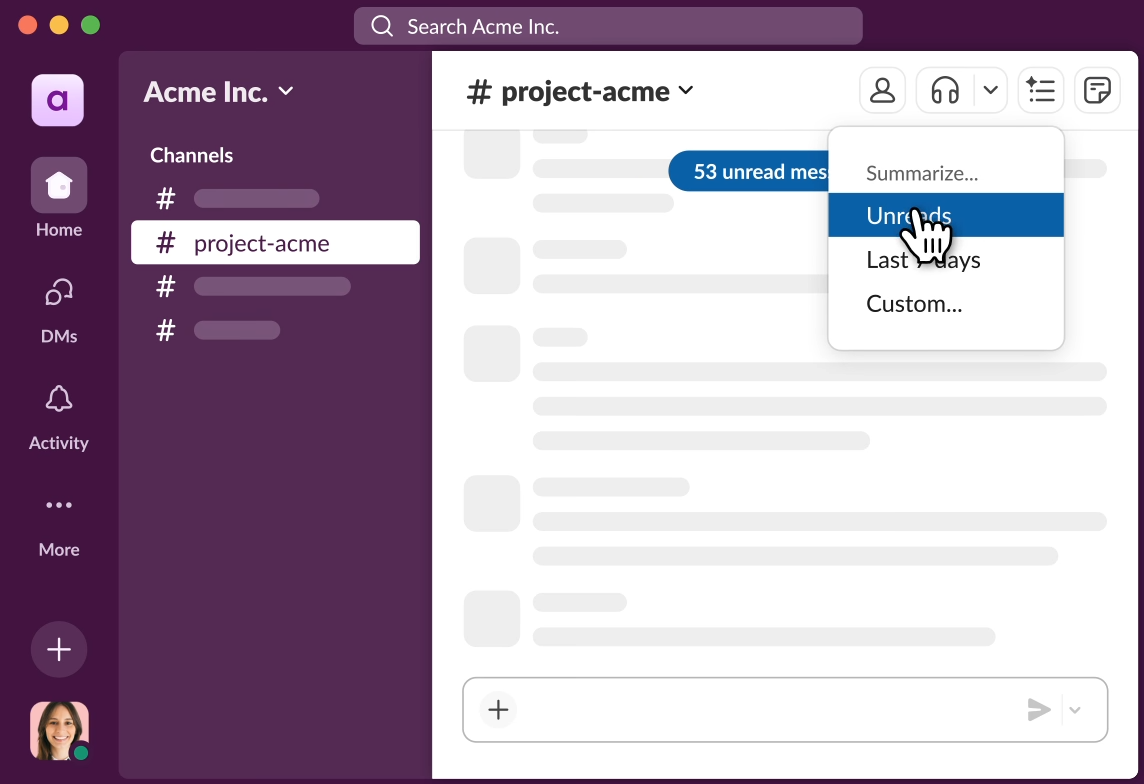
How it shows up: Slack’s AI recap lets users catch up without scrolling through dozens of unread messages. Recaps highlight important themes, summarize long threads, and cite sources so users can explore details if needed. The result is less cognitive load and more mental bandwidth to focus on the work that matters.
2. Be a great host
Understand how people work
What it means: Anticipate needs before people have to ask. Designing like a great host means understanding how users work, the context they operate in, and the constraints around them. The goal is to create experiences that feel intentional, supportive, and helpful in the moment.
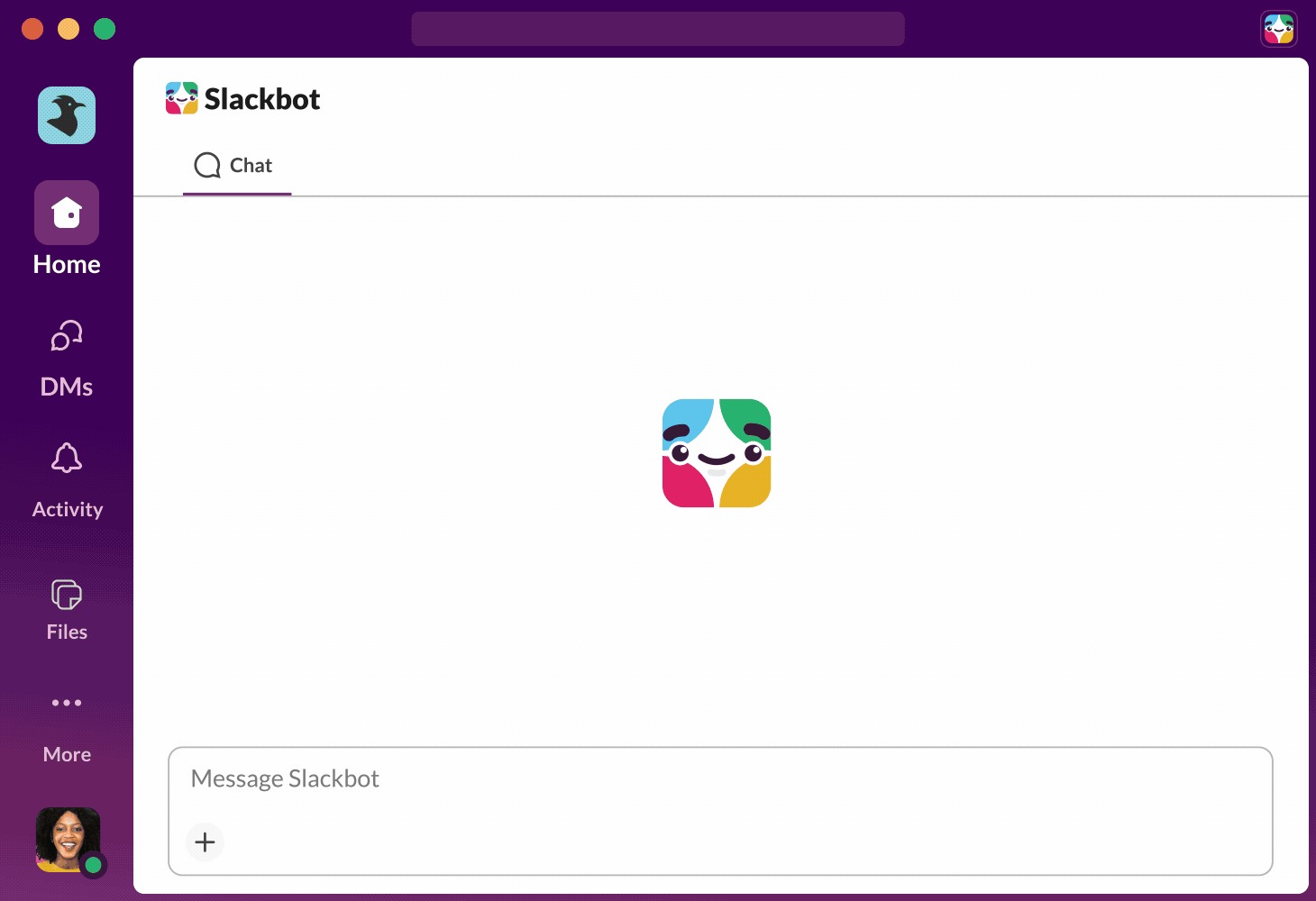
How it shows up: Slackbot draws on the context of your workspace, including conversations, files, projects, and connected apps within your permissions. It can summarize threads, surface key documents, draft follow-ups, and answer questions about past decisions without forcing you to search across tools.
Because its responses are grounded in your team’s actual work, the experience feels relevant and personal – less like a bot and more like a thoughtful AI assistant.
3. Prototype the path
Test interactive models
What it means: Prototypes turn assumptions into learning. Instead of guessing how something might work, teams can explore real interactions, uncover hidden friction, and refine ideas quickly. Each iteration brings the product closer to what users actually need.
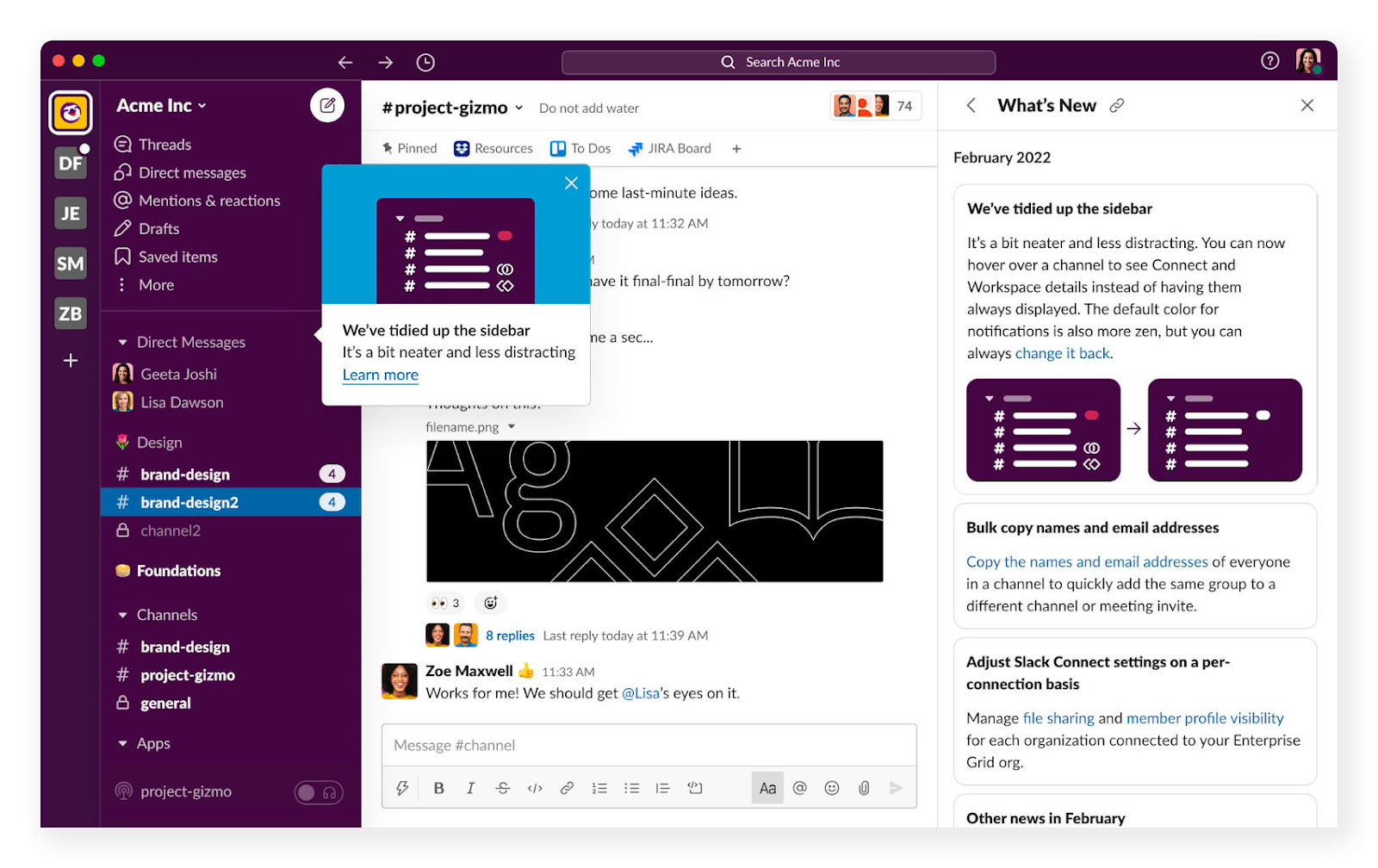
How it shows up: Slack’s sidebar navigation came to life through countless working prototypes. Testing in real workflows revealed how people actually interact – scanning unread messages, searching for channels, and moving between workspaces.
Those insights guided subtle refinements like:
- Clearer channel indentation
- More balanced icon sizing
- Stronger font weight for unread messages
Each small change adds up to a faster, more intuitive experience. Prototyping also surfaces ideas that may seem “cool” but don’t improve the experience, helping teams stay focused on what truly matters.
4. Seek the steepest part of the utility curve
Focus on what will make the biggest impact
What it means: Not all features create equal value. Small, well-chosen changes can have outsized impact, while spreading effort across too many areas dilutes results. Make the great parts great and concentrate effort where it matters most.
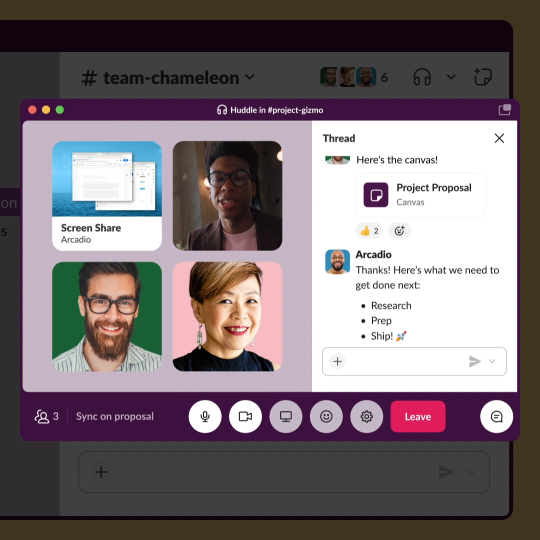
How it shows up: Slack Huddles began with a simple goal: instant audio connections for quick, spontaneous collaboration in channels and direct messages. Features like video, screen sharing, AI note-taking, and reactions were added later, building on the value of that core experience.
5. Take bigger, bolder bets
Challenge the status quo
What it means: Incremental improvements matter, but sometimes the greatest value comes from reimagining the product entirely. Bold bets give teams permission to rethink workflows, reshape interactions, and set new expectations. Instead of optimizing what already exists, they start with a simple question: what would this look like if we built it today?
How it shows up: Slack started as an internal communication tool, but embedding conversational AI is a transformative leap. Users can now have a single, contextual conversation with Slackbot or other agents instead of toggling between multiple tools. This changes expectations for workplace software and sets a new standard for collaboration, conversation, and context, showing what’s possible when design is guided by big, bold ideas.
Putting principles into action
Great design doesn’t happen by accident. Strong principles give teams a clear direction as they explore, iterate, and focus on what matters most. They keep work clear, human, and meaningful even as the product evolves. Which principle will guide your next opportunity?
Get more stories about user experience design.