

The businesses that are winning right now aren’t waiting for the perfect moment to adopt artificial intelligence (AI). They’re already using it — and the gap between them and everyone else is growing fast.
At Salesforce, we’ve seen this shift firsthand. Our latest research shows that 58% of growing businesses are now using generative AI — not as an experiment, but as a core part of how they operate. For lean businesses with ambitious goals, that’s not a trend to watch from the sidelines. It’s a signal to act.
The good news? Getting started doesn’t require a big team or a complex rollout. In this guide, we’ll walk you through how to adopt AI in a way that fits your business, your budget, and your ambition — so you can start running smarter from day one.
What is AI adoption for small and growing businesses?
AI adoption is the process of integrating AI tools into daily workflows to automate tasks, analyze data, and improve customer experiences. It’s the shift from simply “trying out” a chatbot to making AI a core part of how your business operates.
Here are some examples of AI adoption on a smaller team scale:
- Drafting marketing email sequences and generating social posts to save marketers hours off their week.
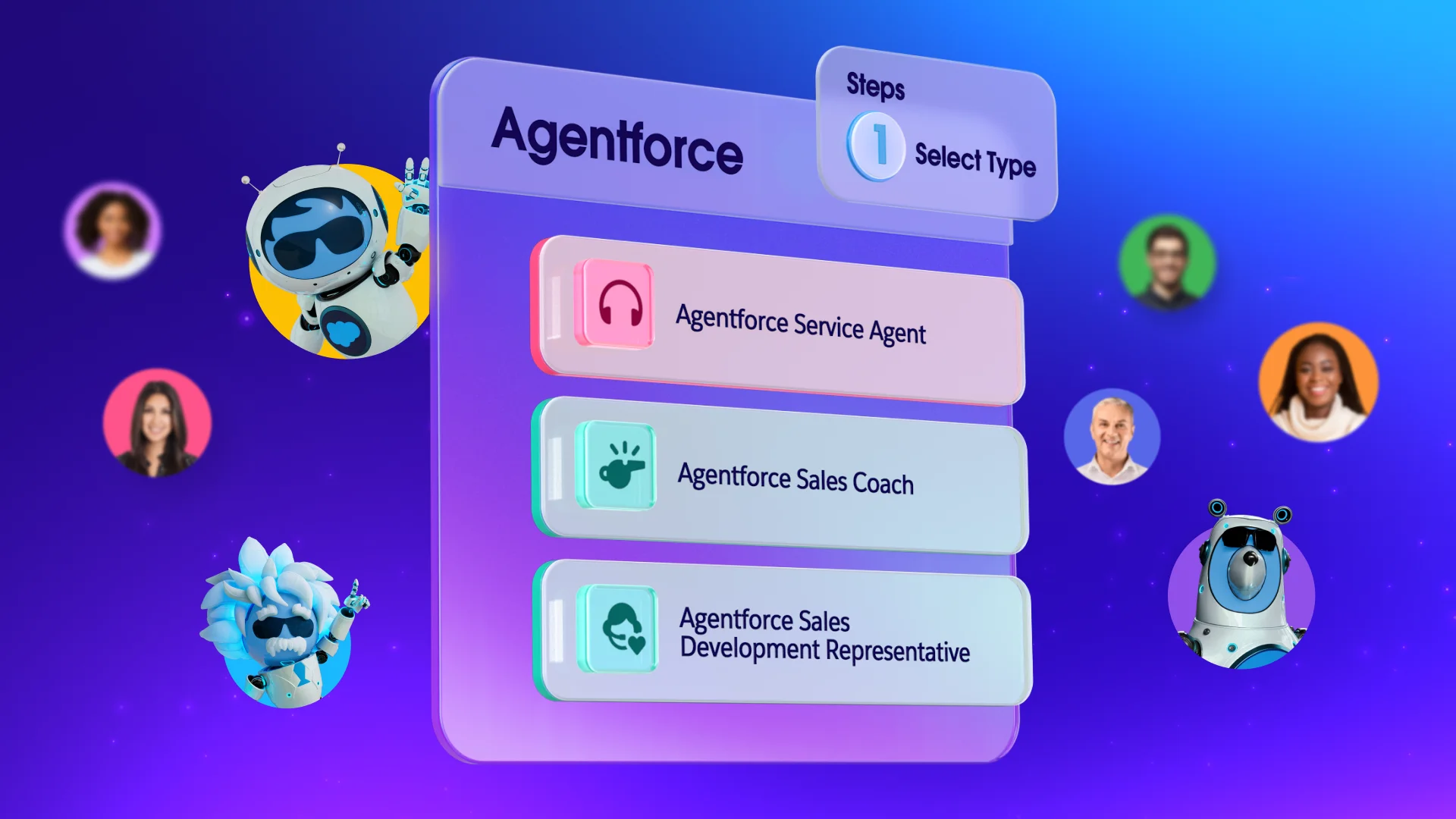
- Deploying conversational AI agents to handle routine customer service queries 24/7, allowing teams to focus on complex issues.
- Automating back-office operations, such as scheduling, processing invoices, or categorizing expenses, to reduce time spent on administrative “busy work”.
Why this is the year for AI action
For years, AI felt like an expensive luxury for the C-suite. Now, it’s an equalizer. Small businesses often have a structural advantage over large corporations: agility. You don’t have to navigate months of procurement or legacy system drama to see results.
Well….read for yourself. A massive 91% of small businesses using AI report that it boosts their revenue. We also read that AI saves marketers an average of 5+ hours per week, which adds up to more than a month of work every year. The adoption gap between small and large firms shrank from 1.8x to 1.2x in just one year. And, half of U.S. small business owners say AI inspired them to consider entrepreneurship because it makes starting a business more achievable.
Common AI use cases for small teams
Small teams can activate AI across various functions to fuel efficiency. Let’s take a look at Turtini, a technology reseller operating in the public sector market.
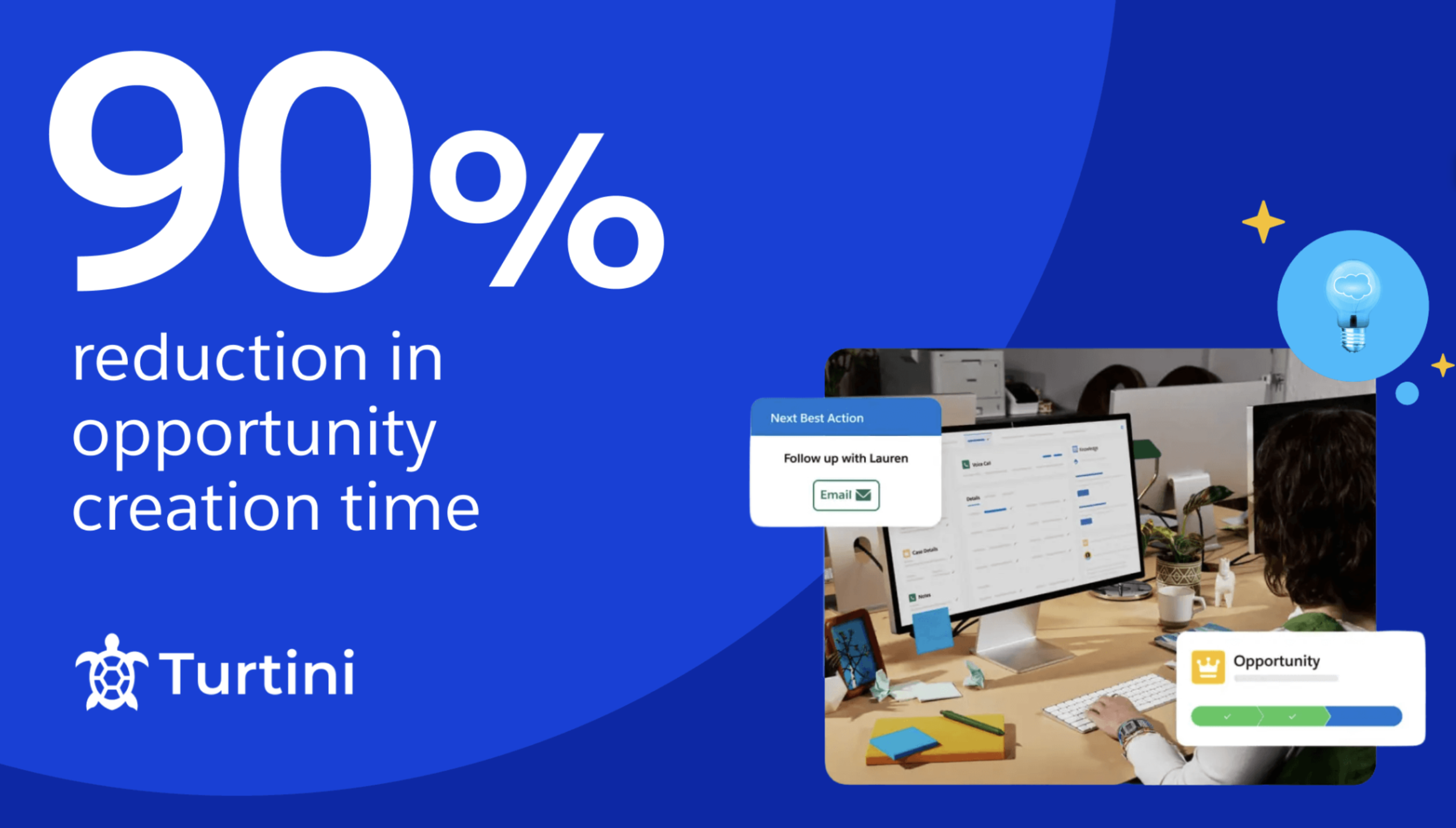
Before Salesforce, the math was brutal for the lean team at Turtini, setting up a single federal opportunity took 25 minutes of manual data entry, and every deal generated up to 60 emails that had to be hand-logged to maintain visibility. Jason McDonald, President of Turtini, didn’t start Turtini to be a “small business.” The vision behind it was to win in the federal market, which comes with challenges of compliance and manual grunt work.
Turtini didn’t need a “scaled-down” CRM; they needed a backbone that didn’t require a fleet of consultants. By choosing Pro Suite, they turned their size into a strategy, using AI as a vision capability rather than just automation. They turned on Einstein Activity Capture to handle the “boring” parts of federal sales, automatically syncing every calendar event and email into the right record. This move shifted the focus from administrative relief to ruthless ambition.
The results speak for themselves: Opportunity setup is now 90% faster, taking just two minutes instead of 25 minutes, and 100% of deal communications are captured by AI. This ensures total compliance and full lifecycle visibility without the manual effort. As Jason notes, this structure gives them the durability they need to outsmart much larger players. For Turtini, Salesforce isn’t just a tool they’ll “grow into” — it’s the co-founder that makes their ambition dangerous.
How Turtini Accelerated Complex Sales with Salesforce
By adopting Salesforce, Turtini accelerated quoting and simplified compliance while supporting rapid growth.
Overcoming the barriers to adoption
Despite the benefits, many leaders are still feeling a “trust gap.” The key isn’t to automate everything — it’s to automate with purpose.
How to adopt your AI tools
When it comes to AI, don’t try to boil the ocean, as they say. If you want to see a return on investment (ROI), you’ve got to start small and stay specific. Here are a few ways to start your AI adoption process:
- Identify one friction point. Pick a task that’s repetitive and time-consuming, like drafting weekly newsletters or answering “where is my order” emails.
- Audit your data. AI is only as good as the information you give it. Ensure your customer records are clean and organized.
- Prioritize training. Since most firms ignore training, upskilling your team is a massive competitive advantage.
- Maintain your voice. Audiences today “gut-check” information with people they trust. Use AI for the heavy lifting, but keep a human in the loop to ensure your brand stays authentic.
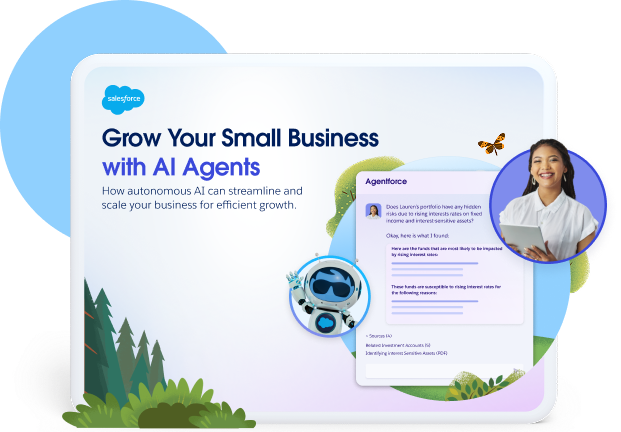
Grow Your Business With AI Agents
Learn how autonomous AI can scale your small business for free in our latest e-book.
How Salesforce can help
This is why Salesforce exists — to help growing businesses be the best they can be. We aim to be your trusted advisor, providing a turn-key agentic CRM built for ambition. Do more with less across marketing, service, and operations, without needing a data science team, which is the best hire you’ll make from day one.
Get started with Salesforce for free or activate Foundations to try out Agentforce today.
AI supported the writers and editors who created this article.
What’s the definition of AI adoption?
AI adoption is the process of integrating AI tools into daily workflows to automate tasks, analyze data, and enhance customer experiences, moving beyond simple experimentation to making AI a core part of operations.
Why is this year considered critical for small businesses to adopt AI?
AI has become an equalizer, and small businesses have the agility advantage over larger firms to quickly implement it. The adoption gap between small and large firms has dramatically shrunk, and 58% of U.S. small firms are already using generative AI.
What are the primary benefits small businesses report after adopting AI?
Key benefits include revenue growth (reported by 91% of users), time recovery (saving marketers 5+ hours per week), and lowered barriers to entrepreneurship.
Where should a small business start with AI if they don’t have data scientists?
Successful firms start with “low-precision” tasks like content creation (used by 76% of marketers), customer service, and administrative operations like processing invoices or scheduling.
What are the biggest challenges small businesses face when trying to adopt AI?
Common barriers include data readiness, skill gaps (70% of employers don’t provide training), a “trust gap” regarding reputation, and the mistaken belief (by 82% of very small firms) that AI doesn’t apply to them.