

For a small or medium business (SMB), your team is everything. Sure, the big companies have huge recruiting budgets, but you thrive on the smarts and connections your current employees bring to the table every single day. When a person on your team walks out the door, it’s not just about the salary loss — it’s a hit to your momentum, your company culture, and your customer experience. If people are leaving often, it can stall your progress and leave the rest of your team feeling overloaded.
That’s why we created this quick guide to talent retention techniques for small teams. If you’re growing fast, you not only need to hire smart, but you need to retain your employees on an even smarter level. Let’s talk talent.
What it takes to retain talent as a growing business
Retaining your best people requires more than just a paycheck. It requires the right environment and tools to get the work done. Many employees feel overwhelmed by manual processes and disconnected data, which lead to fatigue and disengagement.
By focusing on smart talent retention techniques, small businesses can create a workspace that values human creativity and productivity. In this article, we’ll share how a modern tech stack dedicated to employee retention and a supportive culture can keep your best talent from looking elsewhere.
Why your SMB needs a modern professional services CRM
Salesforce HR Service Management has redesigned the CRM experience to act as a growth engine specifically for service-based businesses. Here is how it can transform your small firm from “keeping up” to “scaling up.”
For small professional services firms — accounting, consulting, staffing, or law offices — the “product” you sell is your expertise. But as your business grows, managing that expertise becomes a juggling act of spreadsheets, disconnected emails, and missed follow-ups.
1. From “organized” to “outcome-driven”
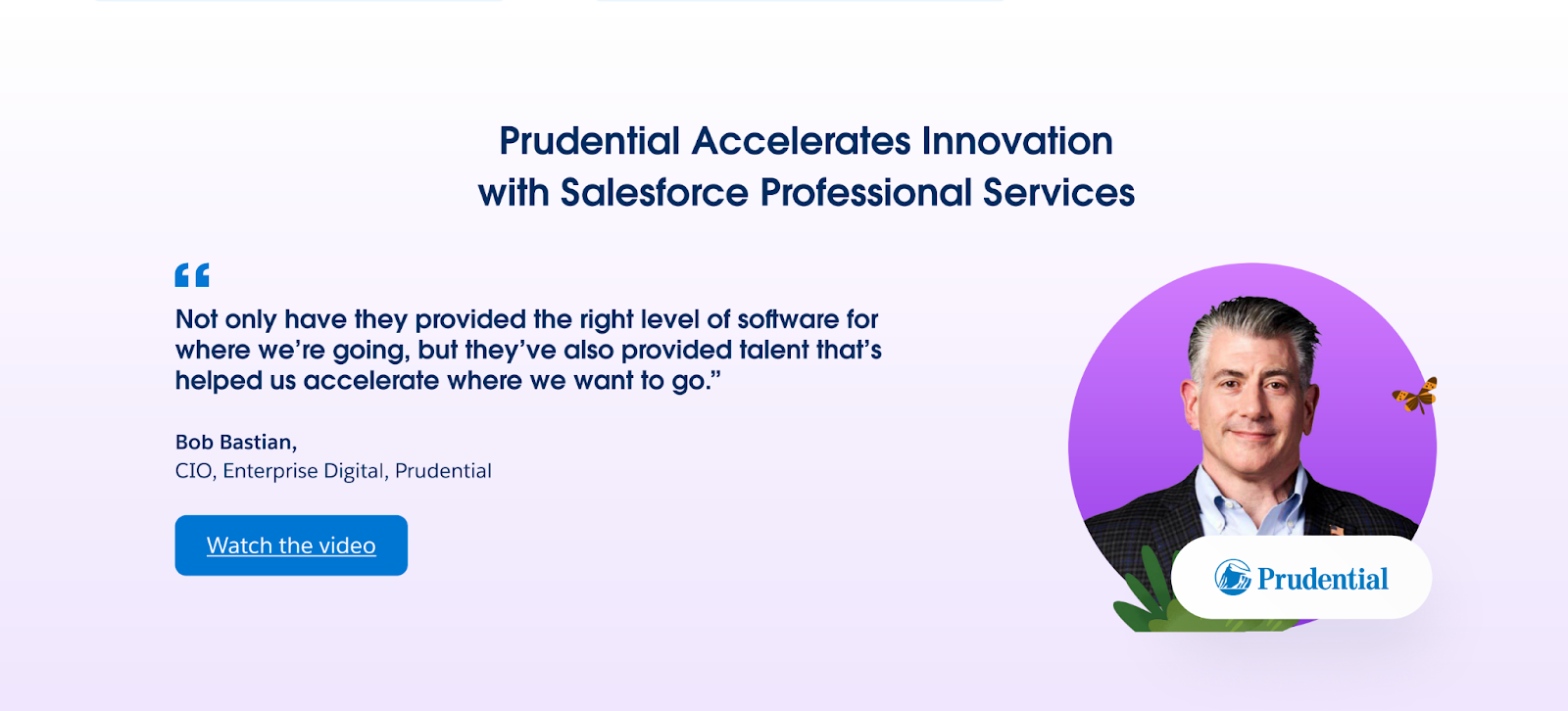
Most small businesses use a CRM as a digital Rolodex. The Salesforce approach for professional services shifts that focus toward high-impact outcomes. It isn’t just about storing contact info; it’s about visibility into your entire pipeline. By unifying your client data, firms have seen up to a 273% ROI by reducing the time spent on administrative “rework” and focusing instead on billable hours and innovation.
Get the study: The need to continuously innovate never stops. Who can help? – Salesforce.com
2. Tailored for your specific industry
A “one-size-fits-all” tool rarely works for specialized firms. This platform provides industry-specific blueprints that understand the nuances of your work:
- Consulting and legal: Track the lifecycle of an engagement or matter in one place.
- Accounting and tax: Simplify compliance and complex client audits.
3. AI that works for you (not against you)
You don’t need a massive IT department to take advantage of artificial intelligence (AI). With the introduction of Agentforce, small businesses can now deploy autonomous AI agents to handle routine tasks — like scheduling, initial client intake, or answering FAQs. This allows your small team to focus on high-value strategic work while the AI handles the remedial tasks.
4. A roadmap to scale
One of the biggest hurdles for small businesses is knowing how to grow without breaking their current processes. Salesforce Professional Services offers a “Phase 0” planning approach. This means you don’t just buy software and hope for the best; you get a strategic roadmap that prioritizes your most urgent business goals first, ensuring that every dollar you spend on technology directly contributes to your bottom line.
Grow your ambitions with the #1 AI CRM.
See what’s possible with the AI-powered CRM suite for growing teams.
Top talent retention techniques using a CRM
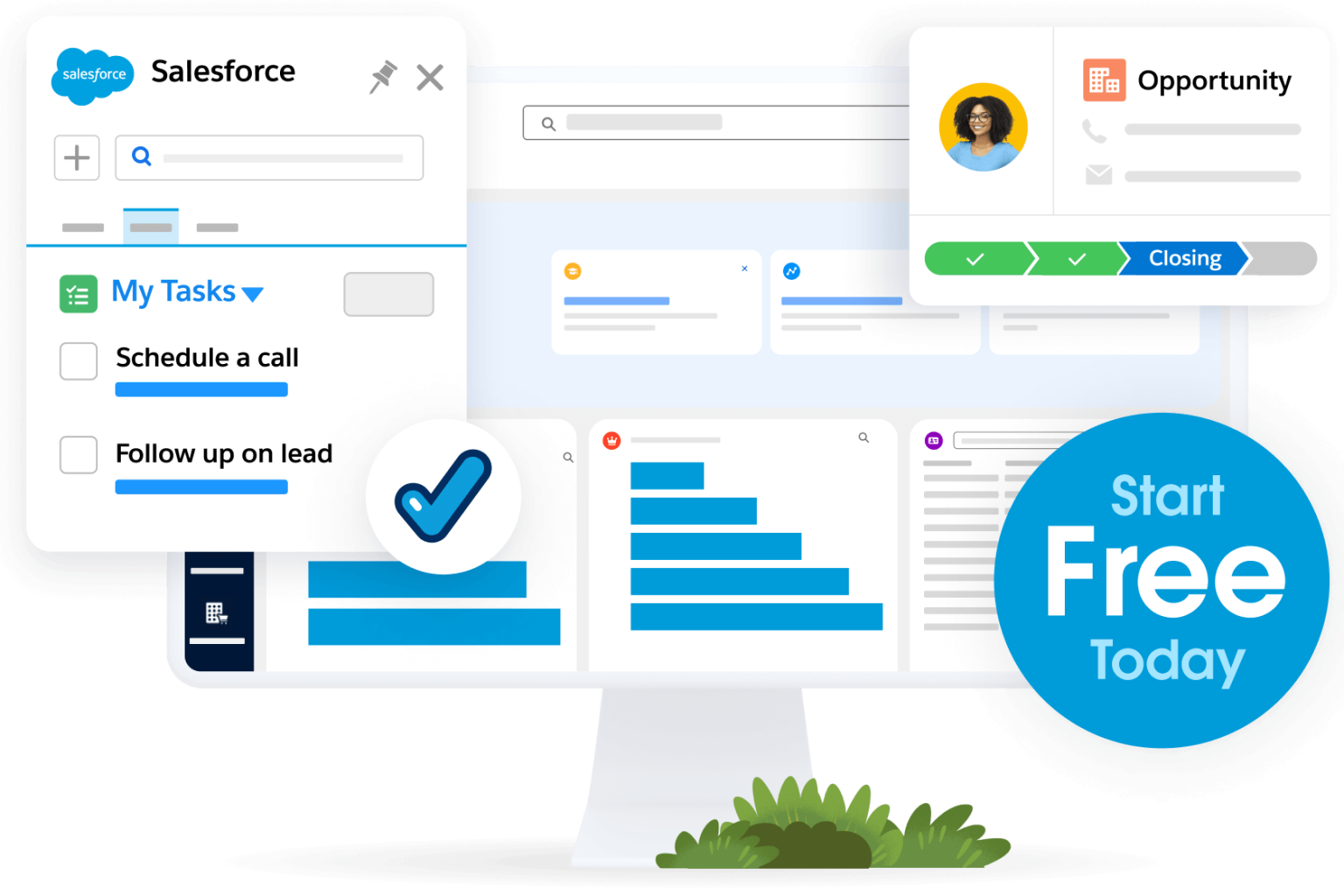
A CRM system is more than just a tool for tracking leads; it’s a powerful asset for retaining your most valuable employees. By streamlining operations and providing clear, actionable data, a CRM directly addresses some of the biggest pain points that lead to employee burnout and turnover.
Here are the key talent retention techniques a CRM enables:
Eliminate data frustration
The job of a CRM is to unify customer data, sales records, and service history into one dashboard. This gives your team instant access to the information they need, reducing administrative work and freeing up time for high-value tasks.
Boost cross-departmental collaboration
When you integrate your CRM with tools like Slack, your sales, service, and marketing teams can collaborate and share the same up-to-date information. This smooth handoff reduces confusion and makes everyone’s job easier and more effective.
Provide transparent performance metrics
A CRM provides analytics that clearly show individual and team performance against goals. This transparency helps leaders quickly celebrate successes and identify where employees need support or training, promoting a culture of fairness and recognition.
Enable effective managerial support
By tracking employee-customer interactions and workload, a CRM gives managers objective data to spot potential burnout before it happens. Managers can use this insight to adjust work or offer coaching, showing employees their wellbeing is a priority.
Support professional growth through continuous learning
Top performers of small business teams often stay because they see a path for their professional development — think promotions based on skill sets. Encourage this growth by allocating time and resources so your employees can acquire new skills that advance their professional development while also benefiting the team. In fact, our latest Small and Medium Business Trends Report states that 66% of SMB leaders expect their headcount to grow in the next 12 months.
Salesforce offers free learning through Trailhead, which allows teams to earn badges and certifications at their own pace. When you encourage your marketing team to master new analytics or your sales team to learn advanced negotiation, you’re investing in your future together. This creates a sense of loyalty because your employees see that the business is committed to their long-term success.
- Schedule training time: Set aside a few hours each week specifically for professional development and training.
- Create mentorship paths: Pair newer hires with experienced team members to enable knowledge sharing and build stronger internal bonds.
- Celebrate achievements: Publicly recognize when a team member finishes a certification or masters new software.




Maximize productivity by using AI
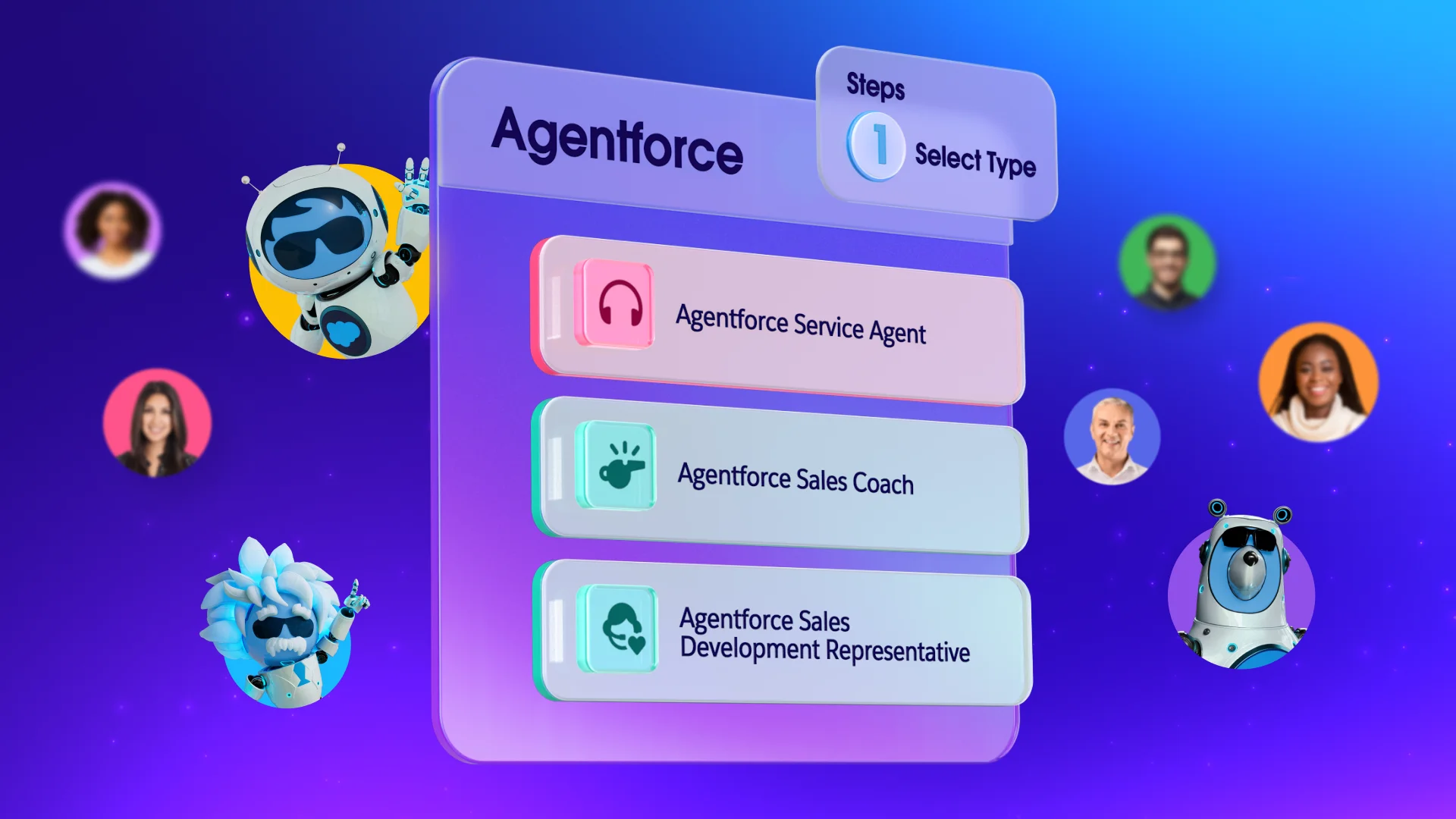
The latest evolution in workplace technology involves humans and agents working side-by-side to achieve more. Agentforce is Salesforce’s AI agent development platform, letting you build AI agents from templates or from scratch. For a startup, this means you can deploy digital assistants that handle the repetitive, high-volume tasks that bog down productivity.
This level of support makes a job at a small business feel like a cutting-edge career opportunity rather than a struggle against limited resources. By equipping your team with Agentforce 360, you’re giving them a tool to support every aspect of their job.
- Automates tedious tasks: AI agents handle repetitive, high-volume data entry and routing, reducing burnout and allowing human staff to focus on high-value, strategic work.
- Scales productivity without overwork: By acting as a force multiplier, Agentforce 360 allows small teams to manage increased customer and data volumes, preventing the overload that often leads to employee turnover.
- Provides cutting-edge tools: Offering modern AI-powered resources shows employees that the business is committed to equipping them for success, making the job feel like a progressive career opportunity.
Build your best talent with Salesforce
Think of talent retention as the absolute smartest way for a business to invest. When you prioritize an environment that’s all about personal growth, and work that truly makes an impact, you can transform a team into a family. The keys? Make sure your customer data is easy to access, invest in your team’s skills, and help them be as productive and happy as possible.
Start your journey with a free trial of Salesforce today. For human resources, check out HR Service Management.
AI supported the writers and editors who created this article.
Frequently Asked Questions (FAQs)
A CRM reduces employee frustration by centralizing data, which eliminates the need for manual data entry and searching for information. When employees have the tools to be successful and productive, they’re less likely to experience the burnout that leads to turnover.
AI handles repetitive and boring tasks like lead qualification and basic customer service inquiries. This allows your human staff to focus on high-value, creative work, which increases job satisfaction and makes them feel more valued.
Yes, platforms like Trailhead offer free, gamified learning paths for a variety of business and technical skills. Providing employees with “learning time” during the workweek is a low-cost way to show you are invested in their career growth.
Absolutely, as Agentforce 360 acts as a force multiplier by providing digital agents that work 24/7. This allows a small team to handle a much larger volume of customers and data without needing to immediately hire more full-time staff.
Many employees at small businesses value flexibility, a sense of belonging, and the opportunity to make a visible impact. A positive culture that uses modern technology to support its workers can often retain talent even when competing against higher-paying large corporations.