Why Good Context Engineering is About Good Design

Building AI that’s intuitive, collaborative, and trustworthy requires shaping everything a system knows. Asking the right design questions is key.

Key Takeaways
Every morning I stop by the same café. I walk in, give a sleepy nod, and like magic, my oat-milk latte appears. No words. No waiting. Just a small ritual of mutual understanding that makes the morning feel slightly less chaotic.
Then one day the barista looks up, squints at the screen, and says, “You usually get the cappuccino, right?”
I don’t. I never have. I felt a small existential crisis rising. Who am I, if not Oat-Milk-Latte Guy? But I nod politely, because arguing about steamed milk before 8 a.m. is a losing game.
AI systems fail in the same way. Not because they lack intelligence, but because they lose the thread of the moment. One second, they feel tuned in, almost empathetic. The next second, they hallucinate a cappuccino version of you that has never existed.
And here’s the interesting part. These failures have very little to do with “model accuracy” or “prompt quality” or “GPU dust.” They have everything to do with context, or more precisely, the absence of context. The system doesn’t fall apart because it can’t think; it falls apart because it can’t remember, infer, or place you in the right mental frame to behave meaningfully.
The frontier is context engineering. Not bigger models. Not cleverer prompts. Not “Siri, but with RAG.” But whether the system understands what’s happening, who’s involved, what matters right now, and what doesn’t.
What’s in this article
What is context engineering?
Design makes AI make sense
Making classic heuristics work for AI
Three practices for context design
Intelligent systems need a semantic backbone
Bringing it all together
What is context engineering?
Simply put, context engineering is about giving your AI the right information, tools, and instructions to achieve a goal.
Going deeper, context engineering is the design work behind intelligent behavior. It’s the scaffolding that keeps agents aligned with human intent. It shapes how a system establishes trust, manages memory, handles ambiguity, reacts to surprises, and moves between tasks without dragging irrelevant details along for the ride.
It’s the work of deciding what persists, what resets, what the system should and shouldn’t infer. It’s part architecture, part choreography, and part etiquette.
As interfaces dissolve, workflows flatten, and agents learn how to participate, we need to design for intelligence itself. That means shaping how AI understands and stays in tune with us.
Design makes AI make sense
Engineers often talk about context as memory, retrieval, knowledge sources, and tools. Designers, however, see the signals, the continuity, and the tone. The moments when the system admits confusion, listens a little more carefully, or quietly keeps track of something important so the user doesn’t have to.
Context engineering is becoming the backbone of intelligent experience design.
For years, design was about making screens. Now, design is about deciding what happens before the screen appears:
- How much continuity is comforting, and how much becomes creepy?
- When should the system ask a question, and when should it infer?
- How should the system reveal uncertainty without undermining trust?
- What does the system do when it realizes it misunderstood the user?
- How does the system carry context across channels or agents?
- When should the system forget on purpose?
This is design work. Context engineering isn’t just about making AI smarter. It’s about making AI make sense.
Making classic heuristics work for AI
For decades, the design world has operated on a kind of constitution: Jakob Nielsen’s usability heuristics. Even if you don’t know them by name, you know them by feel. They’re the principles that ask a system to make its workings visible, prevent avoidable errors, and preserve the user’s sense of control.
Those rules didn’t die just because we switched to LLMs. In fact, they matter more now than ever.
The challenge is that AI breaks them by default. It’s opaque, which violates visibility. It hallucinates, which violates error prevention. It pushes ahead confidently even when it’s wrong, which makes user control feel fragile. The old failure modes still exist, but the mechanics underneath them have changed.
Context engineering is the work of rebuilding those classic heuristics for a probabilistic world. It gives AI a sense of state, a way to check itself, and channels for people to intervene without friction. Without this structure, we’re effectively shipping broken interfaces in a clever new wrapper.
Context is no longer a backstage infrastructure. It’s part of the interaction surface.


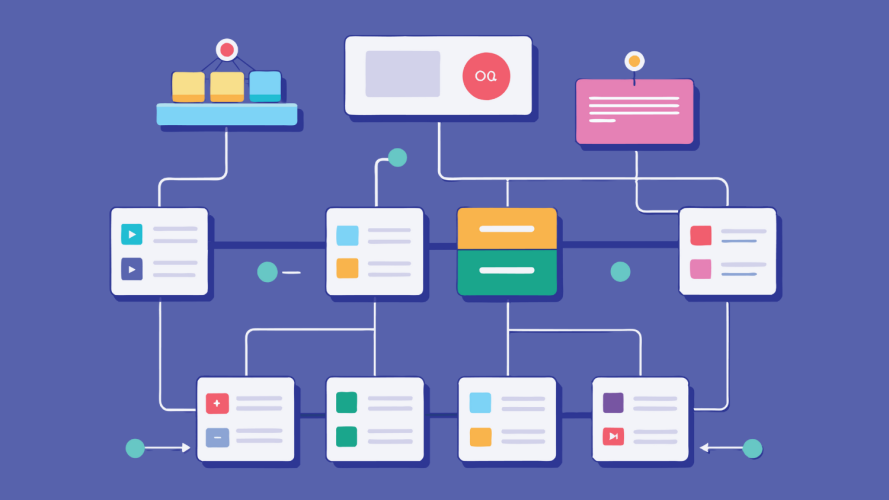

Three practices for context design
If context is our new design material, how do we shape it. It isn’t enough to expand a prompt and hope the model figures it out. We need to architect understanding: how context is formed, carried, surfaced, and corrected.
A helpful way to approach this work is through three practices: designing for continuity, agency, and correction. Each maps to familiar design heuristics, but the mechanics underneath them are new.
1. Designing for continuity
The default state of an LLM is like a goldfish, with no memory, no grudge, no plan. Every prompt is treated like the first day of the rest of its life.
Humans don’t work this way. We expect recognition over recall. We expect systems to carry the thread so we don’t have to. Designing for continuity means building that thread intentionally:
- The baton pass – When agents coordinate, context must travel cleanly. If Agent A helps a user start a return and Agent B handles the refund, Agent B should already know the tracking number. If the user has to repeat themselves, continuity has failed.
- Drift prevention – Long conversations create confusion. Models gradually wander and begin inventing new requirements. We need anchors: a durable state that holds the goal, constraints, and key details outside the chat history and reasserts them when the system drifts.
- The clean break – When the user changes topics, the system must shed the old context. If we have moved from billing stress to technical support, the system shouldn’t drag the prior assumptions into the new request. Designing the reset is as important as designing the carry.
Continuity is what keeps an agent present rather than forgetful or clingy.
2. Designing for agency
Most trust failures in AI share a root cause. The system acts, but the user can’t tell why. That’s the black-box problem.
We need glass-box mechanics instead. It’s not a diagnostic log, but enough visibility of system status for people to stay oriented.
- Light reasoning – A short explanation of why a result appeared can realign expectations immediately: “I recommended this record because it matches the region you worked in yesterday.”
- The “why this” control – Users should be able to double-click the system’s reasoning. When the AI hallucinates a cappuccino version of the user, they should be able to see the assumption that created it and correct it rather than feeling surprised.
- Collaborative clarification – When uncertain, the system shouldn’t guess. It should ask. The question should feel like a conversational check-in, not an error state: “Just to confirm, are we still working on the Q3 report.”
Agency is what transforms AI from a mysterious actor into a visible, understandable partner.
3. Designing for correction
People want agency, not homework. If an AI misunderstands you, you shouldn’t need to restart the prompt. You shouldn’t have to shout instructions at it. You should be able to adjust what the system believes.
This is where context becomes editable and where user control and freedom become concrete.
- Guided determinism – The AI provides generative flexibility, but the human provides guardrails. Corrections should shape the underlying assumptions, not require prompt gymnastics.
- Editable assumptions – Imagine a small panel of active context variables. If the system thinks you prefer cappuccinos, you remove that variable. If it flags an account as high priority, you can demote it. You aren’t rewriting prompts. You’re editing the system’s current beliefs.
- Inline corrections – Simple controls that remove, refine, or expand what the system remembers let users steer without effort. This is how people adjust the AI’s intelligence without becoming prompt engineers.
Correction mechanisms are what keep the system aligned with the human, moment-by-moment.
When continuity, agency, and correction are treated as core practices, context stops being hidden machinery. It becomes a visible, tunable part of the experience. And that’s exactly where it needs to live.
Intelligent systems need a semantic backbone
We’re entering a moment when products are no longer just tools. They’re interpreters. Every click, hesitation, and unfinished request becomes part of a living model of what we mean.
For decades, we designed interfaces where the truth of the system lived on the screen. Now we design systems where the truth lives inside the model. That shift is enormous.
And it changes the work.
As agents coordinate across surfaces, products, and organizations, they will need shared meaning, not just shared memory. Designers will need ways to inspect that meaning, critique it, and adjust it with the same fluency we bring to layout grids and interaction flows.
Our tools will evolve. Design reviews will include checks on the system’s state of understanding. Experience blueprints will map flows of meaning alongside flows of interaction. Prototypes will reveal drift. Wireframes will call out retrieval triggers. Annotations will define what the system should remember and what it should deliberately forget. Designers will shape not only what the system shows, but what it knows.
To support this, systems need structure. Context tracks the moment, but ontology teaches the system what the world looks like. Descriptive and structural models create a scaffold for understanding. Without a semantic backbone, context becomes trivia. With it, intelligence becomes consistent and legible.
The stakes are already visible. Agents that remember too much feel invasive. Agents that remember too little feel incompetent. Agents that reason incorrectly become risks. Context engineering shapes the middle ground where intelligence feels stable and trustworthy.
It also expands our definition of the user. The user is no longer just the human on the other side of the screen. The user now includes the agent, the memory layer, the retrieval pipeline, and the orchestration fabric between them. Each has constraints and needs. Each requires intentional design.
There are hard questions ahead. How do we prevent context drift during long tasks? How do we design for consent when the system is modeling the person, not just the interaction? How do we keep intelligence aligned as it adapts? How do we create shared frameworks so agents built by different teams can actually work together?
The answers will shape more than our applications. They will shape our relationship with computational systems.
Bringing it all together
We’re entering a decade when intelligent systems do more than answer questions. They participate, collaborate, and take initiative. They help people do work that’s too complex or too subtle for a single prompt.
Context makes this possible. Good context engineering shapes how systems think. Good design shapes how that thinking feels. Together, they determine whether our future with AI feels empowering or bewildering, aligned or out of tune, human-centered or human-adjacent.
Like my barista, an AI doesn’t need to be perfect to feel intuitive. It simply needs to understand enough of the moment to stay with you rather than drift away.
The teams who learn to design with context will shape the experiences that come next.