


Agentic AI has moved from stakeholder slide decks to frontline service desks, and it isn’t hard to see why. Unlike rule-based chatbots, AI agents can think independently, interpret intent, personalise customer experiences, take action based on live context, and give customers a much shorter route from getting help to getting the problem sorted.
But what does this mean for the way service teams work? More importantly, how does it impact the customer experience? We surveyed more than 3,000 service professionals in our latest State of Service: AI Agents Edition to find out. In this guide, we’ll explore how agentic service is moving beyond chatbots and how teams like yours are using AI agents today to move from first contact to faster resolution, freeing up reps for high-value work.
Discover the latest trends and gain valuable insights from more than 5,500 service professionals.
Read the Salesforce “State of Service” report for an in-depth look at the findings.
Key Takeaways
The agentic era of customer service is here
AI isn’t exactly a newcomer to customer service: 85% of service organisations already use it in some form for everything from automated ticket triage to predictive analytics. And you’d be hard-pressed to find a rep who isn’t using an LLM to make admin less of a headache.
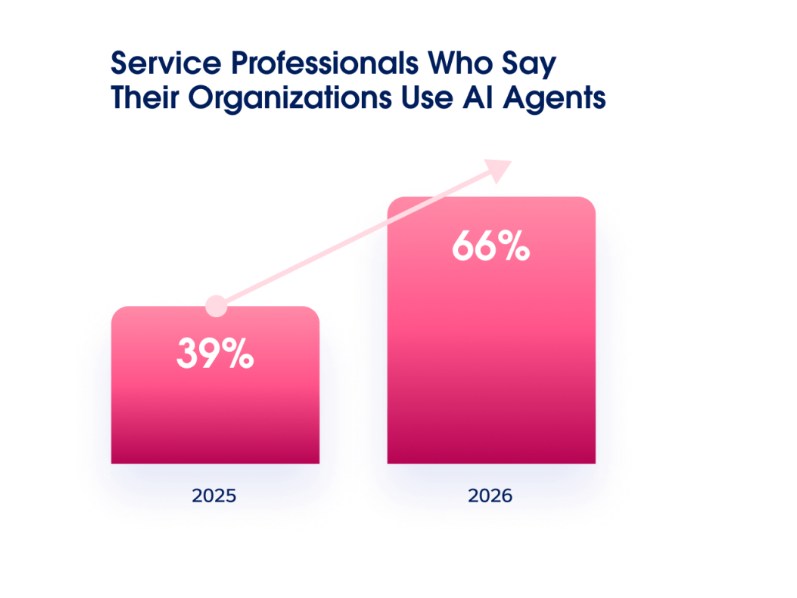
But the more exciting shift sits within that wider data. Over the last year, the number of service organisations using AI agents has risen from 39% to 66%. To put that into perspective, Australian businesses took over two years to increase their cloud use by 13% back in 2019-20, and that felt like a new era at the time.
One of the biggest impacts of AI service agents is how they transform the customer experience (CX). Instead of forcing customers through a script, they can adapt to what the customer is actually trying to achieve. For anyone who’s been trapped in a dead-end loop of scripted responses, that might come as a breath of fresh air.
“Sorry, I didn’t understand that”: The chatbot problem
Chatbots were supposed to offer a faster alternative to phone queues. Instead, they left millions of frustrated consumers spamming “speak to a human!!!” until a rep finally appeared.
The problem lies in how traditional chatbots work. They stick to predefined rules and use keyword matching to shuttle customers down one of a limited number of pre-built paths. That works just about fine for simple queries with predictable outcomes. However, as soon as the customer goes off script, the experience starts to unravel. The chatbot either:
- Fails to understand the customer query because it doesn’t include key terms it recognises. Cue the “sorry, I didn’t quite get that” loop of doom.
- Latches onto one familiar term while misreading the customer’s intent, leading it to serve up completely irrelevant or misleading advice.
- Answers one part of a multi-part question. “My order is damaged and I need a replacement before Friday” gets you a return policy, but doesn’t address the urgency.
- Puts customers in an infinite loop. “Track my order” goes to the tracking page. The tracking page goes to the chatbot. The chatbot says “track your order here”.
- Reaches the correct verdict but is unable to take action. The customer gets the message across, but has to speak to a rep anyway to reach a resolution.
The common thread across these problems is that all of them end with a rep, undermining the time the chatbot was supposed to save. To add to the frustration, once the rep did arrive, the customer often had to repeat everything from scratch because the context never carried over.
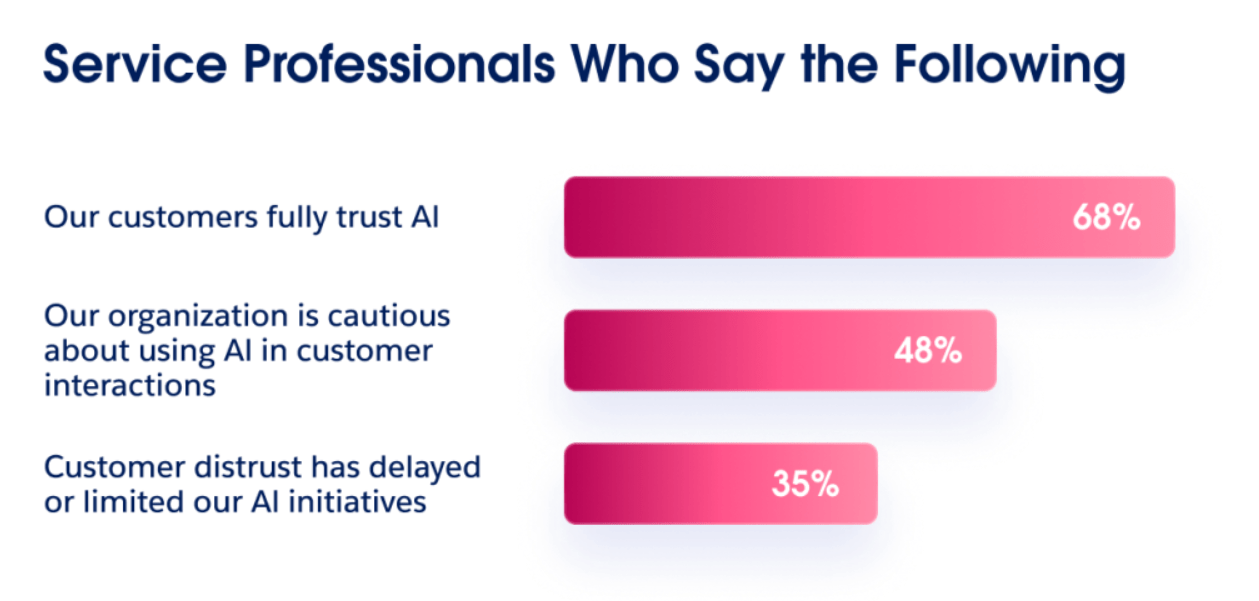
Those experiences have left customers understandably sceptical of anything with “AI” attached to it. While 68% of service professionals say their customers trust AI, just 44% of customers say the same. On top of that, 48% of organisations are now cautious about using AI in customer interactions, and 35% say it’s delayed their AI initiatives.
AI agents flip the (chatbot) script
What makes AI agents so powerful is that they aren’t bound to rigid scripts and pre-defined paths. They can interpret messy intent, handle multi-part queries, pull relevant context, take approved actions, and escalate to a rep when needed with the full context attached. To show you how transformative that can be, let’s look at a potential customer complaint:
“You’ve charged me a late fee, I already told you I’ve paid half and that I can’t pay the rest until Friday. The last rep said it was fine, I need you to remove the fee.”
A chatbot will understand the customer is asking about a late fee. It won’t pick up on the frustrated tone, the part payment, or the previous rep’s promise.
However, if you were to put an agentic platform like Agentforce in the same scenario, an AI agent could:
- Recognise that the customer is feeling frustrated and adjust its tone accordingly
- Confirm the part-payment and verify what the rep originally promised
- Remove the fee and move the payment date if authorised to do so
- Update the record to reflect the change and send the customer confirmation
- Hand over to a rep with a complete summary if the case needs human judgement
This is what people envisioned when they imagined the chatbot – a digital rep that understands what customers need and does something about it. The result is that, despite ongoing trust issues, 73% of healthcare consumers, 69% of financial services consumers, and 64% of retail consumers say AI-powered customer service exceeded their expectations.
And that’s just one example of what an AI agent can do inside a single conversation. Zoom out, and the opportunities for end-to-end service automation get even more exciting.
AI agents are more than a chatbot replacement
As reps know all too well, there’s more to service than handling customer complaints. An automation that handles one task is nice, but it’s hardly transformative when teams still need to complete the surrounding steps and keep everything held together.
The beauty of AI agents is that they can carry context and work across connected systems and workflows. This means they can not only manage customer queries but coordinate the work around them. Let’s look at how agents can support the entire service journey from end to end.
Get started with Service AI in 5 minutes.
Take our free Trailhead module to learn all about AI for service. In 5 minutes you’ll know how generative AI is changing the future of service and where to start.

Resolve routine requests from start to finish
Self-service used to mean giving customers enough information to sort everything out themselves. Now, AI agents can handle routine requests from first message to resolution.
For example, in Service Cloud, an agent could check an order against your returns policy, confirm the customer is eligible, generate a return, arrange collection, update the record, and send confirmation, all in the same conversation. And if anything falls out of its remit, it’ll bring in a rep instantly with full context so they can pick up where the agent left off.
The result? Forty per cent of cases handled by AI are now resolved without human intervention. That’s the kind of success rate that beats customer chatbot fatigue.
Reach customers before they run into an issue
Resolving customer queries is a daily part of service work, but when teams are drowning in admin, direct outreach is usually the first thing to fall by the wayside. AI agents can help here by spotting signs that something isn’t right and reaching out to customers proactively.
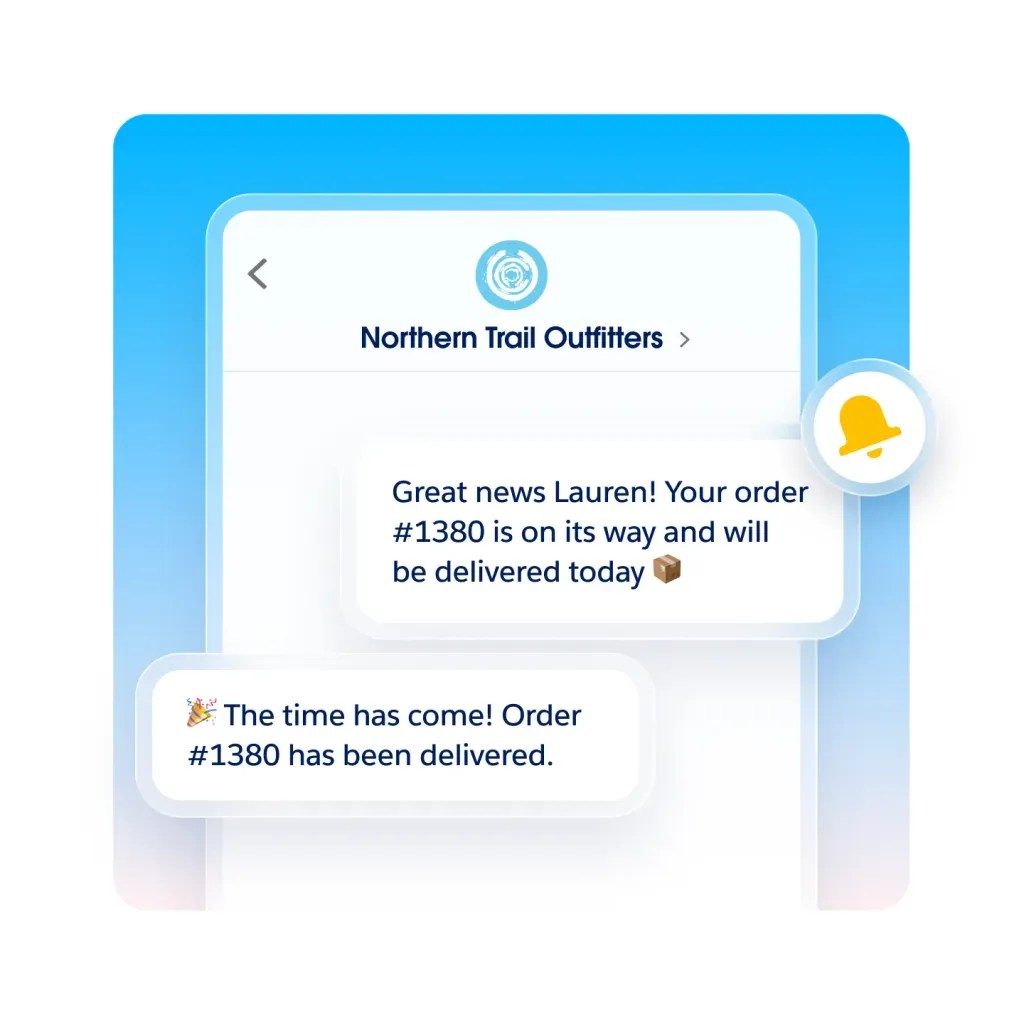
As an example, an agent within Service Cloud can detect automatically that a customer’s order is running late, contact the customer with an explanation, offer approved options like a rescheduled delivery or a refund, and keep service teams in the loop throughout.
Connect every service interaction
AI agents don’t start every interaction from a blank slate. When businesses connect them to trusted, unified customer data, they can pull in case history, purchases, payments, and previous conversations to understand what’s already happened and work out the next step.
Context flows back the other way, too. As the agent completes tasks, it will update records, add summaries, and note any action it has carried out. This means any rep or agent that needs to follow up at a later date already has all of the data they need to understand what happened and decide what needs to happen next.
Elevate Your Service Strategy with Unified, Actionable Data
Transform every customer interaction into a revenue opportunity with activated data.


Handovers that don’t start from scratch
Another advantage of AI agents is that they make the handover to a human rep completely seamless. When a case needs a human’s touch, or just when the customer asks to speak to a person, the agent recognises that point and steps aside. No more dead-end loops.
But the best bit is that the agent carries context forward. Once a rep needs to step in, it will route the case with a streamlined summary of the request, the customer’s history and sentiment, and any actions already completed. The rep can then lead onward rather than asking the customer to start again.
Support reps in real time
An AI agent’s support doesn’t have to end once they hand over a conversation. Once a rep takes over, Service Cloud can act as a contact centre copilot, surfacing customer context and recommending actions as the case develops.
The rep can then use, adapt, or ignore those suggestions and apply the empathy and judgement only they can, all without ever leaving the conversation.
Wrap up without admin
One of the biggest admin headaches for reps is the work that happens after a call. Even after a successful resolution, they still need to write case notes, record what happened, and prepare future follow-up, which isn’t easy when there are already five new tickets to address.
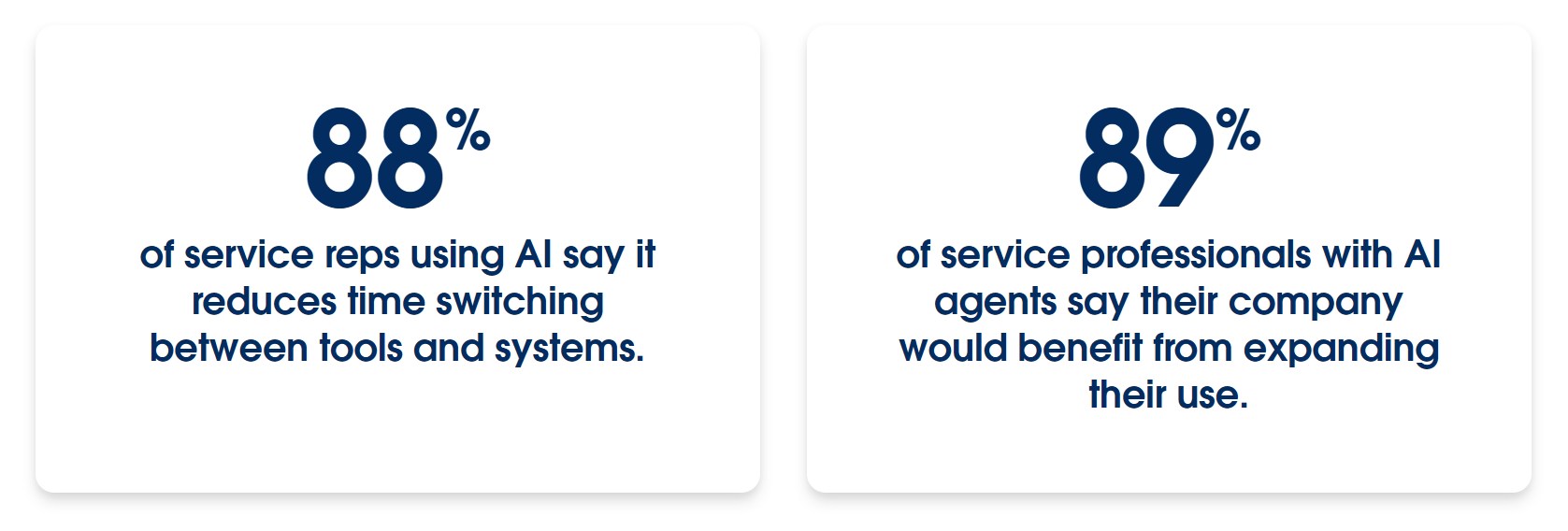
AI agents can make this admin easier to stomach by generating post-conversation summaries, capturing issues and outcomes, and drafting the case wrap-up for reps to review and save. With Service Cloud, all of this information appears directly in the rep’s flow of work, so they can review, edit, and save without context switching across tools.
Turn conversations into real-time rep coaching
Managers can only review so many calls. But now, they no longer have to choose between personalised coaching and wider workforce management. AI agents can analyse rep interactions, compare them against quality standards, and feed back to reps to help them improve before the next conversation.
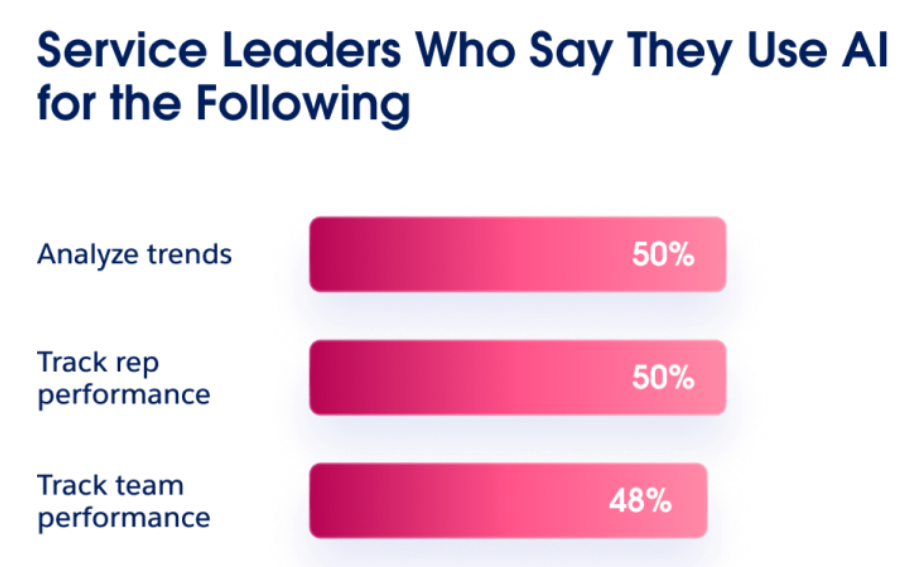
Tracking individual and team performance now ranks in the top three AI use cases for service leaders. However, while AI can scale up coaching, it’s still important to choose a platform that makes those insights feel like they were produced by a human rather than an automated scorecard.
Agentforce Contact Centre turns feedback into targeted, personalised coaching that explains what went well and where the rep can improve. This frees up leaders to work on individual mentoring without leaving broader coaching feeling like an impersonal afterthought.
Spot problems before they spread
One of the wider benefits of AI agents is that they also power analytics. The same interactions that improve coaching can feed straight into insights that surface recurring complaints, changes in customer sentiment, and sudden demand shifts.
From there, leaders can use a platform like Agentforce Tableau to investigate the root cause, monitor whether the problem is escalating, and take action before it reaches more customers.
Do more with your data with scalable insights from Tableau
As the world’s leading AI-powered analytics platform, Tableau makes it easy to see, understand and act on data wherever you work.
Expand service well beyond a chat window
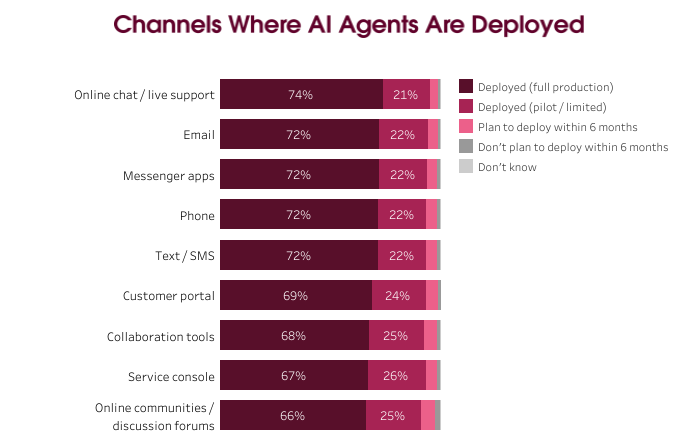
AI isn’t confined to a box in the corner of your website. As the data from our latest State of Service Report shows, service teams are already finding success deploying agents across email, messaging apps, phone, SMS, customer portals, and even online communities.
Take Engine as an example. The brand’s virtual assistant, Eva, now handles hotel, flight, and car-rental requests across chat and voice using connected customer and booking data, past interactions, and knowledge data.
The result is that Eva now resolves 50% of Engine’s booking enquiries, while Engine has cut handle times by 15% and increased customer satisfaction (CSAT) by 16%.

The point is that you shouldn’t limit yourself to a live website chat feature. You have the opportunity to build a connected layer of support that spans your entire service ecosystem.
The wider impact: people, performance, and profit
We’ve seen what AI agents can do, but the more exciting thing is what they can achieve once everything falls into place. Customers get better service, reps get more room for the work that matters, leaders get a clearer view of the entire operation, and businesses get more room to grow.
- For customers: The immediate impact is less effort. Customers get faster answers, resolve more issues in a single interaction, and can reach a human without starting from scratch. You can see the impact: Customer satisfaction now ranks as the most improved KPI following AI-agent deployment. Chatbot fatigue hasn’t disappeared, but AI agents give self-service a chance to earn back their trust.
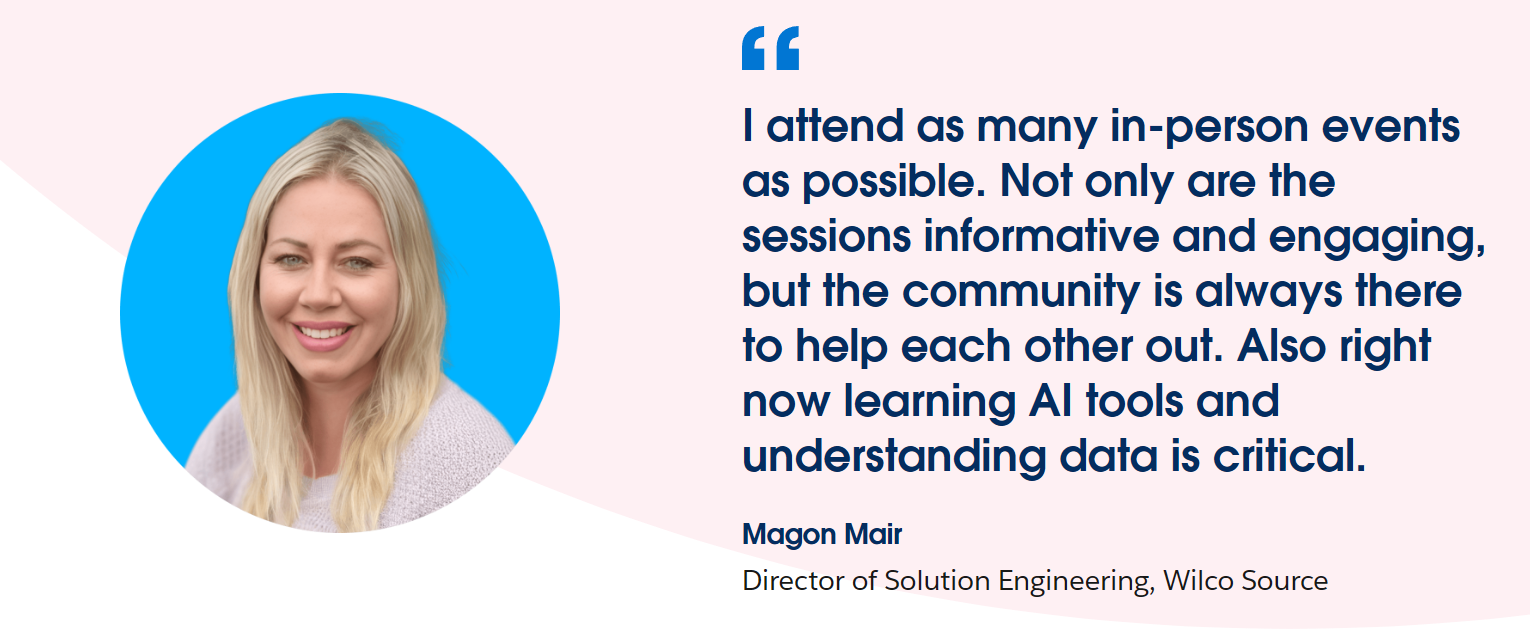
- For reps: Taking admin off reps’ plates gives them more time for conversations that need a human touch. On the flip side, the move to AI also asks reps to learn new skills. As such, 97% of customer service reps are now investing time in learning new skills, whether that be through training, online courses, or in-person events. The good news is that, with AI agents working alongside them, they finally have the room to build those skills without squeezing development into an already overloaded day.
- For leaders: AI agents give service leaders a broader view of what’s happening across the operation, which lets them understand performance, anticipate demand, and decide where teams need support. Half of service leaders already use AI to analyse trends and track rep performance, while 47% use it to predict demand.
The advantages extend to the wider business, too. Better customer experiences strengthen retention. More productive reps increase your service capacity, and stronger visibility helps leaders direct resources more effectively. From there, the ROI of AI in customer service becomes clear: 70% of organisations report measurable returns within 60 days of deploying AI agents.
Make AI agents your next service advantage
AI agents are transformative for service businesses, but service organisations still need to have a plan to implement them safely and securely. Teams need to choose the right use cases, connect the agents to a foundation of trusted data, set clear guardrails and human handoffs, and see how they perform in real scenarios before they scale out.
We won’t dive into detail on laying the groundwork for agentic AI in customer service during this guide, but if you’re ready to go deeper and start building your agentic enterprise, we have multiple resources that can help:
- Become an Agentic Enterprise: A Step-by-Step Guide for a practical roadmap covering strategy, data, governance, testing and continuous improvement.
- Seven Requirements for Effective Agents is a checklist of the foundations every reliable AI agent needs.
- The Data 360 Fast-Start Playbook for building a data foundation around your first use cases.
- Scaling AI You Can Trust for guidance on guardrails, governance and human oversight.
From there, the big win is to choose an agentic enterprise platform that’s built for trusted service at scale. Service Cloud brings AI agents, customer data, and human reps together on one platform, helping your team work smarter, improve productivity, and gain back time for the work that actually matters. Watch the demo today to see it in action.
FAQs
An AI service agent is software that can understand a customer’s request, decide what needs to happen, and take action using connected business data and systems. It might check an order, update a booking, process a return, or bring in a human rep when the issue needs more care. This makes it a more capable form of contact centre automation, able to complete an entire service workflow rather than simply direct customers towards information.
AI agents can handle routine requests immediately and give reps more context when cases become complex. This can improve first contact resolution (FCR) and the overall case resolution rate, while shorter queues and less repetitive work help reduce operational costs. Customers get answers sooner, and reps have more time for the conversations where their judgement makes a difference.
Not at all. In fact, AI agents are most effective when they work alongside service reps. They can take care of repetitive tasks, gather information, and pass complex cases to a human with the conversation history intact. Workforce upskilling helps reps make the most of that partnership, whether they’re managing exceptions, reviewing agent decisions, or handling higher-value interactions. With multi-channel support, the same combination of AI speed and human expertise can extend across chat, messaging, voice, and other service channels.
Front-office and back-office integration gives AI agents access to the systems and context they need to complete work instead of stopping at an answer. Data privacy and governance set the rules around what data agents can access, which actions they can take, when a human must step in, and how decisions are monitored. Together, they help agents act usefully without operating beyond their remit.