



The world is generating, capturing, copying and consuming more data than ever before — around 402.74 million terabytes each day. That’s enough to store every movie ever made millions of times over every 24 hours. The age of ‘big data’ has well and truly arrived.
Big data refers to the massive volume and variety of information created by people, devices and digital interactions. In this guide, we’ll explore how it works, why it matters, and how you can leverage it to drive smarter decisions and improve customer experience in 2026.
What you’ll learn:
- What is big data?
- Why does big data matter? The importance of big data
- How big data works (and how to leverage it)
- Big data use cases
- Tips to get the most value from big data
- Key challenges (and how to overcome them)
- Salesforce’s Agentforce 360 for big data
- Try Agentforce 360 to kickstart your big data ambitions
- FAQs
What is big data?
Big data refers to vast, complex amounts of structured, unstructured and semi-structured data that continually expands over time. This data is so enormous and diverse that it’s beyond the processing capabilities of traditional data management systems.
Big data encompasses everything from databases, spreadsheets and financial records to social media posts, past customer interactions, and sensor data. In essence, it involves every piece of information an organisation can capture and analyse, regardless of its format or source.
Related: The Definitive Data Glossary For Business Leaders
The ‘five Vs’ of big data and what they mean for your business
Big data is best understood through the ‘five Vs’, which indicate both the characteristics that define big data and the kind of technology, processes and protocols you’ll need to have in place before you can harness the power it offers:
- Volume: Big data is ‘big’ because of the sheer amount of it. From transactions and app usage to IoT devices and customer interactions, businesses handling big data will need to process vast amounts of information, often without knowing if that data holds value.
- Velocity: Big data moves fast; it’s usually generated in real time or near-real time. This means organisations often need to process, access and analyse it in real time for it to yield any meaningful insights.
- Variety: Big data can originate from any source. This includes structured databases (like spreadsheets) and semi-structured data (like sensors), as well as unstructured data (like images and social media impressions).
- Veracity: Big data is often messy and chaotic, making it difficult to link and standardise. Businesses need to have processes in place that ensure high-quality data that’s clean and trustworthy to prevent information from becoming biased or unhelpful.
- Value: Big data must have value. Whether the value is smarter decision-making or increased productivity, businesses must have processes to derive meaningful insights from the data they collect. Artificial intelligence (AI) and machine learning (ML) are critical here.
Together, these five Vs show what makes big data different from traditional datasets and why it requires more advanced tools, strategies and robust data governance to manage effectively.
Why does big data matter? The importance of big data
At this stage, you may be wondering why big data matters at all. Here are five reasons why it’s worth looking beyond structured datasets to get meaningful business intelligence.
- Improved decision-making: Exploring big data gives you a combined view of every data point you possess. This lets you make faster, more evidence-based decisions that take the whole picture into consideration.
- Deeper customer understanding: Analysing social media activity, app usage, and transactional data gives you clearer insights into customer behaviour and sentiment than structured data alone, making it easier to deliver personalised experiences.
- Agility in response to trends: Enriching historical data with real-time insights lets you anticipate everything from customer needs and seasonal demand to market trends and potential risks long before they happen, helping your business move with agility.
- Increased efficiency: Analysing operational data can help you detect issues with your workflows, identify potential maintenance problems and show where to allocate resources. All of this lets you improve how you operate.
- Innovation: Insights from big data can uncover unmet customer needs or gaps in the market, helping your business develop new products, features or services to capture new audiences.
Big data has the potential to be revolutionary for businesses, but getting off the mark requires the right processes and technologies to turn disparate, raw information into valuable insights. Let’s take a step-by-step look at how to get started with big data.
Say hello to Data 360.
Data 360, the only data platform native to Salesforce, unlocks and harmonises data from any system — so you can better understand your customers and drive growth.


How big data works (and how to leverage it)
Harnessing big data involves collecting real-time information from various sources, storing it in systems that are designed to handle information at scale and then processing and analysing it to turn raw information into insights you can act on. Let’s look at these steps one at a time.
1. Data collection: Gather your data
The first step in the big data process is data collection. Unlike a traditional database, which typically only involves structured data, big data also includes semi-structured and unstructured data. Here’s how these three terms differ and the data types included:
Structured vs. Semi-structured vs. Unstructured Data
| Data type | What it is | Examples |
|---|---|---|
| Structured | Highly organised data that fits into predefined models (such as spreadsheet columns) | Spreadsheets, databases, CRM records, financial records, POS transaction data |
| Semi-structured | Partially organised data with predictable patterns but not in a fully standardised format | Sensor data, IoT readings, NoSQL databases, HTML, JSON, CSV, app event logs, metadata |
| Unstructured | Data without a fixed format or model that doesn’t fit neatly into a relational database | Emails, images, audio, videos, social media impressions, behavioural data |
This combination of structured, semi-structured and unstructured records creates an enormous volume of information to gather. To help with this process, leverage tools like APIs, webhooks, and event streaming to ingest data from apps, devices, and systems reliably in real time.
In addition, centralised data platforms, such as Data 360, can unify data from thousands of disparate sources under one roof. This turns data collection from a time-consuming manual process into a continuous flow of information that’s organised and ready for analysis.
Related: Unlock the Power of Unstructured Data for Agentic AI
2. Data storage: Unify your data
Once you collect the data, the next step involves storing it in a system designed to handle large volumes of information. There are two main options to choose from: data warehouses and data lakes.
Data Warehouse vs. Data Lake
| Storage type | Best for | Advantage |
|---|---|---|
| Data warehouse | Structured data for standard analytics and reporting | Strong governance and security, fast query performance |
| Data lake | Semi-structured or unstructured data | A highly flexible, more affordable way to store any type of information |
Typically, most businesses will choose a hybrid approach, storing structured data in warehouses for daily reporting and analytics, and maintaining raw data in a lake so it can be explored for correlations, patterns, and deeper insights that would otherwise be missed.
Some platforms, such as Data 360, combine the benefits of data warehouses and data lakes, giving you the tools to unite, organise and store structured, semi-structured and unstructured data from any source in one central system.
3. Data processing: Clean and transform your data
The next stage is data processing, which involves cleaning, filtering and preparing the data to ensure it meets quality standards and is consistently formatted and ready for big data analysis.
The first consideration here is how you’re going to process your data. There are two options:
Batch Processing vs. Streaming
| Storage type | What it is | Best for |
|---|---|---|
| Batch processing | Processes data in scheduled batches | Large, historical datasets or less time-sensitive data |
| Streaming | Processes data in real time as it arrives | Live monitoring and real-time decision-making |
Use streaming for high-velocity sources like IoT sensors and transactions, as it ensures you can react to new information immediately. Conversely, batch processing is better suited for historical datasets where speed is less of a concern, as it’s considerably less resource-intensive.
Once you’ve landed on your approach, the next step is to prepare and clean the data. Here’s a quick checklist for this stage:
- Deduplicate and validate: Remove errors, inconsistencies and duplicate records.
- Standardise formats: Convert unstructured data into formats ready for analysis.
- Add context: Add additional metadata to datasets to enrich them with context.
- Tag PII: Flag sensitive data so it can be anonymised and protected for compliance.
- Track lineage: Clearly document data sources, flows and quality for auditability.
Where possible, use ETL (extract, transform, load) data pipelines to automate this process. Solutions like Data 360 can clean incoming streams, check for data integrity and transform data from multiple sources so it’s standardised and ready for analysis.
4. Data analysis: Draw insights from your data
Next, use data analytics to identify patterns and trends. This is where you turn raw data into insights that drive decision-making. Common techniques include:
- Data mining: Examine large datasets to uncover patterns and anomalies that aren’t immediately obvious.
- Statistical analysis: Use statistics to summarise trends, calculate averages and test hypotheses within your datasets.
- Predictive analytics: Leverage past data to forecast what might happen in the future, such as predicting customer behaviour or demand.
- Deep learning: Building advanced ML models that automatically detect patterns in data, producing predictive insights and recommendations to support decision-making.
Ultimately, you need to use methods that can explore information at a scale far beyond what traditional tools can handle. Artificial intelligence is the natural choice here, as it can analyse big data in real time and adapt to new patterns as they emerge. It provides a wealth of information at your fingertips, and the model will improve consistently over time as it’s exposed to more data.
For instance, AI-powered analytics solutions like Agentforce CRM Analytics can automatically uncover trends, segment customers and provide accurate recommendations to support growth in real time and at scale. And it’s all grounded in your unified operational and customer data.
5. Data visualisation: Make your insights accessible
The final step is to take the insights generated by your statistical and machine learning methods and leverage big data visualisation to make them easy to understand.
In most cases, this involves creating charts, graphs and visual dashboards to help make information clear and actionable. You can also set up automated triggers for anomalies and opportunities identified by AI/ML models to ensure you can act in real time.
A good place to start is with a tool like Tableau. This solution connects directly to CRM Analytics and Data 360, helping you visualise trends and monitor real-time data through easy-to-read dashboards. This ensures all data is clear, visible and actionable at all times. After that, all that’s left to do is put your data-driven insights to use.
Gartner named Salesforce a Leader in Customer Data Platforms. See why.
Big data use cases
So, you now understand how big data works and what you need to do to get the best out of it. Now, let’s talk about some of the ways businesses in different industries can use big data to improve their operations and deliver better customer experiences.
Finance
Financial institutions leverage big data to detect fraud, assess risks and develop new financial products. Information from analytics can be used to protect customers from financial crime, improve the efficiency of financial transactions and develop new investment opportunities.
Bank Australia, for example, uses analytics and ML to automatically review payslips, bank statements and other financial documents to identify inconsistencies and signs of fraud in real time. This helps the bank reduce risk while reducing the time it takes to approve loan applications.
Retail
Retailers can use big data to track customer purchases, analyse customer behaviour, optimise inventory management and develop targeted marketing campaigns. This information can be used to improve the shopping experience, increase sales and reduce costs.
Healthcare
In healthcare, big data is used to improve patient care, reduce costs and develop new treatments. This information can be used to identify patients at risk for certain diseases, develop personalised treatment plans and track the effectiveness of treatments.
For instance, Singapore’s National University Health System recently built ENDEAVOUR AI, which uses predictive analytics on clinical, demographic, lab and imaging data and supports clinical decision-making at scale.
Transportation
Transportation companies use big data to improve logistics, reduce costs and improve safety. They can use the results from analytics to optimise shipping routes, track the location of vehicles, and predict traffic patterns.
Manufacturing
In manufacturing, big data can transform operations through real-time monitoring and quality optimisation. Collecting sensor data from machines and analysing it with AI can reduce downtime and improve efficiency over time.
For instance, Perth Manufacturing Co. implemented an AI smart factory solution that combines IoT sensors with predictive maintenance models. This solution helped the brand achieve a 99.9% efficiency and save more than $1.2 million annually in downtime.
Tips to get the most value from big data
To get the most out of your enterprise data, you need to be deliberate about how you apply it. In this section, we’ll walk you through practical ways to do that:
- Tie your data to clear goals: Make sure your big data project is linked to a clear objective. Whether it’s understanding customer behaviour or optimising operations, you need to understand what you want to achieve to keep your initiative focused.
- Invest in skills and training: Train your teams in visualisation, AI fundamentals and data science basics so they can interpret results and confidently take action based on new insights. Trailhead has a range of free courses to help your team improve.
- Unify your data sources: Think beyond silos when you unify your data. Linking unstructured and structured sources is the key to getting smarter insights that you couldn’t view in isolation.
- Make data quality a priority: Advanced analytics will crumble if your data isn’t up to scratch. Regularly audit your internal process, maintain strong governance and monitor for inconsistencies to ensure accuracy. This will help your AI model do its best work.
- Experiment strategically: Encourage teams to explore data and A/B test different ideas in sandbox environments. This will help you discover additional insights without disrupting operations.
Taken together, these tips will help you build a data culture that keeps your big data initiatives focused, consistent and actionable.
Get expert Data 360 guidance from Salesforce Professional Services.
With 1.3K+ certified Data 360 consultants and 240+ implementations globally, we’ll help you realise value quickly. Check out our guide to learn how.
Key challenges (and how to overcome them)
As you’d expect, big data isn’t without its hurdles. Let’s talk through five key challenges and how to overcome them.
Big Data Challenges and How to Overcome Them
| Challenge | Solution |
|---|---|
| Managing data that ‘never stops growing | Use scalable data infrastructure, such as cloud data platforms, to keep your information organised and cost-efficient. |
| Maintaining data quality over time | Set up clear data standards and validation rules; review them regularly so teams can trust the insights they gather. |
| Keeping data secure | Apply strong access controls and conduct regular audits to stay compliant with regulations and protect sensitive data. |
| Unifying data from multiple sources | Leverage a modern data platform that brings structured and unstructured data together in one place. |
| Closing skill gaps | Invest in upskilling teams and use visualisation tools to make data accessible to team members who aren’t experts. |
Agentforce 360 for big data
Ready to get started with your big data strategy? Here’s how Agentforce 360 can help you unify your data and turn it into actionable insights that drive your growth.
How Agentforce 360 can support your big data efforts
| Solution | How it helps |
|---|---|
| Data 360 | Unify your unstructured and structured data under one roof |
| CRM Analytics | Run predictive models to discover business data trends |
| Tableau | Visualise big data through intuitive dashboards |
| Agentforce | Leverage AI recommendations to make data-backed decisions |
| Agentforce Marketing | Use insights to deliver more personalised customer experiences |
| Agentforce Sales | Give your sales teams a complete view of every customer |
| Agentforce Service | Resolve issues faster by surfacing context-rich big data insights |
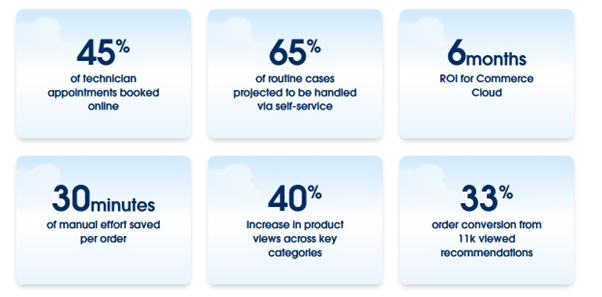
Fisher & Paykel provides a great example of how Agentforce 360 can support your big data project. The luxury appliance brand used our suite of tools to unify all of its unstructured and structured data and explore it with the support of AI.
This helped the business better understand customer needs, trigger automated journeys based on real-time buying signals and connect more authentically with every customer.

With Agentforce 360, Fisher & Paykel was able to provide personalised experiences at every touchpoint.
Try Agentforce 360 to kickstart your big data ambitions
Big data is the key to understanding your customers, optimising operations, responding to trends proactively and making decisions that are based on evidence rather than intuition.
But unlocking this value comes with challenges. Big data is enormous, fast-moving and diverse. This means you need the right process, guardrails and solutions in place to ensure your business can integrate data, process it in real time and use it to drive measurable outcomes.
Agentforce 360 can help you bring all of your data together under one roof, analyse it at scale and apply insights to every aspect of your operation, all with the help of powerful artificial intelligence (AI). Try Agentforce 360 for free today to get started.
FAQs
How did the term ‘big data’ originate?
In the early days of computing, data was scarce and difficult to leverage for insights. But as cheaper storage and more powerful computers became commonplace, businesses were able to collect and process vast amounts of data for the first time.
This led to an enormous influx of information, leading Roger Mougalas to coin the term ‘big data’ in 2005. Since then, the volume, speed and variety of data we generate have grown rapidly thanks to technological developments like the Internet of Things (IoT), cloud computing, social media and, most recently, artificial intelligence (AI) and machine learning (ML).
What are the future trends for big data?
We can all anticipate that big data is going to get ‘bigger’ at an alarming rate. Fortunately, there are some new technologies coming into play that can help with this. In the future, expect edge analytics, which will allow businesses to analyse data at the source as soon as it’s generated. Hybrid cloud models will also be increasingly influential, offering businesses the elastic scalability and speed they need to store and process big data at scale.
What is the link between big data and AI?
Artificial intelligence and big data are closely linked, as each makes the other more powerful. AI requires big data to learn patterns and make accurate predictions at scale, but this data is often too complex for humans to process manually. However, AI tools like machine learning can automate this process, classifying and extracting insights in real time. In turn, as organisations collect more data, AI models can grow smarter with time. It’s a constant symbiotic relationship that fuels intelligence and smarter decision-making.